Brooklyn’s Dynamic Arts Scene: A Global Epicenter of Influence and Innovation
Brooklyn, New York, has unequivocally cemented its status as a global powerhouse of arts and culture. Far from being a mere shadow to Manhattan, this vibrant borough pulses with an unparalleled creative energy that resonates far beyond its geographical boundaries. Its sprawling and diverse arts scene consistently shapes national and international cultural narratives, making it a critical hub for innovation across various disciplines. A prime example of this recognition comes from insightful publications like Brooklyn Magazine, whose near-comprehensive list of the “100 Most Influential People in Brooklyn Culture” offers a valuable lens into the individuals and forces driving this extraordinary dynamism.
Navigating Brooklyn’s Cultural Landscape: A Rich Tapestry of Influence
The Brooklyn Magazine list serves as an illuminating guide to the multifaceted nature of influence within the borough. It meticulously highlights a broad spectrum of cultural architects, from the established figures at prestigious institutions to the trailblazing leaders of grassroots movements. Readers will find venerable curators who expertly steward the collections and exhibitions at long-standing landmarks such as the world-renowned Brooklyn Museum, showcasing the enduring legacy of artistic patronage and scholarly curation. In parallel, the list celebrates the spirited visionaries behind newer, yet equally impactful, endeavors—such as the executive director of the Brooklyn Hip-Hop Festival, who champions contemporary urban culture and community engagement through music.
Beyond these pivotal figures, the compilation deeply acknowledges the independent artists and intrepid gallerists who form the very backbone of thriving art communities, particularly within the celebrated Bushwick scene. These individuals are often at the forefront of artistic experimentation, discovering new talent, and challenging conventional norms. Interestingly, the list also broadens its scope to include personalities whose influence extends beyond traditional artistic confines, exemplified by the inclusion of Brownstoner founder Jonathan Butler. His presence underscores how cultural impact in Brooklyn is interwoven with urban development, community building, and the revitalization of neighborhoods, demonstrating that influence can manifest in diverse and unexpected ways, shaping not just art, but the very fabric of daily life.
This comprehensive approach emphasizes that Brooklyn’s cultural strength lies in its ability to foster and integrate a wide array of artistic expressions. From the captivating visual arts that adorn its galleries and streets, to the compelling narratives explored in performance, the groundbreaking sounds of its music scene, the profound insights found in literature, and the innovative storytelling through film, Brooklyn offers an ecosystem where creativity is nurtured, celebrated, and continuously redefined. Such a list, therefore, is not merely an honor roll but a living document, reflecting the dynamic interplay of tradition and innovation that positions Brooklyn at the cutting edge of contemporary global culture.
The Evolution of a Cultural Powerhouse: Brooklyn’s Artistic Journey
Brooklyn’s ascendancy as a cultural powerhouse is a fascinating narrative of transformation. Historically, it was known predominantly for its industrial might and its distinct residential neighborhoods. However, a confluence of socio-economic factors began to reshape its identity in the late 20th and early 21st centuries. Relative affordability compared to Manhattan, coupled with an increasingly diverse demographic and a burgeoning influx of creative individuals, artists, and entrepreneurs, catalyzed a remarkable metamorphosis. Neighborhoods like Williamsburg, DUMBO, Bushwick, and Fort Greene saw warehouses and underutilized spaces repurposed into vibrant artist studios, avant-garde galleries, and experimental performance venues. This organic, grassroots development fostered an environment ripe for artistic experimentation, collaboration, and community building, attracting further talent and investment and creating a self-sustaining creative ecosystem.
Today, Brooklyn stands distinct with a unique cultural identity that masterfully balances institutional excellence with an undeniable spirit of grassroots innovation. This duality is arguably one of its greatest strengths. While grand institutions like the Brooklyn Museum and the Brooklyn Academy of Music (BAM) anchor the scene with their world-class exhibitions, performances, and educational programs, countless smaller independent galleries, intimate DIY music venues, experimental theater collectives, and community art centers thrive alongside them. These smaller venues act as vital incubators for emerging talent, platforms for avant-garde projects, and accessible spaces for community engagement. This dynamic interplay ensures a constant flow of fresh ideas, fosters a spirit of artistic risk-taking, and maintains an arts scene that is both globally significant and deeply rooted in its local communities, accessible to all who seek creative inspiration.
Diverse Artistic Expressions: The Pillars of Brooklyn’s Creativity
The cultural vibrancy of Brooklyn is built upon a foundation of diverse artistic expressions, each flourishing in its unique way and contributing to the borough’s global reputation.
Visual Arts: A Canvas for Innovation and Urban Expression
The visual arts scene in Brooklyn is a continuous narrative of transformation and innovation. Bushwick, for instance, has evolved into a globally recognized gallery district, housing hundreds of independent spaces that showcase cutting-edge contemporary art, fostering both local and international talent. Yet, the visual landscape extends far beyond traditional white-cube galleries. Brooklyn’s streets themselves serve as vast, ever-changing canvases. Street art and murals, often transient but always impactful, contribute profoundly to the borough’s visual identity. These public artworks transform mundane urban spaces into vibrant cultural statements, making art accessible to daily commuters and residents. From large-scale commissioned pieces to spontaneous graffiti, the presence of works by iconic artists, both local and international, contributes to a constantly evolving outdoor gallery that invigorates neighborhoods, sparks dialogue, and reflects the diverse social and political dialogues of the community. This blending of formal and informal art spaces solidifies Brooklyn’s role as a leader in contemporary visual culture.
Music: A Symphony of Genres, Venues, and Global Sounds
Brooklyn’s musical landscape is as rich and diverse as its population, a true melting pot of sounds and genres. It’s a borough where legendary indie rock clubs like Brooklyn Steel and Warsaw host major touring acts, while countless smaller, intimate venues provide crucial platforms for local bands and emerging artists across jazz, hip-hop, electronic, folk, and world music scenes. Annual festivals, such as the internationally acclaimed Afro-Punk Festival and the vibrant Northside Festival, draw global attention, solidifying Brooklyn’s role as a trendsetter in contemporary music. The borough isn’t merely a place where music is performed; it’s a crucible where genres are blended, new sounds are forged, and musical movements are born, influencing popular culture worldwide and offering an unmatched sonic experience.
Performance Arts: Redefining the Stage and Beyond
From avant-garde theater to classical dance, experimental opera, and improvisational comedy, Brooklyn’s performance arts scene is incredibly rich and boundary-pushing. The Brooklyn Academy of Music (BAM) remains a cornerstone, presenting a diverse and often daring program of theater, dance, opera, and film that consistently pushes artistic boundaries. Beyond BAM, independent theater companies and dance troupes flourish in spaces across the borough, creating intimate and experimental productions in black-box theaters, renovated industrial spaces, and even public parks. Spoken word artists, performance artists, and choreographers utilize every conceivable venue, ensuring a vibrant, accessible, and thought-provoking performance culture that challenges, inspires, and entertains audiences with its boundless creativity and fearless expression.
Literature and Film: Narratives from a Global Borough
Brooklyn has long served as a muse for countless writers and filmmakers, and it continues to be a fertile ground for both disciplines. Independent bookstores are more than just retail spaces; they are vibrant community hubs, hosting readings, author talks, and literary events that foster a strong sense of intellectual and creative community. Many acclaimed authors reside in Brooklyn, drawing deep inspiration from its bustling streets, its diverse inhabitants, and its rich historical tapestry. Similarly, the independent film scene thrives, supported by respected film festivals like the Brooklyn Film Festival and numerous independent cinemas that champion diverse voices, experimental storytelling, and compelling narratives. Brooklyn provides a unique and authentic backdrop, as well as endless narrative inspiration, contributing significantly to contemporary storytelling in both print and on screen, capturing the essence of the modern urban experience.
The Global Reach of Brooklyn: Barry McGee’s Mural in Fort Greene
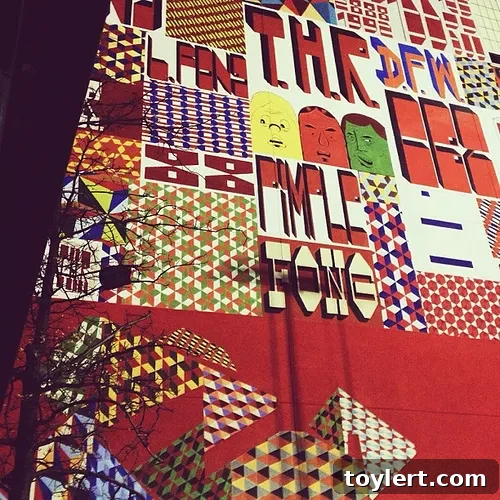
A prime illustration of Brooklyn’s magnetic pull for artistic talent from beyond its own borders is the striking mural by California artist Barry McGee, prominently featured in a Fort Greene parking lot. McGee, often associated with the influential San Francisco Mission School art movement, brings a distinctive blend of graffiti aesthetics, folk art influences, and a profound understanding of urban visual culture to his work. His art frequently explores themes of consumerism, urban decay, social commentary, and outsider culture, often characterized by his iconic geometric patterns, stylized faces, and intricate text-based elements, all rendered with a unique hand-drawn quality.
The presence of such a significant piece in Fort Greene highlights several key aspects of Brooklyn’s profound cultural dynamism. Firstly, it unmistakably demonstrates the borough’s openness to receiving, embracing, and integrating diverse artistic voices and perspectives from across the globe. Brooklyn is far from insular; it actively engages with and draws inspiration from wider artistic currents, fostering a truly international dialogue. Secondly, McGee’s specific style of street art powerfully embodies the intersection of fine art and public space—a defining characteristic of contemporary urban art movements. These murals transcend their role as mere visual adornments; they transform mundane cityscapes into vibrant cultural statements, making high-quality art accessible to daily commuters and residents who might not typically frequent traditional galleries. Lastly, the often transient nature of street art, even by renowned artists, speaks to the ever-changing, ephemeral quality of urban culture itself, where artistic expressions emerge, evolve, and sometimes fade, making their viewing a unique, temporal, and deeply personal experience.
Such pieces are more than just captivating visual adornments; they represent conversations writ large on city walls, inviting public dialogue, contemplation, and a deeper connection to the urban environment. They serve as potent reminders that art in Brooklyn is not confined to formal institutions or exclusive venues, but is a living, breathing, and integral part of the community, constantly evolving, reflecting, and shaping the world around it.
The Unending Conversation: Who Truly Shapes Brooklyn’s Culture?
The very question posed by the original article – “Is there anyone you think should have been included who wasn’t?” – underscores the inherent challenge and subjective nature of compiling any list that purports to identify the “most influential” individuals. While comprehensive and well-researched, no single compilation can ever fully encapsulate the sprawling, multifaceted, and deeply interconnected creativity that defines Brooklyn. Influence itself is a fluid and complex concept, manifesting in myriad forms: through direct artistic output, through visionary curatorial choices, through tireless community organizing, through dedicated arts education, or through crucial financial and infrastructural support for the arts sector.
Perhaps such lists are best viewed not as definitive, immutable declarations, but rather as powerful starting points for broader discussion and deeper inquiry. They provoke us to consider the unsung heroes—the dedicated arts administrators, the emerging talents yet to break into mainstream consciousness, the passionate educators, and the numerous community builders whose influence, though perhaps less visible on a grand public scale, is profoundly felt within their immediate neighborhoods and local scenes. The true, enduring vibrancy of Brooklyn’s arts scene lies not solely in its recognized figures but in the countless individuals, both celebrated and unsung, who collectively weave the intricate, ever-evolving tapestry of its cultural identity, ensuring its continued dynamism, relevance, and global impact.
Brooklyn remains a beacon for creativity, a fertile ground where innovation thrives, established traditions are reinterpreted with fresh perspectives, and new artistic frontiers are constantly explored. Its cultural footprint continues to expand globally, shaped by a relentless spirit of artistic inquiry and a diverse, passionate community committed to fostering expression in all its magnificent forms.