Unveiling Crown Heights: The Enduring Story of 1183 Bergen Street
A captivating journey through Brooklyn’s past and present, seen through the lens of a single, iconic address.
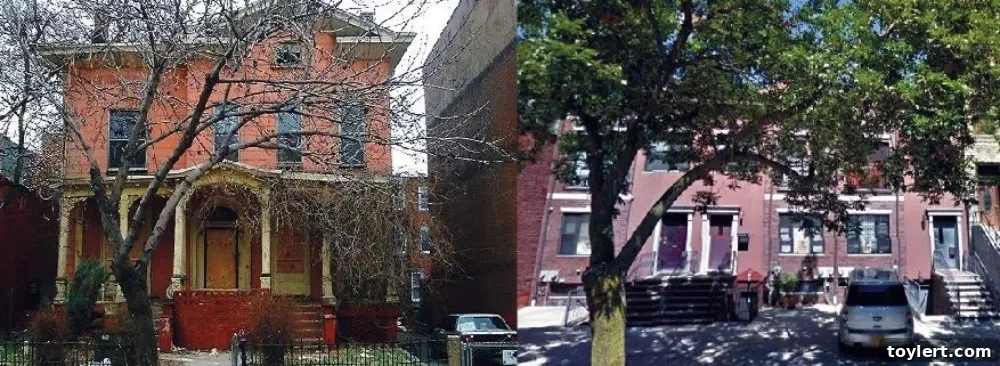
When I first moved to the vibrant community of Crown Heights North in 2000, Brooklyn was a borough on the cusp of significant change. Among the many architectural gems that defined the neighborhood’s character, one particular structure stood out in my memory: a distinctive pink house located at 1183 Bergen Street. Just two blocks from my new home, its presence became a familiar sight, a silent sentinel witnessing the ebb and flow of urban life. Even then, in the early 2000s, it bore the marks of time, undeniably in rough shape, yet crucially, it had not yet been boarded up, retaining a glimmer of its former life and a hint of stories untold.
1183 Bergen Street: A Glimpse into Crown Heights’ Soul
The house at 1183 Bergen Street wasn’t just another building; it was a testament to the layered history of Crown Heights. Its faded pink facade, perhaps once a vibrant hue, whispered tales of different eras – of families who built lives within its walls, of the changing demographics of the neighborhood, and of Brooklyn’s relentless evolution. The fact that it stood, albeit weathered, spoke volumes about the resilience of these historic structures and the community they anchored. It offered a tangible connection to an older Brooklyn, a stark contrast to the burgeoning energy of the new millennium.
Crown Heights North: A Rich Tapestry of History
To truly understand the significance of a place like 1183 Bergen Street, one must delve into the historical context of Crown Heights itself. Originally envisioned as a suburban retreat for New York’s burgeoning middle and upper classes in the late 19th and early 20th centuries, Crown Heights developed rapidly. Developers like William H. Reynolds and George P. Bergen (for whom Bergen Street is likely named) erected rows of elegant brownstones, limestones, and Queen Anne-style houses. These grand residences, often featuring intricate details, expansive bay windows, and high ceilings, attracted professionals, merchants, and industrialists seeking spacious homes outside Manhattan’s congested core.
The architectural grandeur of Crown Heights during this period was undeniable. Streets were lined with meticulously crafted homes, each vying for attention with its unique stoop, cornice, and facade ornamentation. The neighborhood quickly gained a reputation for its stately beauty and refined atmosphere. Many of these homes, including what was likely the original iteration of 1183 Bergen Street, were built with enduring quality, designed to convey prestige and stability.
The Mid-20th Century: Shifting Tides and Enduring Spirit
The mid-20th century brought significant shifts to Crown Heights, mirroring broader urban trends across America. Economic downturns, the advent of suburbanization, and racial demographic shifts led to a period of decline for many of Brooklyn’s historic neighborhoods. As original residents moved out, new communities moved in, often facing disinvestment and neglect from city services. Properties, including those on Bergen Street, sometimes fell into disrepair as owners struggled with maintenance costs or as properties were subdivided into multiple apartments to accommodate growing populations.
Despite these challenges, the spirit of Crown Heights endured. New waves of immigrants and African American families established vibrant communities, creating a rich cultural mosaic that continues to define the neighborhood today. While some of the architectural splendor may have faded during this era, the underlying community fabric remained strong, fostering a sense of belonging and resilience that would become crucial for its eventual resurgence.
The Dawn of a New Millennium: Crown Heights in 2000
By the time I arrived in Crown Heights North in 2000, the neighborhood was entering yet another transformative phase. The slow burn of renewed interest in Brooklyn’s historic districts was beginning to ignite, and areas like Crown Heights, with their comparatively affordable yet architecturally significant housing stock, started attracting a new generation of residents. However, this renaissance was not uniform. Many blocks still bore the scars of decades of underinvestment.
The pink house at 1183 Bergen Street perfectly encapsulated this transitional moment. Its weathered facade and evident need for repair were common sights. Yet, its mere existence, un-boarded and still structurally sound, symbolized a lingering hope, a potential waiting to be realized. It was a tangible link to the past, a silent witness to countless moments in Brooklyn’s ongoing narrative.
Walking past it daily, I observed its steadfast presence. It wasn’t pristine, but it was authentic. It represented a raw, unfiltered version of Crown Heights, a neighborhood with immense potential and a deep-seated history, slowly beginning to shed its previous struggles and embrace a new chapter. The peeling paint and worn exterior were not just signs of neglect but also emblems of survival, indicating that the building had withstood various eras and remained a part of the urban landscape.
Architectural Significance and the Fate of Historic Homes
Houses like 1183 Bergen Street are typically specimens of late 19th-century or early 20th-century Brooklyn architecture. While the exact style would require closer inspection, many homes in Crown Heights feature elements of Queen Anne, Romanesque Revival, or Neo-Grec styles. These styles are characterized by:
- Queen Anne: Asymmetrical facades, bay windows, turrets, patterned shingles, and elaborate woodwork.
- Romanesque Revival: Round arches, heavy masonry, and sometimes rusticated stone.
- Neo-Grec: Characterized by angular incised lines, geometric patterns, and classical motifs in a simplified form.
The original builders meticulously crafted these homes with high-quality materials and attention to detail, a stark contrast to some modern construction. Preserving these structures is not merely about retaining old buildings; it’s about safeguarding the architectural heritage, the craftsmanship, and the tangible history that defines Brooklyn’s unique identity.
The fate of the pink house on Bergen Street is typical of many such properties during periods of urban renewal. It could have been bought by a savvy investor and meticulously restored to its former glory, perhaps losing its “pink” identity in favor of a historically accurate brownstone or limestone finish. Alternatively, it might have succumbed to demolition, making way for a modern multi-family dwelling, a common occurrence in rapidly gentrifying areas aiming for higher density. Each outcome presents a bittersweet paradox: revitalization versus the erasure of original character.
Crown Heights “Now”: A Flourishing Metropolis
Fast forward to today, and Crown Heights has undergone a remarkable transformation. The quiet, sometimes rough-around-the-edges neighborhood I moved into in 2000 has blossomed into one of Brooklyn’s most sought-after and vibrant communities. Property values have soared, and many of the once-dilapidated brownstones have been painstakingly restored, their intricate details brought back to life. New businesses, from trendy cafes and artisanal bakeries to diverse restaurants and boutiques, line Franklin Avenue and Nostrand Avenue, injecting new life into commercial corridors.
Crown Heights today is a dynamic blend of old and new. Long-term residents, many of whom have lived in the neighborhood for decades, coexist with an influx of new families, young professionals, and creatives. This demographic mix contributes to a rich cultural tapestry, fostering a unique Brooklyn identity that is both deeply rooted in its past and forward-looking. The neighborhood boasts numerous parks, cultural institutions like the Brooklyn Museum and Brooklyn Botanic Garden nearby, and a strong sense of community that continues to evolve.
The concept of “then and now” in Crown Heights is not just about physical changes in buildings but also about the shifts in its social, economic, and cultural landscape. While the transformation has brought undeniable improvements in infrastructure and amenities, it also sparks ongoing conversations about affordability, displacement, and the delicate balance required to maintain a neighborhood’s unique character amidst rapid development.
The Enduring Legacy of 1183 Bergen Street
Whether the pink house at 1183 Bergen Street still stands in its original form, or if it has been transformed or replaced, its memory serves as a potent symbol. It represents the countless individual stories embedded within the broader narrative of Crown Heights. It reminds us that urban environments are constantly in flux, living entities shaped by human hands and historical forces.
This single address, once a humble pink house in need of care, embodies the resilience of Brooklyn’s architecture and the enduring spirit of its communities. It encourages us to pause, observe, and appreciate the layers of history that exist on every street corner. Understanding the “then” helps us truly appreciate the “now” and critically engage with the future. The story of 1183 Bergen Street is, in essence, the story of Crown Heights: a testament to continuous change, adaptation, and the unwavering charm of a neighborhood that truly defines the heart of Brooklyn.
As you walk the historic streets of Crown Heights today, take a moment to look beyond the polished facades. Imagine the peeling paint, the worn stoops, and the vibrant life that once thrived in every home. These silent witnesses to history are not just buildings; they are keepers of memory, connecting us to the rich, complex, and ever-evolving story of Brooklyn.