Discovering Brooklyn’s Architectural Heritage: The Enduring Charm of 18 Ashford Street – The James Royal House
Brooklyn, one building at a time, reveals a tapestry of stories, eras, and architectural marvels. Each façade holds whispers of the past, offering a captivating glimpse into the borough’s vibrant evolution and the lives that shaped it. Today, our journey takes us to a particularly captivating structure nestled within the dynamic landscape of East New York: 18 Ashford Street, originally known as the James Royal House. This residence stands not merely as a dwelling but as a robust monument to Brooklyn’s late 19th-century prosperity and architectural ambition. Its distinct character and historical significance make it a prime candidate for exploration, providing invaluable insights into the borough’s rich heritage and the architectural styles that defined an era.
In a city constantly reinventing itself, the preservation of such historic homes becomes paramount. They serve as tangible links to previous generations, offering a sense of continuity and depth to a constantly evolving urban fabric. The James Royal House, with its commanding presence and intricate details, invites us to pause and appreciate the craftsmanship and vision that went into its creation, reminding us of the unique identity each landmark contributes to the broader Brooklyn narrative.
A Glimpse into the Past: The James Royal House and Its Origins
Built during a transformative period for Brooklyn, the James Royal House at 18 Ashford Street emerged as a testament to the borough’s burgeoning growth. The late 19th century saw an explosion of development, with new neighborhoods expanding outwards from the established city core, fueled by improved transportation, industrial growth, and a growing population seeking homes with more space and modern amenities than the crowded tenements of Manhattan. It was within this vibrant atmosphere that James Royal, a prominent local entrepreneur and likely a successful merchant or industrialist, commissioned this stately residence. His vision, undoubtedly shaped by the prevailing architectural trends of the time, was to create a home that reflected his status, celebrated his achievements, and contributed to the beautification of Ashford Street, an area then transitioning rapidly from semi-rural plots to a more defined residential district.
The name “James Royal House” itself suggests a significant figure, someone whose presence left an indelible mark on the community. While specific historical records might require deeper archival research, the moniker implies a residence that was once a hub of social activity, a focal point for neighborhood gatherings, or a prominent landmark known to generations of local residents. These initial owners often played pivotal roles in shaping their respective communities, and their homes became extensions of their public and private lives, often reflecting the aspirations of an entire era. For 18 Ashford Street, this foundational history provides a compelling narrative layer, inviting us to delve deeper into its design and the countless stories it could tell, from grand celebrations to quiet family moments.
Architectural Grandeur: A Blend of Styles and Enduring Craftsmanship
Victorian Elegance on Ashford Street
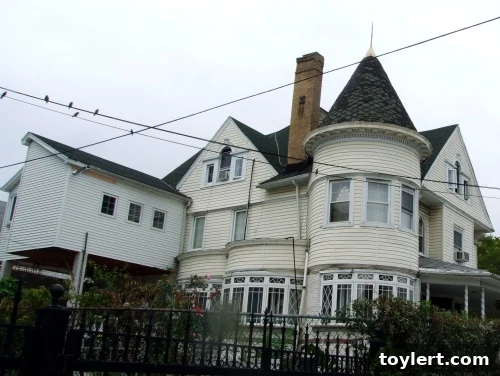
The architecture of 18 Ashford Street is a quintessential example of the late Victorian era, a period celebrated for its elaborate ornamentation, asymmetrical forms, and a bold embrace of varied textures and materials. While often categorized broadly as Victorian, specific elements suggest strong influences from the Queen Anne style, a particularly popular architectural movement in America between 1880 and 1910. This style is characterized by its picturesque quality, featuring turrets, bay windows, projecting gables, textured wall surfaces (often shingle work), and wrap-around porches—elements that could very well adorn the façade of the James Royal House, even if subtly integrated into a more restrained urban context.
Examining the existing visual data, even from a distance, hints at the meticulous craftsmanship characteristic of the period. We can envision a façade likely adorned with a rich palette of materials: perhaps a sturdy brownstone or brick foundation providing a solid base, rising to clapboard siding or decorative shingles on upper stories, creating a delightful interplay of textures. The windows, often a focal point of Victorian design, might feature intricate leaded glass transoms, ornate surrounds, or perhaps even small stained-glass panels catching the Brooklyn sunlight, casting colorful patterns within. A prominent front porch, often a hallmark of these homes, would offer a welcoming transition from the street, perhaps supported by turned columns and adorned with delicate spindle work or carved details, inviting contemplation and social interaction on warm evenings.
Distinctive Features and Design Philosophy
A key aspect of Victorian homes like the James Royal House is their departure from the stricter symmetry of earlier architectural styles like Neoclassical or Federal. Instead, they celebrate individuality, visual complexity, and picturesque charm. This often manifests in varied rooflines—perhaps a combination of gabled and hipped sections with decorative bargeboards—and an irregular footprint that allows for distinct interior spaces, each with its own character and purpose. The exterior might also feature decorative elements such as terra cotta panels, pressed metal ornamentation around cornices, or corbelled brickwork, each contributing to a layered and visually engaging composition. The careful choice of durable materials and the high quality of construction speak volumes about the original owner’s aspirations and the skilled labor available in Brooklyn at the turn of the century, a time when craftsmanship was highly valued.
Inside, one might imagine spacious rooms with generously high ceilings, intricate plasterwork in the form of medallions and cornices, and rich, dark wood trim adorning doorways and fireplaces. The interior layout would have reflected a lifestyle that valued both formal entertaining and comfortable family living, with distinct parlors, dining rooms, and private studies. While the exterior is what captures the eye from the street, the interior layout and detailing would have completed the grand vision, making the James Royal House a truly exceptional residence for its time. It represents an era when homes were built not just for shelter but as statements of identity, family legacy, and a proud contribution to the burgeoning urban landscape.
Ashford Street and the Evolution of East New York
The location of the James Royal House on Ashford Street is integral to its story and understanding its significance. East New York, a vibrant and diverse neighborhood in southeastern Brooklyn, boasts a fascinating history of development, shaped by successive waves of immigration, significant economic shifts, and ambitious urban planning initiatives. Originally characterized by vast agricultural land and scattered farmhouses, the area began to urbanize rapidly in the late 19th and early 20th centuries, transforming into a bustling residential and commercial hub. Ashford Street, like many others in the vicinity, would have witnessed this dramatic metamorphosis firsthand, evolving from dirt paths to paved avenues lined with impressive homes.
Homes like 18 Ashford Street played a crucial role in defining the nascent character of these new residential blocks. They set a standard for quality and design, attracting families from various backgrounds and contributing significantly to the social fabric of the neighborhood. The streetscape, once perhaps dotted with isolated farmhouses or undeveloped plots, would have gradually filled with rows of similar, yet individually distinct, homes—each adding to a cohesive architectural narrative that spoke of progress and community building. The presence of such a distinguished house suggests that Ashford Street, at the time of its construction, was seen as a desirable and developing locale, attracting residents with a certain level of affluence and a desire for well-appointed living spaces away from the city’s denser core.
Over the decades, East New York has experienced numerous changes, undergoing periods of prosperity, decline, and revitalization. Through it all, resilient structures like the James Royal House stand as silent anchors, bearing witness to the ebb and flow of urban life. They serve as tangible links to previous generations, offering a sense of continuity and historical depth to a constantly evolving borough. These buildings are more than just bricks and mortar; they are memory keepers, holding the echoes of countless lives lived within their walls and contributing to the enduring spirit of East New York.
Preserving Brooklyn’s Legacy: The Importance of Historic Homes
The continued existence of buildings like the James Royal House is vitally important for understanding Brooklyn’s broader historical and architectural narrative. In a city constantly reinventing itself and embracing modern development, the preservation of historic homes offers a crucial counterpoint, reminding us of the foundations upon which modern Brooklyn is built. These structures are not merely old buildings; they are living archives, embodying the craftsmanship, design philosophies, and social aspirations of their respective eras. They tell a story of human ingenuity and resilience.
Preserving 18 Ashford Street, and similar buildings throughout Brooklyn, involves more than just maintaining their physical integrity. It means valuing the rich stories they tell, the cultural significance they hold for their communities, and their irreplaceable contribution to the unique character and charm of their neighborhoods. Such preservation efforts often face numerous challenges, from the significant costs of ongoing maintenance and complex restoration work to the relentless pressures of modern development and changing zoning laws. However, the benefits far outweigh these hurdles. Historic homes consistently enhance property values for surrounding areas, attract cultural tourism, and provide a sense of place and identity that contemporary architecture often struggles to replicate. They imbue a neighborhood with a distinct sense of soul and history.
Furthermore, these venerable structures also offer valuable lessons in sustainable living and construction. They showcase building techniques and materials that have stood the test of time, often with greater durability, inherent charm, and a lower environmental impact over their lifespans than some modern constructions. By celebrating and actively protecting these architectural treasures, we ensure that future generations can connect meaningfully with their past, appreciate the artistic vision and skill of previous eras, and truly understand the intricate layers that form the rich, multifaceted tapestry of Brooklyn. They are a testament to the enduring power of good design and solid construction.
The Enduring Appeal of the James Royal House
In conclusion, the James Royal House at 18 Ashford Street is far more than just an address; it is a captivating and indispensable piece of Brooklyn’s architectural legacy. From its commanding presence on Ashford Street to its intricate Victorian detailing and the echoes of a prominent family, every aspect of this building speaks volumes about a bygone era of prosperity, exceptional craftsmanship, and ambitious vision. It stands as a silent sentinel, gracefully observing the constant changes around it while steadfastly maintaining a palpable link to its origins, a true survivor of time.
For those passionate about history, fascinated by architecture, or simply enchanted by the unique and multifaceted charm of Brooklyn, 18 Ashford Street offers a compelling subject for contemplation and admiration. It reminds us that behind every façade lies a profound story waiting to be discovered, and that the true character and soul of a city are often found in the individual buildings that collectively form its identity. The James Royal House serves as a powerful reminder of the importance of recognizing, cherishing, and safeguarding these architectural gems, ensuring their unique stories continue to be told, one building at a time, for generations to come, enriching the lives of all who encounter them.