Exploring the Timeless Charm of a Historic Stone House in Feura Bush, NY
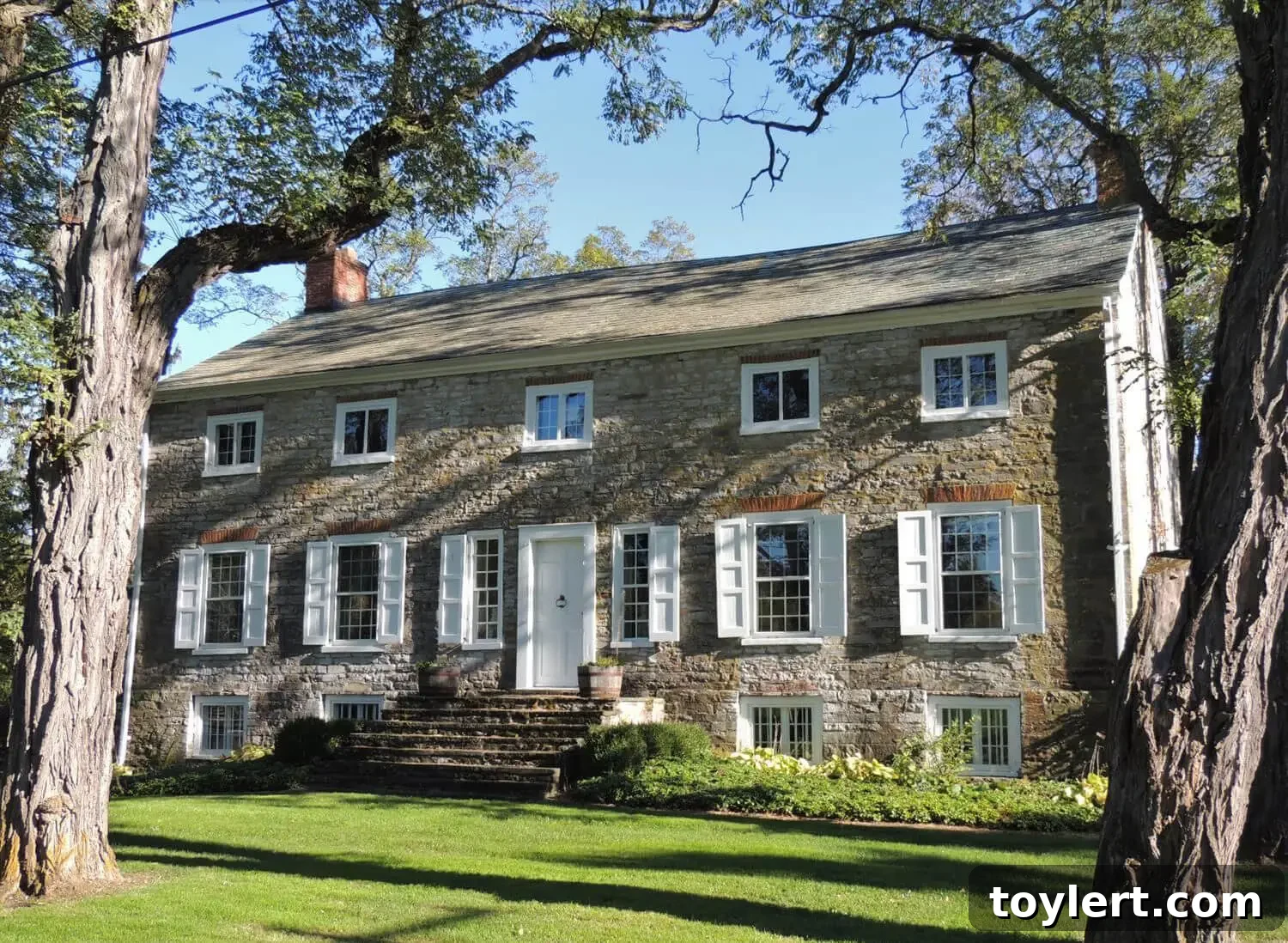
Nestled in the picturesque landscape of Feura Bush, New York, approximately half an hour’s drive from the bustling state capital of Albany, stands an architectural marvel that whispers tales from centuries past. This venerable stone house, located at 361 Onesquethaw Valley Road, is more than just a dwelling; it is a tangible piece of history, steeped in a rich tapestry of narratives, some verifiable, others perhaps embellished by the passage of time and local lore. The very address itself offers a glimpse into the region’s heritage, with “Onesquethaw” adorning not only the road but also a creek, waterfalls, and other natural features across the area. This distinctive name is widely believed to be derived from a word of Mohawk origin, underscoring the deep indigenous roots of this enchanting valley.
A Glimpse into the Mohawk Heritage and Early Settlement
Before European settlers arrived, the Onesquethaw Valley and the surrounding lands were integral to the territory of the Mohawk people, a prominent nation within the Haudenosaunee (Iroquois) Confederacy. Their presence shaped the landscape and culture for centuries, leaving an indelible mark that resonates in place names like Onesquethaw. It wasn’t until the late 17th century that this land began to transition into European hands, marking the beginning of a new chapter in its history. By the 18th century, the fertile valley, with its abundant resources and strategic location, saw the emergence of a scattering of dwellings, forming the nascent stages of what would become a small, thriving settlement. Today, Feura Bush is a charming and peaceful community, a constituent part of the larger, historically rich town of New Scotland. This region offers a compelling blend of rural tranquility and convenient access to modern amenities, making it a highly desirable location for those seeking a connection to the past without sacrificing contemporary comforts.
Unraveling Centuries of History: The Enigma of the Stone House
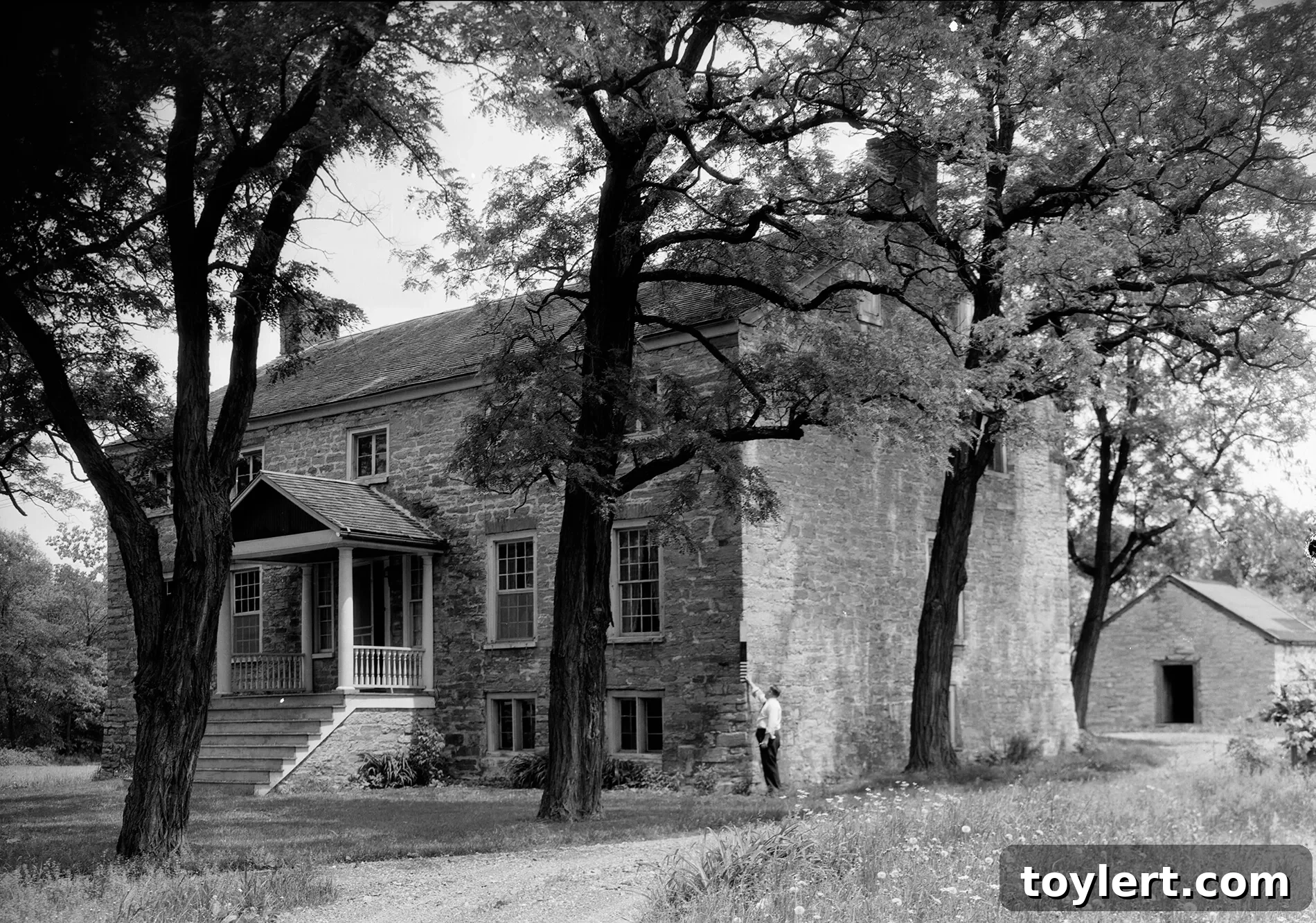
The exact genesis of this distinguished stone house is steeped in the mists of time, though historical surveys, including a comprehensive National Register survey form dedicated to the building, firmly place its origins in the mid-18th century, likely between the 1750s and 1760s. Further substantiating its venerable age, the house made its inaugural appearance on a map of the area as early as 1767, solidifying its status as one of the oldest standing structures in the region. It is perhaps unsurprising that a dwelling boasting more than 250 years of continuous existence would accumulate an almost equally extensive list of names throughout its lifespan. This rich but complex nomenclature has, however, rendered the meticulous tracking of its historical lineage a considerable undertaking.
Delving into historical archives and local records reveals a fascinating array of appellations attributed to this single, resilient structure. Over the centuries, it has been known as Nisquethaw, Oriskatach, the van Rensselaer House—a name that hints at connections to one of colonial New York’s most powerful and influential Dutch families. Other documented names include the Gerrit Van Sante (Van Zandt) House, the Bleeker House, and the John Vadney House, among others. Each name likely represents a significant period of ownership or a prominent family who once called its sturdy stone walls home, adding layers to its storied past. The sheer number of names speaks volumes about the continuous occupation and evolving identity of the property, reflecting the socio-economic shifts and familial successions that have characterized the region for generations. For historians and enthusiasts alike, piecing together the precise timeline of these names and the families behind them offers a captivating challenge, akin to solving a centuries-old puzzle.
Architectural Endurace: The Craftsmanship of an 18th-Century Stone Dwelling
The very fabric of this old stone house speaks to the enduring craftsmanship and robust construction methods prevalent in the 18th century. Unlike the lighter timber frames of many contemporary structures, stone houses of this era were built to withstand the test of time, weather, and conflict. The choice of stone, likely sourced locally from the abundant geological formations of the Onesquethaw Valley, signifies a commitment to permanence and durability. These thick, formidable walls provided excellent insulation against harsh Upstate New York winters and provided a cool respite during the summer months, a testament to practical design principles predating modern climate control technologies. While specific architectural details are not explicitly outlined, it is common for stone houses from this period in the Hudson Valley and surrounding regions to exhibit characteristics influenced by Dutch Colonial and early American styles.
Such features often include a symmetrical façade, perhaps modest yet sturdy window openings, and a pragmatic layout designed for efficiency and warmth. The exposed stone, often left unplastered on interior walls in certain areas, would reveal the painstaking work of masons who carefully selected and fitted each rock, transforming raw materials into a habitable and visually striking structure. Imagine the warmth radiating from a grand central fireplace, a common element in homes of this vintage, serving not only as a source of heat but also as the heart of family life, cooking, and gathering. The sheer scale and effort required to construct such a building without modern machinery underscore the ambition and resilience of the early settlers who envisioned a permanent foothold in the newly developing landscape of colonial America.
Life in the Onesquethaw Valley: A Historical Tapestry
When this house first took shape in the mid-1700s, the Onesquethaw Valley was a dramatically different place. The sounds of colonial life would have filled the air – the rustling of leaves, the babbling of the creek, and perhaps the distant calls of indigenous hunters or the clatter of early farming implements. The valley served as a crucial connection point, part of the broader network of trails and waterways that linked settlements in the Albany area with more remote outposts. Life was rugged, agrarian, and deeply interconnected with the natural environment. The inhabitants of this stone house would have experienced significant historical events firsthand, from the French and Indian War to the American Revolution, witnessing the birth of a nation from their very doorstep.
Over the centuries, the valley transitioned from a sparsely populated frontier to a more established agricultural community. Roads improved, communication became more accessible, and the small cluster of dwellings grew into the charming community of Feura Bush. Yet, through all these changes, the fundamental character of the Onesquethaw Valley, defined by its natural beauty and rich historical layers, has endured. The stone house stands as a silent observer to this evolution, a steadfast sentinel reflecting the passage of time and the lives that have unfolded within its venerable walls. Its strategic location, close enough to Albany for commerce and governance but distant enough to offer rural peace, has always been a key part of its appeal, whether to 18th-century farmers or 21st-century residents.
The Enduring Appeal of Historic Upstate New York Homes
For those enchanted by the allure of history and the unique character that only an antique home can offer, a property like 361 Onesquethaw Valley Road represents a rare and compelling opportunity. Owning a piece of the past is not merely about acquiring real estate; it is about becoming a steward of history, preserving the narratives embedded in its very foundations. Historic stone houses in Upstate New York, particularly in areas like Feura Bush and the greater Albany region, are highly sought after for their unparalleled charm, architectural integrity, and the sense of connection they offer to previous generations. Unlike modern constructions, these homes possess a unique soul, evidenced in their irregularities, their weathered textures, and the very stories they seem to silently tell.
Such properties often attract discerning buyers who appreciate the craftsmanship of a bygone era, the solidity of stone construction, and the peaceful ambiance of a home that has stood for centuries. Whether as a private residence, a tranquil retreat from city life, or even a charming bed and breakfast, a historic stone house offers a distinctive living experience that cannot be replicated. Its presence on a National Register survey form further accentuates its importance, hinting at its potential for preservation and its role in the broader architectural heritage of New York State. This Feura Bush gem, with its deep roots in Mohawk history and its storied colonial past, continues to beckon those who seek not just a house, but a home with a profound and captivating narrative, nestled in the heart of the beautiful Onesquethaw Valley.