Unveiling 288 Jackson Avenue: The Enduring Legacy of Greenpoint Hospital, A Brooklyn Icon
Address: 288 Jackson Avenue, Brooklyn, NY
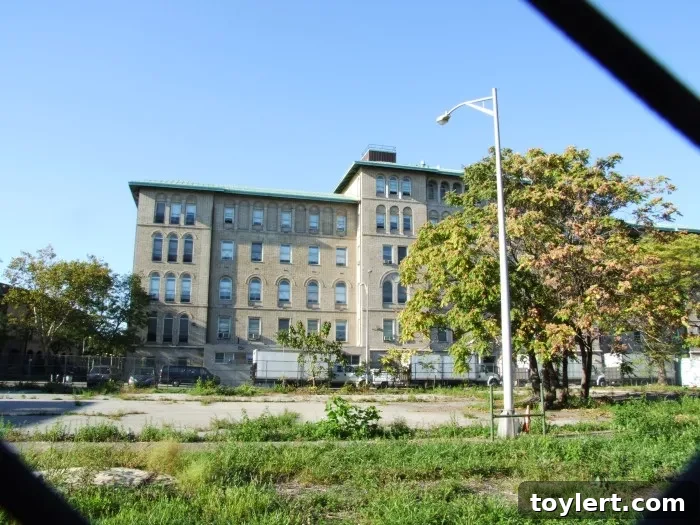
Nestled within the vibrant and ever-evolving landscape of Brooklyn lies a building whose very bricks tell a profound story of community, care, and architectural resilience. At 288 Jackson Avenue, what once served as the cornerstone of public health for generations of Brooklynites – the formidable Greenpoint Hospital – now stands as a powerful testament to the borough’s architectural heritage and its intricate urban narrative. This article delves into the rich history, distinctive architectural significance, and lasting impact of this iconic structure, exploring its journey from a bustling medical facility to a significant landmark within the dynamic Greenpoint neighborhood.
Brooklyn, a borough renowned for its diverse neighborhoods and architectural marvels, often reveals its deepest stories through its historic buildings. The narrative of 288 Jackson Avenue transcends a mere physical address; it’s an exploration of an institution that profoundly shaped lives, provided essential solace, and mirrored the significant socio-economic transformations of one of New York City’s most storied communities. As we unpack its past, we uncover compelling layers of urban development, the evolution of public health initiatives, and the enduring spirit of Greenpoint itself.
For decades, the address at 288 Jackson Avenue was synonymous with healing and hope. It represents a crucial chapter in Brooklyn’s effort to provide comprehensive healthcare to its rapidly growing population. Its story is not just one of bricks and mortar, but of the countless human connections made within its walls – from the anxious waiting of family members to the triumphant cries of newborns, and the dedicated service of healthcare professionals. Understanding this building means understanding a pivotal piece of Brooklyn’s soul, making it a compelling subject for exploration.
The Genesis of a Community Lifeline: Greenpoint Hospital’s Early Years
The early 20th century witnessed an unprecedented boom in Brooklyn’s population, fueled by waves of immigration and industrial expansion. With this rapid growth came an increasing demand for robust public services, particularly in healthcare. In response to the burgeoning needs of the Greenpoint community, the city embarked on the ambitious project of establishing a new municipal hospital. Greenpoint Hospital, strategically located at 288 Jackson Avenue, opened its doors in the early 20th century (likely around the 1910s or 1920s), quickly becoming an indispensable lifeline for thousands of residents.
Its construction reflected a broader societal shift towards formalized public health initiatives, moving away from charitable almshouses to more structured, professional, and accessible medical institutions. The hospital was designed not just as a place for healing but as a powerful symbol of civic progress and governmental responsibility. Its establishment marked a critical period when urban centers recognized the imperative of providing accessible medical care for all residents, irrespective of their economic standing. For over half a century, Greenpoint Hospital was more than just a building; it was a sanctuary, a birthplace, and often, a final resting place, deeply woven into the fabric of daily life for families across Greenpoint and surrounding neighborhoods like Williamsburg and Long Island City.
From its inception, the hospital grappled with the ever-present challenges of public health, from infectious disease outbreaks to the complex medical needs of an industrial working-class population. Its dedicated staff—a tireless team of doctors, nurses, and support personnel—worked relentlessly, often under immense pressure, to provide essential services, embodying the spirit of community care that defined the era. The very existence of Greenpoint Hospital at 288 Jackson Avenue underscored the city’s unwavering commitment to its citizens, representing a physical manifestation of communal well-being and a beacon of medical advancement for its time.
Architectural Grandeur and Functional Design
The architecture of 288 Jackson Avenue is a compelling example of institutional design from its era, masterfully blending a stately presence with practical functionality. While specific architectural details, such as the original architect’s name, might require deeper historical documentation, the building typically exhibits characteristics common to early 20th-century municipal structures. These often include a robust and imposing facade, possibly in styles ranging from Neoclassical to Beaux-Arts or even early Art Deco influences, reflecting a civic desire for public buildings to convey strength, reliability, and dignified permanence.
The careful choice of construction materials, often brick, terra cotta, limestone, or a thoughtful combination thereof, speaks to both remarkable durability and a sophisticated aesthetic appeal. Large, often multi-paned windows would have been an integral design feature, meticulously placed to maximize natural light within the extensive wards, operating rooms, and administrative offices. This emphasis on natural illumination was a critical aspect of hospital design before the widespread adoption of modern artificial lighting. The sheer scale and multi-story stature of the building at 288 Jackson Avenue suggest a complex layout with multiple wings or sections, each thoughtfully dedicated to specific medical functions, administrative duties, and various patient care areas. Its often symmetrical design and classical elements likely conveyed a profound sense of order, professionalism, and institutional authority, qualities deemed crucial for a public health institution.
Even after decades of varying use or periods of vacancy, examining the building’s current state allows one to still deeply appreciate the craftsmanship, vision, and meticulous planning that went into its original construction. The enduring bones of Greenpoint Hospital reveal a sophisticated and thoughtful approach to creating a high-volume medical facility capable of efficiently serving a dense and diverse urban population. Furthermore, the building’s strategic location within Greenpoint played a vital role in its original design and long-term operation, offering unparalleled accessibility while simultaneously standing as a prominent, recognizable landmark within the Greenpoint streetscape, commanding attention and respect.
A Hub of Healing: Greenpoint Hospital’s Operational Zenith
Throughout the mid-20th century, Greenpoint Hospital at 288 Jackson Avenue continued to serve as an absolutely vital cornerstone of healthcare for its surrounding community. It competently handled everything from urgent emergency care and routine check-ups to complex surgical procedures and essential maternity services. For countless families in Greenpoint, monumental life events such as births and deaths, moments of triumph and periods of profound tragedy, were all experienced within these significant walls. The hospital effectively functioned as a microcosm of the city itself, accurately reflecting its incredibly diverse population and its constantly evolving medical needs and challenges.
Beyond its primary role in clinical care, Greenpoint Hospital was also a significant economic engine and employer in the local area, providing stable jobs for a vast array of professionals: dedicated doctors, compassionate nurses, meticulous administrative staff, essential maintenance workers, and many others. It was a place where careers were forged, where professional lives were dedicated, and where countless individuals committed their lives to invaluable public service. The institution also played a crucial, often unsung, role in public health education, initiating important community outreach programs, and even contributing to medical research, thereby advancing broader healthcare knowledge and practices within New York City as a whole.
Its sprawling facilities would have included numerous specialized departments: a bustling emergency room, state-of-the-art surgical suites, advanced radiology departments, comprehensive laboratories, and specialized wards for treating a wide array of conditions. The hospital was exceptionally well-equipped to handle everything from minor injuries to major public health crises, solidifying its unwavering reputation as an indispensable resource for the working-class families that largely defined the character of Greenpoint. The anecdotes and deeply personal histories connected to Greenpoint Hospital are immeasurable, each one underscoring its profound integration into the community’s collective memory and its indelible mark on generations.
Challenges, Closure, and the Path to Redevelopment
Like many municipal hospitals in rapidly changing urban centers, Greenpoint Hospital faced increasing challenges towards the latter half of the 20th century. Shifting healthcare policies, mounting financial constraints, the pervasive rise of private healthcare systems, and significant changes in urban demographics began to strain public hospital systems across New York City. Despite its profound historical significance and the continued community need for its services, difficult decisions were eventually made to consolidate healthcare services and modernize facilities elsewhere.
The inevitable closure of Greenpoint Hospital at 288 Jackson Avenue, which occurred in the late 1980s, was a deeply significant blow to the Greenpoint community. It left a substantial architectural void and created a massive challenge regarding the future use of such a large, specialized, and historically important building. For several years, the impressive structure sat largely vacant, becoming a stark reminder of changing times and posing complex questions about urban renewal, historical preservation, and economic viability in a transforming neighborhood.
The period following its closure saw various proposals and intense debates regarding the building’s ultimate fate. Its sheer size, specialized design, and undeniable historic character presented both immense opportunities and significant obstacles for redevelopment. Community activists, dedicated preservationists, and ambitious developers each brought their distinct visions to the table, grappling with how best to honor its storied past while ensuring a vibrant and sustainable future. The narrative of 288 Jackson Avenue thus profoundly transformed from one of active medical service to one of potential adaptive reuse, a common and critical theme for many historic institutional buildings in rapidly developing urban areas across the nation.
288 Jackson Avenue Today: A Legacy Reimagined
Today, 288 Jackson Avenue stands as a powerful emblem of adaptive reuse and the enduring potential of historic urban structures. While the exact current usage might vary (as specific redevelopment details often evolve), buildings of this stature frequently undergo significant transformations to serve new community needs, whether as modern residential complexes, dynamic mixed-use developments, or even vibrant cultural or civic centers. The fundamental challenge has always been to thoughtfully re-envision its purpose while meticulously preserving its architectural integrity and profoundly acknowledging its historical significance to Greenpoint.
The intricate process of reimagining 288 Jackson Avenue involves careful planning, sensitive restoration techniques, and innovative design to seamlessly bring the building into the 21st century. Developers and city planners often work diligently to retain key architectural features, such as original facades, grand entrances, and significant interior elements where possible, allowing the building’s unique character and historical narrative to shine through. This conscientious approach not only preserves a tangible piece of Brooklyn’s invaluable architectural heritage but also significantly contributes to the distinct identity of the Greenpoint neighborhood, which increasingly values its historical roots amidst rapid modernization and new construction.
The comprehensive transformation of this address from a vital hospital to its contemporary role symbolizes Brooklyn’s ongoing evolution and its remarkable ability to reinvent itself. It powerfully highlights how former industrial and institutional sites can be revitalized to meet contemporary demands, creating new, functional, and aesthetically pleasing spaces for living, working, and vibrant cultural engagement. 288 Jackson Avenue is far more than just a renovated building; it is a living archive, continuously telling the compelling story of Greenpoint’s past, dynamic present, and hopeful future, proving that even after decades, a building can find new purpose and continue to profoundly contribute to the community it once served.
The Enduring Impact on Greenpoint’s Identity
The historical presence and subsequent transformation of 288 Jackson Avenue have undeniably left an indelible mark on the identity and collective memory of Greenpoint. Its profound history as Greenpoint Hospital provided a central anchor for the community, a revered place where countless pivotal life events unfolded. Even now, decades after its closure as an active medical facility, the building remains a significant and easily recognizable landmark, deeply cherished by long-time residents and intriguing to new arrivals alike, sparking curiosity about its past.
Its distinctive architectural presence contributes significantly to the visual character and historical texture of Greenpoint, standing as a grand reminder of a bygone era amidst a flurry of modern developments. As the neighborhood continues its rapid gentrification and ongoing transformation, buildings like 288 Jackson Avenue serve as vital historical anchors, offering a tangible and invaluable link to Greenpoint’s rich industrial past and its strong community-focused roots. They actively encourage dialogue about urban memory, the critical importance of architectural preservation, and the continuous, often cyclical, processes of change that inherently define urban life.
For those researching Brooklyn’s fascinating urban development, its public health history, or the intricate narratives of adaptive reuse, 288 Jackson Avenue provides an exceptionally compelling case study. It represents a building that has gracefully adapted through different eras, consistently reflecting the evolving needs and core values of the community it serves at various points in time. Its story is a profound microcosm of Brooklyn’s broader narrative – a dynamic borough constantly reinventing itself while striving to honor its deep and multifaceted heritage, one building at a time.