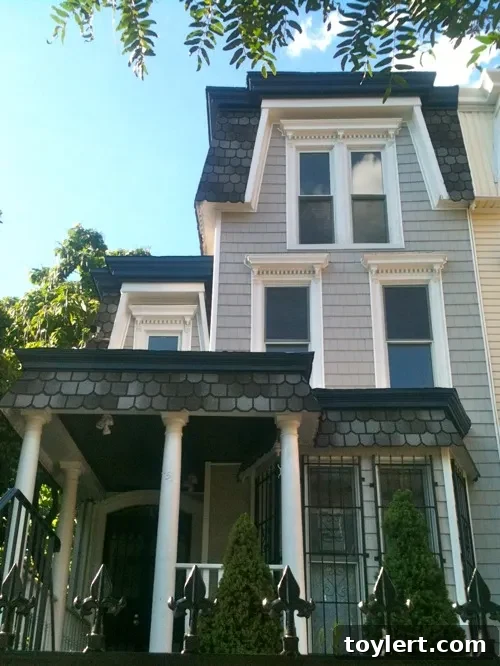
From Dilapidated to Desirable: The Remarkable Transformation of 451 Decatur Street, Bedford-Stuyvesant
In the vibrant and historically rich neighborhood of Bedford-Stuyvesant, Brooklyn, stories of architectural resurgence are common. Yet, few properties encapsulate the journey from near demolition to a coveted residence quite like 451 Decatur Street. This semi-detached gem, once an emblem of neglect, has undergone a breathtaking revitalization, illustrating the powerful impact of strategic investment and thoughtful restoration in preserving Brooklyn’s cherished urban fabric. Its narrative is one of dramatic contrast, blending historical intrigue with a modern success story, albeit tinged with a poignant local tragedy.
A Glimpse Into the Past: From Grandeur to Gradual Decline
When we first encountered 451 Decatur Street three years prior to its recent listing, the sight was disheartening. The once-proud facade, part of a distinctive pair of semi-detached homes, bore the undeniable marks of severe neglect. Trash lay piled high on its inviting porch, and the mansard roof, a hallmark of its architectural period, was crudely patched with plywood in the rear. These visible scars hinted at a long period of disrepair, raising questions about its journey from an admired home to its then-sorry state.
The house, like many in Bedford-Stuyvesant, holds layers of history within its walls. Intriguingly, its past is partially documented in the New York Public Library’s extensive collection of Brooklyn photographs by Dinanda Nooney. A photograph from 1978 captures the interior of the house, along with its then-owner, Evelyn F. Veres. This historical artifact paints a picture of a well-maintained home, reflecting a different era for both the property and the neighborhood. The stark contrast between Ms. Veres’ time and the dilapidated condition observed decades later serves as a powerful reminder of urban ebb and flow, highlighting how economic shifts, changes in ownership, and broader societal dynamics can impact individual properties over time. The decline of this particular residence wasn’t merely a structural issue; it represented a lost connection to its heritage.
The Developer’s Vision: Rescuing a Bedford-Stuyvesant Treasure
In 2011, the fate of 451 Decatur Street hung in the balance. When it changed hands, selling to Darger Homes LLC for a mere $175,500, many onlookers, including ourselves, considered it a prime candidate for demolition. Its advanced state of disrepair, coupled with the potential costs of renovation, made a tear-down seem like the most pragmatic, albeit unfortunate, outcome. Developers often face this critical juncture: to salvage or to rebuild anew. However, Darger Homes LLC, a developer renowned for its commitment to urban revitalization and an understanding of Bed-Stuy’s architectural significance, saw beyond the immediate decay. They envisioned a future for the property that respected its past while embracing modern living standards.
Instead of opting for demolition, Darger Homes embarked on an ambitious renovation project. Their work transformed the house from a neighborhood eyesore into a beacon of thoughtful restoration. The most immediate and striking change was the installation of a brand-new shingled roof, replacing the unsightly plywood patches and restoring the mansard’s original grandeur and functionality. Beyond the structural necessities, attention to aesthetic details significantly enhanced its curb appeal. A particularly charming touch, and one we heartily applaud, was the decision to paint the bead board porch ceiling a sophisticated navy blue. This choice not only adds a vibrant splash of color but also evokes a classic, maritime-inspired elegance that complements the historic architecture, making the porch a welcoming focal point once again.
Beyond the Facade: Imagining the Interior Transformation
While specific details about the interior renovations remain private, it is reasonable to infer the scope of work typically undertaken in such high-value flips within a discerning market like Bedford-Stuyvesant. Developers aiming for a significant return on investment usually focus on modernizing essential spaces while either preserving or artfully recreating period details. Prospective buyers in Bed-Stuy often seek a blend of historic charm with contemporary conveniences.
- Modern Kitchens: Expect state-of-the-art appliances, custom cabinetry, and high-end finishes, designed to be both functional and aesthetically pleasing for today’s homeowners.
- Luxurious Bathrooms: Renovated bathrooms likely feature contemporary fixtures, new tiling, and potentially spa-like amenities.
- Restored Period Details: Efforts might have been made to salvage original hardwood floors, intricate moldings, fireplaces, or staircases, or to replicate them where necessary, maintaining the home’s historic integrity.
- Updated Infrastructure: Crucial updates to plumbing, electrical systems, and HVAC ensure the home meets modern safety and efficiency standards, offering peace of mind to new owners.
- Open-Concept Flow: Where possible and appropriate for the architectural style, interior layouts might have been subtly adjusted to create a more open, inviting flow between living spaces, catering to contemporary lifestyle preferences.
This comprehensive approach to renovation would undoubtedly have been key to transforming a property that was once a tear-down candidate into a highly desirable listing.
A Resurgent Market and the Unveiling of Value
The real estate market in Bedford-Stuyvesant has experienced a dramatic upswing over the past decade, driven by its stunning architecture, vibrant community, and relative affordability compared to other Brooklyn neighborhoods. Properties that were once overlooked are now commanding premium prices, and 451 Decatur Street’s trajectory perfectly illustrates this trend. After its extensive renovation, Fillmore listed the property in March for $479,000. This impressive price jump from its 2011 purchase price of $175,500 underscores the significant value added through Darger Homes LLC’s investment and the robust demand in the Bed-Stuy market.
The transformation reflects not only the developer’s skill but also the inherent value of historic Brooklyn architecture. Buyers are increasingly drawn to homes with character and a story, especially when they have been meticulously updated to combine old-world charm with modern comfort. The listing price of nearly half a million dollars for a semi-detached home in this area, while reflective of market conditions, also speaks volumes about the quality of the renovation and the perceived desirability of the property.
A Poignant Coincidence: Urban Renewal and Community Challenges
Amidst the narrative of architectural triumph and rising property values, an unsettling truth about urban life emerged at 451 Decatur Street. We would be remiss if we failed to acknowledge the poignant and somber scene that unfolded directly outside the property. Near the curb, a cluster of candles and a makeshift shrine stood as a testament to a life tragically cut short. Guy Simpson, a 26-year-old man, was fatally shot in front of the building at 8:52 pm on Saturday, May 26th. This tragic event serves as a stark reminder that even as neighborhoods undergo revitalization and properties are meticulously restored, communities can still grapple with profound challenges.
The timing of this incident adds a layer of surreal coincidence to the property’s story. Around the very same time that the community grappled with the shock and sorrow of this violent act, 451 Decatur Street went into contract. This simultaneity highlights the complex tapestry of urban existence: the relentless march of real estate development and the enduring realities of community life, sometimes marked by unforeseen tragedies. It suggests a resilient market, perhaps, where the inherent value and appeal of a well-renovated property can, in some cases, transcend immediate local incidents.
Bedford-Stuyvesant: A Neighborhood of Enduring Appeal
The story of 451 Decatur Street is, in many ways, a microcosm of Bedford-Stuyvesant itself – a neighborhood rich in history, architectural beauty, and cultural significance, constantly evolving. Known for its grand brownstones, tree-lined streets, and strong community spirit, Bed-Stuy has transformed from being an often-overlooked area to one of Brooklyn’s most sought-after locales. Its appeal lies in its distinctive character, vibrant local businesses, lush community gardens, and excellent transportation links to Manhattan and other parts of Brooklyn.
Properties like 451 Decatur Street, which represent successful preservation and thoughtful modernization, play a crucial role in maintaining the architectural integrity and charm that define Bedford-Stuyvesant. They attract new residents who appreciate the blend of historic aesthetics with contemporary living, contributing to the neighborhood’s dynamic growth and sustained appeal. The journey of this particular house, from a state of abandonment to a testament of renewed beauty, stands as a symbol of the broader urban renewal efforts that continue to reshape and invigorate historic areas across Brooklyn.
Conclusion: A Happy Ending, With Nuance
The narrative of 451 Decatur Street ultimately unfolds as a story with a “surprise happy ending” for the property itself. What began as a forgotten dwelling, teetering on the brink of demolition, has been lovingly restored and repositioned in a flourishing real estate market. The meticulous efforts of Darger Homes LLC transformed a dilapidated structure into a highly desirable home, preserving a piece of Bedford-Stuyvesant’s architectural heritage. Its dramatic increase in value from $175,500 to $479,000 reflects not just the economic savvy of the developer but also the enduring appeal of quality craftsmanship and historic preservation in a prime Brooklyn location.
However, the narrative is not without its complexities. The tragic incident that occurred outside the property reminds us that urban revitalization is a multi-faceted process, often juxtaposed against ongoing social challenges. Yet, the rapid contract signing for the house, even in the shadow of this event, speaks volumes about the neighborhood’s resilience and the strong demand for its unique offerings. 451 Decatur Street stands as a powerful symbol of revival, embodying the spirit of a community that continues to honor its past while actively building its future.
Further Reading and Sources:
-
Building of the Day: 451-453 Decatur St. [Brownstoner] – For more historical context on this pair of buildings.
-
1978 Nooney Photograph of Veres [NYPL] – Delve into the fascinating past of the home with this historical photograph.
-
View 451 Decatur Street on GMAP – Explore the location on Google Maps.
-
Father of Three Shot to Death in Bedford-Stuyvesant [DNAinfo.com] – For details on the tragic event.