The Grand Legacy of Hotel Bossert: A Brooklyn Heights Icon Reimagined
Exploring the Enduring Allure of 98 Montague Street, Brooklyn
Brooklyn, one building at a time, reveals stories of grandeur, transformation, and enduring architectural beauty. Among its most storied structures, the Hotel Bossert stands as a magnificent testament to a bygone era of luxury and urban sophistication. Located at the prestigious address of 98 Montague Street in the heart of Brooklyn Heights, this historic edifice has witnessed over a century of New York City’s evolution. From its inception as a beacon of opulence to its periods of quiet use and its anticipated resurgence, the Hotel Bossert has captivated residents and visitors alike with its distinct Renaissance Revival architecture and panoramic views.
This comprehensive exploration delves into the rich history, distinctive architectural features, and significant cultural impact of the Hotel Bossert. We will uncover the vision behind its creation, its role in shaping the social fabric of Brooklyn Heights, and its journey through various ownerships, ultimately focusing on its enduring status as a cherished landmark and a symbol of Brooklyn’s architectural heritage.
A Vision of Elegance: The Birth of Hotel Bossert
The story of the Hotel Bossert begins in the early 20th century, a period of immense growth and prosperity for Brooklyn. Conceived by its namesake, lumber magnate Louis Bossert, the hotel was designed to be a pinnacle of luxury and comfort, catering to the borough’s burgeoning elite and transient visitors seeking refined accommodations. Construction commenced in 1908, culminating in its grand opening in 1909. The chosen location on Montague Street was no accident; it placed the hotel at the nexus of Brooklyn Heights, offering unparalleled access to the borough’s cultural institutions, business centers, and the breathtaking Brooklyn Promenade with its iconic views of the Manhattan skyline and the New York Harbor.
The architectural genius behind the Hotel Bossert was William H. Stone, a prominent architect known for his work on several notable buildings of the era. Stone embraced the Renaissance Revival style, imbuing the hotel with a sense of classical grandeur and timeless elegance. This style, characterized by its emphasis on symmetry, classical motifs, and robust construction, was a popular choice for prestigious urban structures of the period, reflecting a desire for stability and classical beauty amidst rapid modernization.
From the outset, the Hotel Bossert was more than just a place to stay; it was a destination. It quickly established itself as Brooklyn’s “Waldorf-Astoria,” a benchmark for luxury hospitality outside of Manhattan. Its elegant ballrooms, fine dining establishments, and well-appointed guest rooms attracted a discerning clientele, making it a vibrant social hub for Brooklyn’s high society.
Renaissance Revival Grandeur: Architectural Highlights
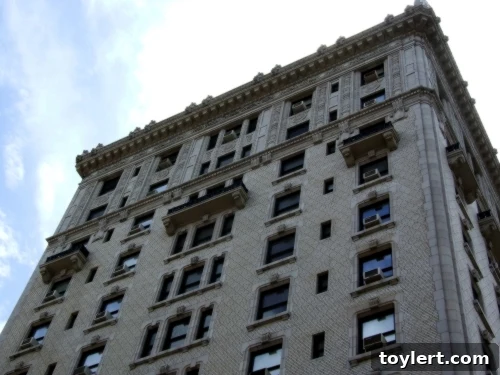
The Hotel Bossert’s facade is a striking example of the Renaissance Revival style, meticulously crafted to convey sophistication and permanence. The building stands proud with its fourteen stories, clad primarily in reddish-brown brick, meticulously detailed with terra cotta ornamentation. The lower floors feature rusticated masonry, providing a sturdy base, while the upper stories showcase a more refined decorative treatment, including intricate patterns, classical pilasters, and cornices that define its various levels.
Key architectural elements that define the Bossert’s aesthetic include:
- Ornate Entrance: The main entrance on Montague Street is a focal point, designed to impress with its elaborate carvings and elegant proportions, drawing guests into a world of luxury.
- Classical Detailing: Throughout the facade, one can observe classical motifs such as acanthus leaves, garlands, and heraldic shields, all executed in terra cotta, adding texture and visual interest.
- Distinctive Cornices: Multiple cornices break the building’s verticality, culminating in a grand crowning cornice that adds a dramatic finish to the roofline, characteristic of the Renaissance Revival style.
- Window Treatments: Windows are often grouped or framed with decorative elements, particularly on the prominent floors, enhancing the building’s rhythm and classical composition.
Internally, the hotel was equally impressive. The lobby, with its high ceilings, marble floors, and rich woodwork, exuded an atmosphere of refined elegance. Grand staircases, elaborate chandeliers, and sumptuous furnishings were integral to the Bossert’s luxurious appeal. The hotel boasted several magnificent public spaces, including elegant dining rooms, lounges, and most famously, the “Starlight Roof.”
The Starlight Roof: Brooklyn’s Premier View
No discussion of the Hotel Bossert would be complete without highlighting its legendary “Starlight Roof.” Perched atop the fourteen-story structure, this iconic ballroom and observation deck offered unparalleled, sweeping vistas of the Manhattan skyline, the Statue of Liberty, and the expansive New York Harbor. It quickly became the premier venue in Brooklyn for social events, elaborate weddings, and high-profile galas. Guests would dance under a ceiling that mimicked a starry night sky, all while enjoying the glittering lights of one of the world’s most famous cityscapes.
The Starlight Roof was not merely a banquet hall; it was a cultural phenomenon. It symbolized the height of Brooklyn’s social scene and played host to countless memorable occasions. Its reputation for spectacular views and elegant ambiance cemented the Hotel Bossert’s status as a jewel in Brooklyn’s crown, attracting celebrities, dignitaries, and prominent figures from across the city and beyond.
A Hub of Brooklyn Life: Famous Connections and Cultural Significance
During its golden age, the Hotel Bossert was more than just a hotel; it was an integral part of Brooklyn’s cultural and social landscape. Its proximity to Ebbets Field, the historic home of the Brooklyn Dodgers, made it a favored lodging for visiting baseball teams, particularly in the early to mid-20th century. The presence of legendary players and rival teams added to the hotel’s colorful history and local lore.
Beyond sports, the Bossert was a magnet for the performing arts, hosting musicians, actors, and other creative luminaries who found its luxurious accommodations and vibrant atmosphere appealing. Its ballrooms and event spaces were the backdrop for countless civic events, charity galas, and political gatherings, further solidifying its role as a central pillar of the Brooklyn Heights community.
The hotel’s design and amenities were tailored to provide an exceptional living experience, whether for short-term guests or long-term residents. Many prominent Brooklyn families chose to make the Bossert their home, enjoying the convenience of hotel services combined with the privacy and prestige of a private residence. This blend of hotel and residential functions was common in the era’s grand hotels, offering a lifestyle of ease and sophistication.
From Public Gem to Private Sanctuary: The Watchtower Era
As the decades progressed, the Hotel Bossert, like many grand hotels of its kind, faced evolving market demands and changing urban dynamics. In 1983, a significant chapter in its history began when the Watchtower Bible and Tract Society, the parent organization of Jehovah’s Witnesses, acquired the property. For over three decades, the Bossert transitioned from a public luxury hotel to a private residential facility, serving as a residence for members of the Watchtower’s worldwide headquarters, which was largely based in Brooklyn Heights.
During this period, the hotel was meticulously maintained, ensuring the preservation of its architectural integrity and internal systems. While it ceased to function as a commercial hotel open to the general public, its structural beauty and historic details were largely protected. This stewardship by the Watchtower Society ensured that the building remained in excellent condition, a crucial factor for its eventual return to the hospitality market.
The Watchtower’s departure from Brooklyn Heights in the 2010s marked another pivotal moment for many of the historic buildings they owned, including the Bossert. Their strategic decision to consolidate operations elsewhere paved the way for these iconic properties to re-enter the commercial market, sparking renewed interest and speculation about their future.
A New Dawn: The Bossert’s Modern Reimagining
In 2012, the Hotel Bossert was sold by the Watchtower Society to a joint venture between the Chetrit Group and Clipper Equity. This acquisition signaled an exciting new chapter for the landmark, with ambitious plans announced to restore its former glory and reopen it as a luxury boutique hotel. The vision was to meticulously renovate the property, blending its historic charm with contemporary amenities and services to meet the demands of today’s discerning travelers.
The proposed revitalization aimed to bring back the elegant public spaces, restore the grand ballrooms, and most importantly, revive the legendary Starlight Roof as a premier event space and observation deck, once again offering its iconic views to a new generation. This extensive restoration project promised to be a sensitive endeavor, respecting the building’s historical significance while integrating modern infrastructure and design elements necessary for a world-class hotel.
While the journey to full restoration and public reopening has involved various complexities and delays, the aspiration remains to reclaim the Hotel Bossert’s status as a quintessential Brooklyn destination. Its potential return as a luxury hotel would not only revitalize a cherished landmark but also significantly contribute to the vibrant tourism and hospitality landscape of Brooklyn Heights and New York City as a whole. It represents a bridge between Brooklyn’s rich past and its dynamic future, offering a unique blend of history, architecture, and unparalleled urban experience.
Brooklyn Heights Charm: The Bossert’s Enduring Appeal
The Hotel Bossert’s enduring appeal is inextricably linked to its prime location in Brooklyn Heights. This historic neighborhood, with its tree-lined streets, brownstone townhouses, and proximity to the Brooklyn Promenade, offers a picturesque backdrop that enhances the hotel’s grandeur. Guests and residents alike have always been drawn to the neighborhood’s tranquil atmosphere, its stunning waterfront parks, and its convenient access to Manhattan via multiple subway lines.
The Bossert is more than just a building; it is a vital thread in the intricate tapestry of Brooklyn’s architectural narrative. It stands as a powerful reminder of the borough’s illustrious past, its economic prosperity, and its ongoing evolution. Its story is one of transformation and resilience, reflecting the broader narrative of Brooklyn itself – a place that honors its history while constantly reinventing itself for the future.
As Brooklyn continues to flourish as a global cultural hub, historic landmarks like the Hotel Bossert play a crucial role in maintaining the borough’s unique identity. They offer a tangible connection to the past, providing context and character that modern developments often struggle to replicate. The hope for the Bossert is that it will once again open its doors to the public, inviting guests to experience its timeless elegance and breathtaking views, thereby ensuring its legacy continues for generations to come.