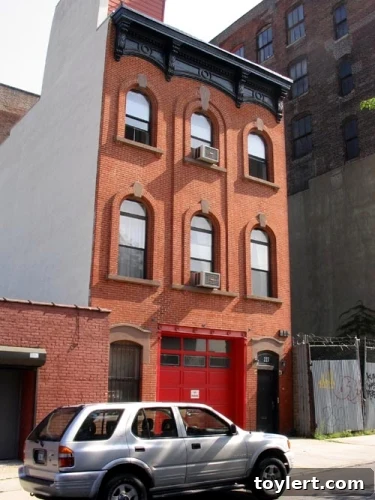
From Firehouse to Dream Home: Uncovering the Rich History of 227 Front Street, Brooklyn
In the vibrant tapestry of Brooklyn, where every brick seems to whisper tales of bygone eras, certain structures stand out not just for their architectural grandeur but for their remarkable journey through time. One such edifice is the building nestled at 227 Front Street, a magnificent example of adaptive reuse that encapsulates the spirit of Brooklyn itself – evolving, resilient, and always captivating. This isn’t just a building; it’s a living piece of history, transitioning from a bustling public service hub to a serene private residence, a testament to Brooklyn’s continuous reinvention, one building at a time.
A Pillar of the Community: The Firehouse Years
The story of 227 Front Street begins not with residential aspirations, but with the urgent clang of a fire bell and the brave hearts of local heroes. Originally known as “Constitution” Engine Co. 7, this structure first served as a vital part of Brooklyn’s Volunteer Fire Department. In an era before professional municipal services were fully established, volunteer firefighters were the lifeblood of urban protection, embodying communal responsibility and unwavering courage. These early firehouses were more than just stations for equipment; they were social centers, meeting points where neighbors gathered, shared news, and forged bonds that strengthened the fabric of their community.
The late 19th century brought significant changes to urban infrastructure. As Brooklyn grew in population and density, the need for a more organized and professional fire department became evident. Consequently, “Constitution” Engine Co. 7 transitioned into Engine 8 of the professional Brooklyn Fire Department (BFD). This shift marked a new chapter for the building, transforming it from a volunteer-run post to a fully integrated municipal station. Firefighters lived and worked within its walls, their lives intrinsically linked to the rhythms of the neighborhood. The building witnessed countless emergencies, celebrated victories against raging infernos, and mourned losses, all while standing sentinel over the lives and properties of Brooklynites.
During its tenure as a fire station, 227 Front Street would have been a hub of activity. Imagine the horse-drawn engines being rapidly hitched, the heavy brass pole glinting as firefighters slid down, and the camaraderie forged through shared dangers and dedicated service. The structure would have been designed for functionality: large arched doorways for engines, tall windows to allow natural light into living quarters, and robust construction to withstand the demands of a busy firehouse. Its very presence would have offered a sense of security and reassurance to the residents of what is now often referred to as the DUMBO or Vinegar Hill area, neighborhoods rich in industrial history and tight-knit communities.
Architectural Character: A Glimpse into Brooklyn’s Past
The architecture of 227 Front Street is a compelling narrative in itself, offering valuable insights into the design sensibilities and construction methods prevalent in 19th-century Brooklyn. Typically, firehouses of this era were built with a robust and utilitarian aesthetic, yet often incorporated decorative elements that reflected the civic pride of their respective communities. This building likely features durable materials such as red brick or brownstone, materials celebrated for their longevity and classic appeal, which remain characteristic of Brooklyn’s enduring architectural landscape.
Key architectural details would have included large, perhaps round-arched, apparatus bay doors on the ground floor, designed to accommodate horse-drawn wagons or early motorized fire engines. These openings are frequently repurposed in residential conversions, often transformed into expansive windows that flood interior spaces with light or integrated seamlessly into a modern facade while retaining their historic footprint. Upper floors might feature rows of tall, double-hung windows, possibly adorned with decorative lintels or sills, hinting at the living quarters and offices once housed within. The building’s massing and overall form would have been practical yet dignified, a reflection of its important civic function.
The facade of 227 Front Street, even in its converted state, speaks volumes about its original purpose. One can almost picture the gleaming fire engine parked behind those grand entranceways, ready for deployment. The choice of materials, the rhythm of its window placements, and the overall scale would have been carefully considered to convey a sense of strength and permanence. These architectural echoes are precisely what make such historic conversions so desirable; they offer a tangible connection to the past, imbuing modern living spaces with unparalleled character and a unique narrative that contemporary constructions simply cannot replicate. Preserving these architectural details during the conversion process was crucial in maintaining the building’s historical integrity and visual appeal within its historic Brooklyn streetscape.
The Art of Transformation: From Engine Bay to Elegant Residence
The journey from a bustling fire station to a sophisticated residential dwelling is a complex and often meticulous process, emblematic of the adaptive reuse movement that has revitalized countless historic structures across New York City. The conversion of 227 Front Street was undoubtedly an ambitious undertaking, requiring thoughtful design, sensitive restoration, and innovative engineering. The primary challenge in transforming a specialized structure like a firehouse lies in reconfiguring its internal layout, originally designed for specific civic functions, into functional and comfortable living spaces without sacrificing its inherent historical charm.
Architects and developers faced the task of preserving key architectural features – the robust brickwork, the grand entry arches, the high ceilings that once accommodated equipment or served as communal gathering spaces – while integrating modern amenities essential for contemporary living. This often involves careful structural modifications, updating plumbing and electrical systems, and creating new floor plans that maximize light and space. The spaciousness of former industrial or civic buildings often lends itself well to open-plan loft-style residences, which are highly sought after in urban environments like Brooklyn.
The successful residential conversion of 227 Front Street demonstrates a commitment to historic preservation combined with a vision for future utility. Original details such as exposed brick walls, timber beams, or even remnants of the fire pole’s opening might have been meticulously restored or creatively incorporated into the new design, serving as focal points that celebrate the building’s past. Large windows, once crucial for natural light in an active workspace, now illuminate stylish interiors, offering residents expansive views and a bright, airy atmosphere. This blend of old and new creates homes that are not only aesthetically unique but also deeply rooted in the historical narrative of their surroundings, appealing to those who cherish character and a sense of place.
227 Front Street Today: Modern Living with a Historic Soul
Today, 227 Front Street stands proudly as a residential building, a prime example of how Brooklyn honors its heritage while embracing progress. The former firehouse now offers unique homes that marry historical grandeur with contemporary comfort. Residents here enjoy more than just a place to live; they inhabit a piece of Brooklyn’s living history, surrounded by architectural details that tell a story spanning over a century.
The appeal of living in a converted historic building like 227 Front Street is multifaceted. These residences often boast features rarely found in newer constructions: soaring ceilings, robust original materials like exposed brick or heavy timber, and an inimitable sense of character. The large, perhaps arched, windows that once framed views for firefighters now offer panoramic glimpses of a rapidly evolving neighborhood, blending indoor and outdoor living in a unique way. Modern kitchens, luxurious bathrooms, and state-of-the-art climate control systems seamlessly integrate with the building’s historic shell, providing all the conveniences of urban living within an extraordinarily distinctive setting.
Living at 227 Front Street also means being part of a vibrant Brooklyn community. Situated in an area rich with artistic venues, independent boutiques, acclaimed restaurants, and waterfront parks, residents benefit from unparalleled access to the best that DUMBO and its surrounding neighborhoods have to offer. The proximity to transportation hubs ensures easy access to Manhattan and other parts of Brooklyn, making it an ideal location for those seeking both connectivity and a strong sense of local community. It’s an address that speaks of a refined aesthetic, an appreciation for history, and a desire for a living experience that transcends the ordinary.
Brooklyn’s Enduring Spirit: A Microcosm of Urban Renewal
The story of 227 Front Street is more than just the transformation of a single building; it is a microcosm of Brooklyn’s broader narrative of urban renewal and adaptive reuse. Throughout its diverse neighborhoods, Brooklyn is dotted with former industrial buildings, warehouses, schools, and civic structures that have been lovingly repurposed, breathing new life into old bones. This trend of converting historic structures into residential or mixed-use spaces has not only preserved invaluable architectural heritage but has also contributed significantly to the borough’s economic and cultural revitalization.
These conversions reflect a growing appreciation for sustainable development and a desire to retain the unique character of urban landscapes. Instead of demolishing and rebuilding, which can erase history and dilute local identity, adaptive reuse offers a path to evolve while remembering. Buildings like the former firehouse at 227 Front Street serve as powerful reminders of the past, linking successive generations to the stories and functions that once defined their neighborhoods. They represent a tangible connection to Brooklyn’s rich industrial, social, and civic history, allowing its residents to literally live within its legacy.
This commitment to preserving and repurposing structures underscores Brooklyn’s identity as a borough that cherishes its roots while continuously innovating. It highlights a community that values character, history, and the unique patina that only time can bestow upon a building. 227 Front Street stands as a proud emblem of this philosophy, showcasing how a building that once protected the community now enriches the lives of its residents, a beacon of Brooklyn’s enduring spirit of transformation and timeless appeal.