Coney Island Crossroads: Preserving a Community Garden Amidst Amphitheater Development
A critical discussion is poised to unfold tonight at Community Board 13, centering on a significant and potentially transformative project for Coney Island: former Brooklyn Borough President Marty Markowitz’s ambitious proposal for a $51,000,000 amphitheater and arts center. This grand vision is earmarked for the site of the historically significant Child’s Restaurant on Surf Avenue, a landmarked edifice steeped in Coney Island’s rich past. However, this development comes with a contentious trade-off, threatening the very existence of a cherished community garden that has served as a vibrant green oasis for local residents. Tonight’s meeting represents a pivotal moment for the future landscape and community spirit of this iconic Brooklyn neighborhood.
The Vision: A $51 Million Amphitheater and Arts Center
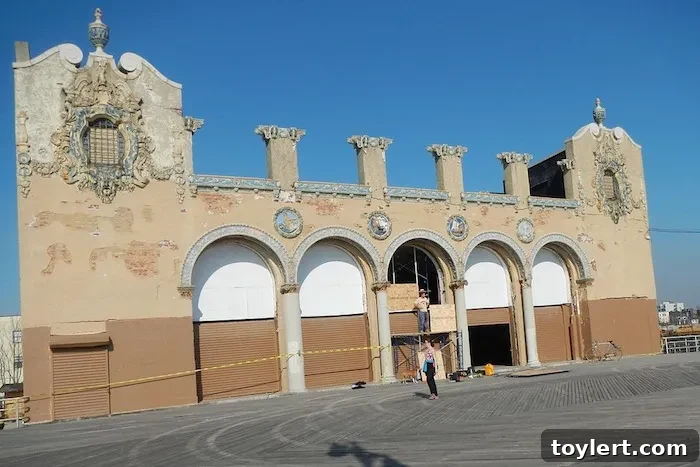
Marty Markowitz, a figure synonymous with Brooklyn’s revitalization efforts, has championed this multi-million dollar project with the aim of injecting new cultural and economic vitality into Coney Island. His proposal outlines a sprawling 5,000-seat amphitheater, complete with an integrated arts center, designed to host a diverse array of performances, concerts, and cultural events. The selected location, the former Child’s Restaurant, holds particular significance. Built in 1923, this Spanish Colonial Revival-style building is not only an architectural marvel but also a landmark that once housed one of the largest and most distinctive restaurants in Coney Island’s heyday. Its grand scale and unique design are envisioned to provide a spectacular backdrop for a modern performance venue, potentially drawing thousands of visitors and boosting the local economy through increased tourism and job creation. Proponents argue that such a facility is crucial for cementing Coney Island’s status as a premier entertainment destination, offering world-class attractions beyond its beloved boardwalk and amusement rides.
The concept behind this extensive arts complex is to create a year-round cultural hub, providing entertainment options that extend beyond the traditional summer season. This would, in theory, stabilize local employment and provide sustained economic benefits for the area, which has historically experienced fluctuations tied to seasonal tourism. The $51 million investment, a substantial sum, reflects a commitment to grand-scale development, aiming to restore some of the old glamour and excitement that characterized Coney Island in its golden age, but with a contemporary twist focused on performing arts and cultural enrichment. However, the path to realizing this vision is not without significant hurdles, particularly concerning the existing community assets that stand in its way.
The Heart of the Community: The Coney Island Boardwalk Garden
Directly adjacent to the former Child’s Restaurant lies the Coney Island Boardwalk Garden, a testament to community resilience and a vital green space for local residents. This garden is far more than just a patch of greenery; it represents a shared endeavor, a source of fresh produce, and a tranquil gathering place in a densely populated urban environment. It provides tangible benefits, from fostering local biodiversity to offering educational opportunities for children and adults alike. For many, it embodies the spirit of self-sufficiency and communal cooperation that thrives within Coney Island’s diverse population. The idea of this cherished space being bulldozed to make way for a large-scale development has ignited a passionate response from community organizers and local gardeners, who view its preservation as non-negotiable.
A Sanctuary Reborn: Post-Sandy Revival
The Coney Island Boardwalk Garden holds a particularly poignant significance, having only recently been painstakingly revived in the devastating wake of Hurricane Sandy. When the superstorm struck in 2012, Coney Island bore the brunt of its fury, suffering extensive damage from flooding and high winds. The community garden, like much of the neighborhood, was severely impacted, inundated with saltwater and debris. Yet, through an extraordinary display of community spirit and tireless volunteer efforts, local gardeners banded together to reclaim and restore their beloved green space. They worked tirelessly to clear debris, amend the saline-soaked soil, and replant, transforming a scene of destruction back into a vibrant, productive garden. This herculean effort cemented the garden’s status as a symbol of hope and recovery, a tangible representation of Coney Island’s ability to overcome adversity. The thought of this hard-won sanctuary being destroyed for a new development feels like a betrayal of that resilience and the immense effort invested by the community.
A Protected Legacy: The “Parks Open Space” Designation
The Coney Island Boardwalk Garden also benefits from a crucial historical designation that underscores its importance and vulnerability. In 2002, the garden, along with more than a dozen other community gardens across the city, was threatened with demolition. This widespread threat prompted a significant legal battle and ultimately led to a landmark settlement between the City of New York and the Attorney General’s office. Under the terms of this agreement, the Coney Island Boardwalk Garden was officially designated as permanent “Parks Open Space.” This designation provides a significant layer of legal protection, acknowledging the garden’s role as a vital public asset and aiming to safeguard it from future development pressures. The community now stands on this legal precedent, arguing that the proposed amphitheater project would directly contravene the spirit and letter of this hard-won agreement. This legal status is a powerful tool in the hands of advocates, highlighting that the garden’s preservation is not merely a matter of preference but a commitment enshrined in a formal settlement designed to protect invaluable public green spaces.
The Stakes: Why the Community Garden Matters
The debate over the Coney Island Boardwalk Garden versus the amphitheater project goes beyond a simple land-use dispute; it touches upon fundamental questions of urban planning, community rights, and the very identity of Coney Island. The garden offers a multitude of benefits that are often undervalued in large-scale development schemes:
- Environmental Benefits: As an urban green space, the garden contributes to biodiversity, improves air quality, absorbs stormwater, and mitigates the urban heat island effect. It serves as a small but crucial ecological lung within a highly developed area.
- Social Cohesion: The garden fosters a strong sense of community. It is a place where neighbors interact, share knowledge, and build relationships, bridging cultural and generational divides. It provides a safe, accessible outdoor space for relaxation, recreation, and communal activities.
- Food Security and Education: For many local residents, the garden provides access to fresh, healthy produce, which can be particularly important in areas with limited access to affordable healthy food options. It also serves as an outdoor classroom, educating residents, particularly children, about gardening, nutrition, and environmental stewardship.
- Historical Significance: Beyond its 2002 designation, the garden’s recent revival post-Sandy connects it directly to Coney Island’s narrative of resilience and recovery. It is a living monument to community strength in the face of adversity.
- Precedent Setting: The outcome of this debate could set a precedent for other community gardens and public green spaces across the city. Upholding the “Parks Open Space” designation is crucial for ensuring that similar agreements are honored in the future, protecting other vulnerable sites from similar threats.
Community Mobilization: A Call to Action
Recognizing the gravity of the situation, community organizers have launched an urgent appeal, urging Coney Island residents to attend tonight’s Community Board 13 meeting. Their message is clear: the voice of the community is paramount, and strong public testimony is essential to sway the decision-makers. Residents are encouraged to come forward and share their personal stories, articulating the profound impact the Coney Island Boardwalk Garden has on their lives, their families, and the wider neighborhood. Testifying in support of the garden means advocating for the preservation of vital green space, upholding legal protections for community assets, and ensuring that development in Coney Island serves the existing community’s needs, not just external economic interests. This democratic process offers a crucial opportunity for residents to directly influence a decision that will irrevocably shape their environment and quality of life.
The meeting is set to be a vibrant forum where various perspectives will be heard. While the economic benefits and cultural prestige of the amphitheater are undeniable, the community’s steadfast support for the garden highlights a deeper tension: how to balance large-scale development with the protection of existing, cherished local resources. The outcome of tonight’s discussion will not only determine the fate of a garden but also send a powerful message about which values take precedence in Coney Island’s ongoing transformation.
Balancing Progress and Preservation in Coney Island
Coney Island has been in a perpetual state of revitalization for decades, with various projects aiming to restore its former glory while adapting to modern demands. From new amusement rides and renovated boardwalks to residential developments, the neighborhood is constantly evolving. The proposed amphitheater by Marty Markowitz is another significant chapter in this ongoing saga. While such projects promise economic growth, increased tourism, and enhanced cultural offerings, they frequently spark debate over the delicate balance between progress and preservation. The challenge lies in fostering sustainable development that respects the area’s unique character and meets the needs of its long-standing residents, rather than merely prioritizing external investment.
This particular conflict exemplifies the broader complexities of urban development in historic and culturally rich areas. On one hand, there’s a strong argument for innovation and bringing new attractions that can benefit the entire city. On the other, there’s an equally compelling argument for protecting the existing social fabric, environmental assets, and the hard-won spaces that define a community’s identity. The decision regarding the Coney Island Boardwalk Garden could set a precedent for how future development projects in Brooklyn and beyond approach valuable public spaces and community-led initiatives.
The Future of Coney Island’s Public Spaces
The deliberations tonight are not just about a single garden or an amphitheater; they are about the very soul of Coney Island and how its public spaces will be stewarded. Will Coney Island prioritize large-scale entertainment venues that attract tourists, potentially at the expense of its green infrastructure and community gathering spots? Or can a harmonious path be found that allows for both cultural enrichment and the preservation of vital community assets? The stakes are incredibly high, as the decision will have lasting repercussions on the environmental health, social cohesion, and unique character of this iconic Brooklyn destination for generations to come. It’s a moment for thoughtful deliberation and for ensuring that the voices of those most directly affected are heard loud and clear.
Join the Discussion: Tonight’s Community Board Meeting
For those passionate about the future of Coney Island and the preservation of its invaluable community spaces, your presence and voice are crucial. The Community Board 13 meeting is scheduled for 7 p.m. tonight. It will be held at Coney Island Hospital, located in the 2nd-floor auditorium. This is a vital opportunity to stand with local gardeners and residents in their fight to protect the Coney Island Boardwalk Garden and to contribute to the ongoing conversation about sustainable and community-centric development in one of New York City’s most historic neighborhoods.
Sources:
- Marty Getting a Theater in Coney Island [Brownstoner]
- Coney Islanders Want to Protect Their Garden [The Brooklyn Paper]