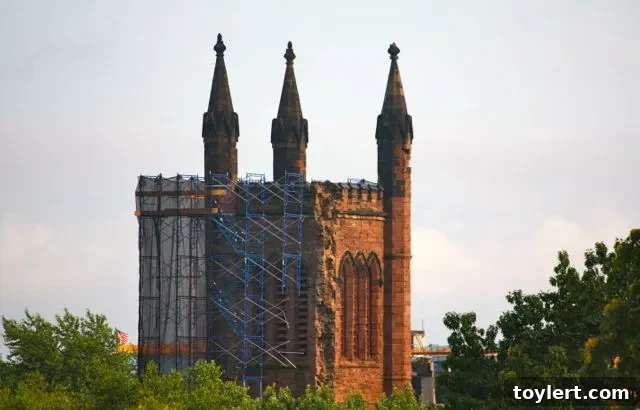
Tragedy Unfolds: The Unheeded Warnings and Scaffolding Collapse at Christ Church Cobble Hill
The quiet, historic streets of Cobble Hill, Brooklyn, were shattered by tragedy in July 2012 when a lightning strike at the venerable Christ Church on Clinton Street led to a catastrophic scaffolding collapse. This devastating incident claimed the life of a 61-year-old passerby, casting a somber shadow over the community and drawing critical attention to the structural integrity of a cherished local landmark. However, as subsequent investigations and revelations from internal church documents would show, this was not merely an unforeseeable act of nature, but the culmination of years of escalating deterioration, unheeded warnings, and a protracted, often frustrating, battle with an insurance company. The Wall Street Journal’s in-depth reporting brought to light a disturbing timeline of awareness regarding the church’s perilous condition, revealing that officials were well aware of the significant risks long before the fatal accident.
A Deadly Day in Cobble Hill: The July 2012 Accident
The summer afternoon of the 2012 incident began like any other, until a sudden and powerful lightning bolt struck the tower of Christ Church. The immediate aftermath was horrific: the force of the strike caused a section of scaffolding, erected for repair work or maintenance, to buckle and collapse. The falling debris tragically struck and killed a pedestrian, a 61-year-old individual, who was simply walking on the sidewalk below. This devastating event sent shockwaves through the tight-knit Cobble Hill neighborhood, prompting an immediate response from emergency services and a rapid investigation by city authorities. The collapse not only took a life but also raised urgent questions about the safety protocols in place, the structural health of historic buildings, and the responsibilities of property owners and contractors operating in bustling urban environments.
The immediate focus was on the human cost and the visible damage. The Department of Buildings (DOB) swiftly descended upon the scene, issuing violations and initiating a thorough review of the incident. It became apparent that critical safety measures, specifically the presence of a sidewalk shed where the fatality occurred, were lacking. This absence of adequate pedestrian protection immediately flagged a serious oversight, indicating that the tragedy might have been preventable had appropriate precautions been taken. The grief and shock reverberated through Brooklyn, turning a routine day into a grim reminder of the delicate balance between urban development, historic preservation, and public safety.
A History of Deterioration and Ignored Alarms
The 2012 tragedy, while sudden and devastating, was not an isolated event but rather the climax of a long-standing struggle. For years, Christ Church had been grappling with a deteriorating structure, exacerbated by previous natural disasters and the inherent challenges of maintaining an aging, historic edifice. The church’s internal records and correspondence, later unearthed by the Wall Street Journal, painted a vivid picture of a structure in distress and officials acutely aware of the mounting dangers.
Early Incidents: The 2000 Lightning Strike and 2009 Earthquake
The seeds of the 2012 disaster were arguably sown over a decade earlier. In the year 2000, Christ Church experienced another significant lightning strike, an event that caused considerable damage to its structure. While an initial insurance payout was received, the church contended that these funds were insufficient to cover the full extent of the necessary repairs. The issue persisted, and in 2009, another natural phenomenon, a minor earthquake, further compounded the structural vulnerabilities. These two events served as critical markers, highlighting the increasing fragility of the church’s tower and other architectural elements. Each incident chipped away at the building’s integrity, creating a cumulative effect that would eventually lead to a critical state. Despite these clear warning signs, comprehensive, long-term solutions remained elusive, largely due to financial and logistical hurdles that would become central to the unfolding crisis.
Mounting Concerns: “Very Hazardous” Conditions Flagged in 2009
Internal church meeting minutes from 2009 revealed an alarming level of awareness regarding the structure’s perilous state. Engineers consulting with the church explicitly characterized the building as “very hazardous,” a stark and unequivocal warning. These minutes detailed concerns about “continuous deterioration in the church and the tower,” emphasizing that “This has gone on too long. Plans must be put in place.” These records, now public, leave no doubt that church officials were fully apprised of the grave risks. The language used was not merely cautionary; it was urgent, indicating an understanding that the structural problems were not only progressive but also posed an immediate threat. The repeated warnings underscored a growing sense of desperation among those responsible for the building’s upkeep, highlighting the urgent need for intervention that, tragically, did not materialize in time.
The Protracted Struggle with Insurance
Following the 2009 assessments, Christ Church intensified its efforts to secure additional funding from its insurance provider, the Church Insurance Agency Corp. A letter sent in 2009 specifically outlined severe problems within the tower’s northwest pinnacle column, directly attributing this damage to the 2000 lightning incident. The church, recognizing the extensive repairs required, sought a substantial sum, reportedly as much as $800,000, to address the cumulative damage. However, the insurance company initially agreed only to revisit its initial $120,000 payout from 2000, a figure that the church considered grossly inadequate.
Ultimately, the Church Insurance Agency Corp. concluded that the church’s severely deteriorated condition was not primarily due to the lightning damage, but rather a result of long-term neglect. Based on this assessment, they refused to disburse any further funds. This denial proved to be a critical turning point. Without the necessary financial support, the urgent repairs identified by engineers and church officials could not be undertaken. This stalemate left Christ Church in an untenable position: aware of a “very hazardous” structure, but without the means to rectify the danger. The problems persisted, growing steadily worse, setting the stage for the tragic events of 2012.
Consequences of Unheeded Warnings and Regulatory Scrutiny
The decision by the insurance company to deny further claims based on alleged neglect had profound implications, effectively leaving the church without the financial resources needed to address critical structural weaknesses. This financial constraint meant that the “very hazardous” conditions continued unchecked, transforming a looming threat into an eventual catastrophe. The inability to fund necessary repairs directly led to the continued deterioration of the building, culminating in the July 2012 scaffolding collapse.
Why Repairs Were Not Made
The insurance dispute played a pivotal role in the failure to make timely and comprehensive repairs. Faced with a substantial repair bill and denied additional insurance coverage, the church found itself in an impossible bind. Historic buildings, particularly those with significant structural issues, require immense financial resources for restoration and maintenance. Without the substantial funds sought from the insurance company, or alternative funding streams, the church was effectively paralyzed. This situation underscores a broader challenge faced by many historic properties: balancing the imperative of preservation and safety with the practicalities of funding and insurance coverage. The inability to bridge this financial gap ultimately cost a life, highlighting the severe consequences when critical warnings are issued but the means to act on them are absent.
Regulatory Scrutiny: Department of Buildings Violations
In the immediate aftermath of the tragic 2012 accident, the Department of Buildings launched a rigorous investigation. Their findings quickly led to the issuance of multiple violations against Christ Church, specifically pertaining to the scaffolding and sidewalk sheds. The most damning revelation was the critical absence of a sidewalk shed at the precise location where the pedestrian was killed. Sidewalk sheds are fundamental safety installations in construction zones within urban areas, designed to protect pedestrians from falling debris and construction hazards. Their absence directly contributed to the tragic fatality, making it a clear breach of safety regulations.
These DOB violations underscored a broader systemic failure to ensure public safety around a deteriorating structure undergoing some form of work. They served as a stark reminder of the non-negotiable importance of strict adherence to building codes and safety protocols, especially in densely populated neighborhoods like Cobble Hill. The regulatory findings reinforced the narrative that the incident was not merely an unavoidable act of God, but rather a preventable tragedy exacerbated by known structural issues and inadequate safety measures on the ground.
Broader Implications and Lessons Learned
The tragedy at Christ Church extends beyond the immediate incident, offering crucial lessons for urban planning, historic preservation, and public safety across New York City and beyond.
Enhancing Safety Standards in Urban Environments
The Cobble Hill incident brought into sharp focus the absolute necessity of stringent safety standards in construction and maintenance projects, particularly those involving historic buildings in vibrant, pedestrian-heavy areas. The tragic role played by the absence of a sidewalk shed highlighted a critical lapse in pedestrian protection. This event served as a catalyst for renewed emphasis on compliance with DOB regulations, prompting closer scrutiny of scaffolding installations, site safety plans, and contractor accountability. For communities like Cobble Hill, where historic structures stand alongside bustling sidewalks, the incident underscored the need for continuous vigilance and proactive measures to safeguard residents and visitors.
Challenges in Historic Building Preservation
Christ Church represents countless historic structures worldwide that face immense challenges in maintaining structural integrity against the ravages of time and natural events. The dispute with the insurance company over “neglect” versus “damage” illustrates a common dilemma: distinguishing between pre-existing conditions and new damage, and securing adequate funding for long-term preservation. This case highlights the unique financial and logistical burdens associated with preserving architectural heritage, often requiring specialized expertise and significant investment. It calls for more robust support systems, including grants, favorable insurance policies, and clearer guidelines, to help custodians of these invaluable landmarks ensure their safety and longevity without compromising public well-being.
The Imperative of Transparency and Accountability
The Wall Street Journal’s investigation, by unearthing internal documents, demonstrated the critical role of transparency. The revelation that church officials were aware of the “very hazardous” conditions for years before the accident raises significant questions about accountability. It underscores the moral and legal obligation of property owners and managing bodies to act decisively on safety warnings, and to communicate risks effectively to relevant authorities and the public where necessary. This case serves as a poignant reminder that documented awareness of danger demands swift and responsible action, particularly when human lives are at stake.
Conclusion: A Call for Vigilance and Responsibility
The tragic scaffolding collapse at Christ Church in Cobble Hill stands as a powerful and somber reminder of the critical importance of timely maintenance, robust insurance frameworks, and an unwavering commitment to public safety. It is a story steeped in a complex interplay of natural disaster, structural deterioration, financial disputes, and ultimately, a devastating loss of life. The Wall Street Journal’s revelations illuminated the profound consequences of unheeded warnings and the dire implications when structural vulnerabilities are allowed to fester. As communities continue to cherish and preserve their historic landmarks, the Christ Church tragedy serves as a poignant call to action for all stakeholders – church officials, insurance providers, regulatory bodies, and construction companies – to prioritize safety, foster transparency, and ensure accountability, preventing future tragedies and upholding the sanctity of both our built heritage and human lives.
Further Reading:
Christ Church Considered ‘Hazardous’ Before a Death [WSJ]
Photo from the Brooklyn Bugle