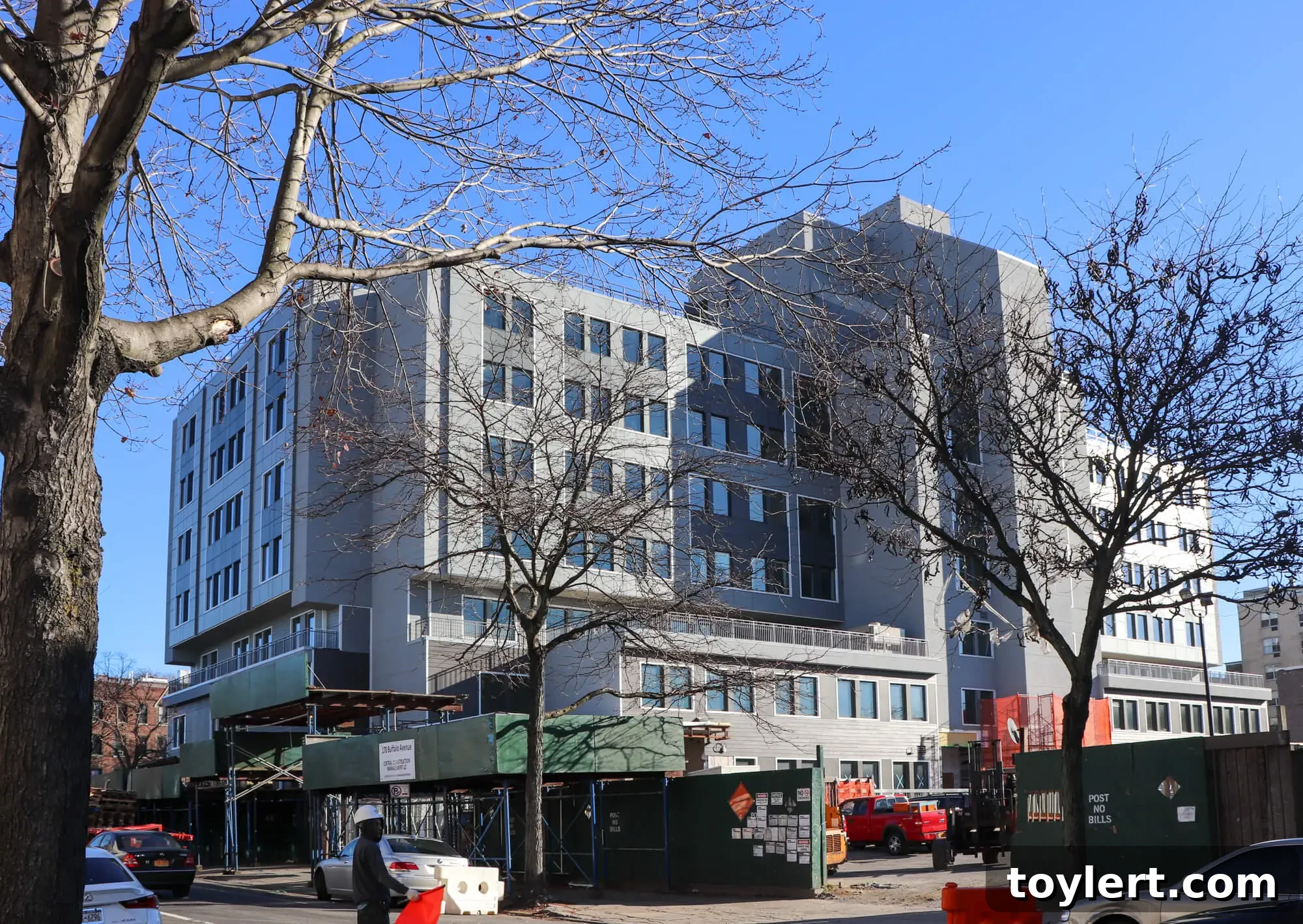
A significant urban renewal project, years in the making, is finally reaching its culmination in the vibrant Crown Heights neighborhood of Brooklyn. The ambitious conversion of the long-shuttered St. Mary’s Hospital into a state-of-the-art nursing home facility is nearing completion, poised to revitalize a historic structure and address a critical need for senior care in the community. This transformation represents not just a new chapter for the building at 170 Buffalo Avenue but a vital investment in the health and well-being of Brooklyn’s elderly population.
The iconic building at 170 Buffalo Avenue has a rich history deeply intertwined with the fabric of Crown Heights. Originally known as St. Mary’s, it served as a Roman Catholic hospital for decades, providing essential healthcare services to countless Brooklynites. Its imposing structure and long-standing presence made it a landmark within the community. However, like many institutions facing evolving healthcare landscapes and financial pressures, St. Mary’s Hospital succumbed to bankruptcy, closing its doors in 2005. For nearly two decades, the sprawling facility remained vacant, a stark reminder of its past glory and a symbol of unrealized potential in the heart of a bustling neighborhood.
Strategically located, the former hospital site holds unique significance. It stands directly across the street from the renowned Weeksville Heritage Center, a vital cultural institution dedicated to preserving the history of one of America’s first free African American communities. This proximity underscores the deep historical and cultural context of the development. The rejuvenation of 170 Buffalo Avenue, therefore, goes beyond mere construction; it is an act of breathing new life into a neglected landmark within a historically rich and culturally diverse area. The project promises to integrate seamlessly into the ongoing revitalization of Crown Heights, contributing positively to its economic and social landscape.
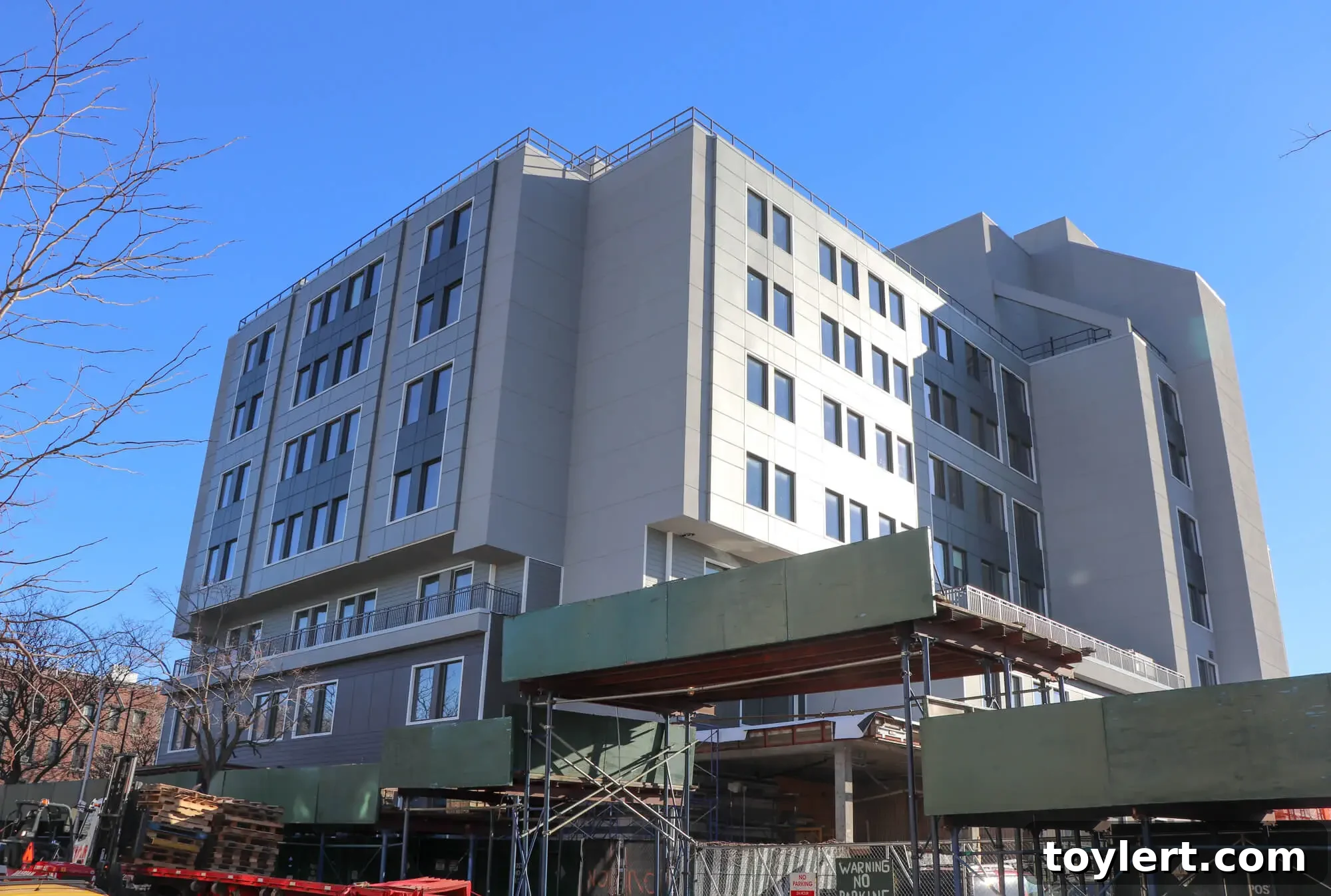
A New Vision for Senior Living in Crown Heights
The adaptive reuse of St. Mary’s Hospital into a modern nursing home facility is a testament to innovative urban planning and a clear response to pressing demographic shifts. New York City, and Brooklyn in particular, faces a growing demand for high-quality senior care and long-term living options. As the population ages, accessible and compassionate facilities become increasingly crucial. This development at 170 Buffalo Avenue aims to fill that void, offering a comprehensive range of services designed to meet the diverse needs of its future residents.
The vision behind this ambitious project was to transform a dormant institutional building into a vibrant, supportive environment for seniors. The developers recognized the inherent structural integrity and grand scale of the original hospital, seeing it not as a derelict property but as a canvas for a modern healthcare solution. The conversion process has involved extensive architectural and engineering efforts to adapt the building’s layout for contemporary nursing home standards, ensuring compliance with all health and safety regulations while maximizing comfort and functionality for residents and staff.
Preserving History, Embracing Modernity
One of the project’s key challenges and successes has been the careful balance between historic preservation and the integration of cutting-edge facilities. While the exterior façade and many of the original architectural details have been meticulously maintained, respecting the building’s historical character, the interiors have undergone a complete overhaul. This thoughtful approach ensures that the new nursing home retains a sense of its past while providing residents with all the amenities and technologies expected in a 21st-century senior care center.
The interior design focuses on creating a serene, comfortable, and therapeutic environment. Spacious private and semi-private rooms, communal dining areas, rehabilitation gyms, activity rooms, and dedicated spaces for specialized care, such as memory support, are integral to the new layout. Modern infrastructure, including advanced medical equipment, sophisticated communication systems, and energy-efficient building technologies, has been installed throughout. The aim is to create a nurturing home that supports both physical recovery and mental well-being, fostering a strong sense of community among its residents.
Addressing Brooklyn’s Healthcare Needs
The closure of St. Mary’s Hospital in 2005 left a significant gap in the local healthcare infrastructure. Its transformation into a nursing home helps to partially address this deficit by reintroducing a large-scale healthcare facility to the area. This new facility will provide essential long-term care, short-term rehabilitation services, and potentially specialized programs for individuals recovering from illness, injury, or requiring assistance with daily living activities. For families in Crown Heights and surrounding Brooklyn neighborhoods, this means a much-needed local option for their aging loved ones, reducing the burden of travel and allowing for more frequent family visits.
Beyond direct patient care, the project brings substantial economic benefits to Crown Heights. The construction phase alone created numerous jobs for local tradespeople and contractors. Upon completion, the nursing home will generate a considerable number of permanent employment opportunities across various sectors, including skilled nursing, therapy, social work, dietary services, administrative support, and environmental services. This influx of jobs will contribute to the local economy, providing stable employment for community members and attracting new professionals to the area.
Community Integration and Impact
The development at 170 Buffalo Avenue is poised to become an integral part of the Crown Heights community once again. Its location directly opposite the Weeksville Heritage Center offers unique opportunities for intergenerational programs and community engagement. Envisioned as more than just a care facility, the nursing home aims to foster connections with local schools, cultural organizations, and volunteer groups, enriching the lives of its residents while contributing to the vibrancy of the neighborhood.
The revitalization of this once-vacant property also has a positive impact on the aesthetic and social fabric of Buffalo Avenue. Replacing a dormant, imposing structure with a well-maintained, active healthcare facility enhances the streetscape and contributes to the overall safety and appeal of the area. It signals continued investment and belief in the future of Crown Heights as a thriving, diverse, and supportive community for all its residents, from young families to cherished seniors.
The Future of Senior Care in Brooklyn
The completion of the 170 Buffalo Avenue nursing home project stands as a beacon for the future of senior care in Brooklyn. It exemplifies a growing trend towards adaptive reuse in urban development, demonstrating how historic buildings can be reimagined to serve contemporary needs. By converting a former hospital into a modern senior living facility, developers are not only preserving architectural heritage but also strategically addressing the evolving demands of an aging population.
This facility will play a critical role in the continuum of care for Brooklyn’s seniors, offering a secure, compassionate, and professional environment. It reflects a commitment to providing high-quality healthcare services that prioritize resident dignity, independence, and overall well-being. As the final touches are applied and preparations for opening commence, the anticipation within the Crown Heights community is palpable. This project is more than just a building conversion; it is a promise delivered, an investment in the community’s future, and a new lease on life for a cherished landmark, ready to serve a new generation of Brooklynites with care, comfort, and respect.