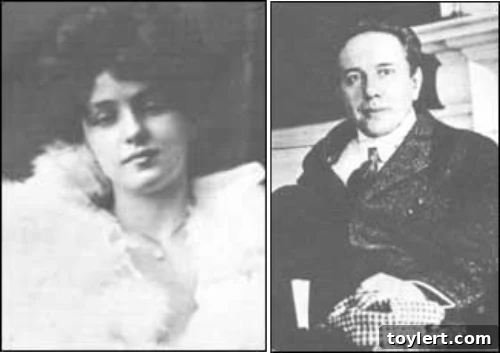
The Gilded Age, a period often romanticized for its opulence and rapid progress, was also an era ripe with dramatic scandals that captivated public imagination. Among these, few can rival the sensational murder of Stanford White, a titan of American architecture, at the hands of millionaire Harry Kendall Thaw. This isn’t merely a tale of a love triangle; it’s a profound narrative touching upon class, power, passion, and the seismic shifts in societal norms at the dawn of the 20th century. The sheer brazenness of the act, committed in full view of a stunned audience, ensured its place in the annals of true crime and architectural history.
The Night the Gilded Age Roared: Murder at Madison Square Garden
The evening of June 25, 1906, was supposed to be a night of entertainment and sophistication at the rooftop theater of Madison Square Garden. Ironically, this grand venue was one of the many masterpieces designed by Stanford White himself. However, the performance was violently interrupted by a real-life drama far more shocking than anything on stage. Harry Kendall Thaw, a wealthy scion from Pittsburgh, Pennsylvania, emerged from the crowd and, with chilling deliberation, fired three shots into Stanford White’s face. The esteemed architect crumpled to the floor, dead. There was no ambiguity; the crime was committed openly, undeniably, before hundreds of witnesses.
The immediate aftermath was chaos and disbelief. The iconic setting only amplified the tragedy, turning a private vendetta into a public spectacle. White, a man whose life was intertwined with the very fabric of New York’s burgeoning architectural grandeur, lay dead in a building of his own creation. This heinous act was immediately recognized as a “crime of passion and opportunity,” but its roots ran far deeper than a momentary outburst. It was the culmination of years of simmering resentment and a deeply personal grievance that Thaw felt had justified such an extreme measure.
Fate played its cruel hand that night. Stanford White, recognized as one of the nation’s greatest architectural minds, had initially planned to be in Philadelphia on business. However, a last-minute change of plans, prompted by his son Lawrence’s unexpected visit to New York, kept him in the city. For the remainder of his life, Lawrence White carried the heavy burden of guilt, believing his presence had unwittingly sealed his father’s tragic fate. Yet, as historians and observers would later attest, Harry Thaw’s obsession with White was so profound and consuming that it was merely a matter of time and place. If not that night, Thaw undoubtedly would have found another moment, another opportunity, to exact his deadly revenge.
Evelyn Nesbitt: The Beauty, the Scandal, and the Seduction
At the heart of this dramatic narrative lay Evelyn Nesbitt, a woman whose beauty captivated artists, photographers, and ultimately, two powerful men. Dubbed “the Girl in the Red Velvet Swing,” Nesbitt was a celebrated model and chorus girl, a quintessential ‘Gibson Girl’ who embodied the aesthetic ideals of her era. She was young, barely out of childhood, when her path crossed with Stanford White. White, a man known not just for his architectural prowess but also for his extravagant lifestyle and questionable personal predilections, became enamored with the sixteen-year-old Nesbitt. His subsequent seduction and “deflowering” of the underage girl would become the central, explosive revelation of the ensuing trials, painting White in a far more complex and morally ambiguous light.
Evelyn’s relationship with White was a clandestine affair, marked by lavish gifts, secret dinners, and what she later described as a “swing” in White’s apartment that would give her the infamous nickname. While White’s admirers saw him as a visionary, this darker side of his character revealed a man who exploited his position and wealth. To Harry Thaw, who later married Evelyn Nesbitt, this past transgression was an unforgivable sin, a profound violation that festered into an all-consuming rage. Thaw, prone to fits of jealousy and deeply insecure, became convinced that White had “ruined” his wife, and therefore, deserved the ultimate punishment. The tabloids of the day, eager for sensationalism, branded this convoluted entanglement a “love triangle,” a dramatic simplification that belied the complex power dynamics and tragic consequences. It was a narrative that would spiral into not just death, but widespread ruination for all involved.
Stanford White: Architectural Visionary of the Gilded Age
Beyond the personal scandal and tragic end, Stanford White remains an indelible figure in the history of American architecture. As a principal partner in McKim, Mead & White, America’s most famous and arguably most accomplished architectural firm of its time, White was a force of nature. Together with Charles Follen McKim and William Rutherford Mead, he forged a practice that defined the look and feel of the Gilded Age, shaping the urban landscape of major American cities with a sophisticated blend of Beaux-Arts classicism and Italian Renaissance influences.
White’s personal touch was evident in many of the firm’s most iconic projects. His designs imbued public and private buildings with a sense of grandeur, elegance, and timeless beauty. Among their monumental achievements stands the original Pennsylvania Station in Manhattan – a colossal, Roman-inspired edifice that served as a majestic gateway to New York City for over half a century. Its eventual demolition in the 1960s is still considered one of the greatest architectural losses in American history, a testament to White’s profound impact and foresight in urban design.
Other notable contributions include the majestic Brooklyn Museum, a testament to their commitment to public institutions and cultural enrichment. The Farley Post Office, directly across from the site of the former Penn Station, shares a similar grand aesthetic, reflecting the firm’s ability to create imposing yet graceful civic structures. White’s creative genius also gave life to the second Madison Square Garden, an opulent pleasure palace that became a social hub, ironically the very stage for his own demise. And the soaring Municipal Building, with its distinctive arch and classical details, still dominates the lower Manhattan skyline, a powerful symbol of civic pride and architectural ambition.
White’s work was characterized by an incredible attention to detail, a masterful use of materials, and an innate understanding of space and proportion. He was not just an architect but also a decorator, a collector, and a patron of the arts, blurring the lines between these disciplines to create holistic environments. His influence extended beyond mere blueprints; he shaped the aesthetic sensibilities of an entire generation, leaving an architectural legacy that continues to inspire and awe, even as the details of his scandalous personal life sometimes overshadow his professional brilliance. His structures are not merely buildings; they are enduring monuments to an era of unparalleled wealth, ambition, and artistic expression, forming the bedrock of American urban identity.
Harry Kendall Thaw: A Fortune, a Temper, and a Murderous Obsession
Harry Kendall Thaw was a figure emblematic of the excesses of the Gilded Age’s ultra-rich, albeit with a volatile and dangerous temperament. Born into immense wealth—his family’s fortune derived from coal and railroads—Thaw was accustomed to a life without limits, fueled by privilege and unchecked impulses. He was notoriously unstable, prone to violent outbursts, erratic behavior, and had a known history of drug abuse. His marriage to Evelyn Nesbitt was itself a tempestuous affair, driven by his possessive jealousy and a deep-seated desire to “rescue” her from her past, particularly from the shadow of Stanford White.
Thaw’s obsession with White was not merely about Evelyn; it was a fixation that bordered on paranoia, a belief that White represented everything corrupt and morally bankrupt about the older generation of wealthy men who preyed on the young and vulnerable. He saw himself as Evelyn’s avenger, a righteous crusader against a libertine who had defiled his wife. This deeply flawed self-perception, combined with his inherited wealth that allowed him to believe he was above reproach, ultimately culminated in the fateful decision to take White’s life. His actions, while framed as a “crime of passion,” were also the calculated outcome of a mind consumed by vengeance.
The Trials That Rocked a Nation: Justice, Spectacle, and Society
The murder of Stanford White immediately plunged the nation into a legal and social maelstrom. The ensuing trials of Harry Kendall Thaw became one of the most sensational events of the early 20th century, dominating newspaper headlines and captivating the public with its dramatic revelations and societal implications. Thaw’s defense team, leveraging his vast family fortune, mounted an elaborate campaign based on temporary insanity, arguing that Thaw suffered from “dementia Americana,” a condition allegedly caused by White’s “ruination” of Evelyn. Evelyn Nesbitt herself was forced to testify, her agonizing recount of her relationship with White becoming a focal point of the proceedings, simultaneously evoking public sympathy and outrage.
The first trial ended in a hung jury, unable to reconcile the conflicting narratives of a righteous avenger, a victimized beauty, and a predatory architect. The second trial, however, resulted in Thaw’s acquittal on grounds of insanity, leading to his confinement in an asylum for the criminally insane. This verdict sparked widespread debate about justice, the influence of wealth in the legal system, and the double standards of morality prevalent in society. While Thaw eventually gained release years later, his life remained a troubled one, plagued by further legal troubles and eccentricities. The trials exposed the dark underbelly of the Gilded Age, peeling back the veneer of respectability to reveal a world of hidden desires, moral complexities, and profound inequalities. It was a societal reckoning, played out in the courtroom, that continues to fascinate and inform discussions about American history.
A Legacy Forged in Scandal and Stone
The story of Stanford White, Evelyn Nesbitt, and Harry Kendall Thaw transcends a simple historical event; it became a cultural touchstone. It highlighted the stark contrasts of an era: breathtaking architectural innovation against personal moral decay, immense wealth against profound personal tragedy. White’s architectural legacy, though forever shadowed by his personal failings, endures in the magnificent structures that grace American cities. His vision undeniably shaped the aesthetic landscape of the Gilded Age, and many of his buildings stand as monuments to enduring classical beauty.
Evelyn Nesbitt, once the object of desire and then the central figure in a notorious scandal, lived a long but often difficult life, forever linked to the tragedy. Harry Thaw, the instrument of White’s demise, represents the destructive power of obsession and unchecked privilege. Together, their intertwined lives form a poignant and cautionary tale about the perils of passion, the corrupting influence of power, and the enduring human fascination with stories that blur the lines between genius and madness, love and hate, creation and destruction. The murder at Madison Square Garden remains a vivid reminder of how personal dramas can intersect with public life, leaving an indelible mark on history and popular culture.
% | % | % | % | % | % | % | % Single Page