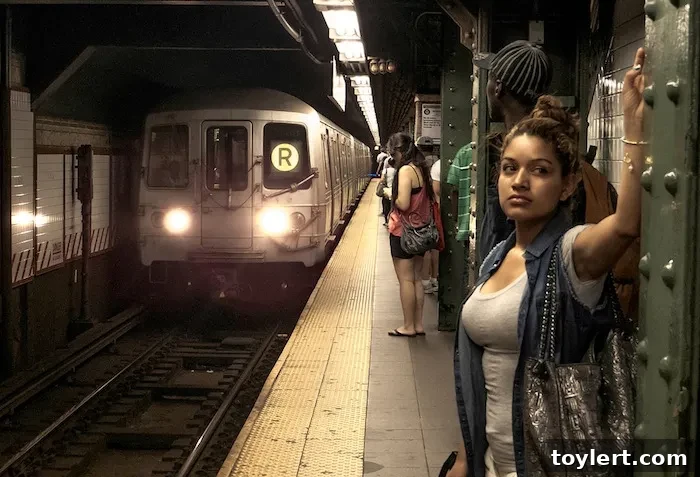
The R Train Returns: Montague Tube Reopens, Connecting Brooklyn and Manhattan After Sandy Repairs
After a grueling 13-month hiatus that profoundly impacted the daily commutes of thousands, the R train has finally resumed its crucial service between Brooklyn and Manhattan. This momentous restoration, following extensive repairs necessitated by the devastation of Hurricane Sandy, marked a significant milestone in New York City’s ongoing recovery efforts. The Montague Tube, a vital underwater conduit for the subway system, was submerged and severely damaged during the superstorm in October 2012, leading to an unprecedented shutdown of a key transit artery.
Commuters who once relied on the direct R line connection between the boroughs were forced to seek alternative, often circuitous, routes. Now, with the successful completion of an arduous repair project, the familiar rumble of the R train once again echoes through the Montague Tube, restoring a sense of normalcy and efficiency to the lives of countless New Yorkers.
A Long-Awaited Return: The R Train’s Resumption of Full Service
The Metropolitan Transportation Authority (MTA) officially announced the reopening of the Montague Tube, allowing the R train to once again connect Bay Ridge, Brooklyn, directly with Manhattan’s Financial District and beyond. This eagerly anticipated event brought an end to a period of considerable inconvenience for riders. Since the tunnel’s closure in August 2013, R train service had been segmented: operating only between Bay Ridge and Court Street in Brooklyn, and separately between Whitehall Street in Manhattan and Forest Hills-71st Avenue in Queens. The absence of a direct link through the Montague Tube created a travel chasm, forcing transfers and extended journey times for those crossing the East River.
The repair project, a massive undertaking by any measure, involved a complete overhaul of critical infrastructure that had been ravaged by corrosive saltwater. The successful completion of these repairs is a testament to the dedication of MTA workers and engineers, and a crucial step in fortifying the city’s transit network against future environmental challenges.
Hurricane Sandy’s Devastating Blow to NYC Transit
Hurricane Sandy, which struck the New York metropolitan area in October 2012, was an unprecedented natural disaster that left a trail of destruction across the region. Its impact on the city’s subway system was particularly severe, with more than a dozen subway tunnels experiencing significant flooding. The Montague Tube, which runs deep beneath the East River, was among the hardest hit. Millions of gallons of saltwater surged into the tunnel, rising to the ceiling in some sections and creating a catastrophic environment for the sensitive electrical, signal, and communication systems.
The immediate aftermath saw an urgent need to pump out the corrosive water, but the true extent of the damage became clear only after the floodwaters receded. Saltwater, unlike fresh water, is highly corrosive and can swiftly degrade metal components, wiring, and sensitive electronic equipment, rendering them inoperable. The challenge facing the MTA was not just to repair but to essentially rebuild the tunnel’s operational core, ensuring its structural integrity and the safety of its future passengers.
The Montague Tube: A Critical Link Under Threat
The Montague Tube is more than just a passage; it’s a vital artery in the New York City subway network, serving as a primary link for residents of Bay Ridge, Sunset Park, and other Brooklyn neighborhoods to Manhattan’s financial hub and beyond. Its closure did not just affect R train riders; it created ripple effects across the entire system. Other lines, such as the N and D trains, experienced increased crowding as commuters sought alternative ways to cross the river. The lack of a direct R train connection also impacted local businesses in both Brooklyn and Manhattan, as foot traffic patterns shifted and accessibility became more challenging.
The decision to undertake such extensive repairs, rather than a quick fix, underscored the MTA’s commitment to long-term resilience and safety. While disruptive, the comprehensive nature of the project aimed to not only restore service but also to make the tunnel more robust against future extreme weather events, acknowledging the changing climate landscape.
The Epic Undertaking: 13 Months of Intensive Repairs
The 13-month repair effort within the Montague Tube was an extraordinary feat of engineering and project management. Working deep underground, often in challenging conditions, crews faced the formidable task of replacing nearly every operational component within the 3,900-foot tunnel. The project’s complexity can be broken down into several key areas:
- Replacing Core Infrastructure: Miles of damaged tracks were removed and replaced. The wooden ties supporting the tracks, which had absorbed saltwater and begun to rot, also required complete replacement. This foundational work was critical to ensuring a smooth and safe ride.
- Battling Saltwater Corrosion: The most insidious damage came from the saltwater. It necessitated the replacement of hundreds of thousands of feet of power cables, signal cables, and communication wires. Every piece of electrical equipment, from intricate signal boxes to robust power transformers, had to be carefully inspected, cleaned, and often replaced entirely due to irreversible corrosion.
- Technological Upgrades: Beyond mere replacement, the project presented an opportunity for modernization. The MTA installed new, more resilient signal and communication systems designed to better withstand harsh environmental conditions. Waterproofing measures were enhanced in certain sections, and new drainage systems were installed to manage future water infiltration more effectively.
- Structural Reinforcement: While the primary damage was to the electrical and track systems, the tunnel structure itself also underwent inspection and reinforcement in areas deemed vulnerable. This comprehensive approach ensured the longevity and safety of the entire tube.
The scale of the financial investment was also substantial, with the project reportedly costing hundreds of millions of dollars, largely covered by federal emergency relief funds. This massive expenditure highlights the critical importance of the subway system to the economic and social fabric of New York City.
Impact on Commuters: Navigating a Divided R Line
For over a year, R train riders endured significant disruption. The split service meant that what was once a direct, often seamless, commute became a multi-leg journey. Passengers traveling between Brooklyn and Manhattan were forced to transfer at Court Street/Whitehall Street, or utilize alternative subway lines, buses, or even ferry services, often adding 20-30 minutes or more to their daily commutes. This increased travel time had a tangible impact on personal schedules, work productivity, and overall quality of life.
Students, workers, and tourists alike felt the burden. The closure particularly affected residents in Southern Brooklyn neighborhoods, for whom the R train is often the most direct link to major employment centers in Manhattan. The reopening, therefore, represents more than just a return to service; it’s a restoration of convenience, predictability, and connectivity for a vast segment of the city’s population.
The Broader Picture: MTA’s System-Wide Recovery Efforts
The Montague Tube repair was just one component of a much larger, system-wide recovery effort undertaken by the MTA in the aftermath of Hurricane Sandy. The storm caused an estimated $5 billion in damage to the entire transit network, affecting tunnels, stations, rail yards, and bus depots across the region. While the Montague Tube received significant attention due to its critical inter-borough connection, numerous other projects were simultaneously underway to repair the L train’s Canarsie Tunnel, the A/C/E tunnels, and other key infrastructure.
These massive recovery initiatives underscored the vulnerability of an aging transit system to climate change and extreme weather. They also highlighted the incredible resilience and dedication of the MTA workforce, who worked tirelessly to bring the city’s transportation back online and, ultimately, to make it more robust for the future.
Lessons Learned and Future Resilience
The prolonged closure and extensive repairs of the Montague Tube served as a harsh but invaluable lesson for urban planners and transit authorities worldwide. It emphasized the critical need for infrastructure resilience in the face of escalating climate change threats. The MTA, along with city and state agencies, has since initiated programs to implement preventative measures, such as hardening vulnerable tunnel entrances, installing floodgates, and elevating critical equipment in low-lying areas.
The investment in not just repairing but upgrading the Montague Tube is a microcosm of a broader strategy to future-proof New York City’s vital transit system. These proactive measures aim to minimize downtime, reduce repair costs, and most importantly, ensure the continuous mobility of millions of New Yorkers should another major storm strike.
The R Train’s Significance to New York City
The R train, often considered a local workhorse, plays an indispensable role in the daily lives of countless New Yorkers. It weaves through diverse neighborhoods, from the historic streets of Bay Ridge and the vibrant communities of Sunset Park in Brooklyn, through the bustling Financial District of Manhattan, and into the residential enclaves of Queens. Its direct connection between Brooklyn and Manhattan is not merely a convenience but a cornerstone of economic activity, cultural exchange, and community cohesion.
The reopening of the Montague Tube signifies not only the restoration of a train line but also the reaffirmation of these essential connections, allowing people to commute, visit, and explore the vast tapestry of New York City with renewed ease. It underscores the profound interdependence of the city’s boroughs and the foundational role that public transit plays in maintaining that intricate balance.
A Triumph of Engineering and Perseverance
The full return of the R train through the Montague Tube is a triumph of engineering, meticulous planning, and unwavering perseverance. It symbolizes New York City’s resilience and its relentless drive to rebuild and emerge stronger from adversity. For the hundreds of thousands of daily commuters, this means an end to prolonged detours and the welcome return of direct, reliable service. The R train is back, linking Brooklyn and Manhattan once more, a testament to the city’s enduring spirit and its commitment to keeping its vital arteries flowing.
Photo by Alex