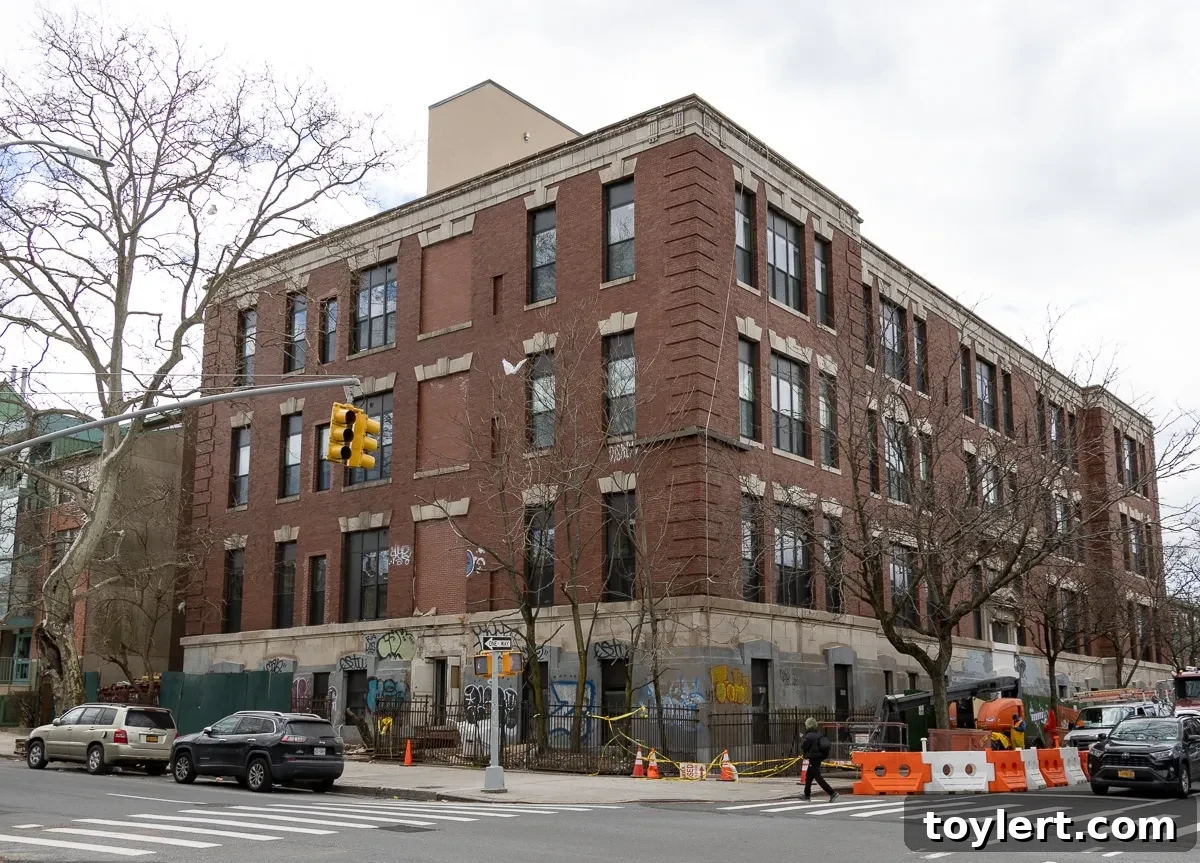
From Classrooms to Comfort: Historic Crown Heights School Transforms into Family Shelter
In a significant development for the historic Crown Heights neighborhood, a beloved former educational institution, Public School 83, located at 1634 Dean Street, is poised for a new chapter. Once slated to provide much-needed affordable housing, the plans have taken an unexpected turn. This early racially integrated school, nestled within what was historically the free Black community of Weeksville, will now be converted into a vital family shelter, addressing an urgent need for support services in New York City.
The Enduring Legacy of PS 83: A Pillar of Weeksville’s Past
Public School 83 stands as more than just a brick-and-mortar structure; it is a profound testament to a rich and significant history within Brooklyn’s urban landscape. Its roots run deep into the soil of Weeksville, a remarkable community founded by free Black residents in the 19th century, long before the Civil War. Weeksville was a beacon of self-sufficiency, a place where Black Americans could own land, establish businesses, and build thriving cultural and educational institutions. PS 83, established during this transformative era, played a pivotal role in this vision, earning distinction as one of the city’s earliest racially integrated schools. This groundbreaking approach to education, fostering learning environments inclusive of all children, speaks volumes about the progressive spirit that defined Weeksville. The building itself, with its unique architectural features, has quietly witnessed decades of societal change, educational evolution, and the enduring spirit of a community that forged its own path. Its preservation and adaptive reuse are therefore not just about a building, but about honoring a vital piece of American history and the continuous pursuit of equity and opportunity. The school’s legacy underscores its inherent value, making its future transformation a subject of intense community interest and discussion.
The Initial Vision: A Promise of Affordable Housing for Crown Heights
When the discussions first began about the future of the vacant PS 83 building, the idea of transforming it into affordable housing resonated strongly with both local residents and city planners. The need for affordable housing in Brooklyn, and indeed across all five boroughs of New York City, is nothing short of critical. Skyrocketing rents, a competitive real estate market, and a persistent housing shortage have made it increasingly difficult for middle and lower-income families to find stable, safe, and reasonably priced homes. Converting a historic structure like PS 83 into residential units offered a dual benefit: it promised to preserve a significant historical landmark while simultaneously providing a tangible solution to the housing crisis. Community leaders and residents had envisioned a future where the renovated building would offer a sanctuary for individuals and families struggling to stay in their beloved borough, fostering a sense of stability and contributing to the socio-economic diversity of Crown Heights. These aspirations were built on the hope that the site could help alleviate some of the pressure on families facing displacement, embodying a commitment to accessible urban living and equitable development within a historically significant neighborhood.
The Unexpected Pivot: Shifting Focus to a Family Shelter
The recent announcement that the former PS 83 will instead be converted into a family shelter marks a significant departure from the initial affordable housing plans, reflecting the urgent and evolving needs of New York City. This decision, while surprising to many, underscores the severity of the homelessness crisis gripping the metropolis. City officials and human services agencies face immense pressure to provide immediate, safe, and supportive accommodations for the rapidly growing number of families experiencing homelessness. With thousands of children and parents relying on temporary solutions, the conversion of a large, structurally sound building like PS 83 offers a rapid deployment option for essential services. The shift highlights a difficult but necessary trade-off in urban planning: balancing long-term community development goals, such as increasing affordable housing stock, with immediate humanitarian demands. While the change may initially disappoint those who championed the affordable housing initiative, it undeniably addresses a pressing need, aiming to offer dignity, stability, and crucial resources to vulnerable families at a critical juncture in their lives, preventing further destabilization.
Navigating New York City’s Persistent Homelessness Crisis
New York City is currently grappling with an unprecedented homelessness crisis, a complex issue exacerbated by a severe shortage of affordable housing, economic disparities, and the lingering effects of global events. The sheer scale of homelessness in the city is staggering, with tens of thousands of individuals, including a disproportionate number of families with children, relying on the municipal shelter system each night. These families often find themselves in precarious situations due to job loss, illness, domestic challenges, or the simple inability to afford rising rents. The city is legally obligated to provide shelter to anyone who requests it, an imperative that places immense strain on resources and infrastructure. Converting buildings like PS 83 into family shelters is a direct response to this immediate demand. These shelters do more than just provide a roof; they are designed to offer a safe environment, access to meals, educational support for children, and critical social services aimed at helping families transition out of homelessness. By addressing the immediate needs of families, these facilities play a crucial role in preventing chronic homelessness and offering a pathway to self-sufficiency and long-term stability in a city renowned for its high cost of living.
Community Reactions and Complex Considerations
The decision to repurpose PS 83 into a family shelter has naturally elicited a range of reactions from the Crown Heights community. While many residents understand and sympathize with the dire need to address homelessness, some express concerns regarding the process and potential implications for the neighborhood. Initial plans for affordable housing had garnered considerable support, aligning with the community’s desire for stable, long-term residential solutions that integrate seamlessly into the existing urban fabric. The pivot raises questions about transparency in decision-making, the allocation of city resources, and the overall vision for community development in Crown Heights. Residents are keenly interested in understanding the specific services the shelter will provide, its operational model, and how it will be managed to ensure both the well-being of the shelter’s residents and the stability of the surrounding area. Engaging with local stakeholders, including historical preservation groups, neighborhood associations, and long-time residents, will be crucial in fostering understanding, addressing anxieties, and building a supportive environment that acknowledges both the historical significance of PS 83 and its new, vital role in addressing a fundamental humanitarian need within the city.
Adaptive Reuse: Balancing Heritage with Modern Imperatives
The conversion of the historic PS 83 building into a family shelter exemplifies the concept of adaptive reuse, a practice that involves repurposing old buildings for new functions. This approach is increasingly common in dense urban environments like New York City, offering a sustainable alternative to new construction and preserving the architectural and cultural heritage of neighborhoods. For PS 83, adaptive reuse means that its historic façade and structural integrity can be maintained, allowing a piece of Weeksville’s legacy to continue to stand proudly in Crown Heights. However, adapting a century-old school building for the specific, complex needs of a modern family shelter presents its own set of unique challenges. These include ensuring compliance with contemporary building codes, designing living spaces that offer privacy and comfort for families, and integrating essential services like communal areas, kitchens, and administrative offices within a structure originally intended for classrooms. While adaptive reuse offers significant environmental benefits and helps retain the character of a neighborhood, it requires careful planning, sensitive architectural design, and substantial investment to transform the space effectively while honoring its past.
Looking Ahead: The Future of 1634 Dean Street
As PS 83 embarks on its transformation into a family shelter, the focus now shifts to its future impact on both the immediate neighborhood and the broader fight against homelessness in New York City. The successful implementation of this project will depend heavily on thoughtful planning, robust community engagement, and the provision of comprehensive support services. The shelter at 1634 Dean Street is expected to offer more than just temporary housing; it will likely serve as a crucial hub for families to access educational resources, job assistance, healthcare, and counseling, all designed to facilitate their journey toward stable housing and independent living. This initiative represents a significant commitment to addressing the human element of the housing crisis, providing a safe haven where vulnerable families can rebuild their lives. While the initial vision for affordable housing has changed, the underlying goal of supporting the community and enhancing the well-being of its residents remains central. The evolution of PS 83 underscores the dynamic nature of urban development and the constant effort required to adapt historical spaces to meet the most pressing social challenges of the present.
Conclusion: A New Chapter for a Historic Landmark
The conversion of the historic PS 83 in Crown Heights into a family shelter marks a poignant and multifaceted moment for the community and New York City at large. While the initial hope for affordable housing reflected a profound need for permanent homes, the pivot to a family shelter addresses an equally, if not more, immediate humanitarian crisis. This decision highlights the complex interplay of historical preservation, urban development, and social welfare in a city constantly grappling with immense population pressures and economic disparities. As the building at 1634 Dean Street prepares to welcome families in need, it will carry forward its legacy as a place of refuge and growth, shifting its purpose from educating young minds to sheltering vulnerable families. This new chapter for the early racially integrated school in Weeksville will undoubtedly shape the lives of many, symbolizing the city’s ongoing efforts to navigate its challenges while honoring its rich past.