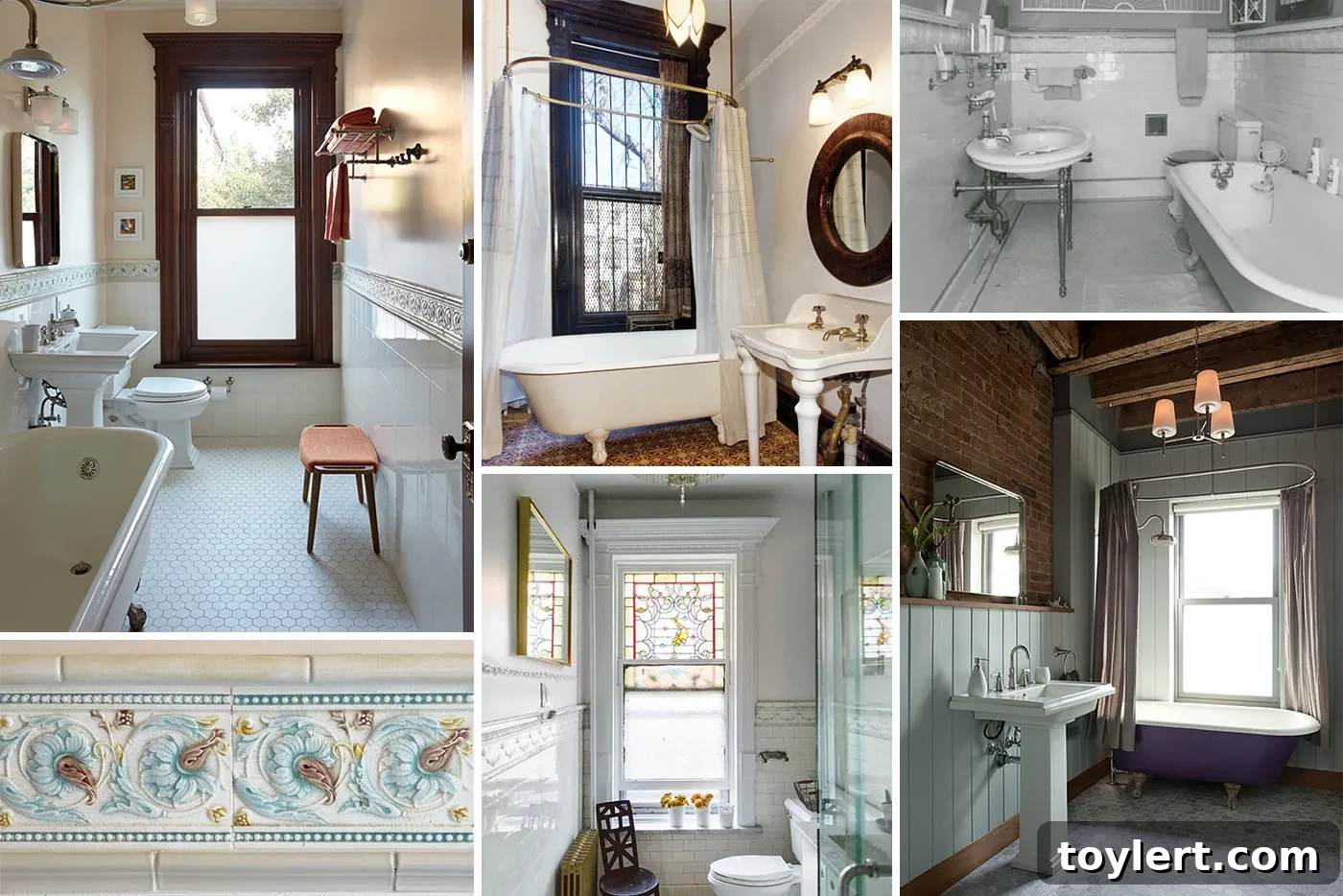
Timeless Elegance: Unveiling the Grandeur of Victorian Bathroom Design
Step back in time to an era of unparalleled sophistication and intricate craftsmanship. The Victorian period, synonymous with innovation and opulence, left an indelible mark on interior design, nowhere more beautifully expressed than in its bathrooms. Far from mere utilitarian spaces, Victorian bathrooms were sanctuaries of luxury, embodying a blend of practical advancements and lavish aesthetics. These grand rooms celebrated elaborate details, from the shimmering surfaces of hand-laid tiles to the deep comfort of iconic clawfoot tubs, all contributing to an atmosphere of serene indulgence.
Often large and exquisitely appointed, a typical late-Victorian bathroom was a testament to the homeowner’s status and a reflection of the era’s design sensibilities. It was a space where form and function converged, offering both hygienic efficiency and visual delight. This guide delves into the distinctive features that define Victorian bathroom design, exploring the materials, patterns, and fixtures that make this style so enduringly captivating.
The Evolution of the Victorian Bathroom: A Blend of Progress and Prestige
The Victorian era (1837-1901) witnessed a significant transformation in domestic life, particularly regarding sanitation and personal hygiene. Prior to this period, bathing was often a sporadic affair, performed in portable tubs within bedrooms. However, rapid advancements in plumbing technology, coupled with a growing public health consciousness, led to the integration of dedicated bathrooms within homes. This shift was revolutionary, marking the transition from outhouses and washstands to sophisticated indoor facilities.
As plumbing became more accessible and efficient, the bathroom evolved from a strictly functional area into a room that commanded aesthetic attention. Wealthy Victorians spared no expense in adorning these spaces, transforming them into luxurious retreats. The design philosophy was clear: even the most private rooms should reflect the grandeur and elaborate taste prevalent throughout the rest of the house. This commitment to both utility and artistry is a hallmark of Victorian bathroom design, creating spaces that were both practical for daily use and breathtakingly beautiful.
The Iconic Clawfoot Tub: A Centerpiece of Splendor
Perhaps no single element defines the Victorian bathroom as much as the majestic clawfoot tub. More than just a bathing vessel, it was a statement piece, a symbol of luxury and relaxation. These deep, generously proportioned tubs were typically crafted from cast iron, coated with a thick layer of porcelain enamel, ensuring durability and excellent heat retention. The iconic “clawfoot” design, often featuring ornate lion’s paw or ball-and-claw feet, elevated the tub, making it a freestanding sculpture within the room.
Victorian clawfoot tubs came in various styles to suit individual preferences. The classic roll-top tub offered a simple, elegant rim, while the slipper tub featured one raised, sloping end for comfortable reclining. Double-ended tubs, symmetrical with both ends sloped, allowed for shared bathing or more spacious solo soaks. The sheer depth and ergonomic design of these tubs provided an unparalleled bathing experience, transforming a routine chore into a luxurious ritual. Today, modern reproductions and restored originals continue to offer this quintessential Victorian comfort, bringing a touch of vintage grandeur to contemporary bathrooms.
Tiles That Tell a Story: Floors and Walls
Tilework played a pivotal role in Victorian bathroom aesthetics, offering both hygienic surfaces and decorative opportunities. The meticulous application of tiles contributed significantly to the room’s overall sense of cleanliness, light, and artistry.
Porcelain Hex-Tile Floors: Enduring Patterns
For flooring, porcelain hexagonal tiles were a ubiquitous choice. These small, durable tiles were laid in intricate patterns, most commonly in classic black and white combinations. While a simple white hex tile floor offered a clean, expansive look, more elaborate designs featured contrasting borders, floral motifs, or geometric patterns embedded within the larger field. The non-slip nature and easy maintenance of these porcelain tiles made them ideal for bathroom environments, providing a practical yet visually appealing foundation for the room’s design. Their enduring popularity means they are still a favored option for those seeking an authentic Victorian look.
White Subway Tile Wainscoting: Clean Lines and Classic Charm
The walls of a Victorian bathroom often featured wainscoting crafted from white subway tiles. Originally designed for the New York City subway stations in the early 20th century for their clean, reflective, and easy-to-maintain surfaces, these rectangular, glazed ceramic tiles quickly found their way into domestic settings. In Victorian bathrooms, they were typically laid in a running bond pattern, covering the lower portion of the wall up to chair rail height. This wainscot created a crisp, bright, and hygienic appearance, contrasting beautifully with the darker wood elements or more decorative upper wall treatments. The clean lines of subway tile continue to be a timeless choice, offering a versatile backdrop for various design styles.
Ornate Tile Borders: Decorative Flourishes
Crowning the subway tile wainscot was usually an exquisite border of ornate tile. These decorative bands were often the highlight of the wall treatment, showcasing the era’s love for intricate detailing. Bas-relief patterns, featuring raised designs, were common, depicting motifs such as garlands, shells, floral elements, or classical scrolls. These borders were frequently finished with puddling pastel glazes, adding subtle hints of color like soft greens, blues, pinks, or creams. The delicate artistry of these borders provided a refined transition between the functional wainscoting and the often simpler painted or papered upper walls, elevating the entire room with their intricate beauty.
Stained Glass: Illuminating Elegance and Privacy
Stained glass windows were another distinctive feature that added both beauty and practicality to Victorian bathrooms. Beyond their decorative appeal, these windows served an important function: providing privacy without sacrificing natural light. The colored and textured glass obscured the view from outside while diffusing sunlight into the room, casting beautiful, soft hues.
In bathrooms, aquatic themes were particularly popular for stained glass designs. Images of stylized fish, gracefully swimming alongside reeds, or even mythical mermaids, were common motifs. These designs resonated with the room’s purpose, adding a whimsical yet elegant touch. Other patterns included geometric shapes, floral arrangements, or abstract designs, all rendered in vibrant, translucent colors. The interplay of light and color through stained glass windows created an ethereal atmosphere, transforming the bathroom into a truly magical space.
Mahogany and Woodwork: Warmth, Richness, and Grandeur
The Victorian era’s affinity for rich, dark woods found its expression even in the bathroom. Mahogany was a preferred choice due to its durability, lustrous finish, and resistance to moisture, though oak and walnut were also commonly used. These woods were incorporated into various elements, adding warmth and a sense of grandeur to the often tiled and porcelain-dominated room.
Mahogany could be found in vanity units, often featuring marble tops and intricate carvings, providing essential storage and a refined surface around the basin. Toilet seats were frequently crafted from polished wood, adding a touch of luxury to a utilitarian fixture. Wall panels, mirror frames, and cabinetry also showcased the era’s superb woodworking skills, often adorned with turned legs, decorative moldings, and deep, hand-rubbed finishes. This rich woodwork provided a beautiful contrast to the white tiles and porcelain, contributing significantly to the luxurious and inviting ambiance of the Victorian bathroom.
Fixtures and Fittings: The Details That Define
The smaller details, the fixtures and fittings, were crucial in defining the authentic Victorian bathroom experience. These elements, often highly decorative, combined robust engineering with elaborate design.
Taps, Faucets, and Plumbing
Brass was the material of choice for taps and faucets, often highly polished or patinated. Designs ranged from simple cross-handle styles to more elaborate, sculpted forms. Nickel-plated finishes also gained popularity, offering a brighter, more contemporary look. For toilets, high-level cisterns mounted near the ceiling with long pull chains were characteristic, a functional design that also added to the room’s distinctive aesthetic.
Sinks and Washstands
Pedestal sinks were common, featuring elegant ceramic basins supported by a slender column. For larger bathrooms, washstands with marble tops, sometimes supported by chrome or brass legs, offered a grander solution, often incorporating towel rails or storage shelves. These basins were designed to be both aesthetically pleasing and highly practical, fitting seamlessly into the overall design.
Accessories and Lighting
Complementary accessories, such as ornate towel rails, soap dishes, and toothbrush holders, were often made from brass, ceramic, or frosted glass. Mirrors, framed in elaborate carved wood or polished metal, were essential elements, adding depth and light. Lighting, initially provided by gasoliers, gradually evolved to include early electric fixtures, typically wall sconces or elegant ceiling lights with frosted or patterned glass shades, ensuring the room was brightly and beautifully illuminated.
Modern Interpretations: Blending Old-World Charm with Contemporary Comfort
The allure of the Victorian bathroom remains strong, inspiring homeowners and designers today to recreate its timeless elegance. Achieving a Victorian-inspired look in a modern home involves a thoughtful blend of authentic period features and contemporary conveniences.
While an original Victorian home might boast preserved plasterwork and grand proportions, even smaller, newer spaces can capture the essence of the era. Start with the core elements: a freestanding clawfoot tub, classic subway tile wainscoting, and hexagonal floor tiles. These foundational pieces immediately evoke the period’s style. For fixtures, opt for reproduction brass or nickel taps and a high-level toilet if space allows, or a more compact, period-appropriate close-coupled WC.
To infuse the room with warmth, consider a wooden vanity – perhaps a reclaimed antique dresser adapted with a basin – or a rich mahogany-finished cabinet. Incorporate stained glass panels, either in a window or as a decorative accent in a door. Don’t forget the details: a large framed mirror, traditional pull-chain lighting, and vintage-style accessories will complete the look. The key is to balance historical accuracy with modern functionality, ensuring your Victorian-inspired bathroom is not only beautiful but also a comfortable and efficient space for contemporary living.
The Enduring Legacy of Victorian Bathroom Design
The Victorian bathroom, with its opulent materials, intricate detailing, and groundbreaking plumbing, represents a pivotal moment in interior design history. It was a space that transcended mere functionality, becoming a symbol of progress, luxury, and personal comfort. From the deep soak of a clawfoot tub to the meticulous patterns of hex and subway tiles, and the rich glow of stained glass, every element contributed to an atmosphere of refined elegance.
Today, the enduring appeal of Victorian bathroom design continues to captivate. Its ability to blend grandeur with comfort, and historical charm with practical needs, makes it a perennially popular choice for those seeking to create a bathroom that is both a sanctuary and a statement. By embracing its core principles, anyone can bring the timeless beauty and unparalleled luxury of the Victorian era into their own home.