Brooklyn Bridge Park’s Future: A Call for Sustainable Financing Over High-Rise Development at Pier 6
Prominent local officials are urging Mayor de Blasio to re-evaluate the controversial plan for two high-rise residential towers at Pier 6, advocating for a more sustainable and community-centric approach to finance Brooklyn Bridge Park. This pivotal moment could redefine the park’s legacy and its relationship with the surrounding urban landscape, moving away from potentially intrusive development.
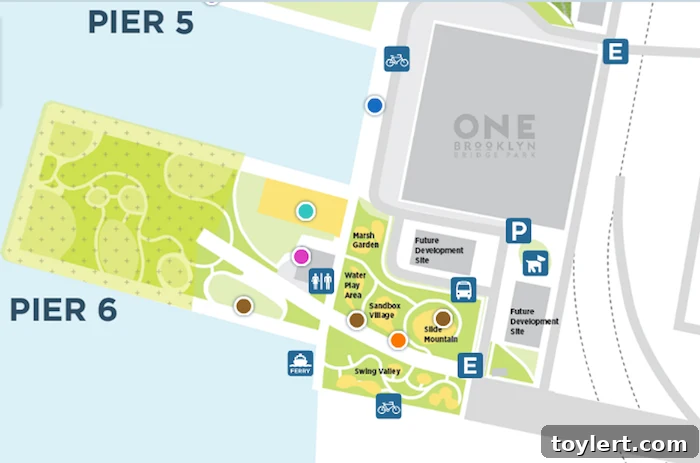
The Unfolding Saga: Brooklyn Bridge Park and Its Financial Dilemma
Brooklyn Bridge Park stands as a crowning jewel of New York City, a testament to visionary urban planning that successfully transformed a dilapidated industrial waterfront into a vibrant, beloved public space. Offering breathtaking views of the Manhattan skyline, diverse recreational opportunities, and a tranquil escape from city life, the park has quickly become an indispensable asset for millions of residents and tourists alike. However, beneath its serene facade lies a persistent and complex challenge: securing sustainable long-term funding for its considerable upkeep and ensuring its future aligns with community aspirations.
The park’s financial model has long been a subject of debate, particularly concerning its reliance on revenue generated from real estate development within or immediately adjacent to its boundaries. This tension recently escalated as a coalition of influential local politicians united to express their profound opposition to the proposed construction of two additional high-rise residential towers at Pier 6 within the park. In a strongly worded letter dated April 7, addressed to Mayor Bill de Blasio, these officials voiced their deep concerns over what they described as the “breakneck speed” of housing development at this crucial waterfront location.
Their appeal to the new mayoral administration was unequivocal: “work collaboratively on alternative park financing, rather than moving forward with the Bloomberg plan,” as reported by The New York Times. This collective stand by elected officials highlights a critical juncture for Brooklyn Bridge Park, demanding a thoughtful re-evaluation of its financial future, its developmental trajectory, and its overarching role as a public amenity. The fundamental question at hand is how to balance the necessity for financial stability with the preservation of the park’s core identity and its public benefits without compromising its aesthetic or accessibility for future generations.
Key Voices Championing Alternative Solutions for Park Financing
The letter to Mayor de Blasio was not merely a symbolic gesture but a powerful statement from a formidable group of elected officials, each representing a significant portion of the Brooklyn community and extending their influence to state and federal levels. Their unified stance underscores the widespread concern regarding the current development plans at Pier 6 and the urgent need for a revised approach that prioritizes public benefit over potentially intrusive commercialization. The signatories to this crucial communication include:
- State Senator Daniel Squadron: A long-standing and vocal advocate for Brooklyn’s waterfront, Senator Squadron has been deeply involved in past negotiations and agreements concerning the park’s development and financing. His consistent engagement reflects a deep commitment to preserving the park’s integrity.
- State Assemblywoman Joan Millman: As a veteran politician with strong ties to the local community, Assemblywoman Millman has been a staunch proponent of community-led development and is dedicated to preserving the unique character of Brooklyn’s neighborhoods, including their cherished public spaces.
- U.S. Representative Nydia Velázquez: Bringing a federal perspective to local development issues, Representative Velázquez leverages her position to advocate for community interests, ensuring that federal support and regulations are considered in urban planning decisions affecting constituents.
- City Council Member Steve Levin: Representing districts directly impacted by Brooklyn Bridge Park’s development, Council Member Levin plays a crucial role in voicing the immediate concerns and aspirations of residents most affected by changes to the park.
- City Council Member Brad Lander: Known for his progressive stances on urban planning and his dedication to community-led development initiatives, Council Member Lander consistently champions innovative solutions that balance growth with equity and public good.
Their collective message is unequivocally clear: while Brooklyn Bridge Park’s long-term financial stability is paramount, the chosen method for achieving it should not compromise the park’s intrinsic value, its visual appeal, its accessibility, or the broader community’s vision for its future. These officials are not simply opposing development; they are calling for transparency, collaborative dialogue, and innovative financial models that genuinely align with the park’s foundational mission as a world-class public amenity.
The Perennial Challenge: Funding Brooklyn Bridge Park’s Intensive Upkeep
The necessity for robust and sustainable funding for Brooklyn Bridge Park is undeniable and constitutes the core of the current debate. The park, a marvel of modern urban design, is largely constructed on repurposed industrial piers that extend into the East River. This unique engineering feat, while creating unparalleled public access to the waterfront, simultaneously presents extraordinary and expensive maintenance challenges. Unlike traditional land-based parks, its structures are constantly exposed to the relentless forces of a harsh marine environment. As highlighted by The New York Times, the waterfront park requires an estimated staggering $16,000,000 in maintenance every single year. This astronomical figure is a testament to the continuous battle against natural elements that impact its intricate infrastructure.
Why is Maintenance So Exceptionally Costly for Brooklyn Bridge Park?
- Relentless Marine Organisms: The structural components of the piers and associated infrastructure are in constant contact with saltwater, making them susceptible to the corrosive effects of marine organisms and barnacles. Regular inspections, specialized anti-fouling treatments, and frequent structural repairs are essential to combat biofouling, decay, and to ensure long-term integrity and safety.
- Harsh Winds and Tidal Currents: The park’s exposed location means it directly bears the brunt of powerful winds sweeping across the harbor and strong tidal currents in the East River. These persistent forces contribute significantly to the wear and tear on pathways, landscaping, public art installations, and structural elements, necessitating continuous upkeep, erosion control, and resilience measures.
- Saltwater Corrosion and Deterioration: The constant proximity to saltwater accelerates the corrosion of metal components, the deterioration of concrete, and the decay of wooden structures. This requires the use of highly specialized, durable, and often more expensive materials for construction and repair, along with a rigorous maintenance schedule.
- Complex and Diverse Infrastructure: Beyond the natural elements, the park boasts an intricate array of specialized infrastructure. This includes meticulously designed landscaping, diverse recreational facilities like sports fields and playgrounds, unique architectural elements, and state-of-the-art irrigation and lighting systems. All these features demand expert, specialized maintenance and repair to remain in optimal condition.
- High Visitor Volume and Wear: As one of New York City’s most popular destinations, Brooklyn Bridge Park experiences extremely high foot traffic throughout the year. This heavy usage places additional strain on all its facilities, from restrooms to pathways and seating areas, requiring ongoing cleaning, efficient waste management, and frequent repair or refurbishment of public amenities to maintain a high standard for visitors.
Effectively addressing these multifaceted challenges demands a robust, reliable, and substantial funding stream. The original financing model for Brooklyn Bridge Park was designed around the concept of self-sufficiency, wherein revenue generated from commercial and residential developments strategically located within or immediately adjacent to the park would cover its operational costs. While innovative, this model has, however, frequently been a source of significant contention, often pitting the park’s undeniable financial needs against the community’s deeply held concerns about over-development, visual impact, and the potential privatization of cherished public space.
The Collapsed Agreement: A Look Back at the Bloomberg-Era Plan
The current heated debate over the proposed development at Pier 6 is not an isolated incident; it has deep roots in previous negotiations and agreements that have unfortunately since unraveled. A pivotal moment occurred in 2011 when State Senator Daniel Squadron and State Assemblywoman Joan Millman, acting as crucial representatives for local community interests, struck a significant deal with the then-Bloomberg administration. This agreement was designed to provide a measure of compromise and address burgeoning community concerns: it aimed to limit the height of the planned residential development at Pier 6, thereby mitigating the visual impact on the park’s iconic views and preventing unchecked growth.
However, this painstakingly negotiated compromise was fundamentally conditional. It hinged upon a very specific, time-sensitive provision: the city’s explicit commitment to rezone all of the nearby Watchtower properties from manufacturing to residential use by January 1 of this particular year, following their sale to new owners. The Watchtower properties, a sprawling complex of buildings in Brooklyn Heights once owned by the Jehovah’s Witnesses, represented a significant landholding whose rezoning was intended to unlock substantial new residential capacity in the area. The underlying idea was that this rezoning could potentially alleviate some of the pressure for intensive development within the park itself, or generate alternative revenue through increased property taxes on the newly valuable residential sites, thereby contributing indirectly to the park’s financial sustainability.
Why the Deal Unraveled: The Critical Missed Deadline
The critical flaw that ultimately led to the collapse of this carefully constructed agreement was the city’s failure to meet the stipulated deadline. Despite the highly publicized sale of the Watchtower properties to developers, the city did not complete the necessary rezoning process by the agreed-upon date of January 1. This lapse had immediate and profound consequences: the meticulously negotiated deal between the local politicians and the Bloomberg administration officially became null and void. The agreement, which was specifically designed to provide a measure of protection and height limitations against excessive development at Pier 6, no longer applied. This expiration effectively reopened the door for the previously contentious high-rise plans, much to the dismay of community advocates.
This turn of events has predictably fueled renewed frustration and a sense of disappointment among community activists and elected officials. It starkly highlights the precarious nature of development agreements and underscores the critical importance of adhering to the terms and deadlines set forth in such compromises. The expiration of this deal has placed the relatively new de Blasio administration in a particularly difficult position, inheriting a complex and highly charged problem that now requires a fresh perspective, renewed negotiations, and a strong commitment to finding a lasting and equitable solution for Brooklyn Bridge Park’s future.
The Stakes: Balancing Community Vision with Financial Necessity
The ongoing conflict surrounding the proposed development at Pier 6 encapsulates a broader, fundamental struggle inherent in contemporary urban planning: how to effectively balance the financial realities of maintaining world-class public infrastructure with the preservation of community character, environmental integrity, and accessible public spaces. For a vast majority of New Yorkers, particularly those in Brooklyn, Brooklyn Bridge Park represents far more than just a park; it is an exemplary model for revitalized urban waterfronts and a powerful symbol of successful urban transformation. The proposed high-rise towers, from the perspective of their opponents, are seen as a direct threat to this carefully cultivated vision and the park’s intrinsic value.
The concerns raised by the community and elected officials are multi-faceted and deeply felt:
- Adverse Visual Impact: The construction of tall residential towers could significantly obstruct the breathtaking and iconic views of the Brooklyn Bridge and the Manhattan skyline that the park uniquely offers. This obstruction would diminish the park’s aesthetic value, erode its sense of open space, and alter its fundamental character as a viewing platform.
- Potential Overcrowding and Infrastructure Strain: Introducing a significant new residential density through these developments could place undue strain on existing local infrastructure. This includes critical public services such as schools, transportation networks (subways, buses, roads), and utility systems, particularly in an already dense urban area that is experiencing rapid growth.
- Gentrification and Displacement Concerns: New luxury housing developments, especially those in prime locations, frequently raise serious concerns about accelerating gentrification. This can lead to increased property values and rents, potentially displacing long-time residents and altering the existing socio-economic fabric and diversity of the surrounding neighborhoods.
- Setting an Unwanted Precedent: Approving these controversial towers could set a dangerous precedent for future development within or immediately adjacent to other cherished public spaces across the city. Such a decision might signal that financial expediency can override community opposition and the integrity of public parks, potentially sparking similar contentious debates elsewhere.
- Environmental and Ecological Impact: While often overlooked, large-scale construction in waterfront areas can have environmental consequences, impacting local ecosystems, water quality, and increasing carbon footprint, which goes against the principles of sustainable urban development.
Crucially, the call from local politicians is not simply a blanket demand to halt all development. Instead, it is an urgent plea to pivot towards “alternative park financing.” This phrase suggests a genuine openness to explore new and innovative models that can effectively meet the park’s substantial financial needs without resorting to what many perceive as inappropriate or excessive commercialization within a designated public park space. It calls for creative problem-solving that respects the park’s primary role as a public amenity.
Exploring Alternative Financing Models for Brooklyn Bridge Park
Given the significant annual maintenance cost of $16 million and the strong community opposition to high-rise development at Pier 6, the challenge for the de Blasio administration and all collaborative stakeholders is to identify and implement creative, sustainable financing mechanisms that genuinely respect the park’s ethos and public mission. Several viable avenues could be thoroughly explored, moving beyond the current contentious approach:
Potential Avenues for Sustainable Park Financing:
- Increased Public Funding: While perpetually challenging in times of tight municipal and state budgets, direct and consistent allocations from city, state, or even federal budgets could significantly supplement existing revenue streams. This approach explicitly acknowledges Brooklyn Bridge Park as a vital public good that serves a broader regional and even national population, not just local residents, thus warranting public investment.
- Enhanced Philanthropic Partnerships and Endowments: Leveraging the park’s immense popularity and New York City’s philanthropic landscape, targeted fundraising campaigns and strategic partnerships with major philanthropists, foundations, and corporations could generate substantial, long-term funds. Establishing a robust endowment fund, seeded by initial public or philanthropic contributions, could generate consistent income through investments, providing a more stable and less contentious financial base for generations. The “Friends of” model has proven highly successful for numerous urban parks.
- Innovative Revenue Generation within Existing Footprint: Exploring non-intrusive and appropriate commercial opportunities can still provide revenue. This includes high-quality, curated concessions, a broader range of specialized public events (e.g., arts, culture, fitness), educational programs, and corporate sponsorships that are carefully vetted to align with the park’s mission and do not necessitate new, permanent construction or detract from the visitor experience.
- Special Assessment Districts (SADs) or Tax Increment Financing (TIF): Implementing a special tax or levy on properties in surrounding areas that demonstrably benefit from increased property values due to the park’s proximity. This ensures that those who gain financially from the park’s presence contribute proportionally to its upkeep, creating a more equitable funding model.
- Revisiting Commercial Leases and Partnerships: A thorough review and scrutiny of existing commercial leases within the park for optimal revenue generation, along with seeking new partnerships that provide a better financial return without requiring new residential towers. This could include strategic leasing of existing non-park structures or facilities for uses that are compatible with the park’s public character.
- Leveraging Green Bonds or Infrastructure Funds: Exploring innovative financial instruments like green bonds, which are designed to fund environmental projects, or tapping into federal and state infrastructure improvement funds. These could be specifically directed towards the unique structural and environmental maintenance needs of a park built on piers.
Each of these options presents its own set of advantages and challenges, requiring careful planning and political will. However, collectively, they represent a diverse and potentially robust portfolio that could be strategically leveraged to secure Brooklyn Bridge Park’s financial future without resorting to controversial development models that contradict deeply held community aspirations. The key to success lies in collaborative policy-making, actively engaging all stakeholders from local government and park administrators to community groups, environmental advocates, and the park’s diverse users.
Conclusion: Charting a Path Forward for a Cherished Urban Oasis
The debate over Pier 6 development and Brooklyn Bridge Park’s long-term financing is far more than just a local dispute; it is a profound microcosm of the ongoing challenge confronting urban centers worldwide. It addresses how to responsibly fund, maintain, and evolve vital public spaces in an increasingly dense, expensive, and rapidly changing urban environment. The collective letter from State Senator Daniel Squadron, State Assemblywoman Joan Millman, U.S. Representative Nydia Velázquez, and City Council members Steve Levin and Brad Lander serves as a powerful and unambiguous call to action for Mayor de Blasio’s administration.
Their message emphasizes the imperative to move beyond the limitations and constraints of past agreements, which have proven fragile, and to forge a new path. This new direction must be built on principles of genuine collaboration, long-term sustainability, and a deep, unwavering respect for the park’s fundamental purpose: to serve as a world-class public amenity for all. The annual $16 million maintenance bill is, without doubt, a significant financial burden that cannot be ignored. However, the proposed high-rise development solution carries an even greater potential cost – not just in terms of dollars, but in terms of public trust, irreversible environmental impact, the erosion of aesthetic value, and the potential sacrifice of a treasured urban oasis for future generations.
As Mayor de Blasio’s administration carefully considers its next critical steps, a significant opportunity arises to demonstrate truly innovative and community-responsive leadership. By actively engaging with all facets of the community and rigorously exploring genuinely alternative financing strategies, the city can achieve a dual objective: securing Brooklyn Bridge Park’s financial future as a vibrant, accessible, and awe-inspiring public space for generations to come, while simultaneously preserving its unique character and preventing over-development. The path forward demands not only creativity and robust political will but also a steadfast and deep commitment to the broader public good, ensuring that Brooklyn Bridge Park remains a beacon of urban excellence and an enduring testament to thoughtful city planning.