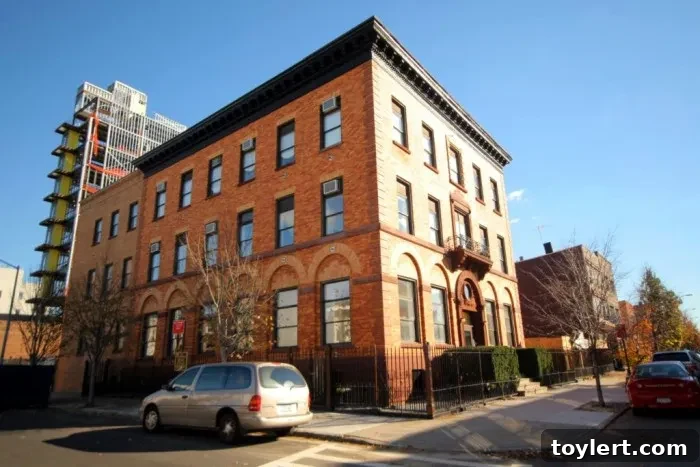
The Schoolhouse Lofts: A Historic Transformation at 484 Humboldt Street, Brooklyn
Brooklyn, one building at a time. Every structure in this borough tells a story, a testament to time, change, and enduring spirit. Among these narratives, the building known today as The Schoolhouse Lofts stands out, a remarkable example of adaptation and preservation. Situated at 484 Humboldt Street, this architectural gem carries a profound legacy, having originally served as the James W. Smith Memorial of the Industrial School Association of Brooklyn, E.D.
This article delves into the captivating history of this iconic Brooklyn building, tracing its origins as a beacon of education and care for children in the Eastern District to its contemporary incarnation as coveted residential lofts. We will explore the context of its creation, its architectural significance, and the meticulous process of its transformation, offering a deeper understanding of its place within Brooklyn’s rich urban fabric.
The Enduring Legacy of 484 Humboldt Street
At the intersection of history and modernity lies The Schoolhouse Lofts, a building that has gracefully weathered the passage of time. Its transformation from a vital community institution to stylish residences reflects Brooklyn’s dynamic evolution. This structure is more than just bricks and mortar; it’s a living archive of social change, architectural endurance, and the borough’s continuous reinvention.
Origins: The James W. Smith Memorial and the Industrial School Association
The original purpose of 484 Humboldt Street was deeply rooted in the social welfare movements of the 19th and early 20th centuries. It was consecrated as the James W. Smith Memorial, a crucial component of the Industrial School Association of Brooklyn, E.D. To fully appreciate its significance, one must understand the context of industrial schools during that era. These institutions were established to provide education, vocational training, and often shelter to impoverished or neglected children, particularly those from immigrant families in burgeoning urban centers like Brooklyn.
The “E.D.” in the association’s name refers to the Eastern District of Brooklyn, a vibrant, rapidly developing area encompassing neighborhoods like Williamsburg and Greenpoint. This district was characterized by a diverse population, including many working-class families and new immigrants, whose children often lacked access to formal education or stable home environments. The Industrial School Association aimed to fill this gap, offering a structured environment that fostered literacy, practical skills, and moral development, thereby equipping children with the tools to become self-sufficient members of society.
Who Was James W. Smith? The Man Behind the Memorial
While specific historical records detailing James W. Smith’s full biography may require extensive archival research, the fact that a significant building was named in his memorial suggests he was a prominent figure, likely a philanthropist, a dedicated educator, or a respected community leader who significantly contributed to the Industrial School Association’s mission. Individuals like Smith were often instrumental in funding, advocating for, and shaping the vision of charitable organizations dedicated to public welfare. His legacy, embedded in the very name of the school, points to a commitment to social justice and the upliftment of the less fortunate children in Brooklyn’s Eastern District. The memorial served not only as a functional school but also as a permanent tribute to his benevolent spirit and lasting impact on the community.
Architectural Character of a Bygone Era
The architectural style of the James W. Smith Memorial is typical of institutional buildings constructed in the late 19th or early 20th century, designed to convey strength, permanence, and a sense of educational purpose. These buildings were often robustly built, utilizing durable materials that could withstand the rigors of time and heavy use.
Design Elements Reflecting Purpose
Common characteristics would have included sturdy brick construction, often in warm red or brown hues, featuring large, regularly spaced windows designed to maximize natural light within classrooms and dormitories. This emphasis on light and air was crucial for the health and well-being of the children housed within. Architectural details might have included elements of Romanesque Revival or Classical Revival styles, such as decorative brickwork, stone lintels, arched windows, or a prominent entrance with a pediment or substantial pilasters. These details, while functional, also imparted a sense of dignity and importance to the institution, reflecting the serious and vital work being done inside.
The overall impression was one of ordered grandeur, a reflection of the hope and stability the school aimed to provide. Such buildings were not merely utilitarian; they were designed to inspire respect and symbolize the community’s investment in its future generations. The enduring quality of its original construction is precisely what allowed the building to survive and thrive into its current incarnation as The Schoolhouse Lofts.
Life Within the Schoolhouse Walls
Imagining daily life within the James W. Smith Memorial offers a poignant glimpse into the challenges and opportunities faced by Brooklyn’s youth over a century ago. This was not just a school in the modern sense; it was often a home, a refuge, and a foundational stepping stone for hundreds of children.
A Day in the Life: Education and Practical Skills
Children attending the industrial school would have followed a rigorous schedule that balanced academic instruction with practical and vocational training. The curriculum would have focused on basic literacy and numeracy – reading, writing, and arithmetic – essential skills for navigating life in an industrializing society. Beyond the classroom, emphasis was placed on teaching trades and domestic skills. Boys might have learned carpentry, shoemaking, or printing, while girls were often instructed in sewing, cooking, and household management. These skills were not merely academic exercises; they were intended to provide tangible means for future employment and independence, directly addressing the root causes of poverty.
Discipline and moral instruction were also integral parts of the program, fostering values such as punctuality, hard work, and respect for authority. For many children, the structure and care provided by the industrial school represented a significant improvement over their previous circumstances, offering stability, regular meals, and a safe environment in which to grow and learn.
Community Impact in Brooklyn’s Eastern District
The Industrial School Association, and facilities like the James W. Smith Memorial, played a pivotal role in the social fabric of Brooklyn’s Eastern District. At a time when public welfare systems were nascent, these private charitable organizations served as crucial safety nets. They alleviated the burden on struggling families, provided a pathway out of poverty for vulnerable children, and contributed to a more skilled workforce for the burgeoning local industries. The school was a hub of activity, a source of hope, and a tangible expression of community responsibility towards its youngest members. Its presence profoundly shaped the lives of countless individuals and indirectly contributed to the stability and development of the surrounding neighborhoods.
From Schoolhouse to Modern Lofts: A Vision for the Future
As the 20th century progressed, the social and educational landscape of Brooklyn underwent significant changes. Public education expanded, social welfare policies evolved, and the need for large-scale industrial schools gradually diminished. Many such institutions faced obsolescence, prompting questions about their future. Fortunately, for 484 Humboldt Street, a new vision emerged, one that honored its past while embracing contemporary urban living.
The Loft Conversion Phenomenon in Brooklyn
Brooklyn, particularly its industrial and historic neighborhoods, has been at the forefront of the urban loft conversion trend. This phenomenon involves repurposing former factories, warehouses, and institutional buildings into residential units. The appeal is clear: these structures often boast desirable characteristics like expansive open spaces, soaring ceilings, oversized windows that flood interiors with light, and distinctive architectural details that are difficult to replicate in new constructions. For urban dwellers seeking character, space, and a connection to history, loft conversions offer a unique living experience.
The transformation of the James W. Smith Memorial into The Schoolhouse Lofts perfectly encapsulates this trend. Developers and architects recognized the inherent value in the building’s robust construction and historical charm, envisioning a future where its architectural integrity could be preserved while catering to the modern demand for unique, character-filled homes.
The Schoolhouse Lofts Reimagined: Blending Old and New
The conversion into The Schoolhouse Lofts was a meticulous process of adaptive reuse. Great care was taken to retain many of the building’s original features, allowing its history to shine through. Elements like original brick walls, high ceilings, and the distinctive window configurations were likely preserved, becoming defining characteristics of the new residential units. These historic touches are seamlessly integrated with contemporary amenities and finishes, creating spaces that are both comfortable and stylish.
Modern kitchens, luxurious bathrooms, updated mechanical systems, and thoughtfully designed layouts transform the former classrooms and dormitories into spacious, light-filled apartments. The blend of old-world charm with cutting-edge design creates a unique living environment that appeals to residents who appreciate both heritage and modernity. This re-imagining ensures that the building continues to serve its community, albeit in a different capacity, contributing to Brooklyn’s ongoing narrative of renewal and innovation.
Architectural Splendor of The Schoolhouse Lofts Today
Even in its modern residential guise, The Schoolhouse Lofts at 484 Humboldt Street continues to command attention with its striking architecture. The building stands as a testament to the quality of late 19th-century construction and the thoughtful approach taken during its conversion.
Exterior Features: A Glimpse into History
The exterior of The Schoolhouse Lofts likely retains much of its original grandeur. The enduring red brick facade, characteristic of many historic Brooklyn institutions, projects a sense of strength and permanence. Careful observation might reveal intricate brickwork patterns, robust stone sills and lintels around the large windows, and possibly decorative cornices or parapets that speak to its original design. These elements not only contribute to the building’s aesthetic appeal but also serve as visual cues to its past, subtly telling the story of its former life as an industrial school. The sheer scale and solid construction of the building are a constant reminder of its original institutional purpose, providing ample space and a formidable presence on Humboldt Street.
Interior Design and Modern Amenities
Inside, The Schoolhouse Lofts offers a diverse range of residential units, each benefiting from the building’s historic bones. Residents can expect open-concept living areas, often featuring exposed brick walls, original structural columns, and expansive windows that provide abundant natural light and often offer picturesque views of the surrounding neighborhood. High ceilings, a hallmark of loft living, create an airy and spacious feel. Modern kitchens are equipped with high-end appliances, custom cabinetry, and contemporary finishes, while bathrooms boast sleek designs and luxurious fixtures. Beyond individual units, common areas often reflect the building’s history, perhaps with preserved lobbies or converted recreational spaces that enhance the living experience. These amenities, combined with the unique character, make The Schoolhouse Lofts a highly sought-after address.
Location and Neighborhood: Humboldt Street’s Charm
The Schoolhouse Lofts benefits immensely from its location on Humboldt Street, nestled within one of Brooklyn’s most dynamic and historically rich areas. This prime position offers residents access to a vibrant community, diverse amenities, and excellent connectivity.
Humboldt Street: Bridging Greenpoint and Bushwick
Humboldt Street itself is a vital artery, often serving as a connector between the established charm of Greenpoint and the artistic energy of Bushwick. This strategic location means residents are perfectly positioned to enjoy the best of both worlds. Greenpoint offers a mix of classic Polish bakeries, independent boutiques, waterfront parks, and a thriving restaurant scene. Bushwick, on the other hand, is renowned for its street art, live music venues, avant-garde galleries, and an eclectic mix of cafes and bars. The immediate surroundings of 484 Humboldt Street are likely characterized by a blend of historic brownstones, industrial buildings repurposed into creative spaces, and modern developments, creating a diverse and engaging urban tapestry. Proximity to public transportation, including subway lines, ensures easy access to Manhattan and other parts of Brooklyn.
Brooklyn’s Enduring Allure
Living at The Schoolhouse Lofts means being part of Brooklyn’s enduring appeal. The borough is celebrated globally for its unique blend of historic charm, cultural diversity, artistic innovation, and strong community spirit. From its world-class parks and waterfront promenades to its countless independent businesses and culinary delights, Brooklyn offers an unparalleled urban experience. Residents of The Schoolhouse Lofts are not just buying into a building; they are investing in a lifestyle, a vibrant community, and a piece of Brooklyn’s living history. The constant evolution of the neighborhoods, coupled with a deep respect for their past, makes this area particularly attractive to those seeking a dynamic and authentic urban environment.
Conclusion: A Symbol of Brooklyn’s Enduring Spirit
The journey of 484 Humboldt Street, from the James W. Smith Memorial to The Schoolhouse Lofts, is a compelling narrative of adaptation, preservation, and urban renewal. This building stands as a powerful symbol of Brooklyn’s ability to honor its past while boldly embracing the future.
A Beacon of Resilience and Transformation
Once a vital educational institution dedicated to empowering children from challenging backgrounds, the building has transformed into a sophisticated residential complex, offering modern living spaces within a historically rich framework. This transformation is not merely a change in function; it is a testament to the resilience of historic architecture and the visionary spirit of developers and residents alike who recognize the intrinsic value of preserving Brooklyn’s heritage. The Schoolhouse Lofts exemplifies how intelligent adaptive reuse can breathe new life into old structures, preventing demolition and ensuring that valuable architectural legacies continue to contribute to the urban landscape.
Preserving Heritage for Future Generations
In a borough that constantly reinvents itself, buildings like The Schoolhouse Lofts serve as tangible links to Brooklyn’s rich and multifaceted history. They remind us of the social conditions, architectural trends, and community efforts that shaped previous generations. By meticulously converting and preserving such structures, we ensure that these stories are not lost but continue to inform and enrich the present. The Schoolhouse Lofts at 484 Humboldt Street is more than just a place to live; it is a living monument to Brooklyn’s past, a vibrant part of its present, and a promising vision for its sustainable future, inviting all who encounter it to appreciate its remarkable journey.