Transforming Brooklyn: Unveiling the Vision for the Brooklyn Strand
After a year of extensive community workshops and dedicated collaboration, the acclaimed architecture firm WXY Studio has unveiled its comprehensive recommendations for the ambitious Brooklyn Strand project. This transformative urban planning initiative seeks to seamlessly link Brooklyn’s vibrant waterfront, historic courthouses, and the dynamic Brooklyn Navy Yard through a thoughtfully designed series of interconnected green spaces. The Brooklyn Strand represents a monumental effort to reclaim and revitalize areas that have long suffered from neglect by the Parks Department or have been rendered inaccessible due to the imposing presence of the Brooklyn-Queens Expressway (BQE).
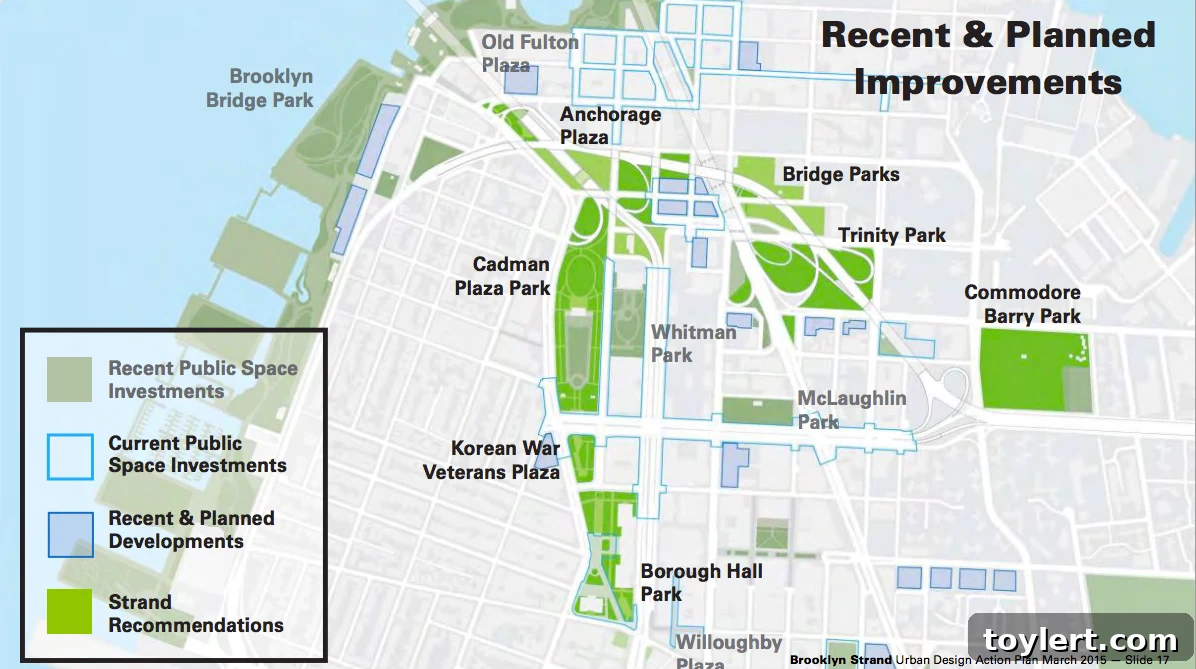
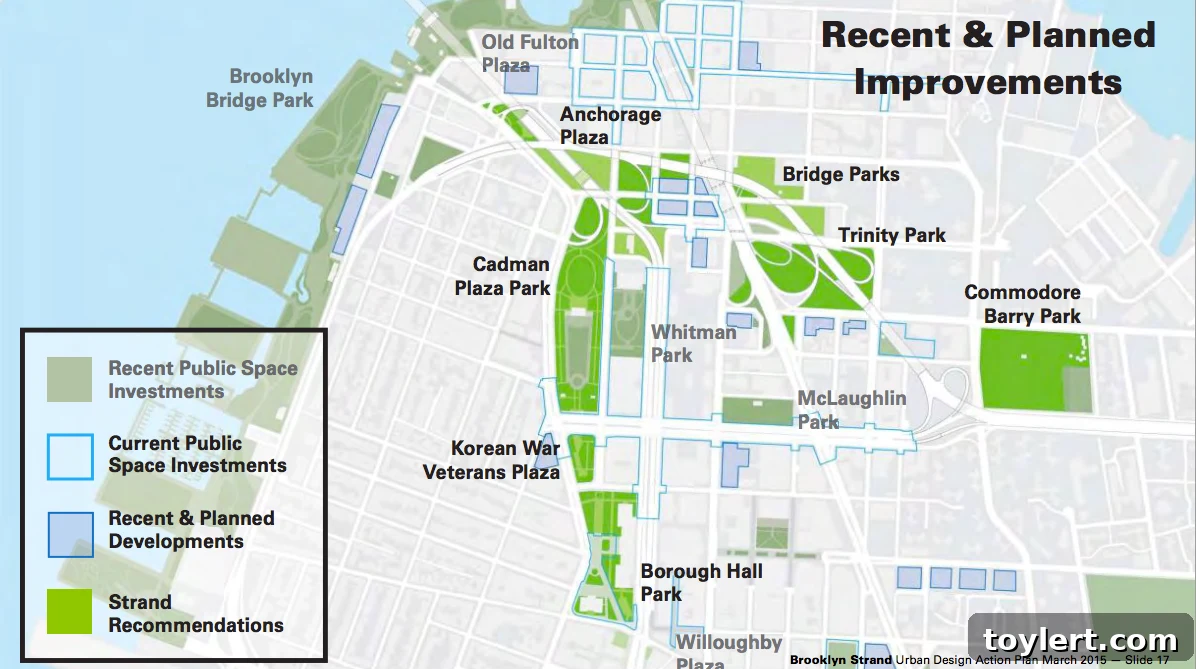
The core objective of the Brooklyn Strand is to significantly expand public space and facilitate easier, more enjoyable pedestrian movement across key Brooklyn neighborhoods, including Brooklyn Heights and Dumbo. These areas, rich in history and potential, are poised for a significant enhancement in liveability and connectivity. During a recent Community Board 2 meeting, which garnered considerable local interest, Claire Weisz, a principal at WXY Studio, presented an exciting array of proposed improvements and evocative renderings. These proposals focused on critical public areas such as Borough Hall Park, Cadman Plaza Park, Commodore Barry Park, and the vital approaches to both the Brooklyn and Manhattan bridges.
The Vision Behind the Brooklyn Strand: Connecting a Disconnected Borough
The Brooklyn Strand is more than just a park project; it’s a vision for a more cohesive, accessible, and green Brooklyn. For decades, the BQE has acted as a formidable barrier, severing downtown Brooklyn from its waterfront and creating pockets of underutilized or neglected public land. This project aims to mend these urban fractures, creating a continuous, verdant corridor that fosters community engagement, promotes active lifestyles, and enhances the ecological health of the borough. By connecting disparate elements of the urban fabric, the Strand promises to transform how residents and visitors experience Brooklyn, making it easier and more pleasant to walk, cycle, and enjoy public green spaces.
WXY Studio’s approach has been deeply rooted in community input, ensuring that the final recommendations reflect the genuine needs and aspirations of local residents and businesses. The year-long series of workshops provided a vital platform for dialogue, allowing the design team to integrate diverse perspectives into their master plan. This participatory design process is fundamental to the project’s success, ensuring that the resulting public spaces are truly owned and cherished by the communities they serve.
Key Areas of Proposed Transformation
The recommendations presented by WXY Studio outline a detailed strategy for enhancing several pivotal public spaces, each playing a unique role in the overall Brooklyn Strand vision:
Borough Hall Park: A Revitalized Civic Heart
Borough Hall Park, situated at the nexus of civic life in Brooklyn, currently serves as a vital but often understated public space. The proposed enhancements aim to elevate its status as a vibrant civic square. Plans include extensive landscaping with diverse native plantings, providing more shaded areas and improving biodiversity. Thoughtfully designed seating arrangements will encourage relaxation and social interaction, while improved pathways will ensure greater accessibility for all, including those with mobility challenges. The objective is to better integrate the park with the surrounding historic architecture and the bustling activities of Borough Hall, making it a more inviting and functional hub for residents and visitors alike.
Cadman Plaza Park: Bridging History and Modernity
Cadman Plaza Park holds significant historical importance, serving as a gateway to the Brooklyn Bridge and a greenspace adjacent to key courthouses. Despite its prime location, its potential often remains untapped. WXY Studio’s vision for Cadman Plaza Park focuses on making it a more active and engaging public realm. Proposed improvements include refreshed greenery, new flexible open spaces for community events and gatherings, and enhanced pedestrian connections that mitigate the isolating effect of surrounding roadways. Particular attention will be paid to softening the visual and noise impact of the nearby BQE, potentially through strategic planting and sound-dampening design elements, thus transforming a barrier into a more pleasant backdrop.
Commodore Barry Park: A Community Oasis Reimagined
Commodore Barry Park is a critical recreational asset for the local communities surrounding the Navy Yard. The Brooklyn Strand project aims to bolster its role as a vibrant community hub. Recommendations for this park include upgrades to recreational facilities, such as sports courts and playgrounds, to better serve local families and youth. Improved lighting and security measures will create a safer and more welcoming environment after dark. Furthermore, the plan seeks to strengthen the park’s connections to the Brooklyn Navy Yard and surrounding residential areas, ensuring it acts as a true anchor for neighborhood life, offering much-needed green space for active and passive recreation.
Brooklyn and Manhattan Bridge Approaches: Iconic Gateways Enhanced
The approaches to the Brooklyn and Manhattan bridges are more than just transit points; they are iconic gateways to New York City. The Brooklyn Strand project intends to transform these functional areas into aesthetically pleasing and highly functional pedestrian and cyclist pathways. This includes beautification efforts, such as new planting beds and public art installations, alongside critical safety improvements for pedestrians and cyclists. The goal is to create a more seamless, enjoyable, and safe experience for those traversing these historic structures, turning a commute into a scenic journey and making these vital links feel like integral parts of the green network.
Impact and Long-Term Benefits of the Brooklyn Strand
The realization of the Brooklyn Strand project promises a multitude of benefits across environmental, social, and economic dimensions, cementing Brooklyn’s reputation as a leader in urban innovation.
Environmental Resilience and Sustainability
By significantly increasing the amount of green infrastructure, the Brooklyn Strand will contribute to greater environmental resilience. Enhanced tree cover and new plantings will help improve air quality, absorb stormwater runoff, and mitigate urban heat island effects, making the city cooler and more sustainable. These green corridors will also provide new habitats for urban wildlife, promoting biodiversity within the bustling city.
Enhanced Community Well-being and Social Cohesion
Creating more accessible and inviting public spaces directly translates to improved community well-being. The Strand will foster greater social interaction, providing natural gathering places for residents of all ages. Increased walkability and bikeability will encourage more active lifestyles, contributing to better public health outcomes. These redesigned spaces will also instill a stronger sense of civic pride and ownership among residents, strengthening the social fabric of the neighborhoods.
Economic Vibrancy and Local Growth
Urban revitalization projects of this scale often stimulate local economic growth. The enhanced appeal of Brooklyn’s public spaces can attract new visitors and residents, potentially boosting local businesses, cafes, and cultural institutions. Increased property values in surrounding areas are also a common outcome, contributing to the overall economic health of the borough. The Strand will become a new draw for tourism, showcasing Brooklyn’s commitment to green infrastructure and livable urban design.
Seamless Urban Connectivity
Perhaps the most profound impact of the Brooklyn Strand will be its success in establishing truly seamless pedestrian and bike paths. By bridging the physical barriers posed by major roadways and neglected zones, the project will create a fluid network that connects residents to their waterfronts, parks, civic buildings, and cultural attractions with unprecedented ease. This enhanced connectivity will redefine urban mobility in Brooklyn, making it a more pedestrian-friendly and enjoyable place to navigate.
Challenges and the Path Forward
While the vision for the Brooklyn Strand is inspiring, its implementation will undoubtedly face challenges. Securing adequate funding, navigating complex urban logistics, and ensuring a phased construction process that minimizes disruption to daily life will be critical. Ongoing community involvement will also be essential to ensure the project continues to meet evolving needs and maintains widespread support. However, with the detailed planning from WXY Studio and the strong community backing demonstrated thus far, the Brooklyn Strand is well-positioned to become a landmark achievement in urban design.
Conclusion: A Greener, More Connected Brooklyn on the Horizon
The Brooklyn Strand represents a bold and essential step towards a greener, more connected, and more vibrant Brooklyn. By transforming underutilized spaces and overcoming historical barriers, WXY Studio’s recommendations offer a compelling blueprint for enhancing public life and environmental quality across key neighborhoods. This ambitious project promises to redefine urban living, creating a network of accessible green spaces that will serve as a lasting legacy for future generations of Brooklynites. The journey ahead will require continued dedication and collaboration, but the promise of a more unified and sustainable Brooklyn makes the Brooklyn Strand an endeavor of immense significance for New York City.