A Victory for Heritage: Greenpoint’s Historic 111 Noble Street Saved from Demolition
In a significant decision underscoring the vital role of historic preservation, a developer’s ambitious proposal to demolish a cherished pre-Civil War, two-family wood-frame building at 111 Noble Street in Brooklyn’s venerable Greenpoint Historic District was definitively rejected. The Landmarks Preservation Commission (LPC), after careful deliberation and hearing overwhelming community opposition, determined that there was insufficient justification for the razing of this historic structure, which has stood as a silent witness to centuries of Greenpoint’s evolution.
The developer, aiming to replace the historic residence with a modern apartment complex, presented arguments centered on the building’s purported structural instability and its alleged status as a “non-contributing building” to the historic district. This latter claim was primarily based on alterations the property had undergone over its long lifespan. However, these assertions met with fierce and unanimous resistance from the local community and preservation advocates, who vociferously countered both points, highlighting the inherent purpose of a landmark district: to safeguard against precisely such destructive proposals. The commission’s ultimate decision to take no action on the demolition request not only preserves a piece of Greenpoint’s invaluable architectural heritage but also reaffirms the community’s commitment to protecting its unique character.
The Developer’s Pursuit: Modernity Versus History on Noble Street
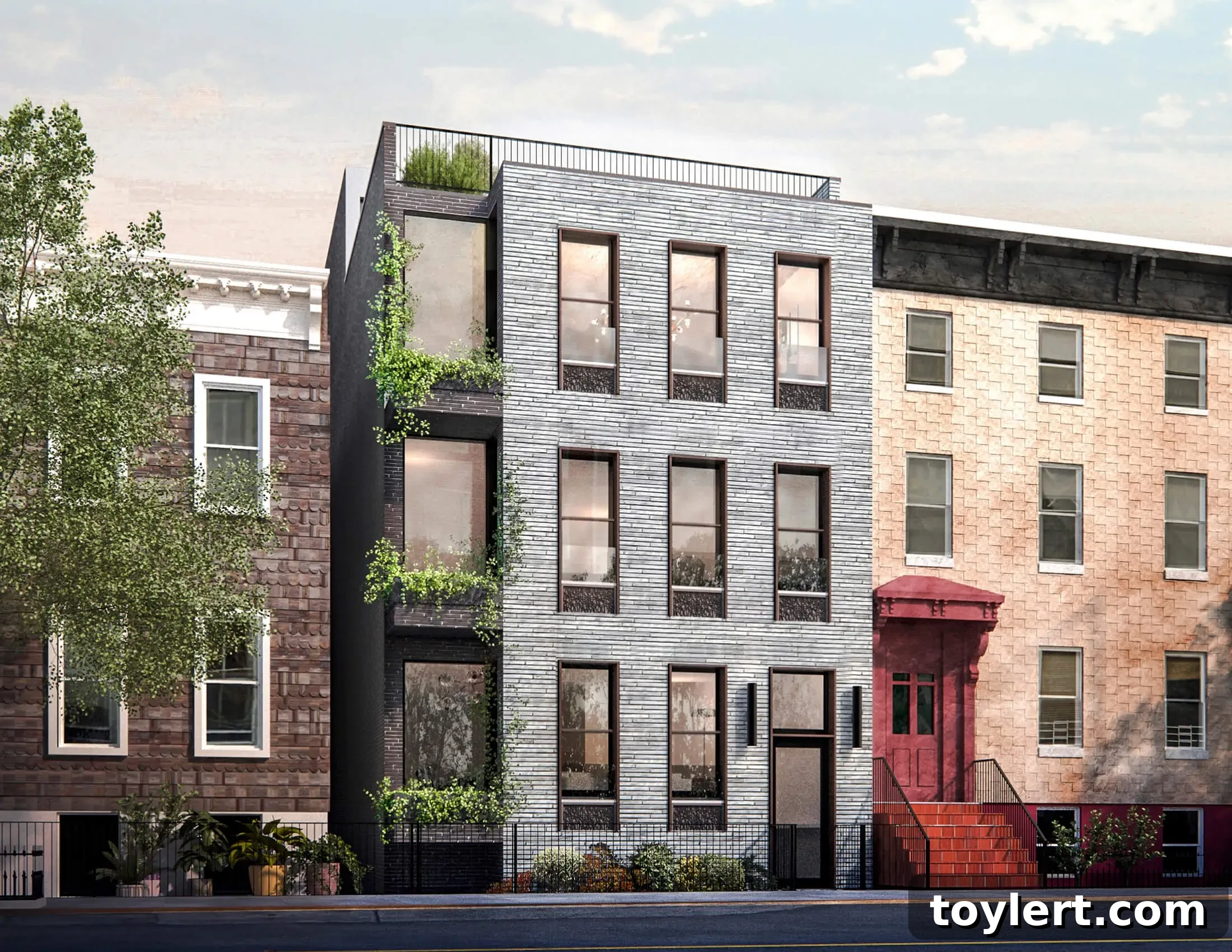
The core of the developer’s application to the Landmarks Preservation Commission revolved around the desire to replace the existing structure at 111 Noble Street with a new, larger, and undoubtedly more profitable modern apartment building. This plan, while potentially offering contemporary housing units, stood in stark contrast to the historic fabric of the Greenpoint neighborhood. To justify the demolition of the existing wood-frame house, the developer put forth two primary arguments. First, they contended that the structure was “structurally unsound,” suggesting it was beyond repair and posed a safety risk or was economically unviable to restore. Such claims are frequently employed in demolition proposals for older buildings, often requiring thorough engineering assessments to substantiate.
Secondly, and perhaps more controversially in the context of a historic district, the developer argued that the building was a “non-contributing building” to the Greenpoint Historic District. This assertion was based on the premise that the house had undergone various alterations since its original construction, thereby diminishing its historical integrity and making it less worthy of preservation. The implication was that its modified state no longer represented its original historical significance, and therefore, its removal would not detract from the overall character of the district. However, this argument often fails to consider that many historic properties have experienced natural evolution and adaptations over time, which themselves can tell a story about a building’s life and the changing needs of its inhabitants. The quest for maximizing development potential often clashes with the nuanced considerations of historic preservation, setting the stage for the contentious public hearing.
Greenpoint’s Architectural Legacy: The Enduring Charm of 111 Noble Street
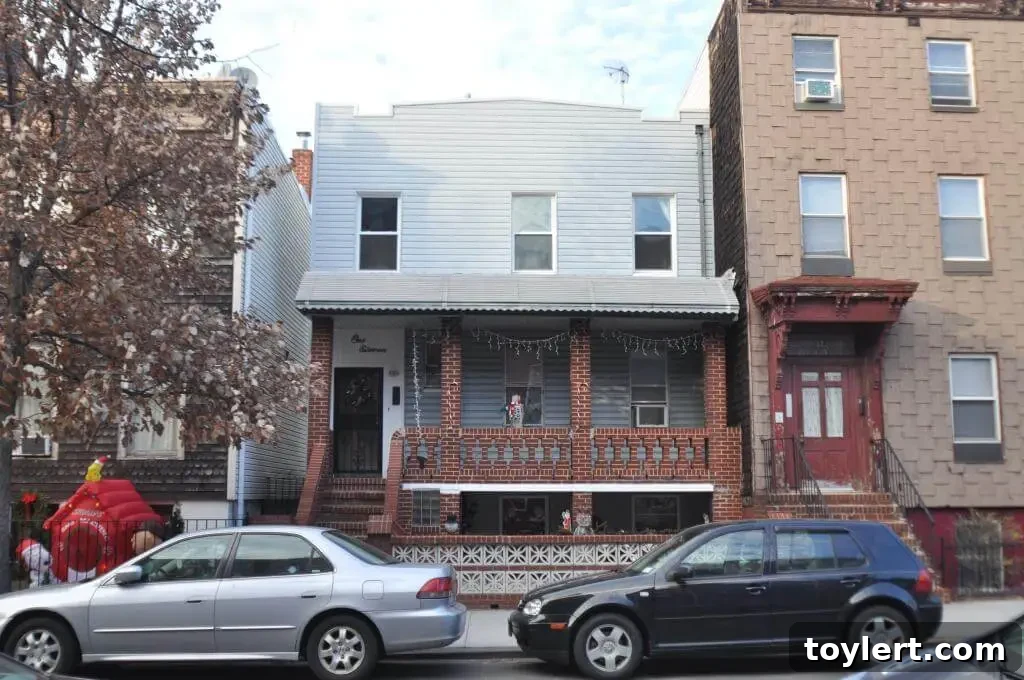
The residence at 111 Noble Street is more than just an old building; it is a tangible link to Greenpoint’s rich past, predating the American Civil War. Constructed as a two-family wood-frame dwelling, it represents a significant architectural type prevalent in Brooklyn during the mid-19th century. These wood-frame houses, increasingly rare as urban development progressed, are characteristic of the domestic architecture that shaped early Greenpoint, providing homes for generations of working-class families who helped build the burgeoning industrial waterfront. Their modest scale, simple yet elegant detailing, and construction methods offer invaluable insights into the building practices and socio-economic conditions of the era.
The developer’s claim that the house’s alterations rendered it a “non-contributing” element to the historic district sparked considerable debate. While it is true that many historic buildings undergo modifications over time—ranging from window replacements and siding upgrades to interior reconfigurations—these changes do not automatically negate their historical value. In fact, many alterations are part of a building’s ongoing narrative, reflecting different periods of occupation, architectural trends, or practical necessities. Preservation philosophy often advocates for the retention of altered historic structures, seeking to understand and interpret their layered histories rather than erasing them. The “non-contributing” label, if applied too broadly, could undermine the very purpose of a historic district, which aims to protect the collective streetscape and the individual elements that comprise it, even those that have evolved. The true significance of 111 Noble Street lies not just in its pristine original state, but in its survival as a testament to the district’s enduring character and its continuous adaptation through time, a living artifact in Greenpoint’s architectural tapestry.
Community United: The Unanimous Voice for Preservation
The public hearing before the Landmarks Preservation Commission served as a powerful testament to the Greenpoint community’s deep commitment to its historic fabric. Opposition to the demolition proposal was not merely strong; it was unanimous. Residents, local historians, and preservation groups converged to voice their concerns, meticulously refuting the developer’s claims. They presented compelling evidence and heartfelt testimony against the proposed razing, emphasizing that the house, far from being a non-contributing element, was an integral part of the historic district’s charm and authenticity. Community members articulated that the essence of a landmark district lies precisely in its ability to protect structures like 111 Noble Street from demolition, preserving the continuity of the streetscape and the architectural narrative of the neighborhood.
The unified front demonstrated by the community highlighted several critical points. Firstly, the public’s understanding of the historical value of the structure, regardless of its alterations, often surpasses a purely architectural assessment. Secondly, the emotional connection to familiar streetscapes and the fear of setting a dangerous precedent for other historic properties fueled the passionate resistance. Testifiers argued that allowing such a demolition would erode the very protective framework established by the Greenpoint Historic District designation, opening the door for similar proposals that prioritize new development over irreplaceable heritage. The community’s organized and articulate opposition played a pivotal role in informing the LPC’s decision-making process, showcasing the power of collective action in urban planning and preservation battles.
The Landmarks Preservation Commission’s Deliberation: A Call for Alternatives
The Landmarks Preservation Commission (LPC) is New York City’s primary agency responsible for identifying and designating the city’s landmarks and historic districts, and for regulating changes to those properties. Its role is to protect the architectural, historical, and cultural heritage of the city. In the case of 111 Noble Street, the commission meticulously considered the owner’s request for a Certificate of Appropriateness for demolition, a necessary step for any proposed changes to a designated landmark property. This process typically involves reviewing submitted plans, architectural drawings, and detailed reports, as well as conducting public hearings to gather testimony from all stakeholders, including the applicant, community boards, and the general public.
Following a thorough review of the evidence and the compelling arguments presented by both the developer and the community, the LPC ultimately opted to take no action on the demolition request. This decision was a direct result of their finding that there was “insufficient proof that demolition was necessary.” This judgment underscored the commission’s high standard for allowing the removal of historic structures, emphasizing that demolition should be a last resort, not a default option for development. Furthermore, the commission proactively suggested that the developer explore viable alternatives to demolition, such as a sensitive addition to the existing structure or a comprehensive renovation that respects the building’s historic character while accommodating modern needs. This recommendation highlights the LPC’s preference for adaptive reuse and preservation over outright destruction, promoting solutions that can achieve both development goals and heritage protection.
Broader Implications: The Balance Between Progress and Preservation
The decision regarding 111 Noble Street carries significant implications beyond the immediate property, resonating through the broader discourse on urban development and historic preservation. It serves as a powerful reminder of the delicate balance between fostering new growth and safeguarding the irreplaceable architectural heritage that defines New York City’s unique neighborhoods. In rapidly gentrifying areas like Greenpoint, where land values are soaring, the pressure to replace older, smaller structures with larger, more profitable modern buildings is immense. This case demonstrates that historic district designations are not mere formalities but active protective measures, capable of resisting market pressures when the community and regulatory bodies stand firm.
The outcome reinforces the importance of the Landmarks Preservation Commission’s mandate, affirming its role as a critical arbiter in these often-contentious battles. LPC decisions set precedents, influencing how developers approach projects in historic districts and empowering communities to advocate for their heritage. It underscores the value of maintaining the integrity of historic districts, which contribute not only to a neighborhood’s aesthetic appeal but also to its cultural identity, sense of place, and economic vitality through heritage tourism and property value stability. The preservation of 111 Noble Street offers a case study in how thoughtful regulation, combined with robust community engagement, can ensure that the narrative of a city’s past continues to enrich its future, rather than being erased in the name of progress.
Conclusion: A Resounding Victory for Greenpoint’s Enduring Character
The rejection of the demolition proposal for 111 Noble Street marks a resounding victory for historic preservation in the Greenpoint Historic District. It stands as a testament to the unwavering dedication of the local community, whose collective voice proved instrumental in defending a tangible piece of Brooklyn’s pre-Civil War legacy. The Landmarks Preservation Commission’s decisive action, based on a rigorous assessment and a commitment to its mandate, reinforced the critical principle that historic structures within designated districts are not mere impediments to development but invaluable assets to be protected and celebrated.
This outcome sends a clear message: the architectural heritage of Greenpoint, and indeed all of New York City’s historic districts, is not to be easily sacrificed for the sake of new construction. Instead, it encourages developers to explore innovative and sensitive approaches, such as adaptive reuse or contextual additions, that respect and integrate with the existing historic fabric. As 111 Noble Street continues to stand proudly amidst its neighbors, it will serve as an ongoing symbol of Greenpoint’s enduring character and the successful collaboration between regulatory bodies and engaged citizens dedicated to safeguarding the stories etched into the very foundations of their beloved community.