An Enduring Masterpiece: Discovering the Historic Charm of 395 Sterling Place in Prospect Heights
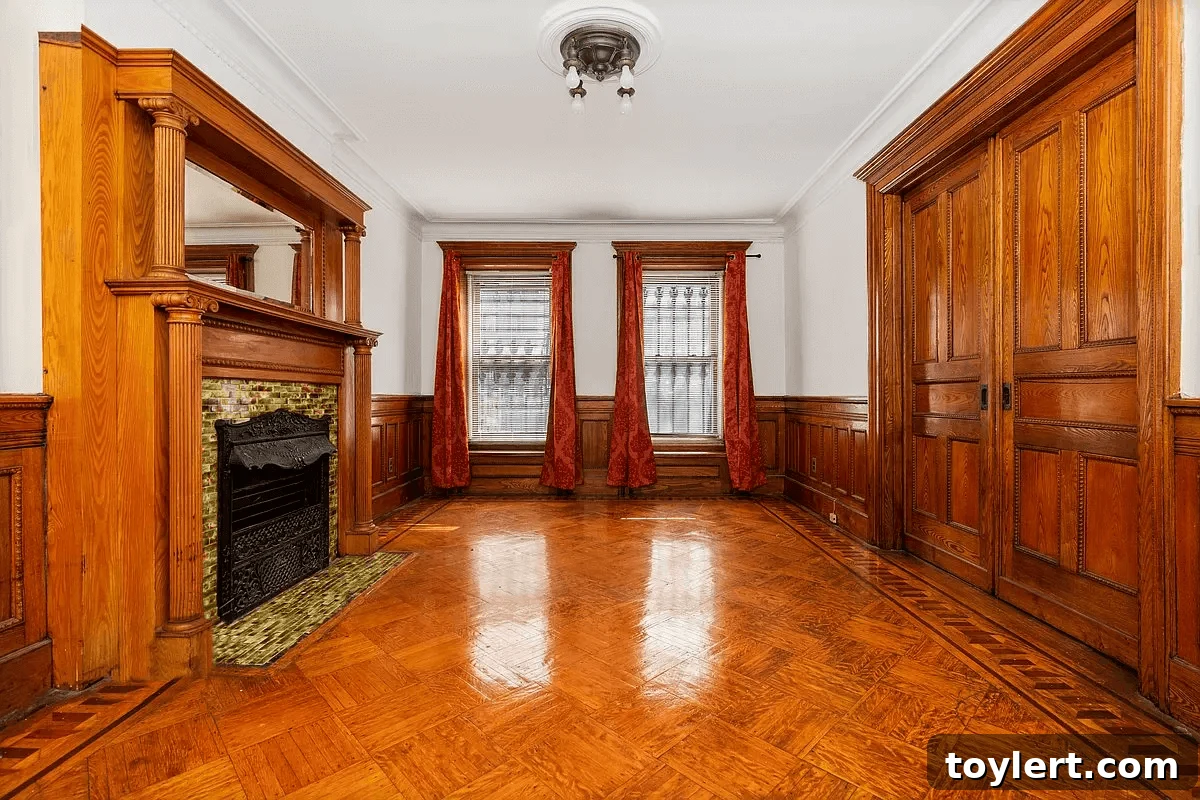
Nestled within the vibrant and historically rich Prospect Heights neighborhood of Brooklyn, 395 Sterling Place stands as a remarkable testament to late 19th-century architectural grandeur and enduring charm. This exquisite narrow row house, dating back to the 1890s, offers a captivating journey into a bygone era, meticulously preserving many of the interior elements that define its distinguished heritage. From the elegant pier mirrors reflecting natural light to the intricately carved mantels, classic woodwork, and functional passthrough, every detail within this historic Brooklyn home speaks volumes about its origins and the skilled craftsmanship of its time. While the property has gracefully undergone thoughtful renovations over the years, ensuring its relevance for contemporary living, these updates have been executed with a keen eye towards maintaining its authentic character. As a result, 395 Sterling Place presents itself today in impeccable condition, a harmonious blend of historical integrity and modern comfort, making it a truly exceptional find in the coveted Prospect Heights real estate market.
A Glimpse into Brooklyn’s Architectural Heritage: 395 Sterling Place
Preserving the Past: Exquisite 1890s Interior Details
The interior of 395 Sterling Place is a treasure trove of period details, offering a rare opportunity to own a piece of Brooklyn’s architectural legacy. Upon entering, residents and visitors are immediately greeted by the distinctive features characteristic of an 1890s row house. The impressive pier mirrors, often found in parlors of the era, are not merely decorative elements but serve to amplify light and space, creating an expansive feel within the elegant living areas. These mirrors, typically flanked by rich millwork, would have been considered a mark of sophistication and social standing. The mantels, central to the home’s heating and social gathering points, showcase the diverse materials and stylistic nuances of the period, perhaps featuring intricate tile work, ornate carvings, or classic marble surrounds that evoke a sense of timeless elegance. Beyond these focal points, the extensive woodwork throughout the residence – from robust original doors and their casings to meticulously crafted baseboards, window frames, and stair railings – highlights the superior quality of materials and the artisanal skill prevalent in homes built during this flourishing epoch of Brooklyn design. Furthermore, the presence of a traditional passthrough, a practical feature facilitating seamless service between different rooms, underscores the thoughtful layout and functionality designed for the lifestyle of a prosperous 19th-century family. These well-preserved elements collectively contribute to a living environment that is both historically significant and remarkably comfortable.
The Allure of Prospect Heights: Location, Lifestyle, and Legacy
Located within the prestigious Prospect Heights Historic District, 395 Sterling Place benefits immensely from its prime position in one of Brooklyn’s most desirable neighborhoods. Prospect Heights is renowned for its tree-lined streets, stunning brownstones, and vibrant cultural scene, offering residents an unparalleled urban living experience. The district itself is a protected enclave, ensuring that the unique architectural character and historical ambiance are preserved for generations to come. Living here means being steps away from world-class institutions like the Brooklyn Museum, the Brooklyn Botanic Garden, and the iconic Grand Army Plaza, not to mention the expansive green spaces of Prospect Park. The neighborhood boasts a lively array of independent boutiques, acclaimed restaurants, and charming cafes, creating a dynamic community feel. Excellent transportation links connect Prospect Heights residents to Manhattan and other parts of Brooklyn with ease, making it an ideal location for commuters and urban explorers alike. The combination of historical significance, architectural beauty, and a thriving contemporary lifestyle makes properties like 395 Sterling Place not just homes, but investments in a rich legacy and a superior quality of life in New York City.
The Legacy of Design: Axel Hedman and the Sterling Place Row
Architectural Grandeur: Blending Romanesque and Renaissance Revival Styles
395 Sterling Place is not merely a house; it is a distinguished component of an architecturally significant row of eleven sandstone residences. These homes were masterfully conceived by Axel Hedman, a celebrated Brooklyn architect whose work left an indelible mark on the borough’s streetscapes during the late 19th and early 20th centuries. Hedman was known for his ability to synthesize diverse architectural influences, and this particular row on Sterling Place exemplifies his innovative approach. Here, he skillfully blended elements of both the Renaissance Revival and Romanesque Revival styles, resulting in facades that are both elegant and robust. At No. 395, the Romanesque Revival influence is particularly pronounced, lending a distinct character to its exterior. This is most evident in the striking trio of keystoned, arched lintels that grace the front door and the parlor windows above. These architectural details, characterized by their sturdy arches and prominent keystones, evoke the timeless strength and solidity of Romanesque design, while the overall composition retains the refined proportions typical of Renaissance-inspired architecture. Such thoughtful design choices not only enhance the visual appeal of the property but also contribute significantly to the aesthetic cohesion and historic value of the entire Prospect Heights Historic District, making Hedman’s creations highly sought after by those who appreciate the artistry of period architecture.
The Visionaries Behind the Brownstone: Bessie L. Martin and William B. Martin
The construction of this impressive row, including 395 Sterling Place, was meticulously documented in filings from November 1898, which credit Axel Hedman with the design for the owner, Bessie L. Martin. While Axel Hedman provided the architectural vision, the practical execution was likely overseen by Bessie’s husband, William B. Martin, a builder of repute during that era. This fascinating historical detail sheds light on the property development practices of the late 19th century and raises intriguing questions about the role of women in business during a period when societal norms often limited their public participation. It is not definitively clear whether Bessie L. Martin’s ownership was a strategic business decision to safeguard assets, a common practice for families in that era, or if she was an active and engaged participant in her husband’s prolific building projects. However, the fact that her name appears on official documents as the owner highlights the quiet but significant contributions women made to the burgeoning real estate landscape of Brooklyn. Regardless of the precise nature of her involvement, the Martin family’s collaboration resulted in the creation of a row of homes that continues to define the architectural character of Prospect Heights, standing as a lasting tribute to their collective endeavor and foresight.
An Evolving Narrative: From Single-Family to Two-Family Dwelling
Adapting to the Times: The Rooming House Era
Initially constructed as a grand single-family residence, designed to accommodate the lifestyle of a prominent late 19th-century family, 395 Sterling Place witnessed significant shifts in its usage over the decades, mirroring the broader socio-economic changes occurring in Brooklyn and across the nation. By the 1930s, newspaper accounts reveal that the property had transitioned into a rooming house, operated by a Mrs. O. Frederickson. This transformation was not uncommon during that era, particularly in urban centers like Brooklyn, where economic pressures of the Great Depression compelled many property owners to adapt their large homes to generate income. Rooming houses provided much-needed affordable accommodation for a diverse population, including single professionals, laborers, and new arrivals seeking opportunities in the bustling city. This period in the house’s history reflects a time of pragmatic adaptation, where grand private homes evolved to serve a broader community need, offering a glimpse into the changing dynamics of urban living and the resilience of property owners in navigating challenging economic landscapes. While different from its original purpose, the rooming house era is an integral part of 395 Sterling Place’s rich and multifaceted history, showcasing its inherent adaptability.
The Modern Appeal of a Two-Family Home in Prospect Heights
The rooming house chapter of 395 Sterling Place eventually concluded, at least by 1946, when official certificates of occupancy confirm its conversion to a two-family dwelling. This conversion marked another pivotal moment in the property’s evolution, reflecting post-World War II demographic shifts and housing demands. The two-family configuration, which persists to this day, offers immense versatility and appeal in the contemporary Brooklyn real estate market. For homeowners, it presents a unique opportunity for flexible living arrangements, whether it’s generating substantial rental income from a separate unit to offset mortgage costs, providing a private space for extended family members, or serving as a dedicated home office or studio. This setup is particularly attractive in a high-demand neighborhood like Prospect Heights, where rental units command premium prices. Furthermore, owning a two-family historic home like 395 Sterling Place is a sound investment, combining the timeless allure of classic architecture with the practical benefits of income generation. The careful partitioning into two distinct units, each maintaining its own character while benefiting from the building’s overall historic charm, ensures that this property continues to be a highly desirable asset, offering both a beautiful residence and a strategic financial opportunity for its discerning owners.
Investing in History: The Enduring Value of a Prospect Heights Row House
Investing in a historic row house like 395 Sterling Place in Prospect Heights is more than just acquiring property; it is embracing a piece of New York City’s past while securing a valuable asset for the future. Properties within the Prospect Heights Historic District are renowned for their stability and appreciation, largely due to the district’s protected status, which ensures the preservation of its architectural integrity and charm. The intrinsic value of homes designed by acclaimed architects such as Axel Hedman, combined with their irreplaceable period details, makes them highly sought after. These residences offer a unique blend of character, spaciousness, and a connection to history that modern constructions simply cannot replicate. The rarity of such well-preserved 1890s interiors, coupled with the enduring appeal of brownstone living in a vibrant, amenity-rich neighborhood, positions 395 Sterling Place as an exceptional investment. Its history as both a single-family home and a two-family dwelling further underscores its adaptability and long-term potential for various ownership models, from a grand private residence to a strategic income-generating property. Owners of such distinguished homes are not just residents; they become custodians of a rich cultural heritage.
Experiencing Prospect Heights Living: Beyond the Walls of 395 Sterling Place
Life at 395 Sterling Place extends far beyond its elegant walls, immersing residents in the unparalleled lifestyle offered by Prospect Heights. This neighborhood is celebrated for its harmonious blend of historic tranquility and dynamic urban energy. Weekends can be spent strolling through the majestic pathways of Prospect Park, exploring the diverse collections at the Brooklyn Museum, or admiring the horticultural wonders of the Brooklyn Botanic Garden. For those who appreciate culinary delights, Prospect Heights boasts an impressive array of eateries, from cozy cafes perfect for a morning coffee to Michelin-starred restaurants offering exquisite dining experiences. Boutique shops and local markets provide a unique shopping experience, fostering a strong sense of community. The neighborhood’s excellent public schools, family-friendly atmosphere, and abundant green spaces make it particularly appealing to families. Commuting is a breeze with multiple subway lines providing quick access to Manhattan and other parts of Brooklyn, making it an ideal base for professionals. Living at 395 Sterling Place means being part of a vibrant, diverse, and well-connected community that truly embodies the best of Brooklyn living.
A Timeless Opportunity: 395 Sterling Place Awaits its Next Chapter
In conclusion, 395 Sterling Place represents a rare and compelling opportunity for discerning buyers seeking a home that offers both historical elegance and modern functionality. This architecturally significant row house, with its meticulously preserved 1890s details and its rich history of adaptation, stands as a beacon of Prospect Heights’ enduring allure. From the masterful design by Axel Hedman to the intriguing history of its ownership and its evolution into a versatile two-family dwelling, every aspect of this property tells a unique story. Its location within the esteemed Prospect Heights Historic District further solidifies its value, promising not just a beautiful place to live, but a wise investment in a thriving, culturally rich community. For those who appreciate fine craftsmanship, architectural heritage, and the vibrant lifestyle of one of Brooklyn’s most cherished neighborhoods, 395 Sterling Place is more than just a house for sale; it is an invitation to become part of a legacy. This exceptional property is ready to embark on its next chapter, awaiting an owner who will cherish its past while creating new memories within its historic walls.