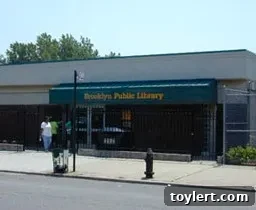
Red Hook Library: A Beacon of Resilience Reopens After Hurricane Sandy
In a powerful testament to community resilience and the enduring spirit of Brooklyn, the Red Hook Library branch is set to reopen its doors to the public on Tuesday, April 2, at 1 p.m., as announced by the Brooklyn Public Library. This much-anticipated reopening marks a significant milestone in the borough’s ongoing recovery efforts following the devastating impact of Hurricane Sandy. The Red Hook branch, along with several others across Brooklyn, was forced to shutter immediately after the superstorm wreaked havoc in October 2012, submerging countless neighborhoods and vital infrastructure in its wake.
The journey to recovery for the Red Hook Library has been particularly symbolic. Located in a low-lying area highly susceptible to flooding, the branch bore the brunt of Sandy’s storm surge, suffering extensive damage that rendered it unusable for its primary purpose for months. However, in an inspiring pivot that showcased the critical role libraries play beyond mere book lending, the Red Hook Library quickly transformed into a vital lifeline for the beleaguered community. In the challenging weeks that followed the disaster, it served as a crucial distribution hub and a much-needed warming center, providing essential supplies, warmth, and a semblance of normalcy to residents grappling with power outages, displacement, and widespread destruction. Volunteers and library staff worked tirelessly to support their neighbors, embodying the true spirit of public service.
The Devastating Impact of Hurricane Sandy on Brooklyn’s Libraries
Hurricane Sandy’s impact on the Brooklyn Public Library (BPL) system was unprecedented. The storm surge, reaching historic levels, inundated several branches, particularly those situated along the borough’s extensive coastline. Red Hook, Coney Island, and Gerritsen Beach were among the hardest hit, with floodwaters compromising infrastructure, destroying collections, and damaging vital equipment. These libraries, often seen as anchors in their respective communities, were suddenly silent, their resources inaccessible at a time when they were perhaps needed most.
The closure of these branches meant a disruption of crucial services: access to computers and the internet, educational programs for children and adults, job search assistance, and, of course, the solace and escape offered by books. For many Brooklynites, libraries are more than just buildings; they are safe spaces, community hubs, and egalitarian centers of knowledge and connection. Their sudden inaccessibility highlighted their indispensable role in the urban fabric, making their restoration a top priority for the BPL and the city.
Red Hook’s Transformation: From Disaster Zone to Relief Hub
The immediate aftermath of Hurricane Sandy presented immense challenges. Red Hook, an isolated industrial and residential neighborhood, found itself cut off from much of the city. With power out, transportation disrupted, and many homes damaged, residents faced an uphill battle for survival and recovery. It was in this dire context that the Red Hook Library stepped up, demonstrating extraordinary adaptability and commitment to its community.
Instead of merely being a damaged building awaiting repairs, the library became a beacon of hope and practical assistance. It quickly evolved into a distribution center, where essential supplies like bottled water, blankets, batteries, and non-perishable food items were handed out to those in need. Simultaneously, it functioned as a warming center, offering a safe, heated space for residents who had lost power in their homes, providing a crucial refuge from the cold. This transformation underscored the library’s intrinsic value as a flexible community asset, capable of adapting to unforeseen crises and serving in capacities far beyond its traditional remit.
Recognizing the prolonged period of closure and the particular needs of children affected by the storm, the Brooklyn Public Library also deployed its bookmobiles to the Red Hook area. These mobile libraries provided free books and organized activities for children, offering a much-needed distraction, a sense of routine, and continued access to educational resources during a profoundly unsettling time. The sight of the bookmobile, a symbol of continuity and learning, brought smiles and a temporary reprieve from the difficult realities facing families.
The Road to Reopening: Challenges and Triumphs
The reopening of the Red Hook Library is the culmination of months of dedicated effort, meticulous planning, and significant investment in repairs and restoration. Floodwaters had left a trail of destruction, damaging everything from flooring and shelving to electrical systems and the priceless collection of books and media. The restoration process involved extensive remediation to prevent mold, replacement of compromised infrastructure, and the careful re-stocking of materials.
The BPL worked closely with city agencies, FEMA, and various community partners to secure funding and resources for the comprehensive rebuilding effort. This involved not just superficial repairs but also an assessment of how to make the branch more resilient to future climate events, incorporating lessons learned from Sandy’s devastation. The focus was not merely on restoring the library to its previous state but on enhancing its capabilities and safeguarding its future, ensuring it could continue to serve Red Hook for generations to come. The collective determination to bring this vital community hub back online reflects a profound understanding of the library’s role in fostering education, culture, and social cohesion.
A System-Wide Recovery: Other Brooklyn Libraries’ Journeys
While Red Hook celebrates its reopening, the broader Brooklyn Public Library system continues its recovery journey. The reopening of branches began in earnest in January, with many smaller affected branches quickly resuming services. However, some of the most severely damaged locations, like the Coney Island Library and Learning Center and the Gerritsen Library branch, have faced more protracted recovery periods.
The Coney Island branch, in particular, suffered catastrophic flooding, with waters reaching several feet high and causing structural damage that necessitates a far more extensive rebuilding process. Its reopening is not anticipated until October, highlighting the scale of the destruction it endured. Similarly, the Gerritsen Beach branch, also heavily impacted, is expected to reopen sometime this spring. These staggered reopenings underscore the varied degrees of damage sustained and the complex, often painstaking, nature of post-disaster reconstruction.
Each reopening is a victory, not just for the Brooklyn Public Library, but for the neighborhoods they serve. It signifies a return to normalcy, a re-establishment of vital services, and a renewed commitment to the educational and cultural enrichment of Brooklyn’s diverse communities. The BPL’s systematic approach to recovery, prioritizing safety, structural integrity, and long-term resilience, has been crucial in navigating this challenging period.
The Enduring Significance of Libraries in Community Recovery
The reopening of the Red Hook Library branch transcends the mere resumption of library services. It stands as a powerful symbol of recovery, hope, and the indomitable spirit of a community that refused to be defeated by disaster. For the residents of Red Hook, the library is more than a place to borrow books; it is a community living room, a place for learning, connecting, and dreaming. Its absence left a void, and its return fills that void with renewed energy and optimism.
This event serves as an important reminder of the multifaceted role public libraries play in society, especially during times of crisis. They are not only repositories of knowledge but also critical infrastructure for disaster relief, community organizing, and the long-term process of rebuilding social capital. The lessons learned from Sandy, and the adaptive responses of institutions like the Red Hook Library, will undoubtedly inform future disaster preparedness strategies for libraries and community centers worldwide.
The Red Hook community, known for its strong bonds and proactive spirit, will undoubtedly welcome its library back with open arms. It’s a moment to celebrate resilience, to acknowledge the hard work of countless individuals, and to look forward to a future where the library continues to serve as a cornerstone of education, connection, and community life in Red Hook.
For more insights into the initial phase of library reopenings across the borough, you can refer to earlier reports such as: Brooklyn Libraries Start Reopening After Sandy [Brownstoner]
Photo credit: The Brooklyn Public Library (BPL)