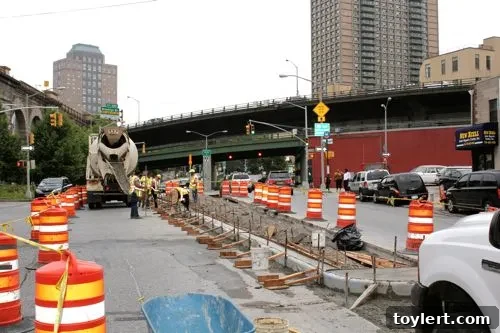
Old Fulton Street, a historic artery connecting Brooklyn’s vibrant DUMBO neighborhood to the iconic Brooklyn Bridge Park, is undergoing a significant transformation. The New York City Department of Transportation (NYC DOT) embarked on a comprehensive streetscaping initiative to redefine this bustling thoroughfare. Starting in May 2012, the project involves the construction of a half-dozen new medians strategically placed between Hicks Street and the sprawling waterfront park. These improvements aim to enhance both the aesthetic appeal and the functional efficiency of one of Brooklyn’s most frequently visited streets.
The initial phase of the project is particularly ambitious, focusing on two prominent medians that are notably larger than the others. These will serve as green anchors, featuring several newly planted trees that promise to introduce a much-needed touch of nature into the urban landscape. Given the considerable width of Old Fulton Street and the constant stream of tourists, commuters, and local residents passing through, these enhancements are widely considered a thoughtful and beneficial intervention. They represent a vital component of a broader, more extensive makeover for the streets in this dynamic area, details of which were previously outlined in a comprehensive NYC DOT slideshow presented to Community Board 2.
A Vision for Old Fulton Street: Enhancing Urban Aesthetics and Functionality
The revitalization of Old Fulton Street is more than just a superficial facelift; it’s a strategic endeavor by the NYC DOT to create a safer, more inviting, and environmentally conscious public space. Streetscaping, by definition, encompasses the design and improvement of the physical elements within a street’s right-of-way. This includes everything from planting trees and installing street furniture to enhancing pedestrian zones and managing traffic flow. For Old Fulton Street, a location that serves as a critical gateway to one of Brooklyn’s premier attractions, a well-executed streetscaping project can significantly uplift the entire neighborhood’s character.
The chosen design for the new medians reflects a thoughtful balance between aesthetic enhancement and practical urban planning. By introducing green elements, the DOT is not merely adding visual interest but also leveraging the environmental benefits of urban forestry. These medians will act as natural dividers, delineating traffic lanes and pedestrian areas, thus promoting a more organized and aesthetically pleasing streetscape. The project addresses the historical challenges of managing heavy foot traffic and vehicular movement in a district that balances its industrial past with its modern role as a cultural and recreational hub.
The Strategic Placement of New Medians
The decision to build a half-dozen new medians along the stretch of Old Fulton Street between Hicks Street and Brooklyn Bridge Park is highly strategic. This particular section of the street is characterized by its generous width, which, while accommodating, also often encourages higher vehicle speeds and can feel less hospitable to pedestrians. Medians, especially those with robust planting, naturally narrow the perceived roadway, prompting drivers to reduce their speed and drive more cautiously. This passive traffic calming is invaluable in an area teeming with pedestrians, including families, cyclists, and tourists engrossed in their surroundings.
The emphasis on the “first two under way” being the largest, complete with “several planted trees,” underscores a commitment to substantial green infrastructure. These larger medians will not only provide significant visual impact but also offer greater ecological benefits. Trees absorb carbon dioxide, release oxygen, filter pollutants, and provide shade, which is crucial during New York’s hot summer months. Their presence transforms barren stretches of asphalt into vibrant, living corridors, making the journey to and from Brooklyn Bridge Park a more enjoyable and refreshing experience for everyone.
Beyond Aesthetics: The Multifaceted Benefits of Urban Medians
The benefits of urban medians extend far beyond their visual appeal. They are sophisticated elements of urban design that contribute significantly to public safety, environmental sustainability, and the overall quality of city life. The medians on Old Fulton Street exemplify a modern approach to urban planning that prioritizes the well-being of its citizens and visitors.
Traffic Calming and Pedestrian Safety
One of the primary functions of street medians is to improve traffic flow and enhance pedestrian safety. In areas with wide streets like Old Fulton, medians create a physical separation between opposing directions of traffic, reducing the likelihood of head-on collisions. More importantly for pedestrians, they provide a safe refuge in the middle of the street, allowing individuals to cross busy roadways in two stages rather than one continuous dash. This is especially critical for children, the elderly, and those with mobility challenges. By breaking up wide crossings, medians significantly reduce pedestrian exposure time to traffic, making the area around Brooklyn Bridge Park much safer for the thousands who traverse it daily.
Green Infrastructure and Environmental Impact
The incorporation of planted trees within these medians introduces vital green infrastructure into a densely built urban environment. Trees are natural air purifiers, filtering out particulate matter and harmful gases, thus improving local air quality. They also play a critical role in mitigating the urban heat island effect by providing shade and releasing water vapor through evapotranspiration, which cools the surrounding air. Furthermore, planted medians can assist with stormwater management, allowing rainwater to infiltrate the soil rather than overwhelming storm drains, thereby reducing runoff and potential flooding. This thoughtful integration of nature contributes to a more resilient and environmentally friendly urban ecosystem.
Enhancing the Pedestrian Experience and Local Economy
Beyond safety and environmental benefits, the new medians significantly enhance the pedestrian experience. A street lined with trees and aesthetically pleasing green spaces is inherently more inviting and pleasant to walk along. This improved ambiance encourages people to linger, explore, and enjoy their surroundings, which can have a positive ripple effect on local businesses. Tourists, in particular, are more likely to spend time and money in areas that offer a comfortable and visually appealing environment. Old Fulton Street, already a magnet due to its proximity to the Brooklyn Bridge and the park, will become an even more attractive destination, fostering increased economic activity in the DUMBO and Brooklyn Heights neighborhoods.
Old Fulton Street: A Historic Thoroughfare Reimagined
Old Fulton Street possesses a rich history, once serving as a bustling commercial artery connecting the Brooklyn waterfront to the heart of the borough. Today, it retains its importance as a gateway, albeit one transformed by the advent of Brooklyn Bridge Park and the revitalization of the DUMBO neighborhood. The street’s past as a crucial link for ferries and industrial activity is giving way to a future focused on pedestrian experience, cultural engagement, and green urbanism.
Its strategic location makes it a primary conduit for visitors arriving from Manhattan via the Brooklyn Bridge, as well as locals seeking recreation and cultural events within Brooklyn Bridge Park. This high volume of diverse users necessitates infrastructure that is robust, safe, and aesthetically pleasing. The streetscaping project directly addresses these contemporary needs, ensuring that Old Fulton Street continues to thrive as a vital part of Brooklyn’s urban fabric, respectfully evolving while honoring its historic roots.
The wide expanse of Old Fulton Street, which historically accommodated heavy industrial traffic, now presents an opportunity for innovative urban design. The medians help break up this expanse, providing visual cues and a sense of order that was previously lacking. They guide the eye, creating distinct zones for vehicles and pedestrians, and transforming what might have been an open, somewhat chaotic stretch into a harmonized urban corridor. This re-imagining ensures that the street feels less like a thoroughfare and more like a destination in itself.
NYC DOT’s Commitment to Public Spaces: A Broader Urban Vision
The Old Fulton Street project is a testament to the NYC DOT’s ongoing commitment to improving the quality of life for New Yorkers through thoughtful and sustainable urban planning. The department consistently works to transform city streets from mere transportation channels into vibrant public spaces that serve multiple functions—from mobility to recreation and community gathering. This initiative aligns perfectly with the DOT’s broader vision of creating safer streets, enhancing pedestrian environments, and fostering green infrastructure across the five boroughs.
Such projects are rarely conceived in isolation. They are often the result of extensive collaboration between city agencies, local community boards, and neighborhood stakeholders. The fact that details of this project were shared in a DOT slideshow to Community Board 2 highlights this collaborative spirit, ensuring that local needs and perspectives are integrated into the final design. This inclusive approach is fundamental to successful urban development, creating improvements that resonate with and genuinely benefit the people who live, work, and visit these areas.
The “Larger Makeover” Explained
While the new medians are a highly visible and impactful component, the “larger makeover of the streets in the area” likely encompasses a more comprehensive suite of enhancements. Such projects often involve upgrading existing infrastructure, including repaving roadways and refreshing sidewalk materials to improve pedestrian comfort and accessibility. Improved street lighting is another common element, enhancing safety and visibility during evening hours, which is particularly important for a tourist-heavy area.
Furthermore, a full streetscape makeover might include the installation of new street furniture, such as modern benches, bicycle racks, and updated waste receptacles, all designed to complement the area’s aesthetic. Wayfinding signage could also be improved, guiding visitors more easily to local attractions and transportation hubs. Collectively, these elements work in concert with the medians and planted trees to create a cohesive, user-friendly, and visually appealing urban environment that reflects the prestige and vibrancy of the DUMBO and Brooklyn Bridge Park area.
A Model for Sustainable Urban Development
The transformation of Old Fulton Street serves as an excellent model for sustainable urban development in densely populated cities. By prioritizing green infrastructure, pedestrian safety, and aesthetic quality, the project contributes to a more livable and resilient urban landscape. The long-term benefits extend beyond immediate improvements, fostering a healthier environment and enhancing the economic vitality of the surrounding neighborhoods.
Investing in such public space enhancements can significantly increase property values, attract new businesses, and instill a greater sense of community pride. Residents and visitors alike will benefit from cleaner air, reduced noise, and safer pathways. This forward-thinking approach ensures that Old Fulton Street not only meets the demands of current urban life but also stands as a testament to Brooklyn’s ongoing commitment to creating exceptional public spaces for future generations.
As the streetscaping project on Old Fulton Street progresses, the visual evidence of positive change is already becoming apparent. The initial construction of the medians, soon to be adorned with lush greenery, signifies a new chapter for this iconic Brooklyn street. This revitalization is a clear indicator of New York City’s dedication to continuously improving its urban fabric, transforming essential thoroughfares into beautiful, functional, and sustainable public assets.
The comprehensive nature of this makeover ensures that Old Fulton Street will not only manage its high volume of traffic and pedestrians more effectively but will also cement its status as a vibrant, welcoming gateway to one of Brooklyn’s most cherished parks. It’s a testament to how strategic urban design can significantly uplift a community, blending historical charm with modern urban necessities to create a truly exceptional public space.