Fort Greene Houses: A Legacy of Modern Living and WWII Resilience in Brooklyn
In the vibrant tapestry of Brooklyn’s history, few landmarks encapsulate the spirit of wartime innovation and social progress quite like the Fort Greene Houses. Conceived during the tumultuous years of World War II, this monumental complex stands as one of the New York City Housing Authority’s (NYCHA) foundational and most ambitious affordable housing projects. Its primary mission was to provide crucial shelter for the burgeoning population of Navy Yard workers and their families, who were vital to the war effort. When the very first residents stepped into their new homes in 1942, the Brooklyn Daily Eagle, a prominent voice of the era, dedicated an entire special section to extolling the virtues and revolutionary amenities of these cutting-edge, modern buildings.
The Genesis of a Vision: Meeting Wartime Housing Demands
The outbreak of World War II dramatically reshaped America’s urban centers, and Brooklyn was no exception. The Brooklyn Navy Yard, a bustling hub of shipbuilding and repair, experienced an unprecedented surge in its workforce. Thousands of skilled laborers, engineers, and support staff flocked to the area, creating an immediate and severe housing crisis. Traditional housing options were insufficient, overcrowded, and often substandard, posing a threat to both worker morale and productivity. In response to this critical need, the New York City Housing Authority, established to provide safe and sanitary housing for low-income residents, embarked on the ambitious Fort Greene Houses project.
Completed with remarkable speed, the Fort Greene Houses complex was not merely a collection of buildings; it was a testament to national determination and progressive urban planning. Federal funding and a sense of shared purpose underscored the project, transforming a previously underdeveloped area into a thriving community. It symbolized a commitment to ensuring that those on the home front, dedicating their lives to supporting the war effort, had access to decent, modern living conditions. This wasn’t just about providing shelter; it was about upholding dignity and fostering a stable environment for families during a period of immense uncertainty.
Architectural Innovation and Community Design
The term “revolutionary modern buildings” used by the Brooklyn Daily Eagle was no exaggeration. The Fort Greene Houses, designed by a team of prominent architects including the highly regarded Shreve, Lamb and Harmon (known for the Empire State Building), aimed to break away from the congested, often dark, and poorly ventilated tenement housing that characterized much of New York City. Instead, the design prioritized light, air, and space. The complex featured multiple stories of brick buildings arranged around expansive courtyards and green spaces, offering residents a sense of openness rarely found in urban dwellings of that era.
Beyond individual units, the overarching vision for Fort Greene Houses encompassed a holistic community environment. The layout included meticulously planned pedestrian pathways, playgrounds for children, and communal areas designed to foster interaction and a sense of belonging among residents. This integrated approach was groundbreaking, moving beyond the simple provision of housing to create a self-contained, supportive neighborhood. The commitment to providing not just walls and a roof, but a high quality of life, was a hallmark of NYCHA’s early projects and set a precedent for future affordable housing developments across the nation.
The Heart of the Home: Celebrating the 1940s Modern Kitchen
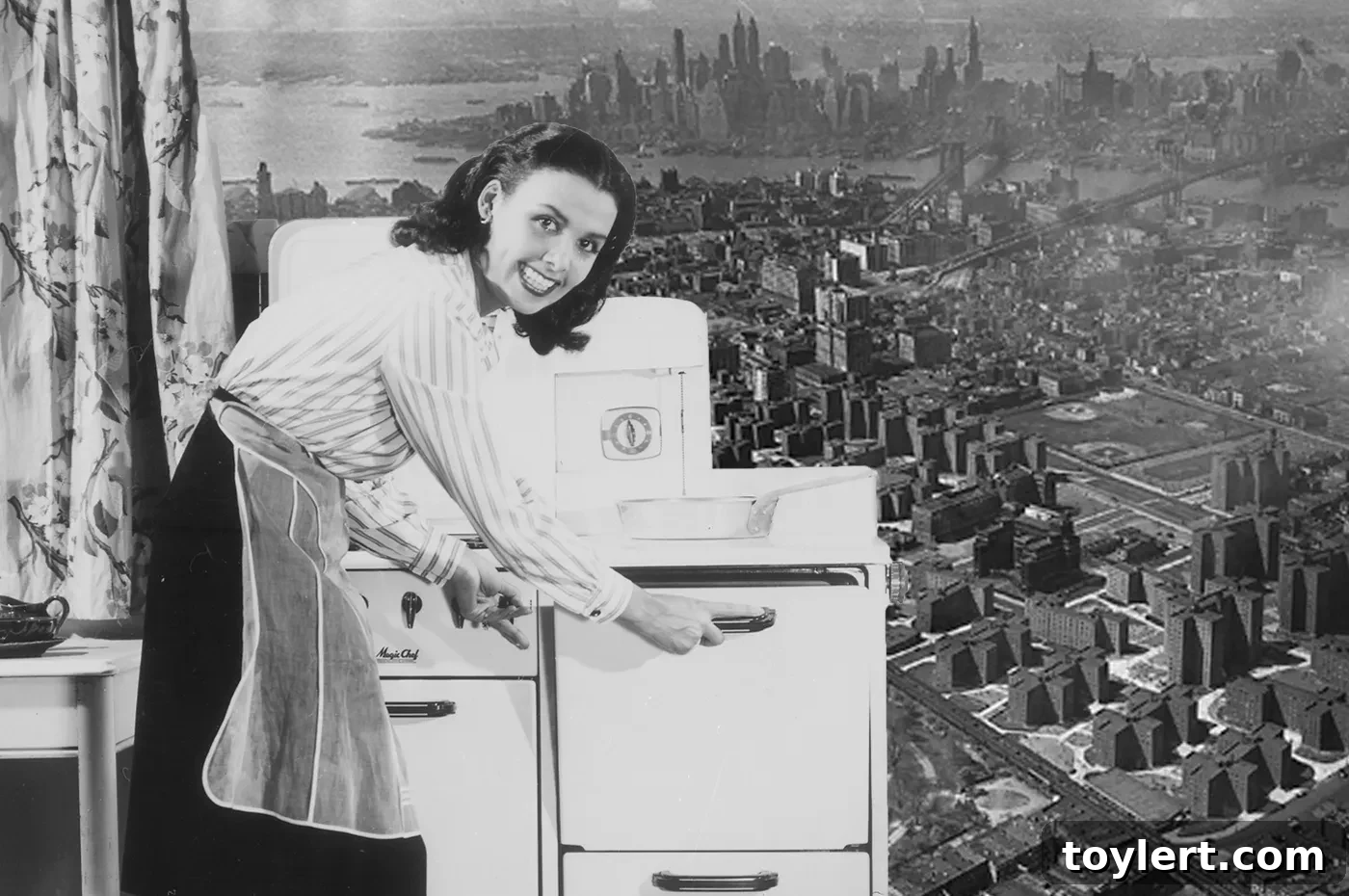
Among the many celebrated features of the new Fort Greene Houses, the kitchens received particular acclaim, becoming a focal point of the Brooklyn Daily Eagle’s enthusiastic coverage. The newspaper enthusiastically reported that the “new ‘Mrs. Fort Greene'” would find more to “swoon over than the mere affordability of her new abode” – specifically, her kitchen. This emphasis highlighted a significant societal shift towards valuing domestic efficiency and comfort for women, particularly in working-class households. The kitchens were meticulously designed to be both functional and desirable, embodying the latest in domestic technology and ergonomic planning.
These weren’t just ordinary cooking spaces; they were a homemaker’s dream. The Brooklyn Daily Eagle described them as having “all the things that women have wanted in a kitchen” and even “a lot of things they didn’t even know they wanted.” What did this entail in 1942? Imagine sparkling new built-in cabinetry offering ample storage, a stark contrast to freestanding, often makeshift storage solutions common in older apartments. Modern gas stoves replaced less efficient, older models, and refrigerators, increasingly common but still a significant investment for many families, were standard features. Hot water heaters provided instant convenience, eliminating the need for laborious water heating processes. These features, while standard today, represented a leap forward in domestic convenience and luxury for families often accustomed to more basic amenities.
The layout itself was a marvel of efficiency. Kitchens were designed with the concept of the “work triangle” in mind, minimizing steps between the stove, sink, and refrigerator, thereby reducing physical strain and saving precious time for the housewife. The bright, easy-to-clean surfaces and thoughtful lighting further enhanced the appeal. The newspaper’s vivid description – “Everything at your hand when preparing a sizzling roast for tired hubby’s dinner” – while undoubtedly reflective of the gender roles prevalent in the 1940s, also underscored the promise of ease, comfort, and the ability to provide a nourishing meal for a hardworking family. This vision of a streamlined, well-equipped kitchen was a powerful selling point, promising a better, more manageable domestic life for the women of Fort Greene Houses.
The Brooklyn Daily Eagle’s Narrative: Journalism as Promotion
The extensive coverage by the Brooklyn Daily Eagle was more than just news; it was a powerful piece of public relations and civic promotion. In an era before widespread television, local newspapers played a crucial role in shaping public opinion and celebrating local achievements. The Eagle’s dedicated special section for Fort Greene Houses served to introduce the project to the broader community, assuage any potential concerns, and instill a sense of pride and optimism about Brooklyn’s future. By focusing on tangible benefits like the modern kitchens and affordable living, the newspaper effectively highlighted the progressive nature of NYCHA’s work.
The language used was deliberately aspirational and enthusiastic. Phrases like “swoon over” and implying features “they didn’t even know they wanted” tapped into a universal desire for improvement and modern convenience. It painted a picture of a better life awaiting residents, suggesting that these apartments weren’t just basic housing, but a significant upgrade in lifestyle. This journalistic approach helped to normalize and popularize the concept of government-sponsored affordable housing, presenting it not as a last resort, but as a desirable, forward-thinking solution to urban challenges. The detailed descriptions of amenities, particularly the kitchen, resonated deeply with the societal expectations and daily realities of families, making the project relatable and highly appealing.
Fort Greene Houses: An Enduring Legacy in Brooklyn’s Urban Fabric
Decades have passed since the first families moved into Fort Greene Houses, yet its legacy continues to resonate profoundly in Brooklyn’s urban landscape. What began as a wartime necessity evolved into a enduring testament to the power of thoughtful urban planning and the sustained commitment to affordable housing. The principles that guided its initial design — ample light, open spaces, efficient layouts, and a focus on community — remain relevant and admirable today. It stands as a powerful historical artifact, illustrating how public initiatives can respond to immediate crises while simultaneously laying the groundwork for long-term social benefits.
Today, the Fort Greene Houses complex remains a vital part of the New York City Housing Authority’s portfolio, continuing to provide homes for thousands of Brooklynites. It has witnessed the ebb and flow of neighborhood changes, the diversification of its resident population, and the ongoing challenges and triumphs inherent in managing large-scale public housing. Its presence has indelibly shaped the character of the Fort Greene neighborhood, contributing to its rich cultural diversity and its dynamic community spirit. The story of Fort Greene Houses is not just a tale of bricks and mortar; it is a narrative of resilience, community building, and the persistent pursuit of a better quality of life for all urban residents, a promise first eloquently articulated by the Brooklyn Daily Eagle nearly a century ago.