Welcome back to This Ugly House, our ongoing renovation diary chronicling the hands-on transformation of a historic wood-frame house in the vibrant heart of Bed Stuy. This installment delves into a pivotal moment in our journey: confronting unexpected structural challenges that ultimately led to a breathtaking design opportunity – a dramatically expanded skylight. If you’re just joining us, you can catch up on the previous adventures and the beginnings of this ambitious project here. For more detailed insights and day-to-day updates, feel free to visit my personal blog at www.thisuglyhousenyc.com.
Unveiling Light: How a Bed Stuy Gut Renovation Transformed a Home with a Breathtaking Skylight
Embarking on a gut renovation is a journey fraught with the unknown, a process that consistently reminds you of the delicate balance between meticulously laid plans and the inevitable surprises hidden within the bones of an old house. Our Bed Stuy wood-frame home, with its rich history and charming Italianate features, has certainly been no exception. What started as an ambitious renovation project quickly evolved into a full-scale gut job, teaching us that sometimes, a comprehensive overhaul isn’t just a necessity, but a profound advantage. It allows for a complete reimagining of the space, a chance to not just fix problems, but to genuinely elevate the home’s functionality and aesthetic appeal.
Our initial intentions were relatively modest, aiming to work with as much of the existing structure as possible. However, the true nature of older homes often dictates a different path. As we peeled back the layers of decades – sometimes even a century – of previous renovations, additions, and repairs, we uncovered a compelling narrative of neglect and wear. This intensive process, though daunting, gave us the unprecedented opportunity to literally open up our home in ways we hadn’t initially conceived, allowing us to rectify long-standing issues and infuse the space with new life and light.
The Unexpected Discovery: Compromised Structure and Hidden Dangers
One of the most significant and unforeseen challenges emerged as we began to address the roof and the topmost floor. According to NYC building code, a small skylight existed at the top of the main staircase, a practical and legally required feature designed to bring natural light and ventilation into the heart of the home. We had planned to retain this modest opening, perhaps sprucing it up a bit. However, as the extensive demolition proceeded, revealing the raw structural elements of the top floor, we stumbled upon a critical issue that would profoundly impact our renovation strategy.
During the careful removal of ceilings and various finishes, we exposed the original roof beams that spanned across the uppermost level. While many of these 130-year-old timbers were in remarkably good condition, others told a different, more alarming story. Specifically, the beams directly above the staircase, supporting a significant section of the roof, were in a perilous state. We discovered that five crucial joists had alarmingly pulled away from the party wall rim joist. Instead of being securely anchored, they were merely hanging on by the roof boards that had been fastened over them, a testament to decades of structural stress and possibly poor original construction or subsequent alterations. This was not merely a cosmetic flaw; it was a serious structural deficiency that demanded immediate and decisive action, compromising the integrity and safety of our home.
From Necessity to Vision: Maximizing Natural Light
At this point in the renovation, our roof had been completely stripped down to its original wood planks, revealing layers of asbestos that had served as a long-outdated roofing material. The scope of our construction already included the complete rebuilding of the roof membrane, a non-negotiable step to ensure the long-term durability and weatherproofing of the house. Given the necessity of extensive roof work and the critical structural repairs needed for the compromised joists, a bold idea began to form: why not seize this unexpected opportunity to not just repair, but to radically improve the existing skylight? If we had to rebuild, why not maximize its potential? And while we were at it, why not consider adding a few more openings to truly flood the house with light?
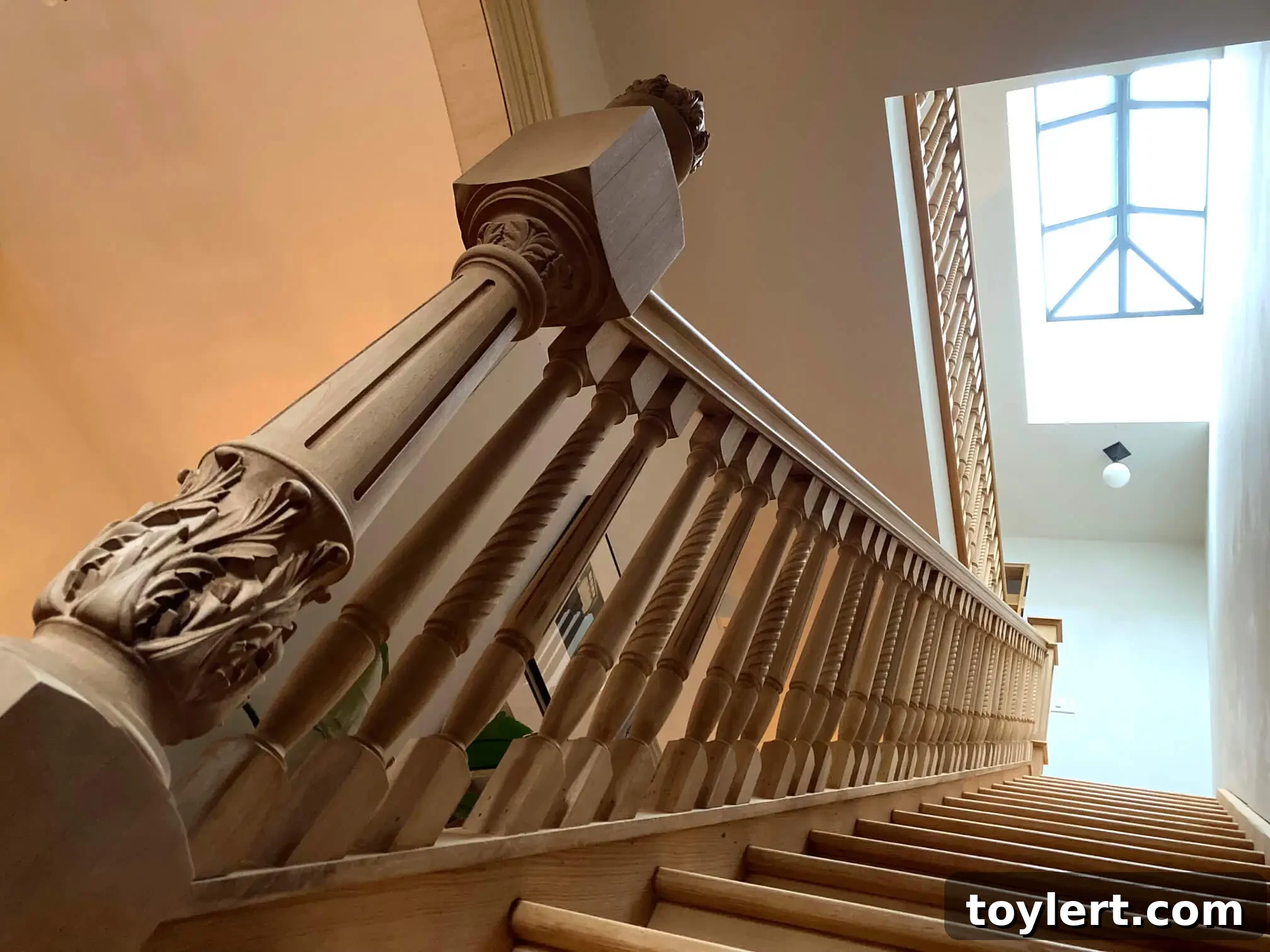
The original skylight over the stairs was a diminutive 2 feet by 2 feet, barely fulfilling the code requirement without truly enhancing the ambiance of the space. Faced with the structural repairs and the open roof, we made the pivotal decision to dramatically expand this opening. The new skylight, custom-fabricated from durable galvanized steel, measures an impressive 3 feet 6 inches by 7 feet. This significant increase in size wasn’t just about aesthetics; it was a strategic move to transform a dimly lit stairwell into a vibrant, light-filled architectural feature, drawing sunlight deep into the core of the house.
Innovative Design: Addressing Structure and Preventing Leaks
The expansion of the skylight, while offering immense aesthetic benefits, also presented unique engineering and design challenges, particularly concerning the necessary structural modifications and the crucial need to prevent future leaks between our property and our neighbor’s. We carefully positioned the new, larger skylight opening and designed a robust frame that would sit securely on top of a specially constructed well wall. This well wall was meticulously extended upwards, rising beyond our neighbor’s roof ridge. This ingenious design wasn’t just an arbitrary choice; it was a critical preventative measure, ensuring proper drainage and creating an effective barrier against any future water infiltration, a common headache in urban rowhouse environments.
Crucially, this new skylight design provided the perfect pathway to address the severely damaged joists. The necessity of creating this larger opening and integrating the new well wall meant that we had to strategically remove and replace enough of the compromised five beams over the staircase. This allowed us to install new, properly anchored structural elements, effectively solving the long-standing connection problem to the party wall rim joist. What began as a discovery of significant structural weakness became the catalyst for a much stronger, safer, and more aesthetically pleasing solution. It underscored the invaluable advantage of a gut renovation: the ability to tackle deep-seated problems comprehensively, rather than merely patching over them.
The Radiant Outcome: A Home Bathed in Natural Light
The transformation wrought by the expanded skylight is nothing short of extraordinary. I am genuinely thrilled with the final result. The immense amount of natural sunlight that now streams down through the house is truly spectacular, fundamentally altering the atmosphere and perception of space. The stairwell, once a somewhat shadowed passage, is now a beacon of light, guiding the eye upwards and creating an immediate sense of openness and airiness throughout all levels. This radiant influx of light not only brightens the interiors but also evokes a profound sense of warmth and well-being, proving that sometimes, the most challenging obstacles in a renovation can lead to the most rewarding and transformative design solutions.
This phase of our Bed Stuy renovation journey has been a powerful reminder that while surprises are inevitable, they often come bearing opportunities for innovation and improvement. Embracing the full scope of a gut renovation, even when initially unplanned, allowed us to address critical structural issues head-on and, in doing so, reimagine our home with a renewed sense of purpose and a breathtaking infusion of natural light. Our “ugly house” is slowly but surely shedding its past, step by illuminated step, revealing the beautiful home it was always meant to be.