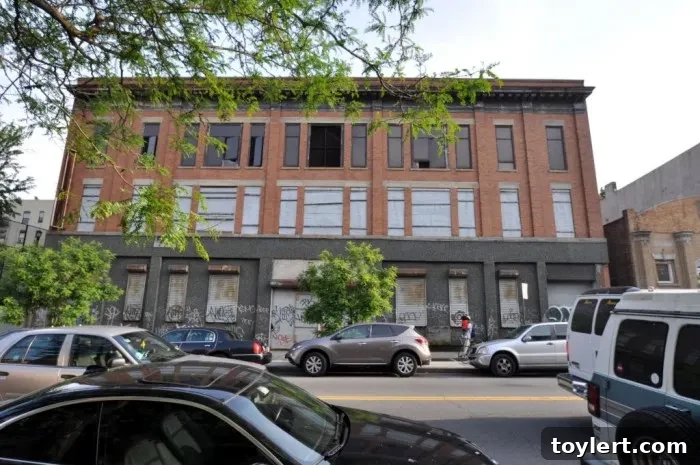
Unearthing Brooklyn’s Industrial Past: The Former Brooklyn Union Gas Showroom at 1024 Fulton Street
Brooklyn, one building at a time, reveals its layered history. Nestled within the vibrant Clinton Hill neighborhood, a seemingly unassuming structure at 1024 Fulton Street holds significant tales of Brooklyn’s industrial growth, technological advancement, and the everyday lives of its residents in the early 20th century. This building, once the bustling showroom of the powerful Brooklyn Union Gas Company, stands as a quiet monument to an era when gas was at the forefront of urban innovation, powering homes, businesses, and public spaces across the borough.
Key Details: 1024 Fulton Street, Clinton Hill
An architectural gem, though unlandmarked, this building offers a fascinating glimpse into a pivotal period of Brooklyn’s development. Here are the essential facts about this historic property:
- Building Name: Former Brooklyn Union Gas Showroom
- Address: 1024 Fulton Street, Brooklyn, NY 11238
- Cross Streets: Grand and Classon Avenues
- Neighborhood: Clinton Hill
- Year Built: 1912
- Architectural Style: Early 20th Century Warehouse Aesthetic
- Architect: Unnamed Staff Architect, Brooklyn Union Gas
- Landmarked: No
The Genesis of a Gas Giant: Brooklyn Union Gas Company
The story of 1024 Fulton Street is inextricably linked to the rise of the Brooklyn Union Gas Company, a powerhouse that played a crucial role in shaping the borough’s infrastructure and modern conveniences. The last decade of the 19th century witnessed a significant consolidation of services, driven by the rapid urbanization and industrialization sweeping through American cities. In Brooklyn, this era culminated in the merger of seven of the largest independent gas companies operating across the borough.
Incorporated in 1895, the newly formed Brooklyn Union Gas Company immediately became a dominant force. Its creation streamlined operations, expanded service reach, and ultimately laid the groundwork for a more efficient and reliable gas supply to a burgeoning population. Overseeing this monumental undertaking was James Jourdan, a distinguished former military officer, who was appointed as the company’s first president. Under his leadership, Brooklyn Union Gas embarked on an ambitious expansion, providing the essential fuel for lighting homes and streets, heating businesses, and powering the burgeoning array of domestic appliances that were transforming daily life.
At the turn of the 20th century, gas was not merely a utility; it was a symbol of progress and modernity. From elaborate gas chandeliers in grand homes to the burgeoning use of gas ranges in kitchens, the availability of gas significantly elevated living standards and spurred economic activity. The company’s expansion mirrored Brooklyn’s own growth, connecting disparate neighborhoods and integrating them into a cohesive urban fabric, all powered by a network of gas lines stretching across miles of streets.
A Vision of Modernity: The Fulton Street Showroom
By 1912, when the Fulton Street showroom was constructed, Brooklyn Union Gas had firmly established itself as an indispensable part of Brooklyn life. The decision to build a prominent showroom at 1024 Fulton Street was a strategic one, reflecting the company’s commitment to public engagement and consumer education. Showrooms like this were vital marketing tools of the era, serving as direct touchpoints between utility providers and their customers.
These spaces were designed to be more than just offices; they were envisioned as centers of innovation, where the public could witness firsthand the marvels of modern gas technology. Visitors to the Fulton Street showroom would have encountered the latest gas appliances – efficient stoves, water heaters, and possibly even early prototypes of gas-powered refrigerators. Expert staff would demonstrate these devices, highlighting their convenience, safety, and economic benefits, thus encouraging adoption and fostering a deeper connection with the company’s services. The showroom was a vibrant hub, reflecting the company’s forward-thinking approach and its pivotal role in introducing new technologies into the homes and businesses of Brooklyn.
Beyond sales and demonstrations, the showroom likely served as a customer service center, a place where residents could pay bills, inquire about services, or report issues. Its location on Fulton Street, a major commercial artery, ensured high visibility and easy accessibility for a wide range of Brooklynites, from homeowners in Clinton Hill and Bedford-Stuyvesant to business owners across the borough. It was a tangible representation of Brooklyn Union Gas’s commitment to its customers and its belief in the transformative power of its product.
Architectural Significance: Early 20th-Century Warehouse Style
The building at 1024 Fulton Street exemplifies the practical yet robust architectural aesthetic prevalent in early 20th-century industrial and commercial structures. Classified as an “Early 20th century warehouse” style, its design prioritizes functionality, durability, and natural light, reflecting the utilitarian demands of its original purpose.
Typical characteristics of this style, likely evident in the Brooklyn Union Gas showroom, include solid masonry construction – often brick or stone – designed for strength and longevity. Large, multi-paned windows are a hallmark, allowing ample natural light to penetrate the deep floor plans, crucial for illuminating detailed product displays in the showroom and reducing the need for artificial lighting during the day. The building’s facade, while perhaps not ornate, would have possessed a dignified simplicity, often featuring strong horizontal and vertical lines that convey stability and permanence.
The choice of an “unnamed staff architect” for a utility company building was common during this period. Large corporations often maintained in-house architectural and engineering departments to manage their extensive building portfolios, which included not only showrooms but also power plants, administrative offices, and maintenance facilities. While these architects might not have achieved individual celebrity, their designs were instrumental in shaping the functional and aesthetic landscape of American cities, blending practicality with a quiet sense of civic presence.
This architectural style, often overlooked in favor of more decorative period buildings, played a fundamental role in supporting the infrastructure of urban life. The former Brooklyn Union Gas showroom, with its sturdy construction and purposeful design, is a testament to the industrial prowess and architectural sensibilities of its time, designed to serve a vital public function with enduring strength.
Clinton Hill: A Neighborhood’s Enduring Character
The location of the former Brooklyn Union Gas showroom in Clinton Hill adds another layer to its historical narrative. Clinton Hill, a neighborhood celebrated for its tree-lined streets and diverse architecture, has a rich history that parallels the growth of Brooklyn itself. From its origins as a quiet residential enclave for wealthy merchants in the 19th century, evolving with grand brownstones and picturesque Victorian homes, to its current status as a vibrant, multifaceted community, Clinton Hill has always been a place of dynamic change.
Fulton Street, in particular, has historically served as a vital commercial thoroughfare, connecting various Brooklyn neighborhoods and facilitating trade and transportation. The presence of a significant company like Brooklyn Union Gas along this artery underscores the street’s importance as a commercial and public utility corridor. The building at 1024 Fulton Street, therefore, isn’t just an isolated structure; it’s an integral part of Clinton Hill’s evolving urban tapestry, bridging the neighborhood’s residential charm with its commercial and industrial backbone.
Today, Clinton Hill continues to blend its historic character with modern amenities and a thriving cultural scene. The former gas showroom, situated amidst this evolving landscape, serves as a tangible link to a past era of industrial growth and technological innovation, standing as a silent witness to the countless transformations the neighborhood has undergone. Its unlandmarked status highlights the importance of recognizing the value of these utilitarian, yet historically significant, buildings that contribute immensely to Brooklyn’s unique identity.
Beyond Gas: A Building’s Enduring Legacy
The destiny of the Brooklyn Union Gas Company itself underwent significant transformation over the decades. As the energy landscape evolved, so did the company. It eventually became KeySpan Energy, a major utility provider in the Northeast, which was later acquired by National Grid, one of the largest investor-owned energy companies in the world. While the corporate names have changed, the legacy of service to Brooklyn, initiated by Brooklyn Union Gas, continues.
Today, the building at 1024 Fulton Street, though no longer a gas showroom, persists as a testament to that legacy. Its current use may be different, perhaps housing new businesses or residential units, but its architectural bones and historical context remain. These types of buildings, often overlooked because they lack the ornate flourishes of other historic structures, are crucial for understanding the complete narrative of urban development. They represent the pragmatic and functional aspects of city-building, providing the essential services that allowed Brooklyn to flourish.
The fact that it is not landmarked does not diminish its historical value. Instead, it underscores the ongoing need for communities and preservationists to identify and celebrate these often-unsung heroes of architectural history. Each brick, each window, and the very footprint of structures like the former Brooklyn Union Gas showroom contribute to the irreplaceable character of Brooklyn, inviting us to reflect on the ingenuity and industry that shaped this remarkable borough.
Preserving Brooklyn’s Past, One Building at a Time
The story of 1024 Fulton Street is a microcosm of Brooklyn’s larger narrative – one of relentless growth, technological adaptation, and community evolution. It reminds us that every building, whether grand or functional, contributes to the unique identity of a place. By understanding the origins and purposes of these structures, we gain a deeper appreciation for the complex forces that have shaped our urban environment.
The former Brooklyn Union Gas showroom stands as a powerful reminder that history is not just found in monumental landmarks, but also in the everyday buildings that once hummed with the energy of progress and served the vital needs of a developing city. Exploring its past helps us connect with the spirit of innovation and community that has always defined Brooklyn. As the borough continues its dynamic transformation, remembering and respecting these architectural legacies ensures that its rich history remains an integral part of its vibrant future.