Discover 35 Prospect Place: A Historic Park Slope Brownstone Awaits Revival
Nestled within the coveted Park Slope Historic District, 35 Prospect Place stands as a magnificent testament to 19th-century Brooklyn architecture. This exceptional 1870s Neo-Grec brownstone, a jewel among its peers, presents a rare and exciting opportunity for discerning buyers and visionary architects. With its estate-condition interior brimming with original details and a facade designed by the esteemed George L. Morse, this property isn’t just a house; it’s a blank canvas for a breathtaking restoration, inviting a new chapter in its storied history.
A Glimpse into History: The Neo-Grec Style and Its Enduring Charm
Built in 1879, 35 Prospect Place proudly showcases the distinctive Neo-Grec architectural style, a sophisticated design trend popular in the post-Civil War era. Characterized by its classical influences combined with a more severe, geometric aesthetic, Neo-Grec departed from the elaborate ornamentation of earlier Victorian styles. Instead, it favored clean lines, incised detailing, and a strong emphasis on form and proportion, drawing inspiration from ancient Greek and Roman architecture but reinterpreting it with a modern sensibility. This architectural movement left an indelible mark on many of Brooklyn’s historic neighborhoods, and this residence beautifully embodies its elegant simplicity and timeless appeal. Owning a Neo-Grec home means appreciating a piece of art that bridges antiquity with the industrial age, a style that continues to captivate with its intellectual and aesthetic depth.
Architectural Grandeur: The Exterior of 35 Prospect Place
A Distinguished Facade by George L. Morse
The facade of 35 Prospect Place is a masterpiece of brownstone craftsmanship, designed by the renowned architect George L. Morse. Morse was a prolific architect responsible for many of Park Slope’s iconic brownstones, known for his ability to blend classical elements with contemporary tastes. This particular residence is part of a cohesive row of six houses, all constructed in 1879 and sharing a consistent architectural language, contributing to the harmonious streetscape of Prospect Place. Each house, approximately 16.5 feet wide, benefits from Morse’s thoughtful design, which prioritizes both aesthetic appeal and functional elegance.
Distinctive Brownstone Features
The brownstone facade itself is a hallmark of Brooklyn’s architectural heritage. This sedimentary sandstone, rich in color and texture, became the material of choice for the borough’s elegant row houses during the 19th century. At 35 Prospect Place, the facade is distinguished by an angled bay that gracefully stretches from the garden level to the parlor level. This architectural detail not only adds visual interest and a sense of depth to the exterior but also allows for increased natural light penetration into the interior spaces, enhancing the living experience. Complementing this, incised ornament adorns the facade, featuring subtle yet intricate carvings that are characteristic of the Neo-Grec style. These geometric patterns and classical motifs are etched directly into the stone, providing sophisticated decorative elements without overpowering the facade’s stately appearance.
Elegant Details: Railings and Cornice
Further enhancing the exterior’s charm are the original cast-iron railings that line the stoop. These exquisitely crafted railings are more than just functional; they are works of art, often featuring intricate scrollwork, rosettes, and other decorative elements that speak to the period’s artisanal skill. They provide a welcoming entry while adding a touch of old-world elegance. Capping off the impressive facade is a bracketed cornice, a defining feature of many historic brownstones. This decorative projection at the top of the building serves both an aesthetic purpose, providing a visually pleasing finish, and a practical one, protecting the facade from the elements. The robust brackets supporting the cornice contribute to the overall grandeur and architectural integrity of the structure, underscoring the meticulous attention to detail prevalent in 19th-century construction.
Interior Charms: A Canvas for Modern Living
Step inside 35 Prospect Place, and you are immediately transported to an era of grandeur, where every detail tells a story. The interior, though in estate condition, offers an unparalleled opportunity to revive and reimagine its inherent beauty. It’s a rare chance to blend historical authenticity with contemporary comfort, creating a truly unique living space.
Statement-Making Wallpaper and Decorative Flair
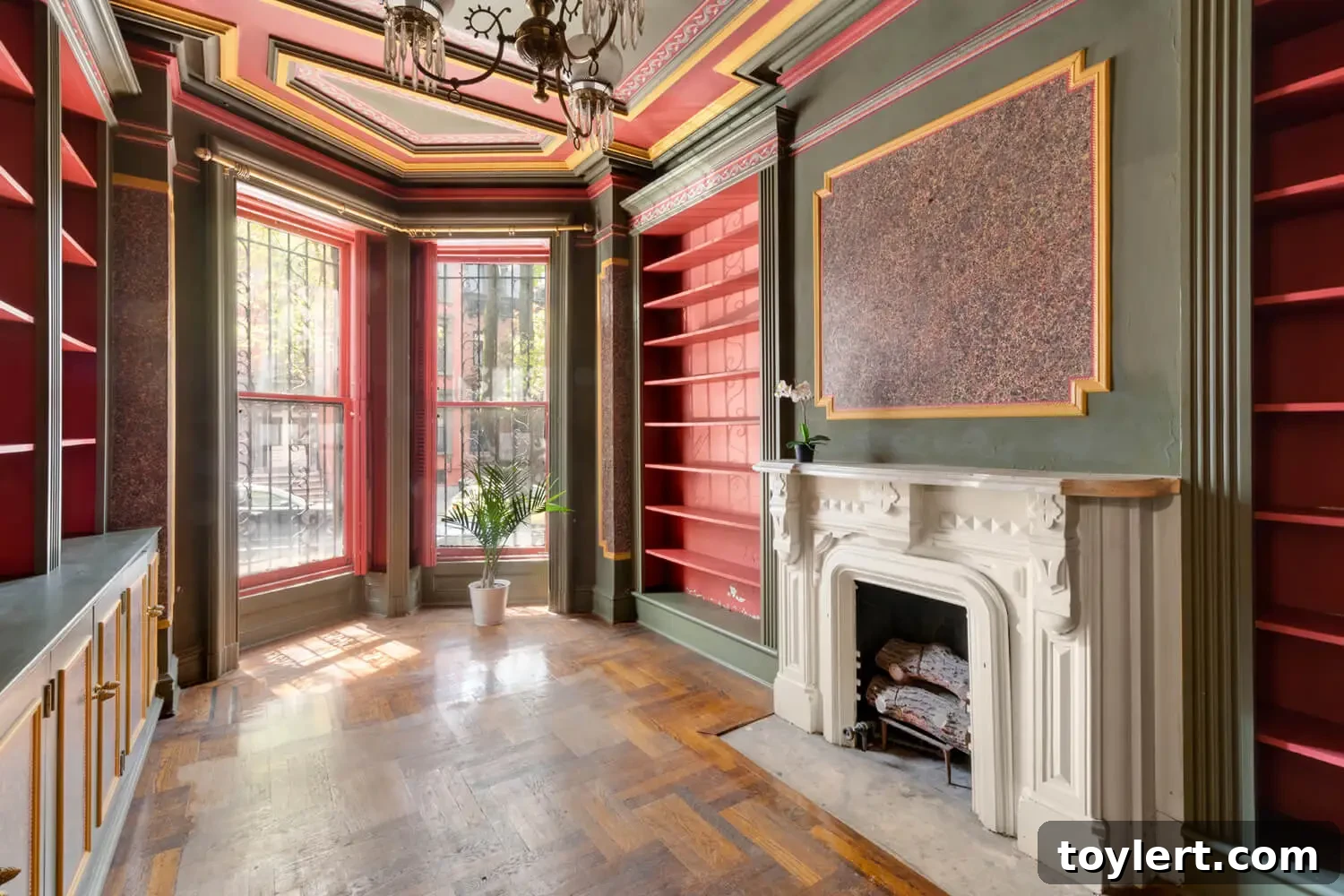
The house is filled with remnants of statement-making wallpaper, a delightful nod to the design sensibilities of the past. While requiring careful restoration or thoughtful reinterpretation, these decorative elements reveal the home’s original flair and offer clues to its historical palette. Imagine the vibrant patterns and rich textures that once graced these walls, and consider the possibilities of restoring them to their former glory or introducing new designs that honor the home’s legacy while reflecting modern tastes. This feature allows for a deeply personalized renovation, where historical context can inform a bold new aesthetic.
Timeless Details: Marble Mantels and Wood Floors
Among the many original details preserved within the home are stunning marble mantels. These elegant focal points, often found in the parlor and bedrooms, showcase exquisite craftsmanship and the enduring appeal of natural stone. Each mantelpiece, likely featuring unique veining and classical designs, awaits careful cleaning and restoration to once again serve as a magnificent centerpiece for gathering and display. Complementing these are the original wood floors, which span throughout the house. Though they may require refinishing, these floors promise to reveal the warm, rich patina of aged timber, adding character and authenticity to every room. The solid construction and quality materials speak to a bygone era of building, ensuring that with proper care, these floors will continue to impress for generations to come.
Functional Elegance: Pocket Doors and a Grand Stair
Adding to the interior’s charm and functionality are the original pocket doors. These ingenious sliding doors, designed to disappear seamlessly into the wall, were a marvel of Victorian engineering. They offer unparalleled flexibility in defining spaces, allowing for open-plan living when desired and private, intimate rooms when needed. Restoring these doors will not only enhance the home’s historical integrity but also provide practical benefits for modern living. A central, grand stair is another focal point, promising a dramatic ascent through the levels of the home. While details such as the newel post and balusters would need careful assessment, the underlying structure offers a foundation for a magnificent vertical journey, inviting light and elegance into the heart of the house. This architectural element is often the first impression of a home’s interior, and its restoration presents an exciting design challenge.
Beyond the Obvious: Uncovering Original Details
The phrase “among the many original details” hints at a treasure trove waiting to be rediscovered. This could include ornate plaster moldings, ceiling medallions, window and door casings, original hardware, and perhaps even built-in cabinetry. Each of these elements, when carefully restored, contributes significantly to the home’s historical character and value. The process of uncovering and preserving these details is a journey of discovery, offering a unique connection to the past and an opportunity to become a custodian of architectural history.
The Opportunity Awaits: A Vision for Restoration
A Time Capsule Property
Having remained in the same hands since 1971, 35 Prospect Place is, in many respects, a time capsule. This prolonged ownership means that while the house proudly retains many of its original features, it also comes with the understanding that it is being sold “as is.” This condition is not a deterrent but rather an invitation for those who dream of crafting a home precisely to their specifications, free from the compromises of previous renovations. It’s an ideal scenario for a buyer who appreciates the inherent value of untouched historical architecture and is prepared to invest in its future.
The “Bring Your Architect” Imperative
The listing’s explicit instruction to “bring your architect” is a clear call to action for visionaries. This property is perfect for a comprehensive restoration and modernization project. An experienced architect will be able to navigate the intricacies of working within a historic district, respecting the home’s architectural integrity while introducing contemporary comforts and efficiencies. From structural assessments to design conceptualization, the collaboration with an architect will be crucial in transforming this historic brownstone into a bespoke residence that meets the demands of 21st-century living while honoring its 19th-century origins.
Addressing Restoration Needs: A Plasterer’s Touch
The visible issues in the photographs, indicating that “a plasterer might be in order,” are typical for a home of this age and condition. Historic plasterwork, while beautiful, can develop cracks, water stains, or damage over time. This isn’t a flaw but an opportunity. Engaging skilled plasterers can bring these walls and ceilings back to life, recreating lost details, smoothing imperfections, and providing a flawless canvas for new finishes. This specific mention underscores the type of restoration work that will be required, emphasizing that while the home needs attention, the challenges are manageable for an informed and prepared buyer.
Envisioning the Future: Blending Past and Present
Imagine the transformation: sun-drenched rooms boasting refinished original wood floors, walls adorned with sophisticated finishes, and grand fireplaces once again providing warmth and ambiance. The restored pocket doors would allow for seamless transitions between elegant entertaining spaces and cozy private retreats. The modern kitchen and luxurious bathrooms, integrated with sensitivity to the home’s historic fabric, would offer every contemporary amenity. This isn’t merely a renovation; it’s a resurrection, a chance to breathe new life into a grand old dame, ensuring her beauty and functionality for another century and beyond. The opportunity to shape a truly unique urban dwelling, rich in history yet perfectly tailored for modern luxury, is immense.
Your Place in Park Slope History
35 Prospect Place represents more than just a home for sale; it is an invitation to become part of the rich tapestry of Park Slope, Brooklyn. This vibrant neighborhood is renowned for its tree-lined streets, stunning brownstones, excellent schools, and a dynamic community spirit. Owning a property in the Park Slope Historic District means contributing to the preservation of architectural heritage while enjoying unparalleled access to Prospect Park, charming boutiques, acclaimed restaurants, and convenient transportation. This Neo-Grec gem offers a rare blend of historical significance, architectural beauty, and incredible potential. For those ready to embark on a journey of meticulous restoration and inspired design, 35 Prospect Place is not just a purchase; it’s an investment in a legacy, a chance to create a dream home that will stand as a testament to timeless elegance for generations to come.