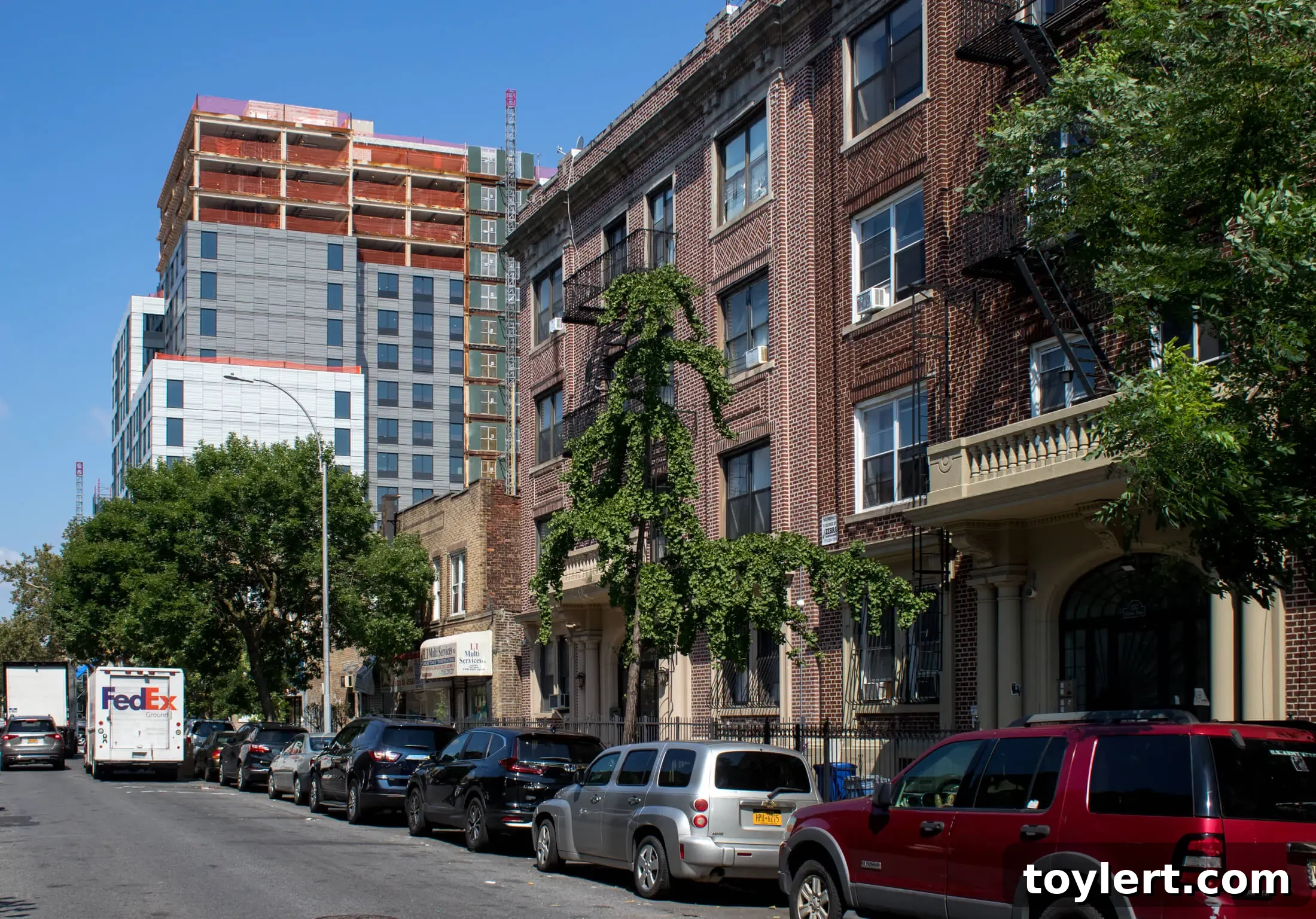
Transforming Crown Heights: The Bedford-Union Armory Redevelopment Takes Shape
The iconic landscape of Crown Heights, Brooklyn, is currently witnessing a profound transformation, spearheaded by the ambitious redevelopment of the historic Bedford-Union Armory. Once a majestic, yet underutilized landmark, this extensive project is now rapidly materializing, promising to inject new vitality into a crucial urban space. While the overall initiative is multi-faceted, encompassing various uses, it is the residential component that is particularly defining the emerging future of the area, offering a carefully considered blend of modern living spaces and vital community resources.
This comprehensive redevelopment marks a pivotal moment for Crown Heights, a neighborhood cherished for its deep history, rich cultural tapestry, and vibrant community spirit. The project aims to seamlessly integrate contemporary housing solutions and commercial amenities within the existing urban fabric, addressing pressing housing demands while skillfully navigating the inherent complexities of large-scale urban growth. It stands as a testament to the principles of adaptive reuse and forward-thinking urban planning, even as its scope and potential impact have generated considerable public discussion and community engagement.
The Evolving Residential Landscape: 1089 President Street and Beyond
At the heart of the residential aspect of the Bedford-Union Armory redevelopment are two distinct, yet harmoniously designed buildings that are rapidly ascending adjacent to one another. Prominently among these, an eight-story structure located at 1089 President Street has demonstrated remarkable progress. This particular building has recently reached its “topping out” milestone, signifying the successful completion of its structural framework – a major achievement in its construction timeline. During a recent site visit, a significant portion of its elegant, modern facade and an array of windows had already been expertly installed, providing a clear vision of its sophisticated final appearance. Concurrently, meticulous work on the ground floor, which typically involves intricate detailing and public-facing elements, was actively underway, signaling the imminent completion of this crucial section that will serve both residents and the wider community.
The building at 1089 President Street is thoughtfully designed to accommodate a total of 60 residential units, significantly enhancing the housing options available in Crown Heights. Beyond individual apartment spaces, the development places a strong emphasis on resident convenience and overall well-being through an array of modern amenities. The cellar level is ingeniously equipped with 38 dedicated parking spots for bicycles, a highly valued feature for environmentally conscious urban dwellers and a clear nod to Brooklyn’s increasingly active, eco-friendly lifestyle. This level also houses contemporary laundry facilities, ensuring that daily necessities are effortlessly accessible, alongside a generously proportioned tenant recreation space, meticulously designed to foster a sense of community and provide inviting areas for relaxation, social interaction, and leisurely pursuits.
Further enriching the resident experience, additional communal spaces are strategically planned for the ground floor. These areas are conceived to be both welcoming and highly versatile, complementing a dedicated community facility that not only occupies a substantial portion of the ground floor but also extends its presence to the third floor. This thoughtful multi-level integration powerfully illustrates the project’s unwavering commitment to embedding public benefit directly within a private development framework. The residential apartments themselves are strategically positioned from the fourth floor upwards, offering residents elevated views of the vibrant neighborhood and a cherished sense of privacy and tranquility away from the bustling streetscape below. This intelligent architectural design ensures that the lower floors can thrive as dynamic community hubs, while the upper levels provide serene, comfortable living environments for its inhabitants.
Navigating Controversy: Community Engagement and Project Evolution
The journey of the Bedford-Union Armory redevelopment has been marked by extensive public discourse and passionate debate, a common characteristic of large-scale urban projects in New York City. Initially, the project, which proposed a blend of market-rate and affordable housing alongside commercial and recreational spaces, encountered considerable pushback from various community groups and local advocates. Primary concerns frequently revolved around the proposed affordability levels of the housing units, the potential for gentrification, and the appropriate utilization of what was perceived as a significant public asset in the heart of the neighborhood. Community advocates tirelessly campaigned for a higher percentage of deeply affordable units, greater transparency in the planning process, and more robust mechanisms for local resident input.
These vigorous and often intense discussions ultimately played a pivotal role in shaping the project’s trajectory, leading to significant revisions and showcasing the undeniable power of sustained community engagement in influencing large-scale urban developments. The final agreement, a testament to robust negotiations and a commitment to compromise, sought to meticulously balance the interests of the developers with the pressing housing and social needs of the Crown Heights community. The strategic inclusion of an affordable housing lottery, specifically for units within developments like 1089 President Street, is a direct and impactful outcome of these dedicated efforts. This lottery aims to provide genuinely accessible housing opportunities for a broad spectrum of income levels within the neighborhood, reflecting a growing understanding that successful urban renewal must tangibly benefit existing residents and foster inclusivity, rather than inadvertently leading to displacement or exclusion.
The Armory’s rich history dates back to its original construction, where it served for decades as a vital military and community hub, a center of activity and local pride. Its eventual disuse left a sprawling, architecturally magnificent, yet profoundly underutilized structure in the very heart of Crown Heights. The current redevelopment represents an adaptive reuse project of considerable scale and ambition. It endeavors not only to preserve the impressive historical integrity of the Armory’s exterior and key architectural features but also to fundamentally transform its interior and surrounding plots into a modern, multi-functional complex. This thoughtful approach ensures that a cherished piece of Brooklyn’s architectural heritage is not merely preserved but is actively re-imagined and repurposed for the demands and opportunities of the 21st century, continuing its legacy of invaluable service to the community in a dynamic new form.
Comprehensive Amenities and Broader Neighborhood Impact
The thoughtful and extensive inclusion of diverse amenities within the new residential buildings at the Bedford-Union Armory site goes far beyond simple convenience; it is fundamentally about cultivating a holistic and enriching living environment. The robust provision of dedicated bike storage, for instance, thoughtfully acknowledges Brooklyn’s increasing embrace of sustainable transportation and actively supports a healthier, more active lifestyle among its residents. Modern laundry facilities are no longer just an amenity but a baseline expectation for quality urban living, while the dedicated tenant recreation spaces offer invaluable opportunities for residents to connect, unwind, and cultivate a genuine sense of belonging within their building. These shared amenities are critically important in dense urban settings, effectively serving as extensions of residents’ private living spaces and significantly promoting a stronger sense of community cohesion.
Beyond the immediate confines of the residential buildings, the wider redevelopment project is poised to deliver substantial enhancements to the Crown Heights neighborhood as a whole. The strategically designed “community facility” spaces are intended to host a wide array of programs and essential services. These could potentially include educational workshops that empower residents, impactful youth initiatives that nurture future generations, vital senior programs that support our elders, or even serve as offices for local non-profit organizations dedicated to community betterment. Such multi-purpose facilities are indispensable for sustainable neighborhood growth, acting as crucial anchors for social services, educational opportunities, and cultural enrichment. This strategic integration of both public and private amenities powerfully underscores the project’s ambition to contribute positively and meaningfully to the neighborhood’s social infrastructure, not merely to its housing supply.
The economic impact generated by a project of this considerable magnitude is also truly substantial. During its various construction phases, the Bedford-Union Armory redevelopment has directly created numerous jobs, providing valuable employment opportunities for skilled tradespeople, laborers, and construction professionals. Once fully complete and operational, the anticipated influx of new residents, coupled with the activation of new commercial spaces and vibrant community hubs, is expected to significantly stimulate local businesses, contributing robustly to the overall economic vitality of Crown Heights. This carefully planned blend of residential housing, dynamic commercial activity, and essential public amenities is designed to create a vibrant, self-sustaining ecosystem that invigorates the immediate vicinity and sends positive ripples throughout the broader community.
Architectural Vision and Future Outlook for Crown Heights
The architectural vision guiding the design of the residential buildings at the Bedford-Union Armory site deliberately emphasizes a sophisticated blend of contemporary aesthetics with a profound respect for the surrounding historic context of Crown Heights. While specific design details are continually refined through the construction process, the striking installation of facades and windows on buildings such as 1089 President Street strongly indicates a commitment to modern, yet understated elegance. Designers typically prioritize the selection of materials that are durable, highly energy-efficient, and visually appealing, thereby ensuring that the new structures contribute positively and meaningfully to the existing streetscape. The careful interplay of materials, textures, and fenestration is paramount in crafting buildings that feel both current and thoughtfully respectful of their rich urban environment.
Looking ahead, the full realization and completion of the Bedford-Union Armory redevelopment promises to be a truly landmark event for Brooklyn, signaling a new chapter in urban development. As the residential units progressively welcome their first occupants, and the carefully planned community and commercial spaces become fully operational, the project will undeniably serve as a compelling living case study in urban transformation. It stands as a powerful example of how complex urban challenges—such as persistent housing shortages, the innovative adaptive reuse of cherished historic structures, and comprehensive community development—can be effectively addressed through thoughtful, strategic planning, robust stakeholder collaboration, and an essential willingness to adapt to evolving needs. The ongoing, visible progress is a clear testament to the unwavering dedication of all involved, from visionary developers and meticulous city planners to the resilient and engaged residents of Crown Heights, all collectively striving towards a more vibrant, inclusive, and sustainable future for their beloved neighborhood.
Ultimately, the enduring success of the Bedford-Union Armory redevelopment will be measured not solely by its impressive architectural grandeur or the sheer number of housing units delivered, but more profoundly by its lasting positive impact on the people and the vibrant spirit of Crown Heights. It represents a significant journey from a contested vision to a tangible, thriving reality, meticulously shaping a new and exciting chapter for one of Brooklyn’s most cherished and dynamic neighborhoods. The rapidly rising structures along President Street are far more than mere buildings; they stand as powerful symbols of progress, the spirit of compromise, and the enduring promise of impactful urban revitalization.