The Enduring Legacy of Brooklyn’s Old First Reformed Church: A Park Slope Landmark
Nestled gracefully at 126 7th Avenue in the heart of Brooklyn’s distinguished Park Slope neighborhood, the Old First Reformed Church stands not merely as a place of worship, but as a monumental testament to enduring faith, architectural prowess, and community spirit. This iconic edifice, with its commanding presence and intricate details, has been a steadfast anchor in Brooklyn for generations, silently witnessing the borough’s dynamic evolution while maintaining its rich heritage.
The story of the Old First Reformed Church is deeply interwoven with the fabric of Brooklyn itself. Founded by Dutch settlers in 1654, it holds the distinction of being the oldest continuously operating Protestant congregation in Kings County. Its journey began as a humble wooden structure in the then-rural Flatbush area, serving the spiritual needs of early Dutch colonists. Over centuries, as Brooklyn grew from a collection of small villages into a vibrant urban center, so too did the church adapt and thrive, eventually relocating to its current, more prominent location in Park Slope.
Architectural Grandeur: A Masterpiece in Stone
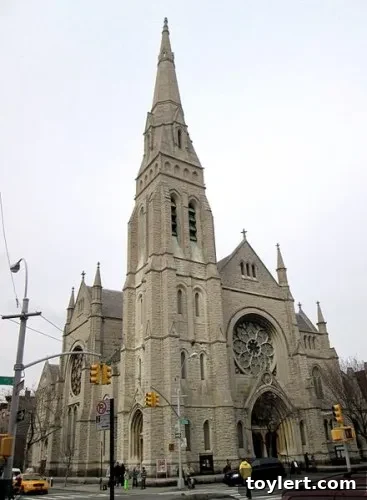
The current structure, completed in 1891, is an exquisite example of Victorian Gothic Revival architecture, a style renowned for its dramatic verticality, pointed arches, and intricate stonework. Designed by the highly respected firm of George L. Morse & Son, the church’s design is a deliberate nod to European cathedrals, yet it possesses a distinct charm that complements its Brooklyn setting. The exterior is primarily constructed of red brick, beautifully accented with brownstone and terra cotta trim, creating a visually rich and textured facade that captivates passersby.
One of the most striking features of the Old First Reformed Church is its magnificent bell tower. Soaring skyward, the tower houses a historic bell that has tolled through countless significant moments in Brooklyn’s history. Its pointed spire, characteristic of the Gothic style, adds to the church’s imposing silhouette against the urban skyline. Inside, the sanctuary is equally breathtaking, featuring soaring ceilings, beautiful stained-glass windows that bathe the interior in a kaleidoscopic light, and meticulously crafted wooden pews. These windows depict various biblical scenes and historical figures, each a work of art in its own right, contributing to the serene and contemplative atmosphere within.
The church’s architectural details are not merely decorative; they tell a story. The gargoyles and intricate carvings often found in Gothic Revival structures serve both aesthetic and symbolic purposes, reflecting the period’s deeply held beliefs and artistic sensibilities. Even the choice of materials—sturdy brick and elegant brownstone—speaks to the desire for a building that would not only inspire reverence but also stand the test of time, embodying the steadfast nature of the faith it represents.
A Tapestry of History and Community Engagement
Beyond its impressive architecture, the Old First Reformed Church has played a pivotal role in the social and cultural life of Park Slope and wider Brooklyn. Throughout its long history, it has been a center for community outreach, education, and social reform. During significant periods like the Civil Rights Movement, the church served as a meeting place and a beacon of hope, advocating for justice and equality. Its doors have always been open, welcoming people from all walks of life, reflecting a commitment to inclusivity that remains strong today.
The congregation itself has adapted over centuries, evolving from its original Dutch roots to embrace the diverse tapestry of Brooklyn residents. This adaptability has allowed the church to remain relevant and vital, continuously serving the changing needs of its parishioners and neighbors. From providing charitable assistance to hosting cultural events, the church has consistently demonstrated its dedication to enriching the lives of those around it.
Today, the Old First Reformed Church continues its legacy of active community involvement. It regularly hosts various programs, including food drives, support groups, and educational workshops, underscoring its role as a vibrant community hub. Its facilities are often utilized by local organizations for meetings and events, further solidifying its position as an integral part of the Park Slope landscape. The church also champions various arts and cultural initiatives, frequently hosting concerts, art exhibits, and theatrical performances that enrich the cultural life of the neighborhood and beyond.
Preserving the Past, Building the Future
Maintaining a historic structure like the Old First Reformed Church is a continuous endeavor. Over the years, significant efforts have been undertaken to preserve its architectural integrity and historical significance. Restoration projects have carefully addressed issues such as masonry repair, stained-glass conservation, and structural upkeep, ensuring that this magnificent building continues to inspire future generations. These preservation initiatives are not merely about aesthetics; they are about safeguarding a piece of Brooklyn’s collective memory and heritage.
The church’s commitment to sustainability and modernization, while respecting its historical context, is also noteworthy. Integrating contemporary needs within a historically significant building presents unique challenges, yet the congregation and its leadership have consistently risen to the occasion, ensuring the church remains functional and accessible without compromising its original charm or historical value.
As Brooklyn continues its dynamic growth and transformation, the Old First Reformed Church stands as a powerful symbol of continuity and resilience. It reminds us of the profound impact that historical institutions have on shaping community identity and fostering a sense of belonging. Its majestic architecture and storied past make it not just a landmark, but a living, breathing part of the Park Slope narrative, inviting all to reflect on its beauty and its enduring message of faith and service.
Visitors to Brooklyn, especially those with an interest in historic architecture and cultural landmarks, would do well to spend time admiring the intricate details and serene atmosphere of the Old First Reformed Church. It offers a unique glimpse into the borough’s Dutch colonial roots, its Victorian-era grandeur, and its ongoing role as a vital community anchor. This building truly embodies the spirit of Brooklyn, one building at a time, showcasing how history and modernity can coexist beautifully, creating a rich tapestry for all who call this vibrant city home.