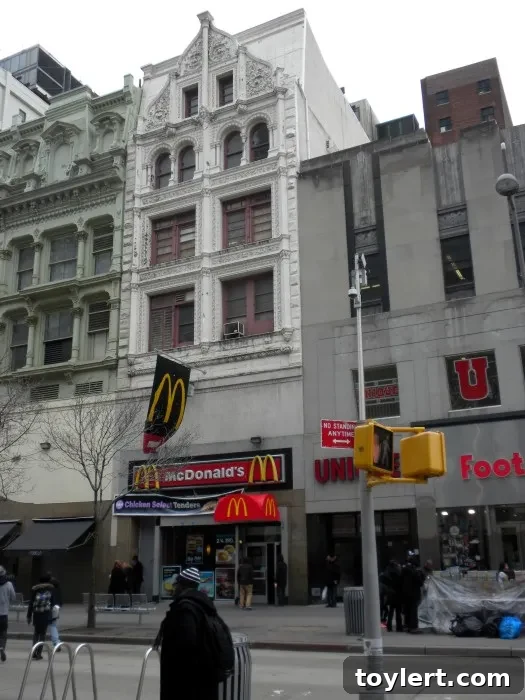
The W. C. Vosburgh Building: A Timeless Legacy on Brooklyn’s Fulton Street
Brooklyn, New York, is a borough rich in history, where every street corner and building facade tells a story. Among these architectural narratives stands the W. C. Vosburgh Building, a venerable structure located at 418-420 Fulton Street. Once a grand showroom for the distinguished W. C. Vosburgh Manufacturing Co., this edifice has gracefully transitioned through the eras, now serving as an integral part of the iconic Macy’s department store complex. Its transformation from an independent commercial hub to a cornerstone of a retail giant mirrors the dynamic evolution of downtown Brooklyn itself.
This article delves into the fascinating history, architectural significance, and enduring legacy of the W. C. Vosburgh Building, exploring its journey from a specialized manufacturing showroom to its current role within one of America’s most beloved retail institutions. By examining its past, we uncover a vital piece of Brooklyn’s commercial and architectural heritage, illustrating how individual structures contribute to the vibrant tapestry of urban life.
A Glimpse into Brooklyn’s Industrial and Commercial Past
To truly appreciate the W. C. Vosburgh Building, one must first understand the era in which it was conceived. The late 19th and early 20th centuries were a period of immense growth and prosperity for Brooklyn. As industry flourished and the population boomed, commercial districts like Fulton Street emerged as bustling centers of trade and innovation. It was within this vibrant economic landscape that the W. C. Vosburgh Manufacturing Company established its presence.
The W. C. Vosburgh Mfg. Co. was known for its high-quality manufactured goods, though specific details about its product lines are often obscured by time. Historical records suggest it likely specialized in fine metalwork, decorative arts, lighting fixtures, or similar high-end products that demanded a sophisticated display environment. The decision to open a dedicated showroom at 418-420 Fulton Street underscored the company’s commitment to prestige and direct engagement with its clientele. A showroom on such a prominent commercial thoroughfare was not merely a place of transaction; it was a statement of brand identity, quality, and ambition. It invited customers to experience the craftsmanship firsthand, fostering a direct connection between manufacturer and consumer.
During this period, Fulton Street was the undisputed retail heart of Brooklyn. Lined with department stores, specialty shops, and ornate commercial buildings, it attracted shoppers from across the borough and beyond. The W. C. Vosburgh Building, with its distinctive architecture, contributed significantly to the street’s grandeur and commercial allure, standing shoulder to shoulder with other architectural marvels that defined Brooklyn’s burgeoning urban identity.
Architectural Grandeur: A Study in Commercial Elegance
While specific architectural blueprints or detailed design history of the W. C. Vosburgh Building are not widely publicized, its integration into the Macy’s complex suggests a structure built with enduring quality and a clear architectural vision. Buildings constructed on Fulton Street during its commercial heyday often showcased the popular styles of the time, such as Romanesque Revival, Beaux-Arts, or early forms of commercial modernism, characterized by robust masonry, intricate detailing, and large display windows designed to attract passersby.
Typically, these commercial structures featured facades crafted from durable materials like brick, terra cotta, and various types of stone. Elaborate cornices, decorative pilasters, and finely carved keystones might have adorned its upper stories, while the ground floor would have been dominated by expansive plate-glass windows, essential for showcasing the Vosburgh Manufacturing Co.’s products. The very purpose of a showroom demanded an inviting and visually impressive exterior, capable of conveying the quality and elegance of the goods within.
The building’s stature and solid construction allowed it to withstand the test of time and adapt to changing commercial needs. Its integration into Macy’s speaks volumes about its inherent structural integrity and the foresight of its original design. Such buildings were not merely functional spaces; they were designed to inspire confidence, project success, and contribute to the civic pride of Brooklyn. The W. C. Vosburgh Building, even as part of a larger complex, retains elements of its original character, offering subtle hints of its past splendor to the discerning eye.
The Macy’s Era: A Seamless Integration
The transition of the W. C. Vosburgh Building into the Macy’s department store complex marks a pivotal moment in its history and reflects broader trends in American retail. As large department stores grew in prominence, they often acquired adjacent properties to facilitate expansion, consolidate operations, and enhance their market dominance. Macy’s, with its significant presence in downtown Brooklyn, likely saw the W. C. Vosburgh Building as an opportune acquisition, allowing it to expand its retail footprint and offer an even wider array of goods and services.
Integrating a historic building into a modern department store complex presents unique challenges and opportunities. While the interior would undoubtedly have been reconfigured to suit Macy’s retail layout, efforts were often made to preserve the external architectural integrity, especially on prominent streets like Fulton. This approach allowed Macy’s to leverage the existing historical charm of the building while modernizing its internal functions.
The precise timeline of this integration is part of the building’s evolving story. However, its current status as part of Macy’s underscores a fascinating narrative of adaptation. The original purpose of the W. C. Vosburgh Building as a showroom aligned well with the fundamental function of a department store – to display and sell a wide variety of goods to the public. This inherent compatibility likely eased its assimilation, allowing its architectural shell to continue serving a commercial purpose, albeit under a new, much larger identity. This transformation ensured the building’s continued relevance and economic viability in an ever-changing retail landscape.
Macy’s and the Heartbeat of Downtown Brooklyn
Macy’s has long been an anchor store in downtown Brooklyn, contributing significantly to the economic and social vitality of the area. Its presence draws thousands of shoppers daily, fueling surrounding businesses and reinforcing Fulton Street’s reputation as a prime retail destination. The incorporation of the W. C. Vosburgh Building into this grand retail ecosystem highlights Macy’s commitment to growth and its deep roots within the Brooklyn community.
Department stores like Macy’s are more than just shopping venues; they are cultural institutions that have shaped urban centers for over a century. They provide employment, contribute to the local tax base, and serve as communal gathering places, particularly during holiday seasons. By expanding into and utilizing historic structures like the W. C. Vosburgh Building, Macy’s not only grows its physical presence but also tacitly acknowledges and respects the historical fabric of the neighborhood.
The enduring presence of Macy’s, with its integrated historical components, speaks to the resilience of brick-and-mortar retail in an increasingly digital world. It demonstrates how historical buildings can be repurposed and integrated into modern commercial ventures, creating a seamless blend of past and present. The W. C. Vosburgh Building, through its affiliation with Macy’s, continues to play a vital role in the commercial narrative of Fulton Street, influencing generations of shoppers and contributing to the dynamic pulse of downtown Brooklyn.
Preserving Brooklyn’s Architectural Heritage
The W. C. Vosburgh Building stands as a testament to Brooklyn’s rich architectural heritage and the importance of preserving historical commercial structures. In a city constantly undergoing redevelopment, buildings like this offer crucial links to the past, reminding us of the artisans, manufacturers, and entrepreneurs who built the borough into what it is today. Its survival, even within a larger complex, underscores the value placed on historical authenticity and the unique character that older buildings bring to an urban environment.
Preservation is not merely about maintaining old facades; it’s about retaining the stories embedded within these structures, understanding the evolution of our cities, and appreciating the craftsmanship of previous generations. The W. C. Vosburgh Building, initially a symbol of industrial innovation and commercial success, now stands as a symbol of adaptive reuse and the continuous intertwining of history with contemporary life. It encourages us to look beyond the immediate function of a building and appreciate its broader contribution to the urban narrative and cultural identity of Brooklyn.
A Legacy Continues
The W. C. Vosburgh Building at 418-420 Fulton Street embodies a fascinating journey through Brooklyn’s commercial and architectural history. From its origins as a specialized showroom for the W. C. Vosburgh Manufacturing Co. to its current role as an integral part of Macy’s, the building has adapted and thrived, witnessing the profound transformations of downtown Brooklyn. It serves as a powerful reminder that while storefronts and names may change, the underlying architectural integrity and historical significance of our built environment continue to enrich the urban experience.
Next time you walk along Fulton Street, take a moment to appreciate the W. C. Vosburgh Building and the many stories it holds within its historic walls. It is a true Brooklyn gem, elegantly bridging the past and present, and contributing to the enduring vibrancy of one of New York City’s most iconic boroughs.