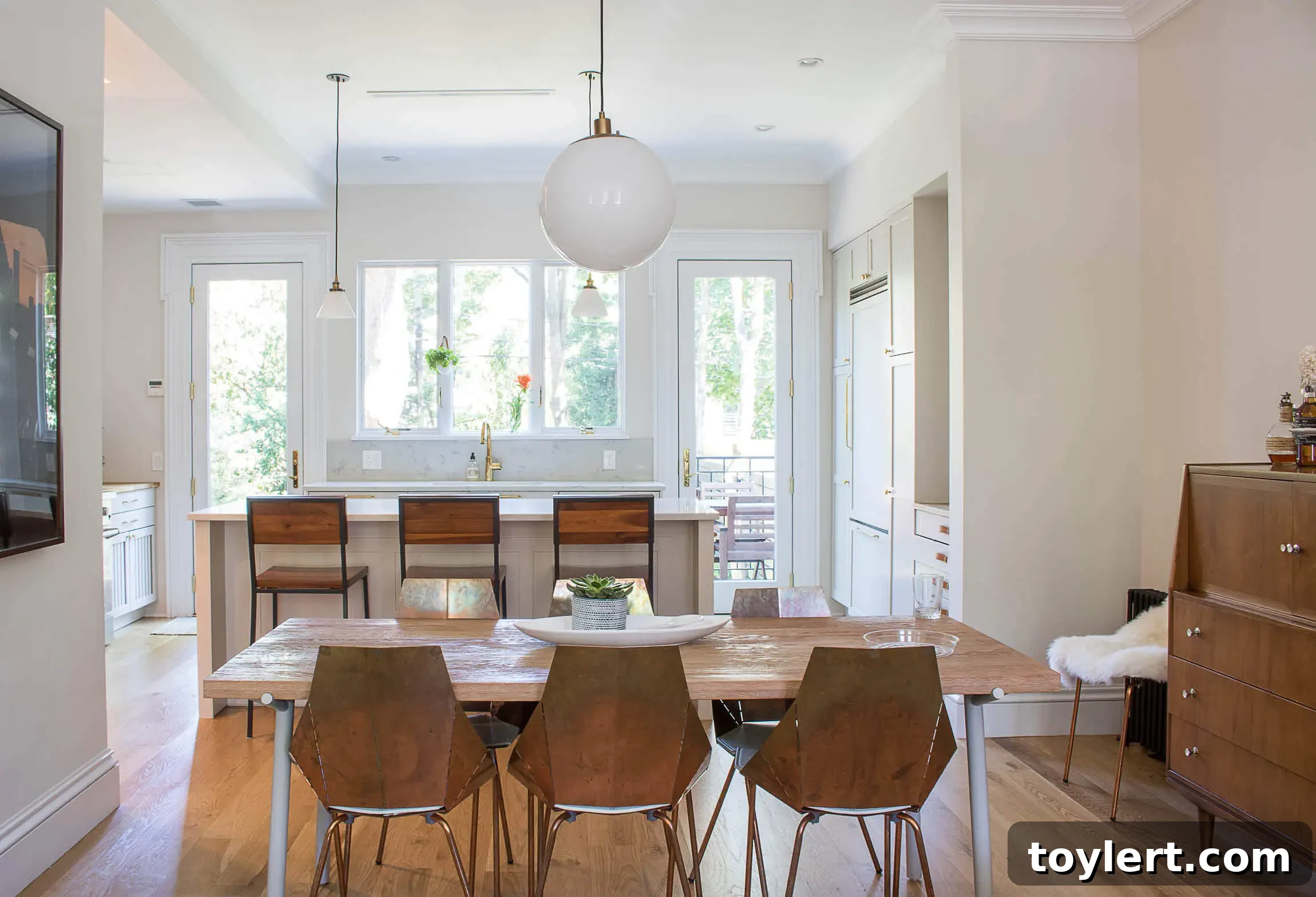
Masterful Renovation: Blending Historic Grandeur with Modern Living in a Fort Greene Greek Revival
In the heart of Brooklyn’s vibrant Fort Greene neighborhood stands a testament to timeless design and meticulous preservation: a landmarked 1853 wood-frame Greek Revival home, masterfully renovated to bridge centuries with grace and functionality. This ambitious project, spearheaded by homeowner Alissa Kelman Selling, a part-time workers’ compensation lawyer with a burgeoning passion for interior design, has not only transformed a historic property into a contemporary haven but also sparked a potential career metamorphosis for its visionary. Alissa’s hands-on involvement in every facet of the design and renovation process has proven so deeply rewarding that she now seriously contemplates trading her legal briefs for blueprints. The successful integration of classic architecture with modern comforts within a landmarked context offers a compelling narrative for anyone interested in historic preservation, interior design, and the art of harmonizing old and new.
The Genesis of a Dream: A Brooklyn Row House Aspiration
For years, Alissa Kelman Selling and her husband, Daniel, a dedicated psychologist, shared a common aspiration: to own and meticulously restore a classic Brooklyn row house. The allure of these historic structures, with their rich architectural heritage and inherent charm, was irresistible. They envisioned a home that would not only provide a sanctuary for their family but also reflect their unique aesthetic—a harmonious blend of reverence for the past and an embrace of modern living. Their search eventually led them to the tree-lined streets of Fort Greene, a neighborhood renowned for its preserved historic architecture, cultural vibrancy, and strong community spirit. It was here, amidst the brownstones and brick facades, that they discovered their dream project: an elegant, albeit slumbering, Greek Revival gem.
The decision to invest in a Fort Greene renovation was driven by the area’s undeniable appeal. Fort Greene offers a unique blend of urban convenience and historical charm, making it a highly sought-after location for families and professionals alike. The neighborhood’s distinctive character, characterized by its stately brownstones and diverse cultural landscape, provided the perfect backdrop for their vision of a home that honored its roots while evolving to meet contemporary needs. Their long-held desire to engage in a Brooklyn row house renovation was finally within reach, promising a deeply personal and creatively fulfilling endeavor.
Unearthing History: The 1853 Wood-Frame Greek Revival
The chosen property, an 1853 wood-frame Greek Revival house, presented both immense potential and significant challenges. As a landmarked structure, it required a renovation approach that meticulously balanced historical preservation with contemporary design sensibilities. The Greek Revival style, characterized by its classical elements, grand proportions, and often understated elegance, held a particular appeal for the Sellings. They recognized the unique opportunity to breathe new life into a home steeped in history, ensuring its architectural integrity was not only maintained but celebrated. This was not merely a cosmetic update; it was a profound undertaking to restore, enhance, and adapt a piece of Brooklyn’s heritage for 21st-century living, while adhering to the stringent guidelines set forth for landmarked properties. The sheer age of the property meant confronting decades of wear, previous unsympathetic alterations, and the inherent complexities of working with historic building materials.
Engaging in a historic home design project of this magnitude in Fort Greene also meant navigating the specific regulations of the New York City Landmarks Preservation Commission. This added an extra layer of complexity, requiring careful planning, extensive documentation, and a deep understanding of preservation standards. However, for Alissa and Daniel, these challenges only solidified their commitment to the project, seeing it as an opportunity to contribute to the ongoing legacy of Fort Greene architecture and ensure their home would stand as a shining example of respectful restoration.
The Art of Integration: Weaving Old and New
Alissa Kelman Selling’s design philosophy for this extensive renovation centered on the delicate art of integration. The goal was to create spaces where original architectural details could coexist seamlessly with modern amenities and contemporary design choices. This intricate dance between preservation and innovation became the hallmark of the project. Instead of stark contrasts, Alissa sought a fluid dialogue between the periods, ensuring that each new addition felt like a natural evolution rather than an abrupt intervention. From the outset, the Sellings understood that a landmarked home demanded a thoughtful approach—one that honored its past while boldly stepping into its future. This meant carefully restoring intricate moldings, preserving original flooring where possible, and respecting the home’s grand proportions, all while infusing it with personalized touches and state-of-the-art conveniences essential for a busy family. This approach to blending old and new design is critical for successful landmarked home renovation, particularly in a historically rich area like Fort Greene.
Preserving Historical Integrity: A Deep Respect for the Past
A cornerstone of the renovation was the unwavering commitment to preserving the home’s historical integrity. This involved extensive research into Greek Revival architecture and period-appropriate materials. Original details, such as ornate plasterwork, classical columns, and wide-plank floorboards, were carefully restored by skilled artisans. The majestic fireplaces, some dating back to the home’s construction, were brought back to their former glory, becoming focal points in the main living areas. Windows and doors, where not salvageable, were replaced with historically accurate reproductions, ensuring that the exterior façade maintained its authentic character. Navigating the stringent requirements of the Landmarks Preservation Commission was a significant aspect of this phase, demanding meticulous documentation and a deep understanding of historical preservation principles. Alissa approached this not as a hurdle, but as an essential part of safeguarding the home’s legacy, ensuring that future generations could appreciate its unique story. This dedication to preserving historic features truly distinguishes the project.
Embracing Modernity: Comfort and Function for Today’s Family
While honoring the past was paramount, the renovation also aimed to equip the home for modern family life. This meant strategic interventions to enhance comfort, efficiency, and functionality. The kitchen, often considered the heart of a contemporary home, was reimagined as a sleek, highly functional space, equipped with professional-grade appliances, ample storage, and expansive countertops for both meal preparation and casual gatherings. Yet, even here, elements like custom cabinetry that echoed traditional forms or thoughtful material choices ensured a harmonious connection to the home’s historical roots. Bathrooms were transformed into luxurious, spa-like retreats, featuring contemporary fixtures and finishes that offered a refreshing contrast while maintaining an elegant aesthetic. Integrated smart home technology, energy-efficient systems, and updated plumbing and electrical infrastructure were seamlessly woven into the fabric of the house, invisible yet indispensable for modern living. The interplay between these new elements and the preserved original features creates a living environment that is both deeply rooted in history and utterly responsive to contemporary needs, achieving the ideal modern amenities historic home balance.
Challenges and Creative Solutions in Historic Renovation
Renovating a landmarked 1853 property is rarely without its unique set of challenges, and the Fort Greene Greek Revival was no exception. From unexpected structural issues hidden behind decades of alterations to the intricate process of sourcing period-appropriate materials, Alissa and Daniel faced numerous hurdles. Securing approvals from the Landmarks Preservation Commission, a complex and often lengthy process, required patience, persistence, and a clear vision. However, it was precisely these challenges that ignited Alissa’s creative problem-solving skills and deepened her passion for design. For instance, when original details were beyond repair, Alissa meticulously researched and commissioned custom reproductions that seamlessly blended with the existing architecture. Structural upgrades were carefully planned to preserve historical elements, often requiring innovative engineering solutions. The tight urban site also presented logistical complexities, requiring precise coordination with contractors and tradespeople. Each obstacle became an opportunity for innovation, allowing Alissa to learn and grow, ultimately enriching the final outcome of the renovation and solidifying her experience in home transformation.
A Deep Dive into the Transformed Spaces
The transformation of the Fort Greene Greek Revival is evident in every thoughtfully designed space, each telling a story of thoughtful restoration and modern interpretation, making it a prime example of interior design Brooklyn homeowners often aspire to.
The Grand Entryway and Living Areas
Upon entering, visitors are greeted by an entryway that immediately establishes the home’s dual identity. Original detailing on the staircase and door frames stands proudly alongside contemporary lighting fixtures and carefully curated artwork. The main living areas, including formal parlors and a more relaxed family room, showcase a sophisticated color palette that complements the architectural style. Rich, historical tones are balanced with brighter, modern accents. Original hardwood floors, painstakingly restored, gleam underfoot, reflecting the abundant natural light streaming through newly restored windows. Furnishings are a mix of antique pieces that respect the home’s era and sleek, comfortable contemporary selections, creating an inviting atmosphere that feels both timeless and current.
The Heart of the Home: A Modern-Historic Kitchen
Perhaps the most dramatic transformation occurred in the kitchen. While respecting the overall footprint and flow, Alissa designed a chef’s dream space that is nonetheless deeply integrated into the home’s character. Custom cabinetry, painted in a subtle hue, features classic profiles but houses cutting-edge appliances. A large central island, topped with durable and elegant natural stone, serves as both a prep area and a gathering spot. Thoughtful touches, such as a salvaged vintage pantry door or exposed brick details, prevent the space from feeling overly sterile, ensuring it remains connected to the home’s historic soul. The kitchen exemplifies the seamless blend—where advanced technology meets artisanal craftsmanship, creating a highly functional yet aesthetically pleasing environment.
Serene Sanctuaries: Bedrooms and Bathrooms
Upstairs, the bedrooms offer serene sanctuaries. The master suite, a spacious retreat, maintains its original generous proportions while incorporating modern comforts. A luxurious en-suite bathroom boasts a freestanding tub, a walk-in shower, and bespoke vanity, all designed with clean lines and high-quality materials that speak to contemporary elegance. Children’s bedrooms are bright and airy, reflecting individual personalities while adhering to the overall aesthetic. Guest bathrooms continue the theme of thoughtful contrasts, perhaps pairing a vintage-inspired vanity with modern geometric tiles, demonstrating Alissa’s knack for creating cohesive yet varied spaces throughout the home.
From Law to Lifestyles: Alissa’s Journey into Design
The original article hinted at Alissa Kelman Selling’s profound statement: “Design is much more fun than lawyering.” This isn’t just a casual observation but a powerful indicator of a budding passion that has found its true calling. Working part-time in workers’ compensation law for a Manhattan firm, Alissa’s legal career required precision, problem-solving, and an acute attention to detail—qualities that, surprisingly, have proven invaluable in the realm of interior design and renovation. However, the creative fulfillment derived from transforming a neglected historic property into a vibrant, living space far surpassed the satisfactions of her legal work. The tactile experience of selecting materials, the intellectual challenge of spatial planning, and the sheer joy of seeing a vision materialize from concept to reality, resonated deeply with her. This renovation project became more than just a personal endeavor; it evolved into a hands-on apprenticeship, solidifying her aspirations for a full-time career in design. Her journey underscores the idea that sometimes, the most fulfilling career paths emerge from personal passions, even if they lie outside one’s formal training, much like Alissa Kelman Selling’s design venture.
The Lasting Impact: A Home Transformed, a Future Redefined
The completed renovation of the Fort Greene Greek Revival is more than just a beautifully restored house; it is a vibrant family home that perfectly encapsulates Alissa and Daniel Selling’s vision. It stands as a testament to what can be achieved when historical reverence meets contemporary innovation. Every corner tells a story of careful consideration, respectful restoration, and a clear understanding of modern living. For Alissa, the project has been a transformative experience, not only in shaping a stunning environment for her family but also in redefining her own professional trajectory. Her successful foray into design with this complex landmarked project demonstrates her innate talent and unwavering dedication. The Fort Greene Greek Revival now serves as an inspiring example of how historic homes can be lovingly preserved and skillfully adapted, ensuring their relevance and beauty endure for generations to come, while also paving the way for Alissa Kelman Selling’s exciting new chapter in the world of interior design.