Editor’s note: An updated version of this post can be viewed here.
The Stone Avenue Library: A Timeless Bastion of Knowledge in Brownsville, Brooklyn
Brooklyn, one building at a time.
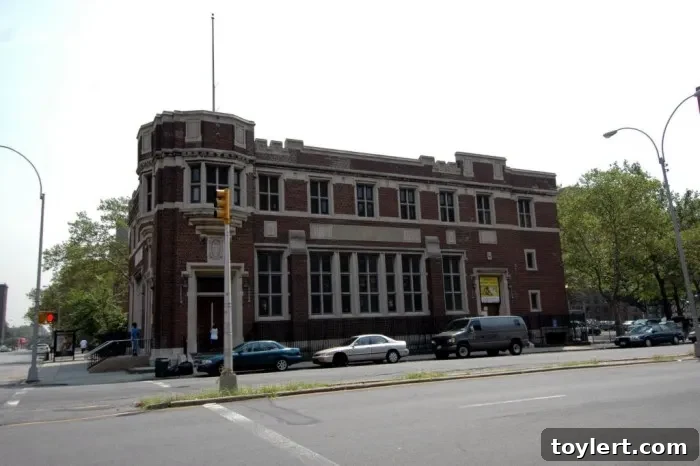
Nestled in the vibrant heart of Brownsville, Brooklyn, the Stone Avenue Library stands as a magnificent testament to community, knowledge, and enduring architectural grandeur. Officially known as the Stone Avenue Branch of the Brooklyn Public Library, this historic edifice at 581 Mother Gaston Boulevard has served as a pivotal educational and cultural hub for over a century. Its distinctive Italian Renaissance Revival architecture, designed by the celebrated William Tubby, not only commands attention but also tells a compelling story of an era when public libraries were conceived as vital engines of social progress and intellectual enrichment.
From its inception, the Stone Avenue Library was more than just a repository for books; it was a beacon of hope and opportunity, especially for the diverse immigrant communities that shaped Brownsville. This article delves into the rich history, remarkable architecture, and profound community impact of a building that continues to inspire and educate, solidifying its place as a cherished landmark in Brooklyn’s storied landscape.
An Architectural Masterpiece by William Tubby
The Stone Avenue Library is an exquisite example of the architectural prowess of William Tubby, one of Brooklyn’s most prolific and respected architects of the late 19th and early 20th centuries. Tubby, known for his diverse portfolio that includes the majestic Pratt Institute Library and numerous brownstones and commercial buildings across the borough, brought his signature blend of classical elegance and functional design to this public institution. Completed in 1905, the library was part of the ambitious expansion of the Brooklyn Public Library system, largely funded by the philanthropic endeavors of industrialist Andrew Carnegie.
Tubby’s design for the Stone Avenue Branch masterfully employs the Italian Renaissance Revival style, characterized by its stately proportions, refined detailing, and a sense of dignified civic presence. The building’s exterior is predominantly constructed of rich red brick, meticulously laid and contrasted beautifully with extensive limestone trim. This material palette creates a striking visual appeal, conveying both strength and sophistication. Large, arched windows dominate the upper stories, allowing an abundance of natural light to flood the interior reading rooms—a crucial design element for a place dedicated to study and quiet contemplation.
Key Architectural Features
- Façade and Materials: The striking red brickwork, meticulously pointed, provides a warm, inviting backdrop, while the crisp limestone detailing on window surrounds, cornices, and the impressive entrance portal adds a touch of classical grandeur.
- Entrance Portal: The main entrance is a focal point, featuring an ornate limestone surround, often adorned with classical motifs such as keystones, pilasters, and decorative carvings that hint at the treasures within. Its imposing yet welcoming design serves as a symbolic gateway to knowledge.
- Windows: The generously sized, often arched windows are not just aesthetic elements but functional components, ensuring well-lit interior spaces conducive to reading and learning. The articulation of these windows within the brick façade adds rhythmic elegance.
- Terra Cotta Accents: Subtle yet intricate terra cotta details are integrated into the design, adding texture and artistic flair. These might appear in decorative friezes, medallions, or specific embellishments that catch the eye and enrich the building’s overall aesthetic.
- Roofline and Cornice: A robust cornice typically caps the building, contributing to its classical profile. The roofline, while functional, often incorporates elements that complete the Renaissance Revival aesthetic, reinforcing the building’s robust and enduring character.
The library’s design thoughtfully balances aesthetic beauty with practical utility. Tubby envisioned a space that was not only architecturally significant but also highly functional for its intended purpose: serving the educational needs of a burgeoning urban community. The spacious interiors, high ceilings, and thoughtful layout were all geared towards creating an optimal environment for public access to literature and information.
A Carnegie Legacy: Fueling Education in Brownsville
The early 20th century marked a transformative period for public libraries in America, largely thanks to the unprecedented philanthropy of Andrew Carnegie. His vision was simple yet profound: to establish free public libraries across the English-speaking world, believing firmly that access to books and knowledge was the most effective means for individuals to improve their lives and for communities to thrive. The Stone Avenue Library stands as a proud emblem of this legacy.
Brownsville, a neighborhood experiencing rapid growth and a significant influx of immigrants, primarily from Eastern Europe, was a prime location for such an institution. These new arrivals, eager to integrate into American society, sought opportunities for education, language acquisition, and cultural understanding. The library provided precisely this—a democratic space where anyone, regardless of their background or economic status, could access resources that were once reserved for the privileged few.
Upon its opening in 1905, the Stone Avenue Library quickly became an indispensable asset. It offered a quiet refuge for study, a welcoming space for children to discover the joy of reading, and a vital resource for adults seeking to learn English, pursue vocational training, or simply engage with the wider world through books and periodicals. The library’s programs and collections were tailored to meet the specific needs of the Brownsville community, playing a crucial role in civic education and fostering a sense of shared identity among its diverse residents.
The Heart of the Community: A Century of Service
For over a hundred years, the Stone Avenue Library has remained a steadfast pillar of the Brownsville community. Its journey mirrors the evolution of the neighborhood itself. Initially serving a predominantly Jewish immigrant population, Brownsville transformed over the decades, becoming home to vibrant African American and Caribbean communities. Through these demographic shifts, the library has consistently adapted its services and collections to remain relevant and responsive to the evolving needs of its patrons.
More than just a place to borrow books, the library has historically served as a central gathering place, a venue for community meetings, cultural events, and educational workshops. It has been a safe haven for children after school, a research center for students, and a valuable source of information for job seekers and entrepreneurs. Its enduring presence underscores its importance as a symbol of continuity and stability in a dynamic urban environment.
The library’s dedicated staff have always been at the forefront of community engagement, curating programs that range from literacy initiatives and storytelling sessions for toddlers to technology training for seniors and civic engagement forums for adults. These efforts reinforce the library’s role not just as a repository of information but as an active participant in community development and empowerment.
Preservation and Enduring Legacy
The historical significance and architectural beauty of the Stone Avenue Library have not gone unnoticed. In recognition of its profound cultural and architectural value, the building was officially designated a New York City Landmark in 2007. This designation ensures that its unique character and structural integrity are protected for future generations, highlighting its importance as a tangible link to Brooklyn’s past.
Preservation efforts have focused on maintaining the library’s original features while upgrading its facilities to meet contemporary demands. The goal is to honor William Tubby’s vision and the Carnegie legacy while providing modern amenities that cater to today’s library users. This delicate balance ensures that the library remains both a historical treasure and a fully functional, forward-looking institution.
The Stone Avenue Library continues to thrive as a vital component of the Brooklyn Public Library system. It stands as a powerful reminder of the enduring value of public institutions in fostering education, promoting literacy, and strengthening community bonds. Its robust architecture and rich history offer a compelling narrative of Brooklyn’s growth, its diverse populations, and the timeless pursuit of knowledge.
In an increasingly digital world, the physical presence of the Stone Avenue Library offers a unique blend of historical reverence and modern utility. It provides not only access to digital resources but also a tangible space for communal learning, personal growth, and human connection. It is a place where the past informs the present, and where every book opened is a step towards a brighter future for the people of Brownsville and beyond. The Stone Avenue Library truly embodies the spirit of Brooklyn, one building at a time, continuing its legacy as a cornerstone of intellectual and social life.