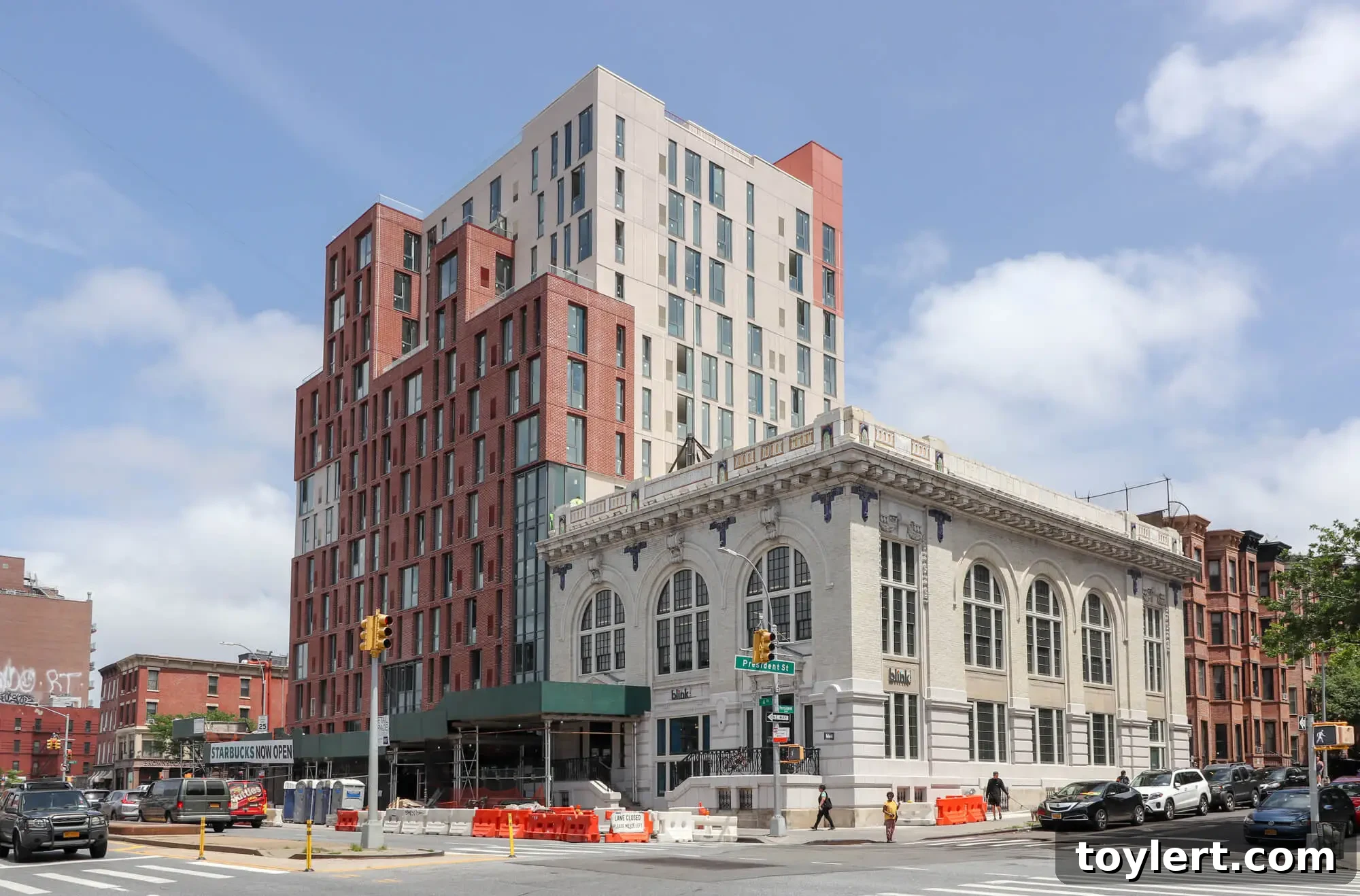
225 4th Avenue: A Modern Marvel Nears Completion in Vibrant Park Slope
The urban landscape of Brooklyn’s beloved Park Slope neighborhood is continually evolving, and a striking new addition is poised to redefine a prominent stretch of 4th Avenue. At 225 4th Avenue, a contemporary 13-story building is nearing its grand completion, bringing a distinct modern aesthetic to this dynamic corridor. This architectural statement not only adds to the borough’s ever-growing skyline but also encapsulates the vibrant spirit of development that characterizes one of New York City’s most sought-after areas. Its imminent opening marks a significant milestone, promising new residential or commercial opportunities and a fresh visual identity for this bustling thoroughfare.
Nestled strategically within Park Slope, this new structure stands as a testament to innovative design and urban renewal. The building’s completion is highly anticipated, as it contributes to the ongoing transformation of 4th Avenue into a modern, amenity-rich artery connecting various parts of Brooklyn. Its presence signifies the continued investment in high-quality urban living spaces and the thoughtful integration of contemporary architecture within a historic context. Residents and visitors alike will soon witness the full realization of a vision that blends cutting-edge design with the enduring charm of a cherished Brooklyn community.
Architectural Vision: Daniel Goldner’s Dynamic Design at 225 4th Avenue
The distinctive character of the 13-story building at 225 4th Avenue is largely attributed to the masterful design by Daniel Goldner, the acclaimed architect of record. Goldner’s vision for this project transcends conventional architectural norms, resulting in a facade that is both captivating and profoundly modern. The building’s aesthetic is immediately noticeable for its deliberate departure from uniformity, embracing a dynamic and playful composition that commands attention.
One of the most striking features of the building is its material palette and color scheme. The primary rust-colored facade provides a warm yet sophisticated base, creating a visual warmth that contrasts beautifully with the industrial undertones often associated with urban development. This rich hue is thoughtfully paired with contrasting yellow brick accents, strategically placed to break up the massing and introduce an element of unexpected cheerfulness. The interplay of these colors ensures that the building stands out, yet feels integrated into the diverse urban fabric of Park Slope.
Further enhancing its unique appeal, the building incorporates a clever design technique where it is set back from the street line. This setback not only contributes to a sense of spaciousness at ground level but also allows for a more pronounced architectural presence as the structure rises. The facade is further animated by a meticulously designed fenestration pattern: offset windows of varied sizes. This asymmetry is not arbitrary; it’s a deliberate choice that injects a “playful, dynamic look” into the building’s exterior. The varied window sizes and their seemingly irregular placement create visual interest, breaking the monotony often found in larger urban developments and reflecting a more artistic, less rigid approach to modern design. This thoughtful arrangement allows for diverse interior layouts while presenting an intriguing puzzle to the onlooker.
Daniel Goldner’s approach to 225 4th Avenue showcases a commitment to contemporary aesthetics that prioritize visual intrigue and sophisticated material use. His design challenges the viewer to engage with the building, observing how light interacts with its different planes and how the colors shift under varying atmospheric conditions. The result is an architectural landmark that is both a functional living or working space and a piece of public art, reflecting the forward-thinking spirit of modern Brooklyn.
A Strategic Location: Park Slope’s Dynamic 4th Avenue
The choice of 225 4th Avenue for such a prominent development is no coincidence; it speaks volumes about the continuous evolution of Park Slope and, specifically, the burgeoning vitality of 4th Avenue. Once primarily known as a bustling thoroughfare for transportation, 4th Avenue has undergone a remarkable transformation over the past two decades, emerging as a vibrant urban corridor rich with residential opportunities, retail spaces, and diverse amenities.
Park Slope itself is celebrated for its tree-lined streets, historic brownstones, and a strong sense of community, consistently ranking as one of Brooklyn’s most desirable neighborhoods. The area boasts an eclectic mix of independent shops, acclaimed restaurants, verdant parks like Prospect Park, and a thriving cultural scene. The presence of the iconic Brooklyn Lyceum next door further underscores the rich cultural tapestry of this location, blending historic significance with modern convenience.
For residents, 4th Avenue offers unparalleled accessibility. Major subway lines, including the R, D, N, and W, provide swift connections to Manhattan and other parts of Brooklyn, making it an ideal location for commuters. The avenue also serves as a vital artery for vehicular traffic and offers numerous bus routes, enhancing connectivity. This superb transportation infrastructure makes developments like 225 4th Avenue particularly attractive to those seeking a balanced urban lifestyle where convenience is paramount.
The ongoing revitalization of 4th Avenue has seen the emergence of numerous high-rise buildings, each contributing to a new architectural identity for the street. These developments often include ground-floor retail, which in turn brings new businesses, services, and vibrancy to the pedestrian experience. The building at 225 4th Avenue fits seamlessly into this narrative of growth, adding to the density and urban sophistication that characterize modern Brooklyn living. Its strategic position allows residents to enjoy the tranquility of Park Slope’s residential streets while being just steps away from urban conveniences and efficient transit options.
Harmony and Contrast: The Brooklyn Lyceum’s Historic Presence
One of the most compelling aspects of the 225 4th Avenue development is its immediate proximity to the venerable Brooklyn Lyceum at 227 4th Avenue. This historic landmark, a magnificent Beaux-Arts former public bath, stands as a proud testament to Brooklyn’s rich past and provides a fascinating architectural dialogue with its new, modern neighbor. The relationship between these two structures—one steeped in history, the other a beacon of contemporary design—creates a unique urban tableau.
The Brooklyn Lyceum is a building of immense historical and architectural significance. Conceived in the ornate and grand Beaux-Arts style, it originally served as a public bathhouse, a crucial amenity in an era when private bathing facilities were not universally available. Its design is characterized by classical symmetry, elaborate ornamentation, grand arches, and a monumental presence that speaks to the civic pride of its time. The building’s landmark status ensures its preservation, recognizing its irreplaceable contribution to Brooklyn’s architectural heritage. Over the years, the Lyceum has adapted to various roles, serving as a cultural venue, event space, and a focal point for community activities, though its exact current usage can fluctuate.
The challenge for the design of 225 4th Avenue was to introduce a distinctly modern building that could coexist respectfully with such a powerful historic neighbor. Daniel Goldner’s design achieves this balance through contrast rather than imitation. While the Lyceum boasts classical grandeur, 225 4th Avenue offers a sleek, dynamic modernity. The rust-colored facade and yellow brick accents, while contemporary, possess an earthy warmth that doesn’t clash with the Lyceum’s stately stone. The setback design of the new building also helps to create a visual breathing room, allowing both structures to assert their individual identities without overshadowing each other. The playful offset windows on the new building draw the eye, offering a different kind of visual interest compared to the Lyceum’s ordered classicism.
This architectural juxtaposition is a microcosm of Park Slope itself—a neighborhood that beautifully marries its historic roots with a forward-looking perspective. The two buildings, standing side-by-side, tell a story of urban evolution, demonstrating how new development can both respect and enrich an area’s historical context. The Lyceum reminds us of the past, while 225 4th Avenue points to the future, together forming a vibrant and diverse streetscape that is quintessentially Brooklyn.
The Impact on Urban Living and Neighborhood Dynamics
The completion of the 13-story building at 225 4th Avenue represents more than just a new structure; it signifies a significant impact on urban living patterns and the evolving dynamics of the Park Slope neighborhood. Such developments typically bring a host of changes, offering both benefits and new considerations for the existing community.
Primarily, this building is expected to introduce a substantial number of new residential units into a highly desirable area. This increased housing density is crucial for accommodating Brooklyn’s growing population and addressing the demand for modern urban residences. These units are likely to feature contemporary layouts, high-end finishes, and potentially amenities such as fitness centers, common lounges, rooftops, and possibly even dedicated co-working spaces, reflecting the demands of today’s urban dwellers. The presence of these amenities enhances the overall quality of life for residents and contributes to a vibrant, self-contained living experience.
Moreover, the influx of new residents typically stimulates the local economy. New businesses, from cafes and restaurants to retail shops, often emerge or expand to cater to the increased population, further enriching the commercial offerings along 4th Avenue and beyond. This can create new job opportunities and diversify the services available to all residents of Park Slope.
From an urban planning perspective, the building at 225 4th Avenue contributes to the ongoing densification of 4th Avenue, transforming it into a more robust and pedestrian-friendly boulevard. The thoughtful integration of setbacks and dynamic facades, as seen in Daniel Goldner’s design, can prevent the creation of monotonous street walls, promoting visual interest and an engaging public realm. Modern developments also often incorporate green building practices, focusing on energy efficiency, sustainable materials, and enhanced indoor air quality, aligning with contemporary environmental values and contributing to a healthier urban environment.
While new developments inevitably bring changes, the thoughtful design and strategic location of 225 4th Avenue suggest a positive contribution to Park Slope. It enriches the architectural dialogue, provides much-needed housing, stimulates local commerce, and reinforces 4th Avenue’s role as a vibrant and accessible urban spine. As the building fully comes to life, it will undoubtedly become a pivotal part of the neighborhood’s ongoing narrative, shaping the future of urban living in this iconic Brooklyn locale.