Saving the Double D Pool: A Community’s Fight Against the Gowanus Canal Cleanup
The vibrant community of Gowanus, Brooklyn, finds itself at a crossroads as a beloved local institution, the Thomas Greene Playground pool—affectionately known as the “Double D”—faces an existential threat. For years, this popular city pool has served as a crucial recreational oasis, especially during sweltering New York summers. Having already survived one battle against city budget cuts, the Double D now confronts a new, formidable challenge: its proposed demolition to make way for an underground sewage storage tank, part of the extensive Gowanus Canal cleanup efforts spearheaded by the Environmental Protection Agency (EPA). This news, initially reported by DNAinfo, has ignited a passionate response from local residents who refuse to let their cherished pool disappear without a fight.
The Heart of the Community: The Enduring Legacy of the Double D Pool
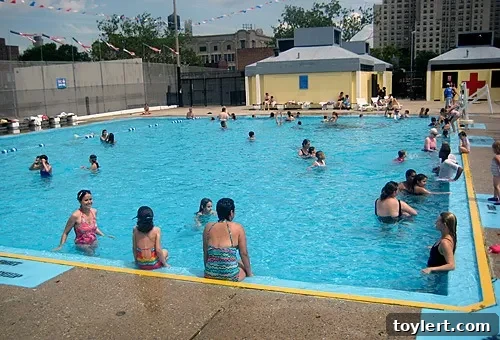
Nestled strategically at Nevins Street and 3rd Avenue, between Degraw and Douglass Streets, the Thomas Greene Playground pool earned its distinctive “Double D” nickname from its street coordinates. More than just a place to swim, this pool has been a cornerstone of the Gowanus community for decades. It’s a place where generations of Brooklynites have learned to swim, where families gather for relief on hot summer days, and where children forge lasting memories. Its accessible location and status as a free public facility make it an invaluable resource for low-income families and individuals who might otherwise lack access to recreational swimming opportunities.
The pool’s history is punctuated by its resilience. Years ago, when faced with potential closure due to city budget constraints, the community rallied with overwhelming support, successfully demonstrating its vital role and securing its future—or so they thought. This previous victory underscores the deep emotional connection residents have with the Double D, highlighting its importance not just as a physical structure, but as a symbol of community spirit and public welfare. Losing such a space would mean more than just losing a pool; it would mean losing a significant piece of the neighborhood’s social fabric and a vital outlet for health and well-being.
Photo by Brooklyn Paper
The Gowanus Canal Cleanup: A Necessary Undertaking with Unforeseen Consequences
The Gowanus Canal, a notorious waterway infamous for its pollution, was officially designated a Superfund site by the EPA in 2010. This designation marked the beginning of a massive, multi-year cleanup effort aimed at remediating decades of industrial contamination and improving water quality. The canal’s cleanup is undeniably crucial for environmental health and the long-term vitality of the surrounding neighborhoods. A significant challenge in this cleanup is managing combined sewer overflows (CSOs) – the discharge of untreated sewage and stormwater runoff into the canal during heavy rainstorms, which severely exacerbates pollution.
To address the CSO issue, the EPA’s cleanup plan includes the construction of large underground storage tanks designed to capture and temporarily hold raw sewage runoff. These tanks prevent the polluted overflow from entering the canal directly, allowing it to be treated later. While the necessity of these measures for the canal’s ecological restoration is widely acknowledged, the chosen location for one of these critical storage tanks has sparked considerable controversy and distress within the community.
A Direct Conflict: Pool vs. The Proposed Sewage Storage Tank
The crux of the current dilemma lies in the EPA’s proposed site for one of these vital underground sewage storage tanks: directly beneath the Thomas Greene Playground, displacing the Double D pool. The tank is envisioned to be a substantial structure, capable of housing hundreds of thousands of gallons of raw sewage and stormwater runoff during intense rain events. Its purpose is to mitigate further contamination of the Gowanus Canal, a goal that aligns with the broader environmental cleanup objectives.
However, for the residents of Gowanus, the choice of this specific site represents a profound conflict of priorities. On one hand, there is the undeniable need for environmental remediation and public health improvements related to the canal. On the other, there is the irreplaceable loss of a beloved community asset that provides essential recreational and social benefits. The EPA’s decision, while driven by engineering and environmental imperatives, is perceived by many locals as a failure to adequately consider the human cost and the existing social infrastructure of the neighborhood. The question that looms large is whether environmental progress must come at the expense of community well-being and recreational spaces.
A Community Rises: Fighting to Save the Double D Pool
The announcement of the Double D pool’s impending closure has galvanized the Gowanus community into action. Residents, parents, local advocacy groups, and elected officials have swiftly mobilized to protest the decision. Their efforts reflect a deep-seated commitment to preserving their public spaces and ensuring that environmental solutions do not inadvertently harm the very communities they are meant to serve.
A central pillar of this resistance is an online petition that has garnered significant support, reflecting the widespread opposition to the pool’s demolition. The petition and accompanying rallies emphasize a key message: “Make the polluters pay, not our community.” This slogan encapsulates the sentiment that while the cleanup is necessary, the burden should not fall on the public through the loss of cherished amenities, especially when alternative sites or engineering solutions might exist. Community meetings have become forums for passionate debate, with residents voicing concerns about the precedent this sets for public land use, the impact on children’s access to recreation, and the perceived lack of transparent engagement from the EPA regarding alternative options.
The Future of the Double D Pool: A Call for Compromise and Community Voice
As the debate continues, the future of the Double D pool remains uncertain. While the environmental imperative to clean up the Gowanus Canal is undeniable, the community’s right to retain its vital public spaces is equally compelling. The situation in Gowanus serves as a powerful reminder of the complex challenges faced by urban communities undergoing large-scale infrastructure projects. It highlights the delicate balance between environmental progress, urban development, and the preservation of community identity and well-being.
The residents of Gowanus are not against the cleanup; rather, they advocate for a solution that respects both environmental goals and community needs. Their passionate plea for the Double D pool is a call for greater transparency, more inclusive planning, and a genuine exploration of alternative sites or designs that could achieve the EPA’s objectives without sacrificing a cornerstone of their neighborhood. The ongoing struggle underscores the power of local activism and the unwavering spirit of a community determined to protect what it cherishes most.