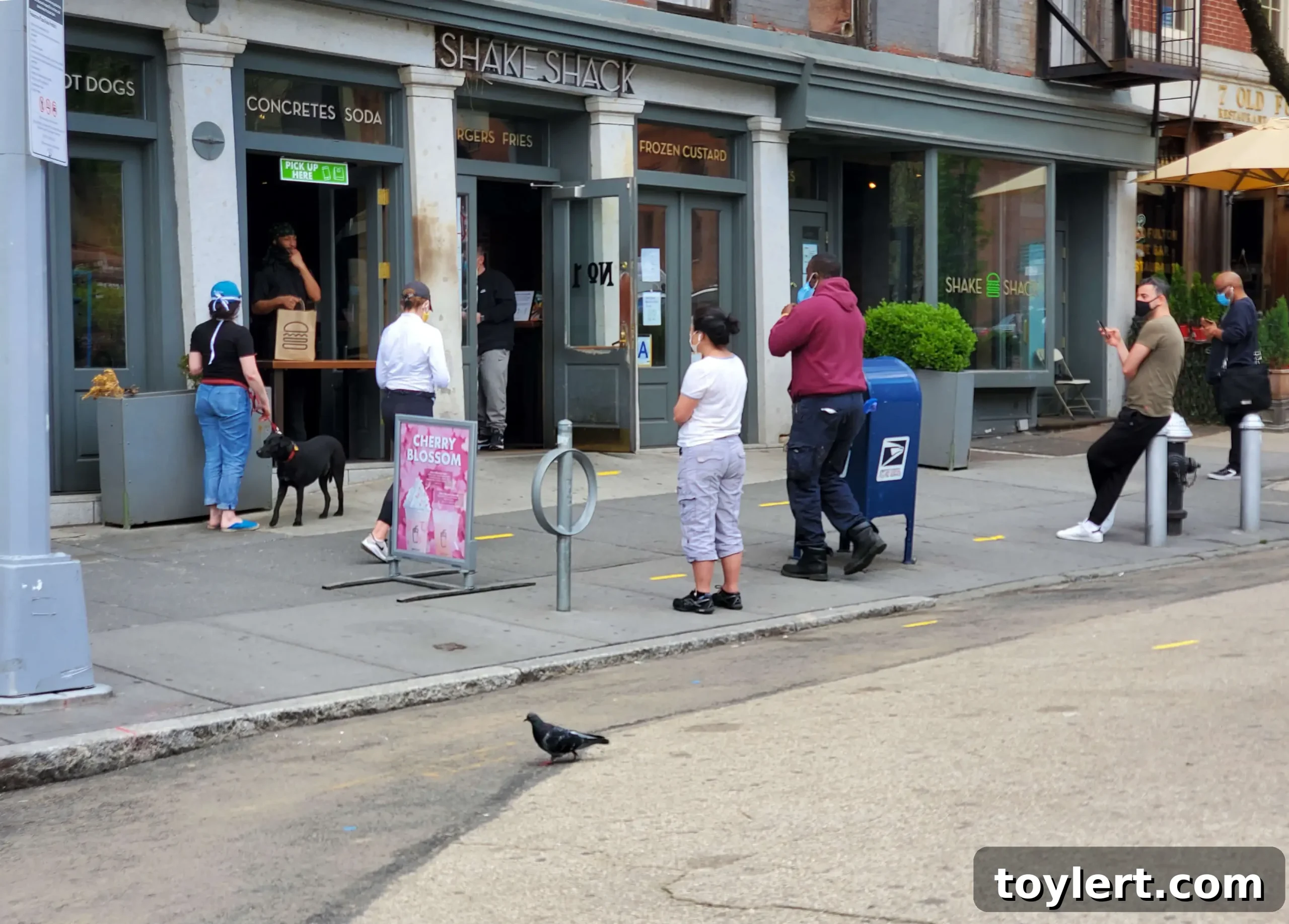
As communities across New York City navigate the protracted realities of the COVID-19 pandemic, the challenges extend far beyond daily life adjustments. Now in the tenth week of widespread sheltering in place and the fortieth day of mandated home schooling for New York City’s vast public school system, the landscape of public health and economic stability is undergoing unprecedented transformations. This period is marked by a complex interplay of evolving public health directives, community adherence, and lurking financial risks that together paint a precarious picture for the city’s immediate future and its path to recovery. From the streets of Brooklyn, where mask compliance remains a contentious issue, to the intricate world of commercial finance, where a potential mortgage crisis looms, the indicators suggest a critical juncture demanding heightened vigilance and strategic action.
Navigating Public Health Directives: The Mask Mandate in Brooklyn
The initial weeks of the pandemic brought with them a rapid and often confusing evolution of public health guidance, particularly concerning face coverings. What began with skepticism from health authorities regarding the efficacy of masks for the general public has since transitioned into a near-universal recommendation, and in many places, a mandate. Despite this dramatic shift, and the overwhelming scientific consensus supporting mask-wearing as a crucial tool to curb transmission, observations from Brooklyn reveal a disconcerting gap between official recommendations and community practice.
Over recent weekends, countless residents in Brooklyn’s vibrant neighborhoods were seen engaging in various public activities—biking, walking, and socializing in parks and on bustling streets—without masks. This widespread disregard for current health guidelines is not merely a matter of individual choice; it has profound implications for the collective effort to contain the virus and safely reopen the city. The reasons for this apparent non-compliance are multifaceted. They range from evolving public fatigue and a desire to return to normalcy, to a potential lack of understanding regarding the updated guidance, or even a sense of invincibility among certain demographics.
Effective communication strategies are paramount in bridging this gap. Public health messages need to be clearer, consistent, and disseminated through a variety of channels to reach all segments of the population. Furthermore, these messages must be culturally sensitive and available in multiple languages to ensure comprehension across Brooklyn’s diverse communities. Beyond mere information, accessibility to protective equipment is also critical. The provision of free masks, specifically designed to fit children as well as adults, would remove a significant barrier for many families. Ensuring children are adequately protected is not only vital for their own health but also for preventing community spread and bolstering the confidence of parents as schools contemplate reopening. By addressing these practical and communicative shortcomings, Brooklyn stands a better chance of achieving higher rates of mask compliance, thereby paving the way for a safer and more expedited reopening of businesses and social institutions.
The success of New York City’s recovery hinges on collective responsibility. While individual liberties are important, the communal benefit of suppressing the virus through simple, proven measures like mask-wearing cannot be overstated. High rates of compliance protect not only the wearers but also the most vulnerable members of society, reduce the strain on healthcare systems, and instill the necessary confidence for economic activity to resume. Without a concerted effort to unify public health behavior, the risks of recurrent outbreaks remain high, threatening to prolong the economic downturn and further delay the city’s return to normalcy.
A Brewing Financial Storm: The Looming Mortgage Crisis
Even as the city grapples with the immediate health crisis, another formidable challenge is emerging from the financial sector, one that could destabilize the broader economy. A recent investigation by ProPublica has brought to light alarming findings: a systematic inflation of building profits by lenders in mortgage applications. This practice, reminiscent of the opaque dealings that precipitated the 2008 financial crisis, suggests that commercial mortgage-backed securities (CMBS) may be significantly riskier than previously understood. The implications, especially when viewed through the lens of the ongoing COVID-19 pandemic, are dire, raising the specter of another widespread mortgage collapse.
Commercial mortgage-backed securities are financial instruments composed of bundles of commercial mortgages. Investors purchase these securities, expecting to receive regular payments derived from the underlying mortgage payments on properties such as office buildings, retail centers, and hotels. The integrity of these securities relies heavily on the accurate valuation and projected profitability of the commercial properties they represent. ProPublica’s investigation, citing a whistleblower, uncovers a disturbing trend where lenders allegedly inflated projected profits for these commercial buildings, making the associated mortgages appear more attractive and less risky than they genuinely were. This artificial boost in profitability allows for larger loans and, consequently, more lucrative packaging into CMBS for sale to unsuspecting investors.
The parallels to the 2008 subprime mortgage crisis are striking. In both scenarios, the underlying assets (residential mortgages then, commercial mortgages now) were allegedly misrepresented or underpinned by shaky fundamentals, only to be bundled into complex financial products and sold widely. The true risk was obscured, creating a ticking time bomb within the financial system. The COVID-19 pandemic acts as an accelerant to this already perilous situation. With widespread business closures, reduced foot traffic, and a dramatic shift towards remote work, the commercial real estate sector is facing unprecedented headwinds. Retail stores are struggling, office vacancies are rising, and the hospitality industry has been decimated. These realities directly contradict the inflated profit projections embedded in many CMBS. As businesses default on their rents and commercial property values plummet, the mortgages backing these securities become increasingly distressed, jeopardizing the payments to investors and threatening a cascade of defaults.
Should another mortgage collapse materialize, its repercussions would be profound and far-reaching. Banks and financial institutions holding these devalued securities would face significant losses, potentially leading to liquidity crises and a freezing of credit markets. The commercial real estate market would experience a dramatic downturn, impacting property owners, developers, and construction workers. Furthermore, such a crisis would inevitably spill over into the broader economy, exacerbating the unemployment crisis, stifling investment, and creating a prolonged period of economic stagnation. The recovery from the COVID-19 pandemic, already a monumental task, would be severely hampered by the added burden of a financial meltdown.
The Interplay of Crises: Health and Economy Intertwined
The dual challenges of public health non-compliance and impending financial instability are not isolated phenomena; they are deeply interconnected, each exacerbating the other. A slow or ineffective response to the public health crisis, characterized by ongoing community transmission and the inability to safely reopen the economy, directly undermines the foundations of commercial stability. Businesses cannot thrive under lockdown conditions, and consumer confidence remains fragile in the face of ongoing health risks. Conversely, a severe economic downturn, triggered by a mortgage crisis or prolonged business closures, would limit the resources available for robust public health initiatives, such as widespread testing, contact tracing, and the equitable distribution of future vaccines. Job losses and financial insecurity also impact individuals’ ability to comply with health mandates, such as staying home when sick or isolating, further complicating containment efforts.
Addressing these interwoven crises requires a holistic and coordinated approach. There can be no true economic recovery without effective containment of the virus, and sustained public health efforts require a stable economic environment to support them. Policymakers must simultaneously prioritize clear, actionable public health guidance and implement stringent oversight of financial markets to prevent speculative abuses. This delicate balancing act demands swift action, transparency, and collaboration among government agencies, financial regulators, and community leaders.
A Path Forward: Resilience Through Action
The current juncture demands both immediate tactical responses and long-term strategic vision. On the public health front, authorities must redouble efforts to disseminate transparent, multilingual information regarding mask usage, social distancing, and hygiene protocols. Community outreach programs, leveraging trusted local voices and organizations, can play a pivotal role in fostering compliance and addressing specific community concerns. Furthermore, ensuring equitable access to masks, sanitizers, and eventually, testing and vaccines, is not just a matter of fairness but a crucial component of effective pandemic management.
In the financial realm, lessons from the 2008 crisis must be heeded. Regulators need to intensify scrutiny of commercial mortgage-backed securities and the lending practices that underpin them. Whistleblower protections should be strengthened, and mechanisms for early detection of systemic risks must be robust. Potential solutions could include stress tests for financial institutions, stricter capital requirements, and increased transparency in the securitization process. Additionally, targeted support for small businesses and commercial tenants can help mitigate the immediate impact of economic downturns, preventing a domino effect of defaults.
New York City and its diverse boroughs, including Brooklyn, possess an inherent resilience, forged through past crises. However, overcoming the current multifaceted challenges will require unprecedented levels of cooperation, adaptability, and foresight. By learning from past mistakes, empowering communities with clear information and resources, and holding financial institutions accountable, the city can hope to navigate these turbulent waters. The path to recovery is arduous, but with collective commitment to public health and financial stability, a stronger, more equitable future remains within reach.