The B2 Modular Tower: A Saga of Innovation, Conflict, and Resilience in Brooklyn’s Urban Landscape
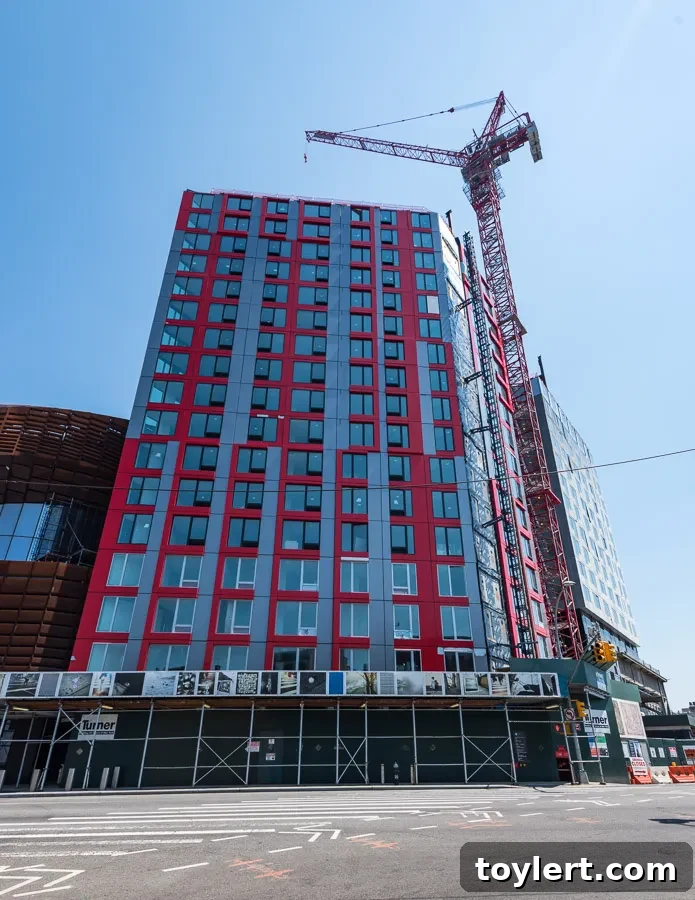
Standing prominently at 461 Dean Street, adjacent to the bustling Barclays Center within the expansive Pacific Park (formerly Atlantic Yards) development, is the B2 modular tower. This ambitious residential building was conceived as a revolutionary project, designed to showcase the immense potential of modular construction in dense urban environments. Initially envisioned as the world’s tallest modular high-rise upon completion, B2’s journey has been anything but conventional. It has been a crucible of innovation, fraught with significant lawsuits, extended construction delays, and a series of technical challenges that have tested the limits of modern building practices.
For many years, the B2 tower symbolized both the promise and the inherent difficulties of pushing architectural boundaries. Its complex history has been a subject of intense scrutiny from urban planners, real estate developers, and the public alike. Despite its tumultuous past, recent statements from a project spokesman offer a glimmer of optimism, proclaiming that its “problem days are behind it.” With the structure visibly progressing and having now reached its 17th floor, these assurances aim to signal a new chapter for the project, promising a stable trajectory towards its long-awaited completion.
The Ambitious Promise of Modular Construction for Urban Development
The core concept behind the B2 tower was its reliance on modular construction techniques. This method involves the factory-production of pre-finished building sections, or “modules,” which are then transported to the construction site and assembled. Proponents of modular building highlight numerous advantages: accelerated construction timelines, minimized on-site waste, superior quality control due to controlled factory conditions, and potentially significant cost efficiencies. For a metropolis like New York City, grappling with high construction costs and a pressing need for housing, modular construction represented a compelling, forward-thinking solution to urban development challenges.
The B2 tower was positioned to be a pioneering example, a flagship project that would validate the scalability and efficacy of modular methods for high-rise residential structures. Its original plan was met with considerable enthusiasm, not only for its innovative construction approach but also for its integral role within the broader Pacific Park development. This monumental urban renewal initiative was designed to inject thousands of new residential units, diverse commercial spaces, and enhanced public amenities into the vibrant heart of Brooklyn, transforming a historically industrial area into a dynamic mixed-use neighborhood.
Pacific Park/Atlantic Yards: A Legacy of Controversy
Understanding the B2 tower’s challenging evolution requires acknowledging the contentious backdrop of the Pacific Park development itself. This multi-billion-dollar undertaking, initially led by Forest City Ratner (now Greenland Forest City Partners), has faced sustained criticism since its inception. Controversies have included allegations of eminent domain abuse for private gain, debates over the sheer scale and density of the proposed buildings, unfulfilled commitments regarding affordable housing provisions, and concerns about its overall impact on the existing fabric of Brooklyn neighborhoods. Consequently, the B2 tower was never merely an isolated construction project; it was deeply embedded within a larger, highly scrutinized urban transformation, inevitably absorbing some of its surrounding contentious energy.
The developer’s bold decision to employ modular construction for B2 was interpreted in various ways: some saw it as a genuine stride toward innovation, while others viewed it as another instance of the project pushing boundaries, potentially at the expense of established construction norms and safety assurances. This inherent tension profoundly influenced public perception as B2’s subsequent difficulties began to emerge.
B2’s Tumultuous Genesis: Unraveling the Delays and Legal Battles
Despite its visionary aspirations, the B2 tower’s path soon diverged into a labyrinth of significant obstacles. The initial partnership between Forest City Ratner and Skanska USA Building, operating under the joint venture FC + Skanska Modular, was heralded as a groundbreaking collaboration to realize the modular dream. However, this alliance quickly deteriorated, culminating in bitter legal disputes that laid bare the extent of the project’s deep-seated problems.
Court documents and detailed reports subsequently revealed a pervasive array of issues impacting both the off-site modular factory and the on-site assembly. Allegations included critical design flaws in the individual modules, pervasive manufacturing defects, and serious concerns regarding the overall structural integrity of the nascent building. Among the most alarming problems were widespread reports of severe water leaks, a fundamental issue for any modern building, amplified by the experimental nature of B2’s construction method. These leaks were not minor; they posed a significant threat to the long-term durability, habitability, and structural health of the building.
The escalating disputes culminated in major lawsuits. Forest City Ratner accused Skanska of gross mismanagement, subpar workmanship, and a failure to meet agreed-upon production schedules, asserting that these deficiencies led to monumental cost overruns and protracted delays. Skanska, in turn, countersued, contending that Forest City Ratner’s flawed designs, inadequate specifications, and aggressive, unrealistic timelines were the true culprits behind the project’s woes, and that the developer held unsubstantiated expectations for an unproven modular system. This intricate legal entanglement effectively brought significant progress on the tower to a standstill for an extended period, pushing its projected completion date years beyond initial estimates and dramatically inflating overall project costs.
The Power of Transparency: Norman Oder and the Unveiling of B2’s “Tortured Past”
The public’s nuanced understanding of the B2 tower’s complex and often challenging history is profoundly indebted to the tenacious investigative journalism of individuals like Norman Oder, chronicler of the Atlantic Yards Report. Through a series of meticulously researched and compelling articles published across platforms such as City Limits and his highly regarded blog, Oder systematically uncovered critical details of the tower’s construction saga. By strategically utilizing the Freedom of Information Law (FOIL)—a vital mechanism for ensuring government transparency—Oder gained unprecedented access to internal documents, technical reports, and confidential communications. These revelations painted a vivid and often troubling picture of the project’s “tortured past,” providing an invaluable public record.
His findings brought to light the true extent of the structural deficiencies, the severity of the water penetration issues that plagued the modular units, and the profound disagreements that fractured the relationship between the developers and contractors. These revelations not only exposed the specific challenges confronted by B2 but also ignited broader conversations about the efficacy of oversight mechanisms for such large-scale developments and the inherent risks associated with pioneering new construction methodologies without exhaustive testing and robust contingency planning. Oder’s dedicated reporting served as an essential public service, offering much-needed transparency and often contrasting sharply with the consistently optimistic reassurances provided by official project communiques.
Assessing the Claim: Are B2’s “Problem Days Behind It”?
The recent assertion by a project spokesman, stating that the B2 tower’s “problem days are behind it” and highlighting its construction progress to the 17th floor, represents a significant positive development for all parties involved. This declaration undoubtedly aims to project renewed momentum and confidence in the project’s ultimate successful completion. However, given the extensively documented history of design flaws, the prolonged construction disputes, and persistent issues with water integrity, this optimistic claim warrants a balanced and cautious assessment. While construction activity has visibly resumed and advanced, the long-term implications of its difficult and controversial genesis may yet continue to resonate.
For prospective renters and future residents of 461 Dean Street, the building’s storied past is more than mere historical anecdote. It naturally provokes legitimate inquiries about the long-term structural integrity and resilience of the building, the comprehensive effectiveness of the remedial actions that have been undertaken, and the overall quality of life within a structure that encountered such profound early challenges. While developers are committed to ensuring that new constructions adhere to all stringent safety and habitability standards, the lingering shadow of past problems can understandably foster hesitation among discerning potential tenants.
Broad Implications for Future Residents and the Modular Construction Industry
The intricate journey of the B2 modular tower offers invaluable, albeit costly, lessons for the global real estate and construction industries, particularly concerning the adoption and scaling of innovative building technologies. For individuals contemplating a move to 461 Dean Street, a thorough understanding of this history empowers informed decision-making. While the completed building may now be certified as structurally sound and free from immediate issues, the pervasive public discourse surrounding its tumultuous past could inevitably influence its market perception, its long-term resale value, and its overall rental appeal within the competitive Brooklyn real estate landscape.
On a broader scale, B2’s experience has undeniably shaped the narrative and trajectory of modular construction. While the methodology continues to hold immense promise for efficiency, cost-effectiveness, and sustainability, B2 stands as a compelling cautionary tale about the inherent complexities and formidable challenges of scaling new technologies, particularly in high-stakes urban environments. It forcefully underscores the critical importance of meticulous design, rigorous execution, robust contractual frameworks, and unwavering transparent communication throughout every stage of a project’s lifecycle. The significant setbacks initially encountered by B2 cast a temporary pall over the nascent modular industry, yet these very challenges have catalyzed a push for more stringent standards, enhanced quality control, and superior project management practices in subsequent modular developments globally.
The Path Forward for 461 Dean Street: A Testament to Urban Resilience
As the B2 modular tower continues its final ascent towards full completion, it represents a pivotal milestone for the Pacific Park development and for the ongoing evolution of the modular construction movement. From its audacious inception and ambitious modular vision to its challenging, protracted execution, and eventual triumphant resumption of progress, B2’s narrative is a compelling case study in contemporary urban development. It vividly illustrates the often-turbulent path from an innovative architectural concept to a tangible, habitable reality, especially within the fiercely demanding and dynamic landscape of New York City’s real estate market.
Ultimately, the building at 461 Dean Street will take its rightful place among the ever-growing constellation of residential towers that define modern Brooklyn. Its enduring legacy, however, will be inextricably intertwined with the pioneering spirit of modular construction, the intense public and media scrutiny characteristic of major urban developments, and the diligent efforts made to uncover the complete truth behind complex, transformative projects. For those who will eventually call it home, and for the countless professionals and enthusiasts who observe the ongoing evolution of construction methodologies, B2 stands as a powerful testament to both the boundless potential and the inherent, formidable difficulties of pushing architectural and engineering boundaries in the 21st century.