Landmark Shift: De Blasio Administration Ends Stop-and-Frisk Appeal, Ushering in a New Era for NYPD and NYC Communities
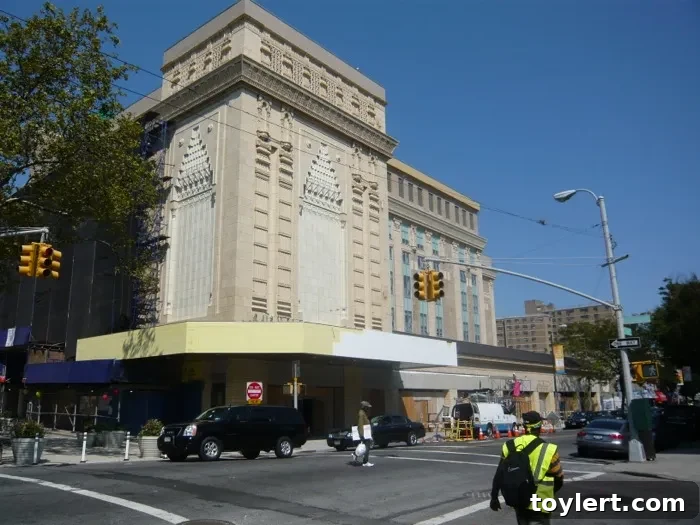
A pivotal moment in New York City’s policing history unfolded yesterday as Mayor Bill de Blasio announced the city would cease its appeal of lawsuits challenging the controversial “stop-and-frisk” policing tactic. The announcement, made at the Brownsville Recreation Center in the heart of Brooklyn, underscored the profound significance of this policy shift. Brownsville, a vibrant and resilient community, had long borne the brunt of the stop-and-frisk policy, with a concentrated eight-block area singled out in a 2010 New York Times report for having the highest concentration of these street stops citywide. The image above captures Pitkin Avenue, Brownsville’s main thoroughfare, in September 2012, serving as a visual testament to the community at the epicenter of this historic reform.
This decision marks a significant departure from the previous administration’s staunch defense of stop-and-frisk and fulfills a key campaign promise made by Mayor de Blasio, who ascended to office on a platform advocating for police reform and improved community relations. The move signals a broader commitment to redefining the relationship between the New York City Police Department (NYPD) and the diverse communities it serves, prioritizing constitutional policing and building trust.
The Troubled Legacy of Stop-and-Frisk in New York City
For over a decade, the NYPD’s aggressive use of stop-and-frisk tactics became one of the most contentious issues in New York City. The practice, which allows officers to briefly detain and search individuals they reasonably suspect of criminal activity, escalated dramatically in the early 2000s. While proponents argued it was a vital tool for crime reduction, particularly in recovering illegal firearms, critics pointed to overwhelming evidence of racial bias and its devastating impact on civil liberties and community trust.
Statistics revealed a stark disparity: an overwhelming majority of those stopped were Black and Hispanic New Yorkers, often in their own neighborhoods, despite comprising a smaller percentage of the city’s population. Furthermore, a minuscule fraction of these stops resulted in arrests or the discovery of weapons, leading many to question the effectiveness and fairness of the policy. The psychological toll on communities, particularly young men of color who faced routine harassment and suspicion, was immense. It fostered deep resentment and alienation, undermining the very concept of public safety that the policy was ostensibly designed to protect.
These concerns culminated in a series of legal challenges, most notably the landmark class-action lawsuit Floyd v. City of New York. In 2013, a federal judge ruled that the NYPD’s stop-and-frisk practices were unconstitutional, violating the Fourth Amendment’s protection against unreasonable searches and seizures and the Fourteenth Amendment’s equal protection clause. The ruling ordered sweeping reforms, including the appointment of an independent monitor and a pilot program for body cameras. However, the previous administration immediately appealed this decision, setting the stage for Mayor de Blasio’s crucial announcement.
Commissioner Bratton’s Pledge: Law Enforcement Rooted in Legality and Trust
Standing alongside Mayor de Blasio, Police Commissioner William Bratton delivered a powerful statement that echoed the administration’s new direction. “We will not break the law to enforce the law,” Commissioner Bratton declared, a promise designed to resonate deeply with communities that felt targeted by previous policing strategies. He continued, articulating a vision for an NYPD committed to fairness and respect for all: “That’s my solemn promise to every New Yorker, regardless of where they were born, where they live, or what they look like. Those values aren’t at odds with keeping New Yorkers safe — they are essential to long-term public safety.”
Commissioner Bratton’s return to lead the NYPD carried significant weight. Known for his “broken windows” policing strategy in the 1990s, he now embraced a more nuanced approach, emphasizing constitutional policing and the critical importance of police-community relations. His statement signals a commitment to re-establishing trust, recognizing that effective law enforcement cannot exist without the cooperation and confidence of the people it serves. The phrase “long-term public safety” is particularly telling, suggesting a shift from short-term crime statistics to a more sustainable model built on legitimacy, accountability, and mutual respect between officers and residents.
This commitment means a focus on smarter policing strategies that are intelligence-driven and community-oriented, rather than relying on blanket enforcement tactics that disproportionately affect minority neighborhoods. It implies an investment in officer training that emphasizes de-escalation, cultural sensitivity, and an understanding of constitutional rights. For many New Yorkers, Bratton’s words offer a glimmer of hope that the NYPD is truly turning a new page, moving beyond the divisive era of aggressive stop-and-frisk towards a future where both safety and civil liberties are upheld.
Brownsville: A Symbol of Change and Community Empowerment
The choice of the Brownsville Recreation Center for this momentous announcement was no accident. Brownsville epitomizes the communities most profoundly affected by the stop-and-frisk policy. Residents here experienced firsthand the daily reality of being stopped, questioned, and searched without clear justification. This created a climate of fear and distrust, making it difficult for officers to cultivate the relationships necessary for effective community policing.
For the people of Brownsville, the mayor’s decision is more than just a legal adjustment; it is an affirmation of their dignity and a recognition of their long-standing calls for justice. It represents a step towards healing the deep wounds left by years of what many perceived as discriminatory policing. The presence of community leaders and residents at the announcement underscored the collective relief and cautious optimism circulating throughout the neighborhood. This event transforms Brownsville from a symbol of disproportionate policing into a beacon of progress and community-led reform.
The reform offers an opportunity for the NYPD to forge genuine partnerships with Brownsville residents, working collaboratively to address public safety concerns while respecting individual rights. It’s an invitation for dialogue, understanding, and the co-creation of strategies that are truly effective and equitable. The shift promises to empower residents, giving them a greater voice in how their community is policed and fostering an environment where every individual feels both safe and respected by law enforcement.
The Path Forward: Sustaining Reform and Building Lasting Trust
Dropping the appeal of the stop-and-frisk lawsuits is a crucial first step, but it is by no means the end of the journey toward comprehensive police reform in New York City. The administration now faces the complex task of implementing the court-ordered remedies and ensuring that the new philosophy of policing translates into tangible changes on the ground. This will involve significant efforts, including:
- Enhanced Training: Reworking police academy curricula and ongoing training programs to emphasize constitutional policing, de-escalation techniques, cultural competence, and community engagement strategies.
- Data Transparency and Accountability: Implementing robust systems for collecting and publicly reporting data on police stops, searches, and use of force, ensuring greater transparency and enabling external oversight.
- Independent Oversight: Cooperating fully with the federal monitor appointed by the court to oversee the implementation of reforms, providing an essential layer of external accountability.
- Community Engagement Initiatives: Developing and expanding programs that foster positive interactions between officers and residents, such as community dialogues, youth programs, and problem-solving partnerships.
- Body-Worn Cameras: Rolling out and effectively utilizing body-worn cameras for officers, which can provide crucial evidence, enhance accountability, and potentially de-escalate confrontations.
The success of these reforms will depend not only on the commitment of the city administration and the NYPD leadership but also on the sustained engagement of civil rights advocates, community organizations, and the residents of New York City. It’s a collective endeavor to move past the divisions of the past and build a policing model that serves all New Yorkers equitably and effectively.
In conclusion, Mayor de Blasio’s announcement to drop the appeal of the stop-and-frisk lawsuits represents a watershed moment for New York City. It is a bold declaration that the city is committed to a future where public safety is achieved through constitutional means, and where trust, not tension, defines the relationship between police and community. This historic decision, particularly significant for communities like Brownsville, sets New York City on a transformative path towards becoming a national model for fair and effective policing, ensuring that justice and safety are truly accessible to all its citizens.