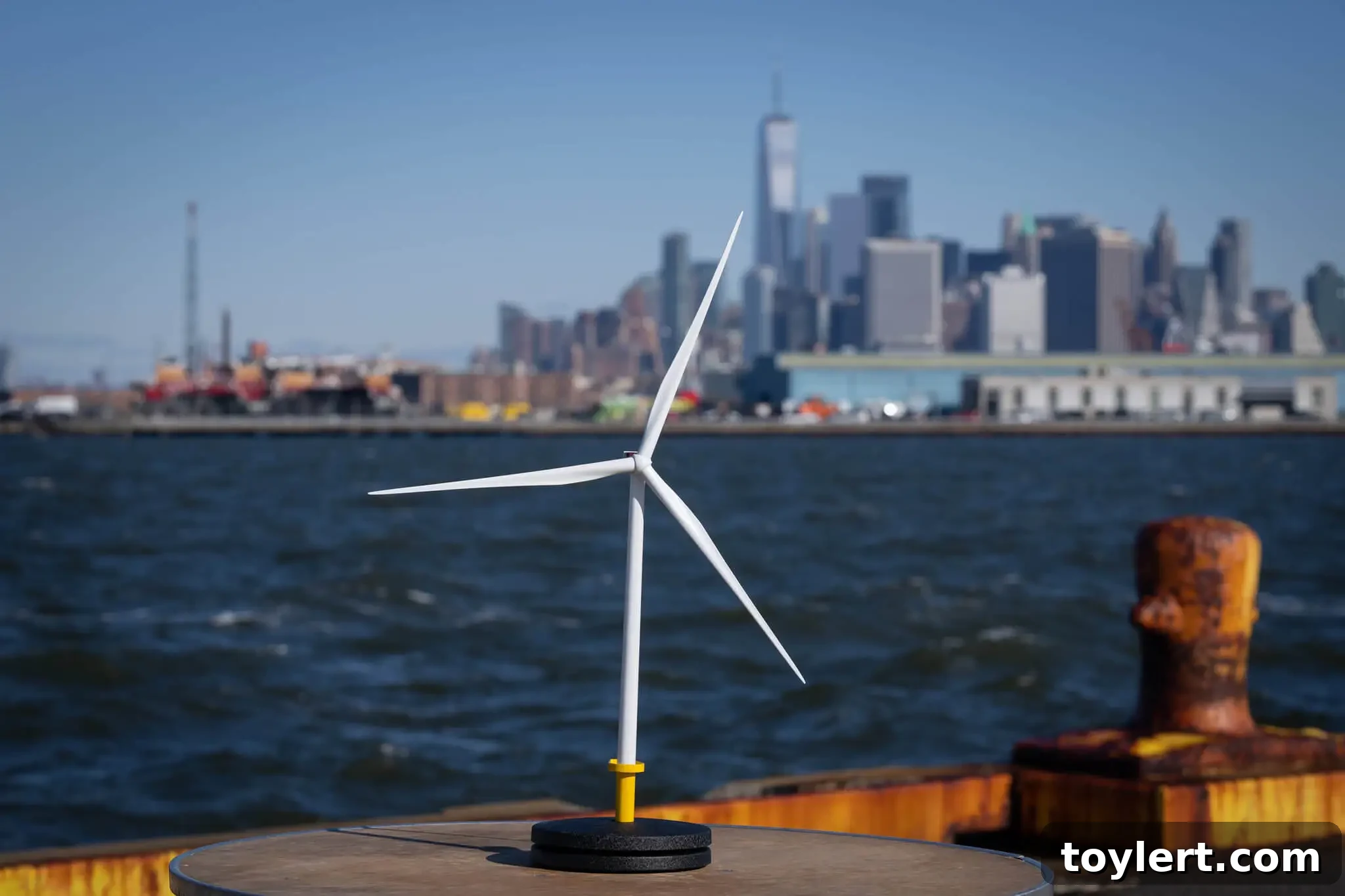
Transforming South Brooklyn: Sunset Park Becomes a Hub for Offshore Wind Energy
New York City is taking a monumental leap towards a sustainable future with the ambitious transformation of Sunset Park’s South Brooklyn Marine Terminal (SBMT). In a landmark announcement by Mayor Eric Adams, this historical industrial waterfront is set to become a cutting-edge offshore wind energy port facility, poised to power a greener New York and create thousands of local green jobs. This initiative represents a pivotal moment in the city’s commitment to renewable energy and climate action, turning an underutilized asset into a beacon of sustainable innovation.
For years, residents and community leaders in Sunset Park have passionately advocated for the revitalization of their industrial waterfront, envisioning a future rooted in clean energy and robust job creation. This project directly answers those calls, aligning the city’s economic development goals with pressing environmental imperatives. The South Brooklyn Marine Terminal, with its deep-water access and strategic location, is uniquely positioned to become a central pillar of the burgeoning offshore wind industry in the Northeast United States.
A New Era for the South Brooklyn Marine Terminal (SBMT)
The redevelopment plan envisions a comprehensive transformation of the existing shipping, warehousing, and manufacturing space at SBMT. Instead of traditional industrial activities, the terminal will be reimagined as a sophisticated operations and maintenance (O&M) hub for offshore wind farms. This means the facility will serve as the crucial nerve center for supporting the vast network of wind turbines planned for the waters off New York and beyond.
An O&M hub like SBMT is far more than just a port; it’s a dynamic ecosystem vital for the longevity and efficiency of offshore wind projects. It will facilitate the loading and unloading of massive turbine components, house specialized vessels for crew transfer and maintenance operations, and provide warehousing for critical spare parts and equipment. Furthermore, it will be the base for skilled technicians, engineers, and support staff who will travel daily to the wind farms to ensure their optimal performance. This centralized hub will significantly reduce logistical complexities and operational costs for the region’s offshore wind projects.
Powering the Future: The Strategic Importance of Offshore Wind
Offshore wind energy is a cornerstone of New York State’s ambitious climate goals, which aim for 70% of electricity to come from renewable sources by 2030 and a 100% clean electricity grid by 2040. The development of port infrastructure like SBMT is absolutely critical to achieving these targets. Without adequate port facilities capable of handling the immense scale and complexity of offshore wind components, the deployment of these vital energy sources would be severely hampered.
By investing in the South Brooklyn Marine Terminal, New York City is not merely building a port; it is establishing a foundational piece of the state’s clean energy supply chain. This strategic investment will enable the efficient construction, operation, and maintenance of numerous offshore wind projects, significantly contributing to the reduction of carbon emissions, improving air quality, and diversifying the state’s energy portfolio away from fossil fuels.
A Coalition of Visionaries: Key Partners Driving Innovation
The successful execution of a project of this magnitude requires a robust partnership, bringing together expertise from both the public and private sectors. Leading this transformative effort is the nonprofit quasi-governmental New York City Economic Development Corporation (NYCEDC). NYCEDC plays a crucial role in stewarding economic growth and creating opportunities across the five boroughs, making them an ideal entity to oversee such a significant infrastructure development.
Joining NYCEDC are key private industry players: Equinor, a Norwegian fossil and renewable energy company with extensive experience in offshore energy development, and its British partner, BP. Both companies bring unparalleled technical expertise, financial investment, and a deep understanding of the global energy landscape. Their collaboration with NYCEDC and the city-owned terminal operators ensures a well-rounded approach, combining public oversight with private sector innovation and efficiency. This partnership model is essential for mobilizing the necessary capital and technical know-how to bring such large-scale green infrastructure projects to fruition.
Fueling Economic Growth: Green Jobs and Community Empowerment
Perhaps one of the most exciting aspects of the SBMT transformation is its promise of significant job creation. The project is projected to generate thousands of well-paying, family-sustaining green jobs, injecting new economic vitality into Sunset Park and surrounding communities. These aren’t just temporary construction roles; they encompass a wide spectrum of long-term career opportunities across various skill levels.
Job categories will include skilled trades such as electricians, welders, crane operators, and fabricators; highly specialized roles for wind turbine technicians and engineers; logistical and administrative positions; and support services for the port’s daily operations. The development will also spur indirect job growth in related industries, from local suppliers to hospitality services, creating a ripple effect throughout the local economy.
Mayor Adams has consistently emphasized the importance of equitable economic development, and this project exemplifies that commitment. NYCEDC, in partnership with Equinor and BP, is expected to implement robust workforce development programs, ensuring that local residents have access to the training and certifications necessary to secure these new green jobs. This focus on local hiring and training empowers communities, fosters economic resilience, and builds a diverse talent pipeline for the emerging green economy.
Environmental Stewardship and Climate Action
Beyond its economic benefits, the SBMT offshore wind hub is a powerful testament to New York City’s dedication to environmental stewardship and aggressive climate action. By facilitating the deployment of offshore wind farms, the terminal directly contributes to reducing the city and state’s carbon footprint. Each megawatt of clean energy generated by these wind farms displaces electricity produced by fossil fuels, leading to cleaner air, healthier communities, and a more stable climate.
This project is a tangible step towards mitigating the impacts of climate change, which disproportionately affect vulnerable coastal cities like New York. It symbolizes a proactive approach, positioning the city as a leader in the global energy transition. The transformation of SBMT underscores that economic prosperity and environmental responsibility can, and must, go hand in hand.
Sunset Park’s Legacy: From Industrial Past to Sustainable Future
The choice of Sunset Park and the South Brooklyn Marine Terminal for this pivotal development is no accident. This area boasts a rich industrial history, characterized by its working waterfront. The terminal’s existing infrastructure, including deep-water berths, extensive laydown areas, and strong transportation links, provides a solid foundation for its new role. Its location within New York Harbor offers ideal access to the Atlantic Ocean, minimizing transit times for vessels servicing offshore wind lease areas.
The community of Sunset Park has long been an advocate for responsible development that respects its industrial heritage while embracing a sustainable future. Their persistent efforts to bring green jobs and clean energy to their waterfront have now come to fruition, marking a significant victory for local activism and forward-thinking urban planning. This project ensures that Sunset Park remains a vibrant working waterfront, albeit one dedicated to the industries of tomorrow.
Beyond the Horizon: The Long-Term Impact and Future of Offshore Wind in NYC
The transformation of the South Brooklyn Marine Terminal is more than just a single project; it is a foundational investment that will have far-reaching impacts for decades to come. It establishes New York City as a critical node in the East Coast’s growing offshore wind supply chain, attracting further investment, innovation, and talent to the region. As more offshore wind projects come online, SBMT will serve as a linchpin for their continuous operation, cementing New York’s leadership in this vital sector.
While challenges such as continued infrastructure upgrades, workforce training, and supply chain optimization remain, the collaborative spirit and strategic vision demonstrated by this partnership lay a strong groundwork for success. The South Brooklyn Marine Terminal’s journey from an industrial past to a sustainable, high-tech future represents a powerful model for urban regeneration and a testament to New York City’s unwavering commitment to building a greener, more prosperous future for all its residents.