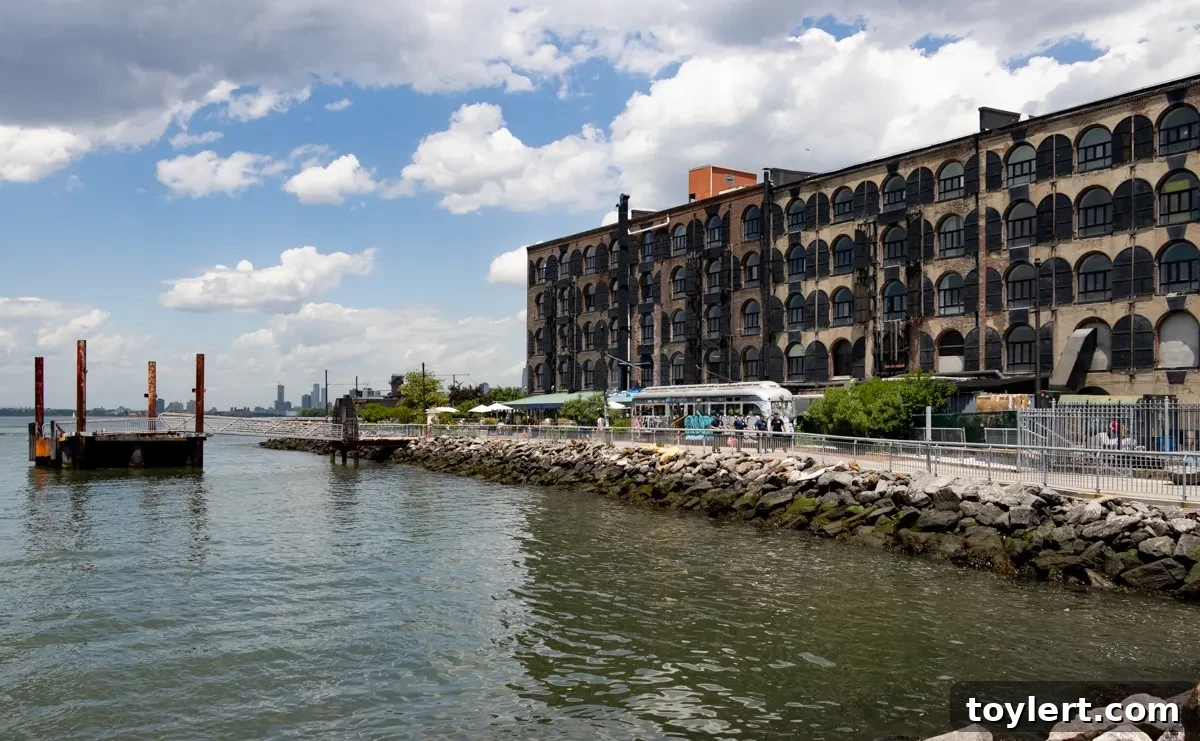
by Kirstyn Brendlen, Brooklyn Paper
Groundbreaking Ceremony Ushers in a New Era of Flood Protection for Red Hook: A $218 Million Coastal Resiliency Project Takes Shape
A pivotal moment arrived for the resilient Brooklyn neighborhood of Red Hook on Tuesday, as officials gathered to break ground on the long-anticipated Red Hook Coastal Resiliency Project. This ambitious $218 million initiative represents a comprehensive series of flood walls, innovative deployable gates, and strategic street enhancements, all meticulously designed to fortify the low-lying waterfront community against the ever-increasing threat of coastal flooding.
For years, Red Hook, a vibrant district situated mere feet above sea level at its lowest points, has grappled with the severe consequences of its geographic vulnerability. This groundbreaking ceremony not only marks the commencement of a vital infrastructure project but also signals a profound commitment to safeguarding the lives, homes, and livelihoods of thousands of residents and numerous businesses that call this unique Brooklyn enclave home. The project is poised to dramatically redefine Red Hook’s relationship with its surrounding waters, ensuring a more secure and sustainable future.
Red Hook’s Urgent Call for Protection: A Community on the Front Lines of Climate Change
Red Hook’s distinctive charm—its industrial heritage, historic streets, and panoramic views of the harbor—is intrinsically linked to its waterfront location. However, this proximity to the water also positions it squarely on the front lines of climate change. The neighborhood’s inherent low elevation makes it exceptionally susceptible to coastal flooding, a vulnerability that was starkly exposed during devastating events like Hurricane Sandy in 2012.
During Sandy, Red Hook experienced catastrophic storm surges that inundated streets, homes, and businesses, causing immense property damage, power outages, and widespread disruption. The memory of flooded basements, submerged vehicles, and the arduous recovery efforts remains a powerful testament to the urgent need for robust protective measures. Beyond major storms, even routine high tides, exacerbated by rising sea levels, can lead to localized flooding, disrupting daily life and slowly eroding the community’s sense of security.
Experts predict that the frequency and intensity of extreme weather events will only increase in the coming decades, alongside a steady rise in sea levels. This grim outlook underscores the critical importance of proactive flood mitigation strategies. The Red Hook Coastal Resiliency Project is not merely a reactive measure but a visionary step towards building a resilient community capable of withstanding future environmental challenges. It represents the culmination of extensive planning, scientific modeling, and dedicated community advocacy, all aimed at creating a permanent buffer against the encroaching waters.
Deconstructing the Red Hook Coastal Resiliency Project: Innovative Solutions for a Vulnerable Coastline
The $218 million Red Hook Coastal Resiliency Project is a multi-faceted undertaking, employing a blend of permanent infrastructure and flexible defenses to create a comprehensive flood protection system. Stretching along nearly 1.5 miles of the neighborhood’s outer edges, its design thoughtfully integrates engineering prowess with urban planning to minimize disruption while maximizing effectiveness.
The Backbone: Nearly 1.5 Miles of Robust Flood Walls
At the core of this ambitious project are the new flood walls, designed to serve as the primary barrier against storm surges and high tides. These walls will be strategically constructed along critical stretches of Columbia and Ferris streets, particularly near Atlantic Basin, as well as on Beard and Reed streets. Their precise alignment has been carefully planned to create a continuous line of defense, intercepting floodwaters before they can penetrate residential and commercial areas.
The flood walls are not just functional but are also being designed with an eye towards aesthetic integration, aiming to blend seamlessly with the existing urban landscape rather than creating an imposing barrier. While providing essential protection, the project aims to maintain the neighborhood’s character and waterfront access where feasible. These robust structures are engineered to withstand significant water pressure and are a permanent fixture in Red Hook’s new resilient infrastructure.
Dynamic Defense: Eight Deployable Flood Gates
Complementing the permanent flood walls are eight strategically placed deployable flood gates. These innovative gates offer a dynamic layer of protection, designed to be rapidly activated and secured during periods of high flood risk, such as approaching storms or predicted severe tidal events. Their locations are crucial, chosen at points where streets or other access ways would otherwise create breaks in the flood wall system.
When not needed, these gates will remain open, allowing for unimpeded community access and maintaining the flow of traffic and pedestrian activity. However, at the first sign of an impending threat, they can be swiftly deployed by trained personnel, effectively sealing off vulnerable entry points. This hybrid approach—permanent walls for constant protection and deployable gates for flexible access—represents a modern strategy in urban flood defense, balancing security with the practical needs of an active waterfront community.
Passive Mitigation: Raising and Regrading Local Streets
Beyond the direct flood barriers, a significant component of the Red Hook Coastal Resiliency Project involves a more subtle, yet highly effective, form of flood mitigation: the regrading and raising of a number of local streets. Certain key arteries within the neighborhood will be elevated by up to three feet. This seemingly minor adjustment will have a profound impact, creating a series of elevated pathways that act as secondary defenses against water ingress.
This “passive” mitigation strategy serves multiple purposes. Firstly, it helps to prevent localized flooding caused by heavy rainfall or minor surges by improving drainage and directing water flow away from critical areas. Secondly, by raising street levels, it provides an additional buffer against floodwaters that might overtop or bypass other defenses, slowing their advance and reducing their destructive potential. Furthermore, elevated streets can ensure crucial access routes remain passable for emergency services and residents during flood events, significantly enhancing the neighborhood’s overall resilience and safety.
A Multi-Stakeholder Endeavor: Years of Planning and Collaborative Vision
The journey to break ground on the Red Hook Coastal Resiliency Project has been a long and arduous one, truly “years-in-the-making.” Projects of this scale and complexity in densely populated urban environments require extensive planning, rigorous environmental reviews, and the careful coordination of numerous stakeholders. This initiative is a testament to the collaborative efforts of various city, state, and federal agencies, working in concert with the invaluable input and persistent advocacy of Red Hook’s community groups and residents.
From initial feasibility studies and environmental impact assessments to public workshops and design iterations, every step of the process has involved careful consideration of engineering challenges, ecological impacts, and community needs. The design team navigated the complexities of integrating modern infrastructure into an historic neighborhood, ensuring that the new flood defenses would be effective without compromising the area’s unique character or disrupting its vibrant daily life. This iterative process, marked by open dialogue and a shared commitment to a resilient future, has ultimately shaped a project that is not only technically sound but also deeply rooted in the community’s vision for its protection.
The Broader Impact: Securing Red Hook’s Future for Generations
The Red Hook Coastal Resiliency Project transcends a simple infrastructure upgrade; it is an investment in the long-term viability and prosperity of an entire community. Its successful implementation will bring a multitude of benefits, resonating far beyond the physical barriers themselves.
Protecting Lives and Livelihoods
The most immediate and profound impact of the project will be the enhanced safety and security for Red Hook’s residents. Protecting homes from flood damage means preserving personal sanctuaries, family memories, and vital possessions. For the myriad small businesses that form the economic backbone of Red Hook, flood protection means reducing the risk of catastrophic losses, preventing business interruptions, and ensuring their continued operation and contribution to the local economy. Furthermore, by safeguarding critical infrastructure, such as power substations and transportation hubs, the project minimizes the broader systemic disruptions that accompany severe flooding, ensuring essential services remain functional.
Fostering Economic Stability and Growth
A neighborhood continually threatened by flooding is an unstable one, deterring investment and hindering growth. By effectively mitigating flood risks, the Red Hook Coastal Resiliency Project is expected to foster greater economic stability. Property values can stabilize, insurance costs may decrease over time, and businesses will have renewed confidence to invest and expand. This newfound security will encourage continued development and vitality, ensuring Red Hook remains an attractive and thriving hub for commerce, culture, and community life.
A Model for Urban Coastal Resilience
New York City, with its extensive coastline, is at the forefront of the global climate crisis. The Red Hook Coastal Resiliency Project stands as a significant testament to the city’s commitment to adapting to a changing climate. It offers invaluable lessons and serves as a model for other vulnerable urban coastal communities, both within New York and globally, demonstrating how thoughtful planning, innovative engineering, and strong community engagement can lead to effective and sustainable flood protection solutions. This project contributes directly to New York City’s broader climate resilience strategy, fortifying critical neighborhoods against the inevitable challenges of rising seas and more intense storms.
Looking Ahead: A New Horizon for Red Hook
The groundbreaking ceremony for the Red Hook Coastal Resiliency Project marks not an end, but a hopeful beginning. It symbolizes the culmination of years of advocacy, planning, and design, now transitioning into the active phase of construction. While the complete transformation will be a multi-year undertaking, the visible progress of flood walls rising and streets being enhanced will serve as tangible proof of a future where Red Hook is safer, stronger, and more resilient.
As construction progresses, there will undoubtedly be challenges, but the long-term benefits promise to far outweigh any temporary inconveniences. The project represents a commitment to ongoing maintenance and adaptive management, ensuring that Red Hook’s defenses remain robust and effective for generations to come. This monumental undertaking is more than just infrastructure; it is a reaffirmation of Red Hook’s enduring spirit, protecting its unique character and ensuring its continued vibrancy as a cherished Brooklyn neighborhood against the backdrop of a changing world.