Real Estate Market Update: A Deep Dive into Open House Picks and Evolving Sales Trends
The real estate market is a dynamic and often unpredictable landscape, constantly shifting with economic indicators, buyer sentiment, and property specifics. For many, following our “Open House Picks” series offers a fascinating glimpse into this complexity, showcasing properties that capture significant interest and those that present unique challenges. Recently, we revisited a selection of properties we highlighted, and the results provide compelling insights into the current state of the market, offering valuable lessons for both potential buyers and sellers.
Analyzing Recent Sales: Three Open House Picks Find New Owners
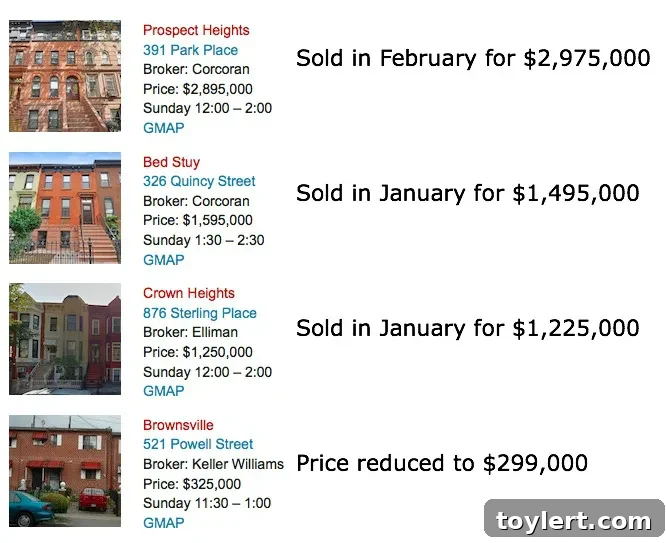
We’re excited to report that three of our featured Open House Picks have successfully transitioned to new ownership. What’s particularly noteworthy about these sales is their proximity to the original asking price. All three properties sold within a $100,000 range of their initial price tag, indicating a relatively stable and responsive market for well-positioned homes. One property even surpassed its asking price, albeit slightly, while the other two closed just under, with one barely missing the mark. This narrow band of negotiation suggests a finely balanced market where buyers are willing to meet sellers close to their expectations, provided the property aligns with current demand.
The successful sales of these properties underscore several crucial aspects of today’s real estate environment. Firstly, it highlights the continued robust demand in certain segments or neighborhoods. Even as broader market narratives might suggest a cooling, specific areas or types of homes retain their allure. Secondly, the close proximity to asking prices could reflect a more accurate initial valuation by sellers and their agents, setting realistic expectations from the outset. This careful pricing strategy can often prevent homes from languishing on the market, attracting serious buyers who perceive good value.
The property that sold slightly above its asking price is particularly intriguing. While not indicative of widespread bidding wars, it suggests that for highly desirable properties – perhaps those with exceptional features, prime locations, or impeccable condition – competitive interest can still drive prices marginally higher. Conversely, homes selling just under the asking price often point to a market where buyers are more discerning, willing to negotiate for perceived imperfections or simply leveraging available market data to secure a fair deal. This delicate dance between seller aspirations and buyer willingness defines much of the transactional activity we observe.
This outcome, where sales are happening very close to asking, is a significant shift from the intense bidding war environment that characterized the market in recent years. It suggests a move towards a more rational and perhaps sustainable phase of real estate activity. Buyers are still active, but they are likely more budget-conscious and less prone to aggressive overbidding. Sellers, in turn, are finding success when their pricing strategy is aligned with market realities and the intrinsic value of their property. This equilibrium creates a healthier market for all participants, fostering trust and predictability in the transaction process.
The Persistent Challenge: Why Some Properties Linger – The Brownsville Case
While the success stories are encouraging, the real estate market is rarely uniform. The experience of a particular house in Brownsville serves as a stark reminder of the challenges some properties face. Despite a proactive price adjustment – often a strategic move to stimulate buyer interest – this home regrettably remains unsold. This situation prompts a deeper inquiry into the factors that can impede a sale, even when sellers are willing to compromise on price.
It would be premature to broadly conclude that bidding wars are entirely cooling down across the board based solely on the close-to-asking sales of the other three properties. Instead, the Brownsville house’s struggle might be more reflective of specific issues related to its condition, location nuances, or perhaps an initial pricing strategy that was significantly out of alignment with market expectations, even after a subsequent reduction. Sometimes, a price chop alone isn’t enough to overcome inherent disadvantages or to reset buyer perceptions that have already been formed during the property’s initial listing period.
Potential reasons for a property’s stagnation are multifaceted. It could be the property’s structural integrity, requiring extensive renovations that deter potential buyers looking for move-in ready options. Outdated interiors, inefficient layouts, or a lack of modern amenities can also play a significant role. Furthermore, the immediate surroundings or specific micro-location within Brownsville might present challenges, such as proximity to busy roads, limited access to desired amenities, or perceptions regarding school districts or safety. These non-negotiable factors often outweigh even an attractive price point for discerning buyers.
Another crucial element is the market’s perception of value. Even after a price reduction, if buyers perceive that the cost of necessary repairs or upgrades, combined with the purchase price, exceeds the property’s ultimate market value, they will understandably hesitate. This is particularly true in a market where buyers have more options and are less pressured to settle for less than ideal conditions. The lingering question for the Brownsville property, therefore, is whether the “price chop” was substantial enough to compensate for these perceived shortcomings, or if a more radical adjustment or significant pre-sale improvements might be necessary to unlock its sales potential.
Broader Market Implications: Are Bidding Wars Truly Cooling?
The mixed results from our Open House Picks provide a microcosm of the broader real estate market. While some properties are selling efficiently near their asking prices, suggesting a more balanced negotiation, the absence of widespread, aggressive overbidding for the sold properties does hint at a subtle shift. The frenzied bidding wars that became synonymous with the pandemic-era housing boom, driven by record-low interest rates and intense competition for limited inventory, appear to be less prevalent in many areas.
This moderation can be attributed to several factors. Rising interest rates have inevitably impacted buyer affordability, shrinking purchasing power and leading to more cautious financial decisions. Additionally, while inventory remains historically low in many markets, there has been a gradual increase in the number of available homes, offering buyers slightly more choice and reducing the urgency to bid aggressively. Buyer fatigue from constant rejections and the economic uncertainties of inflation and potential recession also contribute to a more measured approach.
However, it is crucial not to generalize too broadly. “Cooling” is a relative term. What we might be witnessing is a return to a more normalized market, where unique, desirable properties still command strong interest, but average homes require more strategic pricing and presentation. The market is not collapsing, but it is certainly adjusting from its peak exuberance. This adjustment means that sellers need to be more realistic about their property’s value and condition, while buyers can approach the process with a bit more leverage and less pressure.
The Critical Role of Property Condition and Presentation
The contrasting experiences of our Open House Picks unequivocally highlight the paramount importance of property condition and presentation in today’s market. For the properties that sold successfully near their asking price, it is highly probable that their condition was a significant factor. Well-maintained homes, those with updated kitchens and bathrooms, fresh paint, and attractive staging, consistently capture buyer attention and command better prices.
Conversely, the struggles of the Brownsville house, despite a price reduction, underscore the challenge of selling a property that may require substantial investment from the buyer. In a market where buyers are increasingly budget-conscious due to higher interest rates, they are often less willing to take on projects, preferring move-in ready options. Properties perceived as “fixer-uppers” need to be priced significantly lower to account for the time, effort, and financial outlay required for renovations. A mere “price chop” might not be sufficient if the underlying condition issues are substantial or if the reduction doesn’t adequately compensate for the future investment required.
For sellers, this means that investing in pre-listing improvements, even minor ones like decluttering, professional cleaning, and basic repairs, can yield significant returns. Staging a home to showcase its potential and allow buyers to envision themselves living there is also a powerful tool. In a competitive market, where buyers have more options, a property’s first impression, both online and in person, can be the deciding factor between a quick, successful sale and a prolonged listing.
Navigating the Current Real Estate Landscape: Advice for Buyers and Sellers
Based on these observations, navigating the current real estate landscape requires both strategic thinking and adaptability. For potential buyers, this market offers a window of opportunity. While interest rates are higher than historical lows, the reduction in intense bidding wars means less pressure to overpay. Buyers should focus on pre-approval, understanding their true budget, and being prepared to act decisively when a well-priced, well-conditioned property emerges. Thorough due diligence, including professional inspections, is more critical than ever.
For sellers, the message is clear: realistic pricing from the outset and impeccable property presentation are non-negotiable. Overpricing, even slightly, can lead to a prolonged listing, potential price reductions that stigmatize the property, and ultimately a lower sale price than if it had been priced correctly initially. Collaborating closely with an experienced real estate agent who understands local market nuances and can advise on strategic improvements and competitive pricing is paramount. Understanding the “why” behind properties selling or not selling is key to a successful transaction.
Conclusion: A Market of Nuance and Opportunity
The recent sales of our Open House Picks, alongside the ongoing challenge of the Brownsville property, paint a picture of a real estate market that is evolving. It’s a market characterized less by frantic bidding wars and more by strategic pricing, discerning buyers, and the undeniable impact of property condition. While the overall frenzy has subsided, strong demand persists for quality homes that are appropriately valued and presented.
The journey of these properties offers valuable lessons: the importance of accurate valuation, the power of presentation, and the localized nature of real estate trends. For those looking to buy or sell, understanding these dynamics and adapting strategies accordingly will be key to unlocking success in this nuanced and opportunity-rich real estate environment. As always, the market continues to surprise and educate, reinforcing the need for informed decisions and expert guidance in every transaction.