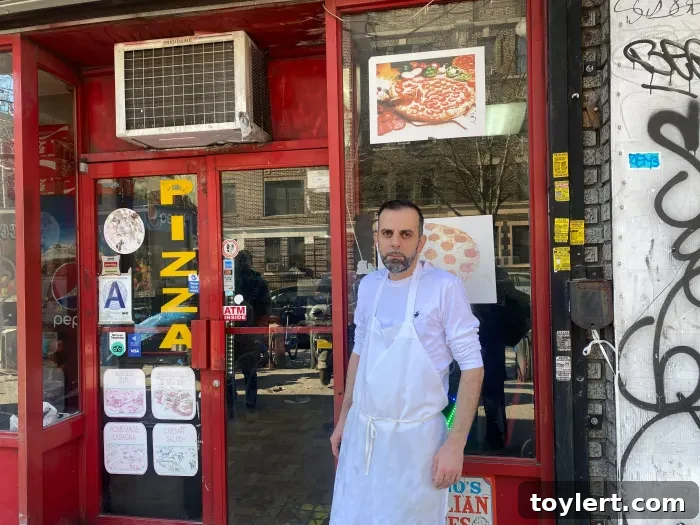
A Beloved Brooklyn Pizzeria Says Goodbye: Mike’s Pizza and Seven Other Businesses Displaced in Prospect Lefferts Gardens
The vibrant heart of Prospect Lefferts Gardens recently experienced a profound loss as Mike’s Pizza, a cherished neighborhood institution, served its final slices. The sudden closure on a Tuesday left a loyal customer base reeling, stunned by the news that their beloved pizzeria and several other long-standing establishments were ordered to vacate their premises by the end of the month. This abrupt displacement is a direct consequence of a landlord’s ambitious redevelopment plans for the entire block, signaling a significant transformation for a corner that has long been a bedrock of community life.
For decades, Mike’s Pizza stood proudly at the bustling corner of Bedford and Clarkson Avenues, its inviting aroma and familiar faces a constant presence. More than just a place to grab a slice, it was a meeting point, a quick dinner solution for busy families, and a symbol of the neighborhood’s enduring character. Its closure is not an isolated incident but part of a larger narrative affecting eight distinct businesses on the block, each grappling with the harsh reality of forced relocation or permanent shutdown.
The Fabric of a Community Unravels: Eight Businesses Face an Uncertain Future
The impact of these redevelopment plans extends far beyond Mike’s Pizza. The block, a microcosm of the diverse commercial landscape that defines Prospect Lefferts Gardens, is home to a variety of essential local businesses. Alongside the iconic pizzeria, a local deli, a vital liquor store, a traditional barbershop, and a unique bookstore café have all been issued vacate orders earlier this month. These are the businesses that, for years, have catered to the daily needs and cultural interests of the community, forming the very backbone of local commerce and social interaction.
Adding to the concern, three other businesses on the same block — a laundromat, a beloved Chinese restaurant, and a popular Indian restaurant — have already ceased operations over the past two years and currently stand vacant. Their earlier closures, perhaps precursors to the broader redevelopment scheme, suggest a long-term strategy by the landlord to consolidate properties and pave the way for a new vision. The cumulative effect is a substantial void in the neighborhood’s commercial offerings, leaving residents to wonder what will replace these familiar and much-needed services.
A Deep Dive into the Displaced: More Than Just Brick and Mortar
Each of these businesses holds a unique place in the community’s memory and daily routine. Mike’s Pizza, with its classic New York-style slices and friendly service, was a generational favorite. Children who grew up enjoying its pies now brought their own kids there. The local deli provided morning coffee, essential groceries, and quick lunch options, often serving as an impromptu news hub. The liquor store offered convenience and a selection tailored to local tastes. The barbershop was more than just a place for a haircut; it was a sanctuary for conversations, community gossip, and the passing down of neighborhood lore.
The bookstore café, a relative newcomer compared to some of its long-standing neighbors, quickly established itself as a cultural anchor, offering literary events, a quiet place to work, and a cozy spot for coffee and connection. Its closure represents a loss for the intellectual and social fabric of the area. The laundromat, now empty, was a practical necessity for many residents, particularly those in older apartment buildings. And the Chinese and Indian restaurants, both offering authentic flavors and a warm dining experience, contributed significantly to the culinary diversity that Brooklyn is famous for.
The Driving Force: Landlord Redevelopment Plans and the Cost of Progress
While the specifics of the landlord’s redevelopment plans remain largely undisclosed to the public, such actions typically involve demolishing existing structures to make way for new, often larger and more modern, residential or mixed-use buildings. In a rapidly evolving urban landscape like Brooklyn, such projects are often driven by escalating property values and the desire to maximize real estate potential. While urban renewal can bring new amenities and housing options, it frequently comes at a steep cost to existing communities and small businesses.
This situation in Prospect Lefferts Gardens is a textbook example of gentrification’s double-edged sword. On one hand, new developments can attract investment, improve infrastructure, and potentially introduce new residents and businesses. On the other hand, it often displaces long-standing residents and cherished local establishments, fundamentally altering the character and affordability of a neighborhood. The forced exit of these eight businesses underscores the precarious position of independent operators in areas experiencing rapid development and rising property values.
Economic and Emotional Fallout: The Human Cost of Displacement
For the owners of Mike’s Pizza and the other businesses, the vacate orders represent not just the loss of a storefront but the potential loss of livelihoods, years of investment, and deeply personal connections forged with their customers and the community. Finding a new location in Brooklyn’s competitive and expensive real estate market is a daunting challenge, often leading to permanent closure for businesses that cannot absorb the costs of relocation, new build-outs, and a potential loss of their established customer base.
Employees, many of whom have worked at these establishments for years, also face an uncertain future. Job loss, especially without significant advance notice, creates immense personal and financial strain. Beyond the economic considerations, there is a profound emotional toll. These businesses are often family legacies, passion projects, and sources of immense pride. To see them dismantled for the sake of “redevelopment” can be heartbreaking for those who built them and for the community that supported them.
Community Response and the Call for Preservation
The news of Mike’s Pizza’s closure and the impending displacement of its neighbors has sparked a wave of sadness, nostalgia, and frustration across Prospect Lefferts Gardens. Social media platforms are abuzz with residents sharing memories, lamenting the loss of their favorite spots, and expressing concern for the future of their neighborhood. Petitions may emerge, and community meetings could be organized, as residents seek to understand, protest, or at least acknowledge the impact of these changes.
This incident highlights a broader conversation about urban planning, community preservation, and the balance between development and maintaining local character. Many residents feel that the unique charm and diversity of Brooklyn neighborhoods are slowly eroding under the relentless pressure of corporate development and increasing rents. There’s a growing call for policies that protect small businesses, support long-term tenancy, and give communities a greater voice in decisions that fundamentally reshape their environment.
Looking Ahead: The Future of Bedford and Clarkson
As the month draws to a close and the final businesses prepare to vacate, the corner of Bedford and Clarkson Avenues will undergo a dramatic transformation. What will rise in the place of Mike’s Pizza, the deli, the barbershop, and the bookstore café? Will the new development contribute positively to the neighborhood, or will it further homogenize an area once celebrated for its unique local flavor?
While change is an inevitable part of urban life, the way it is managed and the priorities it serves are crucial. The story of Mike’s Pizza and its neighbors in Prospect Lefferts Gardens serves as a poignant reminder of the fragility of local businesses and the lasting impact of development decisions on the soul of a community. As the construction fences go up, residents will undoubtedly watch with mixed emotions, hoping that whatever emerges will somehow honor the rich history and vibrant spirit of the neighborhood that once thrived there.
Supporting Local: A Continuous Effort in a Changing City
The displacement of these beloved establishments underscores the critical importance of actively supporting independent local businesses. In an era dominated by large chains and online commerce, neighborhood gems like Mike’s Pizza provide more than just goods and services; they offer a sense of identity, community gathering spaces, and unique character that cannot be replicated. Every purchase, every visit, and every word of mouth recommendation contributes to their survival.
As Prospect Lefferts Gardens mourns the loss of some of its most cherished spots, the incident serves as a call to action for other communities across Brooklyn and beyond. Protecting the local ecosystem of small businesses requires ongoing advocacy, consumer consciousness, and a collaborative effort between residents, local government, and even developers to find more equitable solutions that allow for growth without sacrificing the heart and soul of a neighborhood. The memory of Mike’s Pizza and its fellow displaced businesses will surely serve as a reminder of what can be lost if we don’t actively work to preserve the unique tapestry of our urban communities.