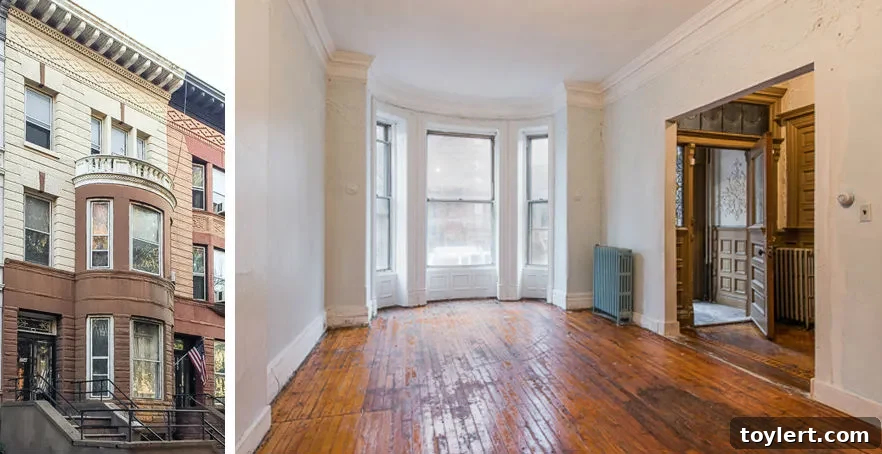
204 Jefferson Avenue: Unveiling the Enigma of a Montrose Morris Masterpiece in Bed-Stuy
Nestled in the heart of Brooklyn’s historic Bedford-Stuyvesant, the brownstone at 204 Jefferson Avenue stands as a testament to a bygone era of architectural grandeur. This remarkable residence, a creation of the renowned architect Montrose Morris, presents a captivating paradox: a magnificent wreck steeped in history, yet shadowed by the complexities of its past, including unsettling allegations of mortgage fraud. As one of the neighborhood’s most distinctive properties, it embodies the enduring allure and potential pitfalls of preserving Brooklyn’s rich architectural heritage.
Designed in 1891, the house is a sterling example of Morris’s signature style, characterized by an opulent display of detail and a commanding presence. It was rightfully featured as a “Building of the Day” in September, drawing attention to its unparalleled craftsmanship and artistic flourishes that set it apart even among the area’s impressive collection of historic homes. From its unusually elaborate entrance to the intricate patterns of its inlaid parquet floors, every element whispers stories of a lavish past, awaiting rediscovery and meticulous restoration.
Montrose Morris: The Visionary Behind Brooklyn’s Brownstone Grandeur
Montrose Morris was more than just an architect; he was a titan of late 19th-century Brooklyn design, leaving an indelible mark on the borough’s streetscapes. Active during an era of significant growth and prosperity, Morris became synonymous with the opulent brownstones, apartment buildings, and institutional structures that defined Brooklyn’s rapidly expanding urban fabric. His designs often incorporated elements from the Romanesque Revival and Queen Anne styles, characterized by rich textures, dynamic massing, and an almost theatrical use of ornamentation.
Morris’s work is celebrated for its robust construction, innovative layouts, and an unwavering commitment to aesthetic excellence. He frequently employed a diverse palette of materials, from rough-faced brownstone and terra cotta to intricate ironwork and vibrant stained glass, creating buildings that were both visually compelling and structurally sound. Homes like 204 Jefferson Avenue exemplify his approach, showcasing a meticulous attention to detail that transformed mere dwellings into works of art. His ability to blend functional design with decorative exuberance earned him a reputation as one of the most influential architects of his time, and his buildings continue to be highly sought after for their historical significance and enduring beauty.
A Deep Dive into Architectural Splendor: The Features of 204 Jefferson Avenue
Stepping into (or even merely gazing upon) 204 Jefferson Avenue is like traveling back in time. The house, sprawling over 4,000 square feet across four stories with a notable extension, remains an intact single-family home – a rare gem in a neighborhood where many brownstones have been subdivided over the decades. This preservation of its original configuration speaks volumes about its potential to once again serve as a grand, cohesive residence. The meticulous details within reveal Morris’s genius:
The Elaborate Entrance: A Grand Welcome
The entrance of 204 Jefferson Avenue is nothing short of a masterpiece, serving as the home’s primary architectural statement. Unlike the more subdued entries of neighboring brownstones, this facade commands attention with its intricate stonework, robust columns, and an imposing archway that frames the heavy, original wooden doors. Detailed carvings often adorn such entrances, featuring classical motifs, naturalistic elements, or even allegorical figures, all designed to convey status and artistic refinement. This elaborate entryway not only provides a dramatic aesthetic but also hints at the luxurious interiors that lie within, setting an immediate tone of elegance and historical significance.
Fancy Plaster Details: Ceilings and Walls Transformed
Inside, the plasterwork is a symphony of artistry. Ceilings are adorned with magnificent medallions, often at the center of grand rooms, from which elaborate chandeliers would once have hung. These medallions are surrounded by intricate cornices and friezes that seamlessly transition from walls to ceilings, featuring delicate floral patterns, classical egg-and-dart motifs, or geometric designs. Wall panels, often framed with subtle plaster moldings, would have provided a perfect backdrop for rich wallpapers or tapestries. The quality and complexity of these plaster details speak to the high level of craftsmanship prevalent in the late 19th century and are key indicators of the home’s original grandeur and the meticulous standards set by Montrose Morris.
Original Mantels: Hearth of the Home
Each fireplace within 204 Jefferson Avenue is likely graced with an original mantel, serving as a focal point for the rooms they inhabit. These mantels are often crafted from exquisite materials such as carved wood, frequently mahogany or oak, displaying intricate designs ranging from Renaissance Revival to Arts and Crafts influences. Some might even feature imported marble, with elegant veining and finely chiseled details. These mantels were not merely decorative; they were central to the domestic life of the era, gathering spots for families and showcases for prized possessions. Their preservation offers invaluable insight into the aesthetic tastes and social customs of the period.
Built-ins: Functional Elegance
Montrose Morris was known for his thoughtful inclusion of built-in features that enhanced both the beauty and functionality of his homes. In 204 Jefferson Avenue, one might expect to find bespoke bookcases lining study walls, elegant display cabinets in dining rooms for showcasing china, or charming window seats offering cozy nooks with views of the tree-lined street. These custom elements not only maximize space but also contribute significantly to the home’s unique character and charm, reflecting a time when homes were designed with specific functions and personalized touches in mind.
Stained Glass Window Transoms: Cascades of Color
Above many of the windows, particularly in prominent areas like the entryway, stairwells, and parlors, stained glass transoms would filter natural light into a vibrant array of colors. These transoms are often exquisite examples of late Victorian artistry, featuring intricate leaded glass patterns that depict floral motifs, geometric designs, or even abstract forms. The soft, colored light they cast across the interiors creates an enchanting atmosphere, transforming ordinary daylight into a dynamic, ever-changing artistic display. They are critical elements that contribute to the home’s original aesthetic and emotional resonance.
Inlaid Parquet Floors: Underfoot Artistry
The presence of inlaid parquet floors throughout the principal rooms signifies a level of luxury and craftsmanship seldom seen in modern homes. These floors are not just functional surfaces but works of art underfoot, featuring complex patterns like herringbone, chevron, basketweave, or even elaborate medallions created from different species of wood. The precision required to lay such floors was immense, making them a costly and highly desirable feature. They reflect the home’s original status and the owner’s appreciation for enduring beauty and meticulous detail, contributing significantly to the home’s overall historical authenticity and aesthetic appeal.
The “Magnificent Wreck”: A Call for Preservation
The term “magnificent wreck” encapsulates the current state of 204 Jefferson Avenue – a property whose inherent grandeur shines through layers of neglect and disrepair. While its architectural details remain largely intact, years of deferred maintenance and environmental exposure have taken their toll. Peeling paint, aging infrastructure, and perhaps structural compromises are common challenges faced by such historic homes. However, it is precisely this “wreck” status that also highlights its immense potential. Beneath the patina of age and disuse lies a blueprint for a breathtaking restoration project.
Restoring a home of this caliber requires vision, resources, and a deep respect for historical accuracy. It involves more than just cosmetic fixes; it demands specialized knowledge in period-appropriate materials and techniques, from plaster repair to woodworking and stained glass restoration. The transformation from a magnificent wreck to a fully rejuvenated Montrose Morris masterpiece would not only preserve a vital piece of Brooklyn’s architectural legacy but also create an unparalleled modern residence that honors its storied past.
The Shadow of Mortgage Fraud: A Complex Title History
Adding another layer of intrigue to 204 Jefferson Avenue is its complex title history, which hints at potential mortgage fraud spanning several years. Such allegations cast a long shadow over any property, often leading to legal entanglements, ownership disputes, and prolonged periods of neglect. Properties caught in the web of fraud can become trapped in a state of limbo, making it difficult for legitimate owners or new buyers to invest in their upkeep or undertake necessary renovations. This situation can accelerate deterioration, turning potentially salvageable historic homes into seemingly insurmountable challenges.
For a building as significant as 204 Jefferson Avenue, the implications of mortgage fraud are particularly distressing. It compromises the integrity of the property’s ownership and can deter potential preservationists or buyers who might otherwise be eager to restore it. A thorough investigation into its title history, often involving extensive legal and financial research, would be crucial for anyone considering acquiring or rehabilitating this historic brownstone. Unraveling these complexities is not just about legal clarity; it’s about safeguarding a piece of urban heritage from the detrimental effects of illicit financial practices.
Bedford-Stuyvesant: A Neighborhood Reawakening
204 Jefferson Avenue resides in one of Brooklyn’s most historically rich and architecturally diverse neighborhoods: Bedford-Stuyvesant. Bed-Stuy is renowned for its tree-lined streets, its stunning collection of brownstones and limestone townhouses, and a vibrant community spirit. In recent decades, the neighborhood has experienced a significant revitalization, attracting new residents while fiercely preserving its unique cultural identity and architectural fabric.
Homes designed by master architects like Montrose Morris are central to Bed-Stuy’s appeal, drawing individuals who appreciate historical authenticity and a strong sense of place. The renewed interest in the neighborhood has fueled a demand for quality restorations, breathing new life into structures that might otherwise have fallen into irreversible disrepair. 204 Jefferson Avenue, despite its current challenges, stands as a symbol of this reawakening, representing both the enduring beauty of Bed-Stuy’s past and its promising future.
Awaiting Its Next Chapter
The house at 204 Jefferson Avenue is more than just a building; it is a repository of history, a canvas of architectural genius, and a testament to the enduring spirit of Bed-Stuy. Its “magnificent wreck” status, coupled with the intriguing narrative of its title history, only adds to its mystique. For those with a passion for preservation and an appreciation for Montrose Morris’s unparalleled legacy, this property presents a rare and compelling opportunity. With careful attention, dedicated resources, and a commitment to its historical integrity, 204 Jefferson Avenue could once again stand as a beacon of Brooklyn’s architectural heritage, shining brightly for generations to come.
Discover more about this iconic property and its historical context on Brownstoner.com.