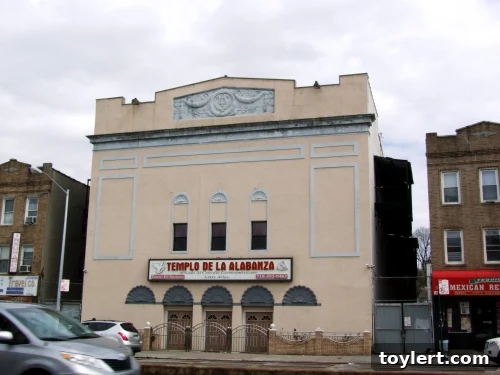
The Enduring Legacy of 5205 4th Avenue: From Brooklyn’s Coliseum Theater to Templo De La Alabanza
In the vibrant tapestry of Brooklyn, certain buildings stand as silent witnesses to the borough’s ceaseless evolution. One such edifice, prominently situated at 5205 4th Avenue, tells a compelling story of transformation, community, and enduring architectural presence. What was once the illustrious Coliseum Theater, a beacon of entertainment for generations, now serves as Templo De La Alabanza, a vital spiritual and community hub. This journey from a grand picture palace to a cherished place of worship encapsulates the dynamic spirit of Brooklyn, reflecting changes in culture, urban development, and community needs.
A Glimpse into the Past: The Grandeur of the Coliseum Theater
Erected during the golden age of cinema, the Coliseum Theater quickly became a cherished landmark along 4th Avenue in Brooklyn. In an era before television and widespread home entertainment, movie palaces were more than just venues for films; they were magnificent destinations, architectural marvels designed to transport audiences into a world of fantasy and glamour. The Coliseum Theater, with its grand facade and elaborate interiors, embodied this vision perfectly. It offered residents of Sunset Park, Bay Ridge, and surrounding neighborhoods an escape, a place where they could gather, socialize, and experience the magic of the silver screen in opulent surroundings.
While specific details of its original design might have faded into history, one can easily imagine the typical splendor of such an establishment. These theaters often featured ornate plasterwork, plush velvet seating, dazzling chandeliers, and expansive lobbies that evoked a sense of luxury and sophistication. Beyond screening films, the Coliseum likely hosted vaudeville acts, live performances, and community events, serving as a cultural cornerstone for decades. It was a place where first dates blossomed, families shared laughter, and collective memories were forged, deeply embedding itself into the local community’s psyche.
The architectural style of the Coliseum Theater would have reflected popular trends of its construction period, possibly blending elements of Art Deco, Neoclassical, or even Spanish Colonial Revival, which were common for grand theaters of that time. Its exterior, likely adorned with intricate detailing, would have stood out on the bustling thoroughfare, inviting passersby to step inside and experience its grandeur. For many years, it was a symbol of prosperity and cultural richness, a testament to Brooklyn’s vibrant urban life.
The Passage of Time: From Silver Screen to Sacred Space
As the decades wore on, the landscape of entertainment underwent profound changes. The advent of television, the rise of multiplex cinemas, and evolving urban dynamics led to the decline of many single-screen movie palaces across the nation. The Coliseum Theater, like many others, faced the challenge of adapting to these new realities. Its large, single auditorium, once its pride, became difficult to sustain in an era of diversified entertainment options. However, rather than succumbing to demolition or neglect, the building at 5205 4th Avenue was destined for a remarkable transformation, a testament to adaptive reuse.
In a move that breathed new life into the historic structure, the former Coliseum Theater was acquired and repurposed to become Templo De La Alabanza. This transition marked a significant shift in its purpose, from a secular place of public entertainment to a spiritual sanctuary. This type of adaptive reuse is a powerful example of how communities can preserve their architectural heritage while meeting contemporary needs. It allowed the building to retain its structural integrity and historical charm, ensuring its continued presence as a familiar landmark for residents, albeit with a new identity and mission.
The transformation into Templo De La Alabanza was not merely a change of name; it represented a new chapter for the building and its community. Today, the edifice serves as a vibrant place of worship, fostering faith, fellowship, and community engagement. This adaptive repurposing is a common narrative in urban development, where historic structures find renewed purpose, preventing their loss and allowing their stories to continue in different forms.
Architectural Adaptation and Community Resonance
Converting a movie theater into a place of worship requires thoughtful architectural adaptation. While the grand auditorium’s core structure often lends itself well to congregational gatherings, modifications would have been necessary to suit its new spiritual function. Elements such as the stage area might have been reconfigured into an altar or pulpit, and the seating arrangement might have been altered to better facilitate religious services and community events. Despite these internal changes, it is often a priority to preserve the building’s distinctive exterior, maintaining its historical character and its visual connection to the past.
The continued existence of the building at 5205 4th Avenue, first as the Coliseum Theater and now as Templo De La Alabanza, speaks volumes about its intrinsic value to the community. It represents more than just bricks and mortar; it is a repository of collective memory, a symbol of continuity amidst change. For older residents, it might still evoke nostalgic images of childhood movie outings, while for newer generations, it stands as a welcoming center of spiritual and social life. This dual identity enriches the narrative of Brooklyn’s historical landscape, highlighting how structures can evolve while remaining deeply rooted in the heart of their neighborhoods.
5205 4th Avenue: A Beacon in Sunset Park
The location of 5205 4th Avenue places it squarely within the dynamic and culturally rich area that bridges Sunset Park and Bay Ridge. Fourth Avenue itself is a bustling artery, known for its diverse commercial establishments, residential buildings, and a constant flow of community life. This street has witnessed tremendous growth and demographic shifts over the decades, making the preservation and adaptation of historic buildings like this particularly significant. They provide a tangible link to the past, anchoring the neighborhood’s identity while embracing its future.
Sunset Park, in particular, is celebrated for its vibrant immigrant communities, its historic row houses, and its spectacular waterfront park offering panoramic views of the Manhattan skyline. A building like Templo De La Alabanza at 5205 4th Avenue not only serves its congregation but also contributes to the social fabric of this diverse neighborhood. It stands as a testament to the community’s resilience and its ability to reinvent and sustain its heritage. The building’s prominent position ensures it remains a focal point, drawing attention to the layered history of this iconic Brooklyn thoroughfare.
The Enduring Legacy of Brooklyn’s Architectural Jewels
The story of 5205 4th Avenue is a microcosm of Brooklyn’s larger narrative – a borough constantly reinventing itself while cherishing its deep historical roots. From its inception as the Coliseum Theater, a palace for cinematic dreams, to its current incarnation as Templo De La Alabanza, a sanctuary for faith and community, the building has served diverse purposes, always remaining a significant part of its surroundings. It exemplifies the concept of adaptive reuse, demonstrating how historical structures can be preserved and imbued with new meaning, contributing to the cultural and social richness of urban environments.
As visitors and residents navigate the streets of Brooklyn, these architectural jewels like the former Coliseum Theater offer profound insights into the city’s past, present, and future. They remind us that buildings are not just static structures but living entities, capable of transformation and renewed purpose. The legacy of 5205 4th Avenue is a powerful narrative of survival, adaptation, and unwavering community importance, truly reflecting the spirit of Brooklyn, one building at a time. Its continuing story ensures that its walls, once echoing with the laughter and applause of moviegoers, now resonate with hymns and communal spirit, firmly cementing its place in Brooklyn’s ongoing history.