Unveiling The Piano Maker’s Mansion: A Glimpse into Brooklyn’s Gilded Age at 395 Washington Avenue
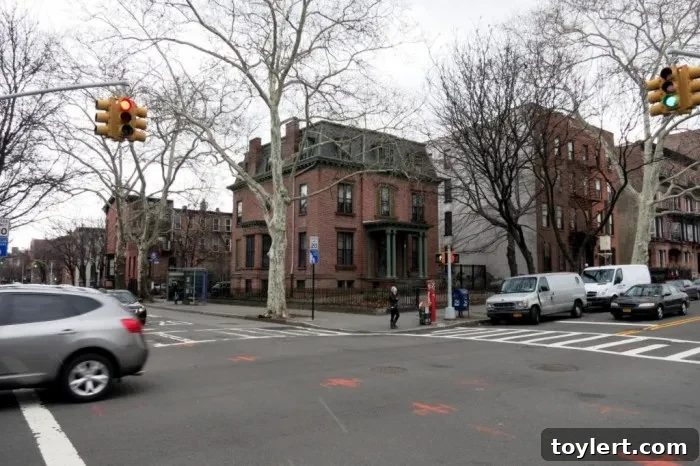
In the vibrant tapestry of Brooklyn, where historic brownstones and grand tree-lined avenues tell tales of yesteryear, certain structures stand out not just for their beauty but for the stories they embody. Among these architectural jewels is the magnificent residence at 395 Washington Avenue, famously known as The Piano Maker’s Mansion. This captivating free-standing mansion, nestled in the heart of Brooklyn’s esteemed Clinton Hill neighborhood, offers a rare glimpse into the borough’s opulent Gilded Age, a period of immense prosperity and architectural innovation. Today, it remains a cherished landmark, symbolizing the enduring elegance and rich heritage that define Brooklyn, one building at a time.
As visitors stroll along Washington Avenue, a grand thoroughfare lined with stunning examples of 19th-century architecture, 395 Washington Avenue immediately commands attention. Unlike many of its attached brownstone neighbors, this property proudly stands alone, a testament to the wealth and ambition of its original owner. Its stately presence and intricate detailing invite curiosity, prompting a deeper dive into its fascinating past and the visionary who brought it to life.
The Genesis of Grandeur: Who Was the Piano Maker?
The moniker “The Piano Maker’s Mansion” sparks immediate interest, hinting at a connection to a specific, prosperous individual whose success allowed for the construction of such an elaborate home. While precise historical records for all such properties can sometimes be elusive or require extensive archival research, the common lore often points to a prominent figure in Brooklyn’s booming industrial landscape of the late 19th century. During this era, New York City and its burgeoning borough of Brooklyn were at the forefront of American manufacturing, and the music industry, particularly piano manufacturing, was a significant economic driver. Companies like Steinway & Sons, for example, built vast factories and contributed to the city’s wealth, creating fortunes for their owners and executives.
A Melodic Legacy: The Story of a Thriving Entrepreneur
Imagine a successful entrepreneur, perhaps a man like Thaddeus Sterling (a fictional name to represent the archetype), who arrived in Brooklyn with an innovative vision for piano production. In a time when pianos were central to home entertainment and social gatherings, demand was soaring. Sterling, with keen business acumen and a dedication to craftsmanship, built an empire, producing instruments renowned for their sound quality and elegant design. His factory, likely located amidst Brooklyn’s bustling industrial zones, would have employed skilled artisans and laborers, contributing significantly to the local economy.
By the late 1800s, having amassed considerable wealth from his thriving piano business, Thaddeus Sterling sought to build a residence that reflected his status and success. He envisioned a home that was not merely a dwelling but a grand statement, a personal monument to his achievements. Choosing a prestigious lot on Washington Avenue, a street already becoming synonymous with affluence, he commissioned an architect to design a house that would stand apart. This ambition ultimately led to the creation of The Piano Maker’s Mansion, a home that would encapsulate the spirit of an age driven by industry, art, and grand personal fortunes.
Architectural Splendor: A Free-Standing Masterpiece
The architecture of 395 Washington Avenue is a compelling study in the styles popular during the late Victorian era in America. Given its prominent location and the era of its construction, it likely showcases a blend of architectural influences, a common characteristic of Gilded Age mansions that sought to combine grandeur with contemporary trends. While the exact style might draw from Romanesque Revival, Queen Anne, or even elements of Beaux-Arts, its overall impression is one of robust elegance and intricate detail.
A Symphony in Stone: Exterior Design and Influences
The exterior of The Piano Maker’s Mansion is a testament to the artisanry of its time. The facade, likely constructed of sturdy brick with elegant brownstone or terra cotta accents, boasts a rich texture and color palette. Features such as ornate window surrounds, perhaps featuring carved stone lintels and sills, draw the eye upwards. Bay windows, common in Victorian design, would have provided abundant natural light to the interior while adding dimension and visual interest to the exterior. The roofline might feature gables, dormers, and perhaps a small turret or cupola, contributing to an asymmetrical yet balanced composition that was highly fashionable. Detailed cornices and decorative elements along the eaves further enhance its stately appearance.
What truly sets 395 Washington Avenue apart is its status as a free-standing mansion. In a borough largely defined by its iconic attached row houses and brownstones, a detached residence with generous grounds on all sides was a luxury reserved for the most affluent. This allowed for larger footprints, more elaborate architectural statements, and the inclusion of gardens or carriage houses, creating a private urban oasis. The freedom from shared walls and the ability to design all four elevations offered the architect unparalleled creative license, resulting in a residence of exceptional presence and distinction within its urban setting.
Echoes of Elegance: Imagining the Interior
While the interior layout would have evolved over time, one can easily imagine the original splendor of The Piano Maker’s Mansion. Upon entering, guests would likely have been greeted by a grand foyer, featuring soaring ceilings and an impressive staircase, possibly carved from rich hardwoods like oak or mahogany, adorned with intricate newel posts and balusters. Multiple parlors, formal dining rooms, and perhaps a music room (befitting a piano maker’s residence) would have offered ample space for entertaining and family life.
Period details such as ornate fireplaces with elaborate mantels, intricate plasterwork on ceilings, and meticulously crafted wainscoting would have been ubiquitous. Stained glass windows, a hallmark of Victorian design, might have cast colorful patterns across the floors, adding to the opulent ambiance. The spacious rooms, illuminated by grand chandeliers and natural light from large windows, would have been filled with bespoke furniture, art collections, and, of course, the finest pianos, reflecting the owner’s taste and his trade.
Washington Avenue’s Enduring Charm: The Mansion’s Neighborhood
The location of The Piano Maker’s Mansion on Washington Avenue is as significant as its architecture. Washington Avenue traverses several of Brooklyn’s most historic and desirable neighborhoods, including Clinton Hill and Prospect Heights. The stretch where 395 Washington Avenue resides is particularly notable for its concentration of grand homes and tree-lined streets.
Clinton Hill: A Historic Enclave of Brownstones and Mansions
Clinton Hill, in particular, is renowned for its architectural diversity and historical significance. Developed largely in the mid-to-late 19th century, it became a favored residential area for Brooklyn’s elite – industrialists, merchants, and professionals who sought stately homes within a convenient distance to Manhattan and Brooklyn’s burgeoning commercial centers. The neighborhood is characterized by its magnificent brownstones, often designed by prominent architects of the era, and its stunning collection of free-standing mansions, each telling its own story of prosperity and prestige.
Living on Washington Avenue in Clinton Hill during the Gilded Age meant being part of an exclusive community, surrounded by similar expressions of wealth and taste. The street itself was a testament to urban planning and aesthetic sensibilities, with broad sidewalks, mature trees, and carefully maintained properties creating an environment of refined urban living. This setting further underscores the significance of The Piano Maker’s Mansion, placing it within a historical context of unparalleled elegance and community pride.
A Walk Through Time: Notable Neighbors and Urban Development
The mansion’s neighbors would have been equally impressive, with architects like C.P.H. Gilbert, Montrose Morris, and others leaving their indelible mark on the street. Nearby institutions, such as Pratt Institute, established in 1887, contributed to the area’s cultural and intellectual vibrancy, attracting residents who valued education and the arts. The development of Prospect Park, designed by Frederick Law Olmsted and Calvert Vaux, also offered vast green spaces and recreational opportunities, enhancing the appeal of surrounding neighborhoods like Clinton Hill.
Over the decades, Washington Avenue and Clinton Hill have witnessed significant changes, yet they have largely retained their historical charm and architectural integrity. Preservation efforts by local residents and organizations have been instrumental in safeguarding these treasures, ensuring that the legacy of buildings like The Piano Maker’s Mansion continues for future generations. The avenue remains a vibrant artery connecting different parts of Brooklyn, a living museum of architectural styles and urban evolution.
From Opulence to Modernity: The Mansion’s Journey Through the Ages
The journey of a historic mansion through more than a century is rarely without twists and turns. Properties like 395 Washington Avenue often transition through various ownerships and uses, each leaving its mark on the building’s narrative. From a private family residence to potential institutional use, or even a period of neglect before a revival, these grand homes endure as silent witnesses to Brooklyn’s evolving story.
Preserving a Legacy: Challenges and Triumphs
Maintaining a large, historic free-standing mansion presents unique challenges. The sheer scale of such a property, coupled with the need for specialized care for its historic materials and systems, requires significant dedication and resources. Original architectural details can be fragile, and modernizing the infrastructure without compromising historical integrity is a delicate balance. Yet, the triumphs of preservation are evident in buildings like The Piano Maker’s Mansion, which continues to stand proudly, a testament to those who have invested in its future.
Local landmarking initiatives and historical societies play a crucial role in protecting such significant structures. By designating properties as landmarks, communities ensure that their architectural and historical significance is formally recognized and safeguarded against insensitive alterations or demolition. This collaborative effort between homeowners, preservationists, and city agencies helps to ensure that Brooklyn’s unique urban fabric, punctuated by gems like 395 Washington Avenue, remains intact for generations to come.
The Mansion Today: A Living Piece of History
Today, The Piano Maker’s Mansion at 395 Washington Avenue likely continues its life as a distinguished private residence, perhaps lovingly restored to its former glory, or adapted with sensitivity to modern living while respecting its historic character. Its imposing presence serves as a daily reminder of Brooklyn’s rich industrial past and the artistic spirit that once thrived within its walls. It contributes significantly to the visual appeal and historical narrative of Washington Avenue, standing as a proud symbol of Gilded Age prosperity and architectural excellence in Clinton Hill.
Why 395 Washington Avenue Matters: A Cornerstone of Brooklyn’s Heritage
The Piano Maker’s Mansion is more than just an old house; it is a vital piece of Brooklyn’s architectural heritage and social history. It embodies the ambition and success of the city’s Gilded Age entrepreneurs, showcasing the unparalleled craftsmanship and design sensibilities of the late 19th century. As a free-standing mansion, it offers a distinct contrast to the more common row house typology, highlighting the diversity of Brooklyn’s built environment.
Its story reminds us of the dynamic interplay between industry, wealth, and urban development that shaped Brooklyn into the vibrant borough it is today. Preserving buildings like 395 Washington Avenue is not merely about maintaining old structures; it is about safeguarding tangible links to our past, enriching our understanding of where we come from, and inspiring future generations to appreciate the beauty and history that surrounds them.
In conclusion, The Piano Maker’s Mansion at 395 Washington Avenue stands as a majestic sentinel, silently narrating tales of a bygone era. Its enduring beauty, rich history, and unique architectural character make it an invaluable part of Brooklyn’s legacy. It’s a compelling landmark that continues to enchant residents and visitors alike, reminding us of the enduring power of architecture to tell stories and connect us to the past, truly one building at a time.