Brooklyn’s Enduring Legacy: Exploring Revolutionary War Sites
Brooklyn, a borough renowned today for its vibrant culture and iconic landmarks, holds an even deeper significance rooted in the very fabric of American history. Long before its brownstones and bustling avenues, Brooklyn played an absolutely major role in the American Revolution. It was here, on the fields and hills that now comprise some of its most cherished parks and neighborhoods, that one of the earliest and most critical battles for American independence unfolded: the Battle of Long Island.
This fierce struggle against the British Crown saw brave patriots fighting for their nascent nation’s future. Sites like the Old Stone House, the expansive grounds of what is now Green-Wood Cemetery, and the scenic landscapes of Prospect Park were not merely green spaces, but pivotal battlefields during this momentous fight. Understanding their historical context transforms a simple visit into a profound journey back in time, offering insights into the sacrifices made for the freedoms we enjoy today.
Fort Greene Park: A Beacon of Revolutionary Resilience
Among Brooklyn’s most significant Revolutionary War sites is Fort Greene Park. During the Revolutionary War, this elevated ground was home to Fort Putnam, one of the primary defensive structures erected to protect Brooklyn and Manhattan from British invasion. Its strategic position offered commanding views, crucial for early warnings against advancing enemy forces. Today, standing within its tranquil confines, visitors can still get a powerful sense of the struggle and resilience that defined those perilous times.
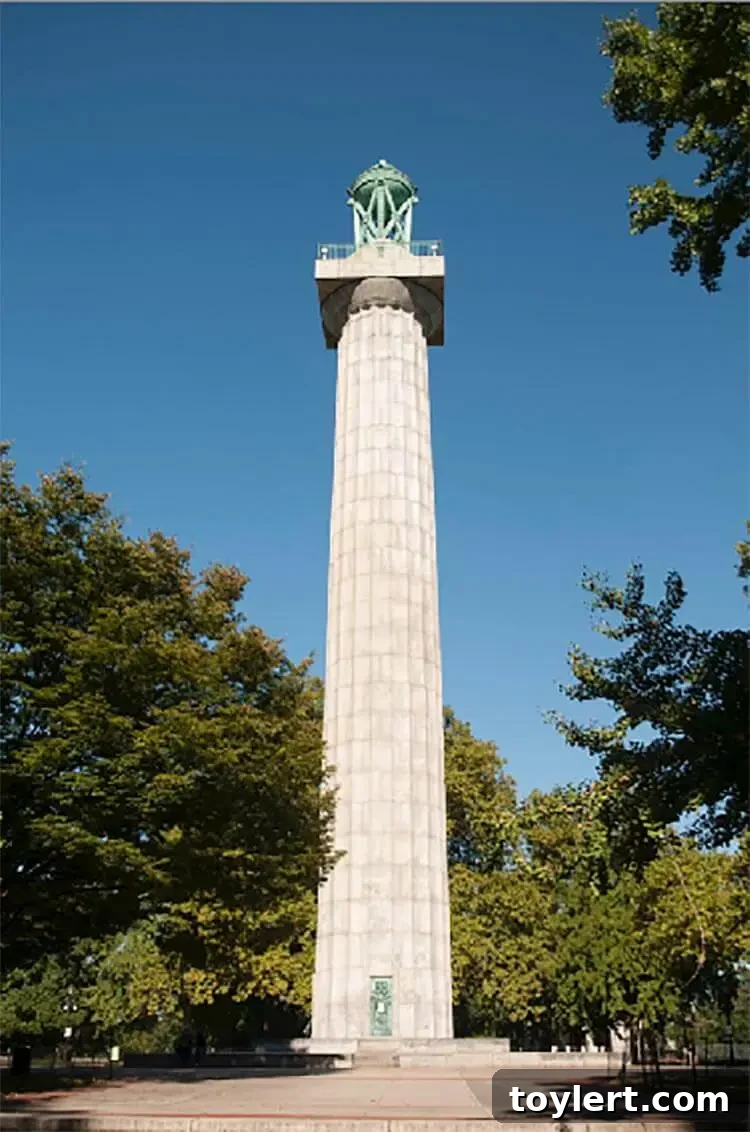
The park is not only a beautiful urban oasis but also a profound memorial. At its heart stands the majestic Prison Ship Martyrs’ Monument, a towering Doric column designed by Stanford White. This monument commemorates the thousands of American prisoners of war who died aboard British prison ships anchored in Wallabout Bay (near what is now the Brooklyn Navy Yard) during the Revolution. These brave souls, many of whom were interred in mass graves, suffered horrific conditions, and their sacrifices represent one of the darkest chapters of the war. Visiting this monument is a sobering experience, offering a tangible connection to the immense human cost of the fight for independence.
Fort Greene Park serves as a poignant reminder that while many battles were fought on land, the unseen struggles and untold suffering of those imprisoned were equally vital to the war’s narrative. The park’s carefully preserved landscape and the monument itself stand as a testament to the enduring spirit of the American patriots and their unwavering commitment to liberty. Exploring the park allows one to reflect on the bravery of the Continental Army and the civilian population caught in the crossfire, making the history of the American Revolution in Brooklyn incredibly vivid and personal.
The Old Stone House: A Critical Stand in the Battle of Long Island
Further cementing Brooklyn’s place in Revolutionary War history is the Old Stone House, a meticulously reconstructed 17th-century Dutch farmhouse located in what is now Park Slope. This unassuming structure became an unlikely, yet crucial, focal point during the Battle of Long Island on August 27, 1776. As the American forces under General George Washington faced overwhelming odds against the vastly superior British and Hessian troops, the Old Stone House, then known as the Vechte-Cortelyou House, became the site of a desperate and heroic rear-guard action.
A contingent of Maryland soldiers, known as the “Maryland 400,” repeatedly charged against a formidable British advance, allowing a significant portion of Washington’s army to escape encirclement and retreat across the Gowanus Creek to safety. This courageous stand, though costly in lives, bought precious time, preventing the complete annihilation of the Continental Army. Without their sacrifice, the course of the Revolution might have been drastically altered. The Old Stone House today serves as a museum and educational center, preserving this incredible story of bravery and strategic retreat. Visitors can learn about the battle, the lives of the early Brooklyn settlers, and the profound impact of this single, pivotal skirmish.
The historical significance of the Old Stone House cannot be overstated. It embodies the tenacity and sacrifice that characterized the American fight for independence. Its preservation ensures that future generations can connect directly with the past, understanding the incredible challenges faced by the revolutionary generation and the pivotal moments that shaped the nation.
Green-Wood Cemetery: A Hallowed Ground of History
While primarily known as a breathtakingly beautiful National Historic Landmark cemetery, the sprawling grounds of Green-Wood Cemetery also bear the indelible marks of the American Revolution. Portions of this picturesque landscape were once active battlegrounds during the Battle of Long Island. The rolling hills and strategic elevations that define Green-Wood today were crucial terrain features that both American and British forces sought to control.
Specifically, the Battle of Long Island encompassed areas within and around what is now the cemetery. The critical Battle Pass, a narrow route through the hills, was fiercely contested. American forces attempted to hold this pass to prevent the British from outflanking their positions. The landscape of Green-Wood Cemetery provides a unique opportunity to visualize the strategic complexities of the battle, imagining the movements of troops and the fierce fighting that took place amidst these very hills and valleys. Walking through the cemetery, one is not just among the resting places of historical figures, but also on ground where history was actively forged under fire.
Furthermore, Green-Wood is home to numerous monuments and memorials dedicated to those who served in the Revolutionary War, including several generals and patriots who played roles in the conflict. While not all graves date directly to the Revolution, the cemetery serves as a repository of American history, connecting visitors to the era and reminding them of the foundational struggles that led to the nation’s birth. Its elevated points offer panoramic views of New York Harbor, allowing one to appreciate the strategic importance of the land during the 1776 campaign.
Prospect Park: Echoes of the Battle on Its Fields
Just as Green-Wood Cemetery holds historical significance from the Revolution, so too does Prospect Park. While the park as we know it today was designed in the mid-19th century by Frederick Law Olmsted and Calvert Vaux, its terrain was undeniably part of the larger battlefield for the Battle of Long Island. The low-lying lands and wooded areas within the park’s present boundaries witnessed skirmishes and troop movements, particularly as American forces attempted to defend their lines and later retreat.
The gentle slopes and depressions within Prospect Park were part of the natural landscape that influenced troop deployment and battle tactics. While the park’s modern design has transformed the original topography, careful observation and historical understanding can still help visitors connect with the past. Areas such as Battle Pass in the northern part of the park, though altered, recall the desperate attempts by the Continental Army to hold back the British advance. Markers and interpretive signs within the park help guide visitors to understand these historical connections.
Prospect Park, therefore, is not merely a recreational space; it is a landscape layered with history. Its serene paths and beautiful vistas belie the fact that beneath its surface, and within its former boundaries, momentous events transpired that shaped the future of a nation. Exploring Prospect Park provides another dimension to understanding Brooklyn’s profound link to the Revolutionary War, encouraging reflection on the historical narrative embedded within its vibrant green spaces.
The Battle of Long Island: A Defining Moment for the Continental Army
The Battle of Long Island, fought primarily in what is now Brooklyn on August 27, 1776, was the first major battle of the American Revolutionary War after the Declaration of Independence, and the largest battle of the entire conflict. It was a crushing defeat for the Continental Army, yet it paradoxically proved to be a pivotal moment for General George Washington’s leadership and the survival of the nascent American military.
Outnumbered and outmaneuvered by the meticulously planned British offensive led by General William Howe, Washington’s forces suffered heavy casualties and were pushed back to their fortified positions on Brooklyn Heights. The British, with their superior numbers and tactical brilliance, appeared poised to deliver a decisive blow that could have effectively ended the Revolution. However, under the cover of a dense fog and with incredible logistical precision, Washington managed to execute a miraculous nighttime evacuation of his entire army, along with their supplies and horses, across the East River to Manhattan.
This daring retreat, often considered one of Washington’s greatest strategic feats, saved the Continental Army from utter destruction, allowing the fight for independence to continue. The Battle of Long Island taught the Americans invaluable lessons about fighting a highly trained professional army and underscored the need for disciplined command and strategic flexibility. Its legacy in Brooklyn is palpable, etched into the very landscape of these historic sites.
Preserving Brooklyn’s Revolutionary History for Future Generations
The historical sites throughout Brooklyn are more than just landmarks; they are living testaments to the birth of a nation. Preserving these Revolutionary War sites is crucial for understanding the struggles and triumphs of our forebears. Each park, monument, and historic house tells a piece of a larger story, offering invaluable educational opportunities for students and history enthusiasts alike. They allow us to walk in the footsteps of heroes, to feel the weight of their decisions, and to appreciate the profound sacrifices made for liberty.
Organizations and local communities tirelessly work to maintain these precious sites, ensuring their integrity and accessibility. Through interpretive programs, educational exhibits, and guided tours, visitors can engage with the past in a meaningful way. These efforts ensure that the lessons learned from the American Revolution, particularly from the intense fighting that took place in Brooklyn, continue to resonate with future generations. The enduring spirit of independence and resilience cultivated during those turbulent times remains a source of inspiration, deeply embedded in Brooklyn’s identity.
Plan Your Visit to Brooklyn’s Revolutionary War Sites
For anyone interested in American history, a visit to Brooklyn’s Revolutionary War sites offers an enriching and enlightening experience. From the solemn grandeur of the Prison Ship Martyrs’ Monument in Fort Greene Park to the historic grounds of the Old Stone House, and the battlefield echoes within Green-Wood Cemetery and Prospect Park, these locations provide a tangible link to the past. Take the time to explore these significant landmarks, reflect on the momentous events that transpired here, and gain a deeper appreciation for Brooklyn’s pivotal role in shaping the United States of America.