246 Gates Avenue: A Queen Anne Masterpiece by Brooklyn’s Parfitt Brothers
Nestled within Brooklyn’s vibrant landscape, the historic townhouse at 246 Gates Avenue stands as a testament to the enduring beauty and meticulous craftsmanship of late 19th-century architecture. This magnificent Queen Anne-style home, dating back to the 1880s, is a prime example of the exceptional artistry for which the celebrated Brooklyn architectural firm, Parfitt Brothers, was renowned. From its intricately detailed exterior to its lavishly appointed interiors, every element of 246 Gates Avenue speaks to a legacy of elegance and architectural sophistication.
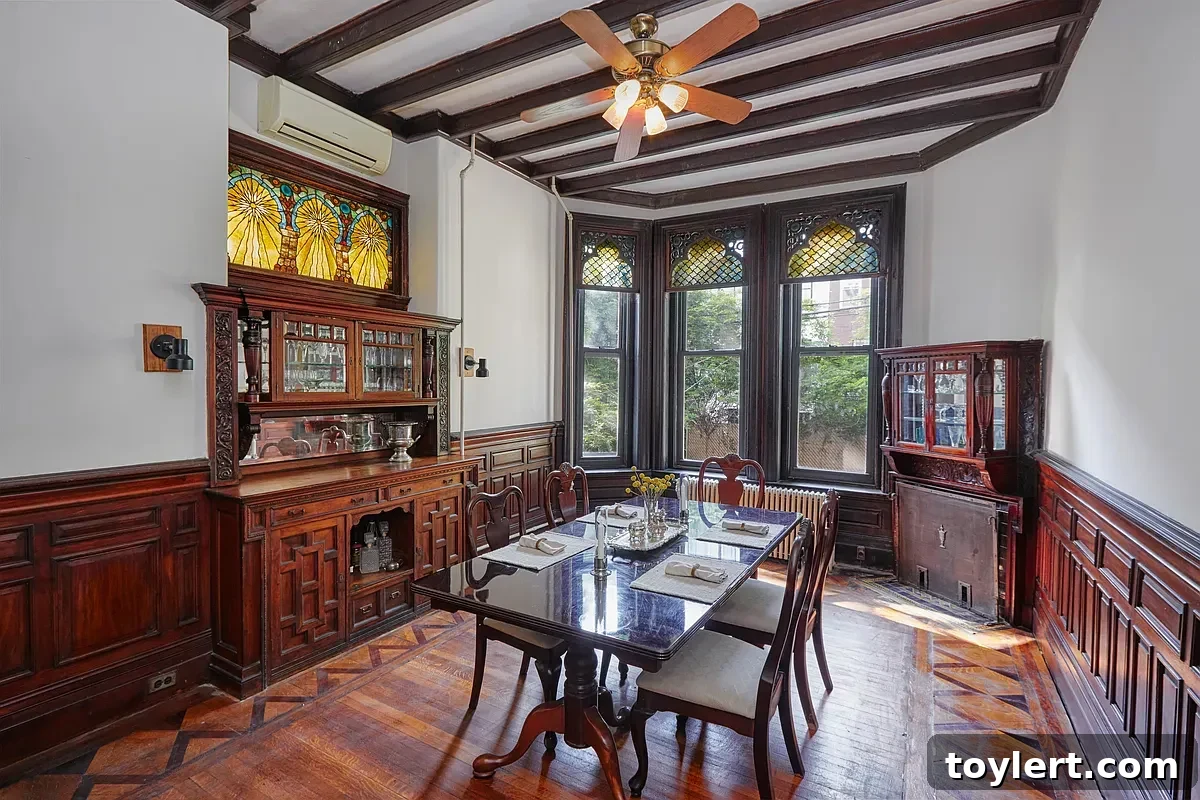
The exterior of this charming residence immediately captures the eye, showcasing the Parfitt Brothers’ signature attention to detail. Layers of meticulously crafted ornament adorn its facade, blending rich textures and forms that are characteristic of the Queen Anne style. Step inside, and this tradition of ornate design continues seamlessly. The interior is a veritable treasure trove of period details, featuring exquisite fretwork, vibrant stained glass, stately mantels, custom-built-ins, and intricate plasterwork that speaks volumes of the era’s dedication to decorative arts. While preserving its historic charm, the home also embraces modern living with thoughtful updates, including a beautifully renovated kitchen and the convenience of central air conditioning, ensuring comfort without compromising character.
The Architectural Visionaries: Parfitt Brothers and Their Legacy
The Parfitt Brothers, a prominent architectural firm active in Brooklyn during the late 19th and early 20th centuries, left an indelible mark on the borough’s architectural landscape. Known for their prolific output and diverse stylistic range, they were particularly adept at translating the ornate sensibilities of the Victorian era into tangible brick and brownstone. Their designs often featured a harmonious blend of materials, asymmetrical compositions, and an abundance of decorative flourishes that defined the Queen Anne style. The townhouses they designed were not merely structures; they were statements of prestige and sophistication, crafted with a deep understanding of aesthetics and functionality.
Their reputation was built on a foundation of quality construction, innovative design, and a keen eye for detail – qualities that are vividly displayed at 246 Gates Avenue. The firm’s ability to create homes that were both grand and liveable made them a preferred choice for Brooklyn’s burgeoning elite, including discerning clients like John Gibb, the visionary behind the Gates Avenue development. The Parfitt Brothers’ work continues to be celebrated today, with many of their buildings standing as cherished historical landmarks, offering a glimpse into Brooklyn’s opulent past.
A Collaborative Creation: John Gibb’s Vision for Gates Avenue
The story of 246 Gates Avenue is also intertwined with that of John Gibb, a successful lace importer and influential partner in the prominent department store, Frederick Loeser & Company. Gibb, already a resident of Gates Avenue with his own grand Second Empire-style manse, recognized the avenue’s potential for lucrative property investment. As meticulously detailed by esteemed Brownstoner columnist Suzanne Spellen, Gibb’s foresight in acquiring significant tracts of land along this desirable thoroughfare proved to be a shrewd financial move.
In May of 1885, plans were officially filed for a spectacular row of six townhouses on this very block, strategically located between Classon and Franklin avenues. Gibb commissioned the Parfitt Brothers to bring his vision to life, resulting in a cohesive yet individually distinctive collection of residences. These grand Queen Anne-style brick dwellings, each boasting two-story rear extensions, were designed to exude luxury and architectural distinction, appealing to the aspiring gentry of late 19th-century Brooklyn. The collaboration between a discerning patron and celebrated architects yielded an urban ensemble that remains impressive to this day.
The Gates Avenue Row: A Symphony in Brick and Brownstone
The row of six townhouses commissioned by John Gibb showcases the Parfitt Brothers’ mastery of creating a unified architectural statement while allowing for individual character. Each house, including 246 Gates Avenue, is adorned with exquisite brownstone and terra-cotta ornament, materials frequently employed in the period for their durability and aesthetic appeal. While clearly part of a unified group, these homes feature unique bays, distinctive dormers, and other individualized architectural elements. This thoughtful variation ensures that each residence possesses its own personality while contributing to the overall grandeur and street appeal of the entire block. The interplay of materials, textures, and forms creates a visual rhythm that is both sophisticated and inviting, making the row a standout example of integrated urban design.
Exterior Grandeur: A Study in Queen Anne Flourishes
The exterior of 246 Gates Avenue epitomizes the flamboyant yet refined spirit of Queen Anne architecture. Unlike the more austere Federal or Greek Revival styles, Queen Anne embraced asymmetry, varied rooflines, and a rich tapestry of textures. Here, the Parfitt Brothers utilized brick as the primary material, providing a sturdy and timeless base, beautifully accented by warm brownstone for sills, lintels, and decorative banding. Terra-cotta, a versatile and artistic medium, was skillfully incorporated into intricate panels and decorative elements, adding splashes of color and fine detailing that catch the light and the eye. The unique bay windows, a hallmark of the style, not only add visual interest to the facade but also flood the interiors with natural light, offering expansive views of the tree-lined street. The meticulously crafted dormers punctuate the roofline, further enhancing the home’s picturesque quality and adding to its sense of verticality and grandeur.
Interior Opulence: A Glimpse into Victorian Splendor
The interior of 246 Gates Avenue is a carefully preserved tableau of Victorian-era luxury. The aforementioned fretwork, an intricate openwork pattern typically carved from wood, adorns archways and transoms, creating delicate screens that define spaces without fully enclosing them. This element speaks to the desire for both privacy and an open, flowing feel within grand homes. The stained glass windows, likely featuring floral motifs or geometric patterns, are not merely decorative; they transform natural light into a spectrum of colors, casting an ethereal glow over the living spaces. These artistic insertions would have been carefully positioned to capture and refract light at different times of the day, creating an ever-changing ambiance.
Throughout the home, the mantels serve as focal points in each room, crafted from rich woods or exquisite marble, often featuring hand-carved details or ornate tilework around the fireboxes. These were not just functional elements but significant pieces of furniture that dictated the room’s aesthetic. Built-ins, such as bookshelves, display cabinets, or window seats, would have been custom-designed to maximize space and provide practical elegance, reflecting the Victorian penchant for order and comfort. Finally, the intricate plasterwork on ceilings and cornices, with its elaborate rosettes, swags, and other classical motifs, elevates the interior to a level of artistry that is rarely seen in modern construction, showcasing the supreme skill of the artisans who shaped these homes.
A Timeless Investment: The Allure of Historic Brooklyn Townhouses
The historical significance and inherent beauty of homes like 246 Gates Avenue were apparent even during their initial offering. Advertisements from 1886 for some of the houses in this exclusive row reveal that they were aggressively marketed as being superior to any competing properties in New York or Boston. The promotional materials proudly highlighted their “painstaking construction, excellent arrangement, and artistic finish,” a testament to the Parfitt Brothers’ dedication to quality and the high standards of John Gibb. This was an era of intense competition among developers, and showcasing superior craftsmanship was key to attracting affluent buyers.
An effusive description of the finished decor of one of the neighboring homes, No. 252, provides an invaluable peek into the original elaborate finishes that were highly fashionable among the discerning residents of the time. Imagine rooms adorned with breathtaking frescoed ceilings, their painted narratives or intricate patterns adding a layer of artistic grandeur above. The walls would have been covered with luxurious Lincrusta, a type of embossed wallcovering that mimicked carved wood or plaster, offering durability and a rich textural quality. Combined with “rich colors throughout” – deep jewel tones, earthy reds, and forest greens were typical – these interiors would have created an atmosphere of unparalleled warmth, sophistication, and dramatic elegance, making each room a sensory experience. Such details underscore the extraordinary level of finish and decoration expected in a high-status Victorian home.
Modern Comforts in a Historic Shell
Today, 246 Gates Avenue gracefully bridges its storied past with the conveniences of contemporary living. The inclusion of a renovated kitchen exemplifies this thoughtful integration. Modern kitchens in historic homes often feature state-of-the-art appliances, ergonomic design, and contemporary finishes, all while respecting the home’s original architectural integrity. This balance ensures that daily life is practical and enjoyable without detracting from the historic ambiance. Similarly, the addition of central air conditioning is a significant enhancement, providing comfort year-round – a luxury unimaginable to its original occupants. These updates are crucial for ensuring that a grand 19th-century townhouse can meet the demands and expectations of a 21st-century homeowner, making it a truly desirable residence that offers the best of both worlds: timeless elegance and modern functionality.
The townhouse at 246 Gates Avenue is more than just a house; it is a living piece of Brooklyn history, a monument to the architectural prowess of the Parfitt Brothers, and a reflection of John Gibb’s ambitious vision. Its blend of meticulous Victorian detail and essential modern updates makes it a highly coveted property for those who appreciate history, art, and the unique charm of Bed-Stuy’s architectural heritage. It stands as a vibrant reminder of an era when homes were built not just for shelter, but as statements of beauty, craft, and enduring legacy.