Broadway’s New Horizon: Six-Story Affordable Housing Project Rises in Ocean Hill
As Brooklyn’s real estate landscape continues its dynamic evolution, a significant shift is underway along the bustling Broadway corridor. The City of New York is actively exploring upzoning initiatives across key neighborhoods like Bushwick, Bed Stuy, and East New York, signaling a commitment to address the pressing housing crisis and stimulate economic growth. This visionary approach is already inspiring developers to embark on ambitious projects, even within the unique confines of areas situated directly beneath the J, M, Z elevated subway tracks. Despite the inherent challenges and specific height restrictions imposed by such infrastructure, the promise of creating much-needed housing and vibrant community spaces is a powerful motivator.
A prime example of this forward-thinking development is taking shape in the heart of Ocean Hill/Bed Stuy. Alembic Community Development, a renowned affordable housing developer, has unveiled plans for a six-story, mixed-use building at 1676 Broadway. This innovative project, detailed in a new building application, is poised to bring vital affordable housing options and convenient ground-floor retail to a neighborhood experiencing significant transformation. It represents a strategic response to the city’s housing needs, demonstrating how thoughtful urban planning and dedicated development can breathe new life into underutilized urban spaces.
Understanding the Broadway Upzoning Initiative
The concept of “upzoning” is a critical tool in New York City’s urban planning arsenal, designed to increase housing density and support neighborhood revitalization. For the Broadway corridor, spanning vibrant areas like Bushwick, Bed Stuy, and East New York, upzoning would primarily entail changing zoning regulations to allow for larger, taller buildings, or more intense land uses than previously permitted. The city’s motivation is multi-faceted: to create more affordable housing units, stimulate local economies by attracting businesses and residents, and optimize the use of existing infrastructure, particularly public transit hubs like the J, M, Z lines.
However, building along an elevated subway line presents a unique set of architectural and engineering challenges. Developers must contend with noise and vibration mitigation, specific setback requirements, and the need for creative design solutions to maximize natural light and air. These constraints often lead to height restrictions, making projects like Alembic’s six-story development at 1676 Broadway a testament to innovative design and careful planning. The goal is to integrate new structures seamlessly into the urban fabric, enhancing the streetscape while providing essential amenities for residents. The upzoning effort aims to strike a delicate balance between fostering growth and preserving the distinct character and community feel of these historic Brooklyn neighborhoods.
Alembic Community Development: A Vision for Affordable Living
At the forefront of this transformative project is Alembic Community Development, an organization with a strong track record of creating high-quality, affordable housing across New York City and beyond. Their mission extends beyond simply constructing buildings; Alembic is dedicated to fostering resilient communities, providing stable homes, and supporting local economies. Their approach often involves deep engagement with neighborhood stakeholders, ensuring that new developments truly meet the needs and aspirations of existing residents.
The planned six-story mixed-use building at 1676 Broadway exemplifies Alembic’s commitment. While specific unit breakdowns are pending, such projects typically incorporate a significant percentage of affordable units, catering to individuals and families across various income levels. Beyond residential spaces, the “mixed-use” designation signifies the inclusion of ground-floor commercial or retail spaces. These can house local businesses, provide essential services, or even offer community facilities, creating active streetscapes and contributing to the vibrancy of the neighborhood. This integrated approach ensures that the development not only provides homes but also serves as a catalyst for local commerce and community gathering. The architectural design is expected to be mindful of its context, aiming for an aesthetic that is both modern and complementary to the existing structures and the unique environment beneath the elevated tracks, carefully considering factors like soundproofing and daylight access for residents.
The Evolving Site: From Henry Distributors to Affordable Homes
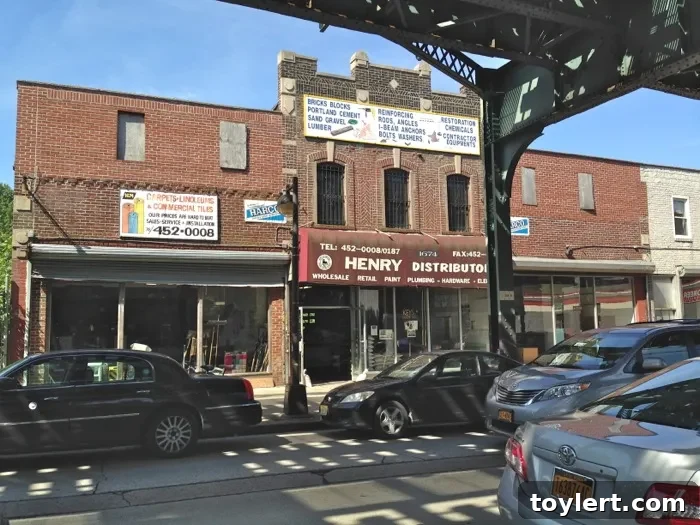
The address 1676 Broadway, now synonymous with this exciting new development, represents a fresh chapter for a site deeply rooted in the area’s commercial history. This particular parcel is part of a larger property at 1674 Broadway, a corner location that served for decades as the home of Henry Distributors. For generations, Henry Distributors was a familiar landmark, a wholesale and retail building supply company that played a vital role in serving local contractors and residents with essential materials. Its long-standing presence spoke to the enduring character of Broadway as a commercial artery.
In 2012, this significant corner property, encompassing multiple parcels, underwent a pivotal change of ownership. It was sold for $1,030,254, marking the end of an era for Henry Distributors at this location and signaling the potential for a new future. Today, the property is owned by an entity known as Broadway Decatur Housing Development Fund Corp., as recorded in ACRIS (Automated City Register Information System). Housing Development Fund Corporations (HDFCs) are non-profit organizations in New York often formed to acquire, rehabilitate, and manage housing, frequently with a focus on creating and preserving affordable housing opportunities. Their involvement underscores the project’s commitment to community benefit and long-term affordability rather than purely market-driven development. This strategic acquisition by an HDFC laid the groundwork for the partnership with Alembic Community Development, paving the way for the transformation of a former industrial site into a much-needed residential and commercial hub at the intersection of Broadway and Decatur, a vital crossroads within the Ocean Hill neighborhood.
Transforming Ocean Hill/Bed Stuy: A Glimpse into the Future
The development at 1676 Broadway is more than just a single building; it’s a piece of a larger puzzle contributing to the ongoing revitalization and densification of Ocean Hill and Bed Stuy. These Brooklyn neighborhoods, rich in history and culture, have experienced significant growth and change over the past decade. Projects like Alembic’s affordable housing initiative are crucial in ensuring that development benefits all residents, providing stable and accessible housing options amidst rising rents and property values.
The introduction of new residents and ground-floor retail will undoubtedly inject fresh energy into the immediate vicinity. Local businesses can thrive with an increased customer base, and the potential for new services or community spaces can enhance the quality of life for everyone. This kind of thoughtful, mixed-use development helps create a more walkable and vibrant neighborhood, fostering a stronger sense of community. It also addresses critical challenges, such as the scarcity of affordable housing, which has been a driving force behind many of the city’s upzoning considerations. By strategically adding density and amenities along transit-rich corridors like Broadway, New York City aims to create more equitable and sustainable urban environments, ensuring that its diverse communities can continue to flourish for generations to come. The transformation of this specific corner at Broadway and Decatur will serve as a model for how development beneath elevated infrastructure can successfully contribute to the fabric of a bustling urban landscape.
Conclusion: A Step Towards a More Inclusive Brooklyn
The planned six-story mixed-use development at 1676 Broadway in Ocean Hill/Bed Stuy marks an important stride in addressing Brooklyn’s complex housing needs. Spearheaded by Alembic Community Development and backed by the Broadway Decatur Housing Development Fund Corp., this project exemplifies a strategic response to the city’s vision for Broadway’s upzoning. By transforming a historically commercial site into a vibrant hub of affordable homes and community-serving retail, it not only adds essential housing stock but also enhances the economic and social vitality of a crucial intersection.
This endeavor navigates the unique challenges of building beneath elevated transit lines, demonstrating innovative approaches to urban development. As New York City continues its efforts to create a more equitable and accessible urban landscape, projects like 1676 Broadway serve as powerful examples of how thoughtful planning, dedicated developers, and community-focused initiatives can collaboratively shape a more inclusive future for Brooklyn’s dynamic neighborhoods. The completion of this building will undoubtedly contribute significantly to the ongoing positive evolution of Ocean Hill and Bed Stuy.