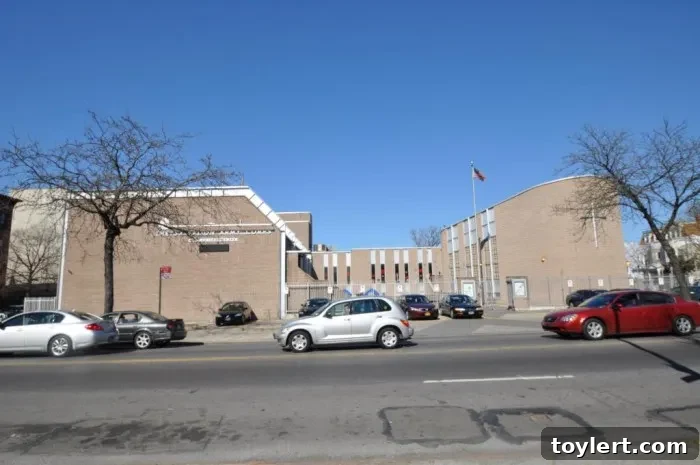
The Salvation Army Community Center: A Cornerstone in Bushwick, Brooklyn
In the vibrant and ever-evolving landscape of Brooklyn, specific buildings stand as more than just architectural constructs; they are vital arteries in the community’s heart. Among these, the Salvation Army Community Center at 1149-1171 Bushwick Avenue represents a compelling blend of architectural evolution and unwavering social commitment. This multi-faceted complex, with its distinct architectural phases, serves as a beacon of hope and support for countless individuals and families in the Bushwick neighborhood. It embodies the enduring legacy of the Salvation Army, adapting its physical form over decades to continue its profound mission of service.
Key Details of the Bushwick Avenue Community Center
Understanding the specifics of this significant institution provides context for its role in the community.
- Name:
- Salvation Army Community Center
- Address:
- 1149-1171 Bushwick Avenue
- Cross Streets:
- Putnam Avenue and Cornelia Street
- Neighborhood:
- Bushwick, Brooklyn
- Year Built:
- First building – 1971-72. Library and Computer Center – 2007-2008.
- Architectural Style:
- Initial building – Brutalist, Library and Computer Center – Moderne-inspired
- Architect:
- First building – Unknown. Library and Computer Center – Rodney Leon
- Other Notable Works by Rodney Leon:
- African Burial Ground National Monument, Lower Manhattan
- Landmarked:
- No
An Architectural Dialogue: From Brutalism to Moderne
The Salvation Army Community Center offers a fascinating architectural narrative, showcasing two distinct styles from different eras that reflect evolving urban design philosophies and community needs. The initial structure, built in the early 1970s, firmly aligns with the Brutalist movement, while the later addition introduces a more contemporary, Moderne-inspired aesthetic.
The Brutalist Origins (1971-72)
The first phase of the building, constructed between 1971 and 1972, epitomizes Brutalist architecture. Characterized by its raw, exposed concrete surfaces, massive scale, and emphasis on functionality, Brutalism emerged in the mid-20th century as a robust and often stark response to the perceived frivolity of earlier styles. Buildings in this style were designed to be honest in their materials and construction, projecting an image of strength and permanence. For institutions like community centers or public buildings, Brutalism often conveyed a sense of civic solidity and durability, designed to withstand the rigors of urban life. While the architect of this initial phase remains unknown, their design choice speaks to the prevailing architectural trends of the era, prioritizing resilient materials and straightforward forms. The resulting structure, though perhaps less ornate than its predecessors, serves as a formidable and functional anchor for the center’s vital operations.
The Moderne-Inspired Addition by Rodney Leon (2007-08)
Decades later, the center underwent a significant expansion, adding a library and computer center designed by the renowned architect Rodney Leon. Completed between 2007 and 2008, this addition introduces a Moderne-inspired style, offering a compelling contrast and complement to the original Brutalist structure. Moderne architecture, often seen as a streamlined evolution from Art Deco, emphasizes clean lines, geometric forms, and a less ornamental, more functional aesthetic than its predecessors. Rodney Leon, known for his thoughtful and culturally resonant designs—most notably the African Burial Ground National Monument in Lower Manhattan—brought a contemporary sensibility to the project. His work on the library and computer center likely aimed to create a welcoming, light-filled, and technologically advanced space, reflecting modern programmatic needs while integrating harmoniously with the existing robust form. This architectural dialogue across the decades showcases the center’s growth and its continuous adaptation to serve the changing demands of the Bushwick community, providing both enduring stability and modern accessibility.
The Salvation Army: A Legacy of Unwavering Service
To fully appreciate the Bushwick Community Center, one must understand the profound history and mission of the Salvation Army itself—an organization that has stood as a global force for good for over a century and a half.
Founding Principles and Early Mission
The Salvation Army was founded in 1865 in the impoverished East End of London by Methodist minister William Booth and his wife Catherine. Disturbed by the destitution and spiritual neglect they witnessed, the Booths embarked on a mission to reach those overlooked by conventional churches. Their vision was radical: to bring “soup, soap, and salvation” to the most marginalized members of society. This powerful motto encapsulated a holistic approach to aid, recognizing that spiritual transformation often requires addressing immediate physical needs. “Soup” symbolized the provision of food and relief from hunger; “soap” represented hygiene, shelter, and a path to dignity; and “salvation” referred to their core spiritual message, offering hope and moral guidance. This integrated strategy allowed them to meet people where they were, offering practical assistance alongside spiritual counsel.
Global Expansion and Arrival in the United States
The Booths’ compassionate and practical approach quickly gained traction, and by 1879, the Salvation Army had expanded its operations to the United States, establishing its first chapter in Philadelphia. Just a year later, in 1880, they extended their reach to New York City, quickly embedding themselves within the bustling urban fabric. From these beginnings, the Army’s distinctive uniform, brass bands, and street-corner sermons became familiar sights, signaling a constant presence in communities where help was most needed. Their rapid growth was fueled by an unwavering dedication to serving the “least of these,” regardless of their background, creed, or circumstances.
Beyond Disaster Relief: A Constant Presence
While the Salvation Army is widely recognized for its crucial disaster relief efforts, providing immediate aid in times of crisis, its daily operations extend far beyond these high-profile interventions. The organization operates thousands of centers worldwide, acting as everyday lifelines for the homeless, the indigent, and those struggling to get back on their feet. These centers offer a wide array of services, including emergency shelters, rehabilitation programs for addiction, job training, and family counseling. Furthermore, the Army’s well-known thrift shops serve a dual purpose: they provide affordable goods to those in need while generating essential funds to support their extensive social programs. This multifaceted approach underscores their commitment to long-term community building and individual empowerment.
The Bushwick Community Center: A Local Hub of Hope
The Salvation Army Community Center on Bushwick Avenue stands as a powerful testament to the organization’s enduring mission, translated into tangible local impact. It is a vibrant hub that caters specifically to the needs of the Bushwick neighborhood, providing essential services that foster growth, safety, and community resilience.
Empowering the Next Generation
One of the cornerstone functions of the Bushwick Avenue center is its dedication to nurturing the potential of children and youth. The center operates comprehensive afterschool, summer, and weekend programs, offering a safe and structured environment where children can thrive. In a dense urban setting like Bushwick, such programs are invaluable. They provide nutritious meals, academic support through tutoring and homework assistance, and opportunities for creative play and social development. These initiatives are critical in offering a positive alternative to street influences, helping children build confidence, develop new skills, and foster a sense of belonging. The library and computer center, a modern addition to the complex, further enhances these educational opportunities, ensuring access to vital learning resources in an increasingly digital world.
Supporting Individuals and Families
Beyond its focus on youth, the Bushwick Community Center extends its services to adults and families, embodying the full spectrum of the “soup, soap, and salvation” motto. While specific offerings may vary, a typical Salvation Army community center would provide services such as a food pantry to address immediate hunger, assistance with utility bills, emergency shelter referrals, and guidance for those seeking employment or stable housing. For individuals facing adversity, the center often acts as a first point of contact, offering a compassionate ear and practical steps toward self-sufficiency. It serves as a crucial social safety net, reinforcing community bonds and providing a stable foundation from which residents can rebuild their lives and contribute positively to the neighborhood.
Conclusion: An Enduring Legacy in Brooklyn
The Salvation Army Community Center at 1149-1171 Bushwick Avenue is far more than a collection of buildings; it is a living institution, deeply woven into the fabric of Brooklyn. Its architectural journey, from the stoic Brutalism of its origins to the thoughtful Moderne-inspired addition by Rodney Leon, mirrors its continuous evolution to meet community needs. More importantly, it represents the steadfast commitment of the Salvation Army to its foundational mission. Through its extensive programs for children, families, and individuals, this center continues to serve as a vital source of comfort, support, and opportunity, embodying hope and resilience in the heart of Bushwick. Its presence ensures that the principles of “soup, soap, and salvation” remain a tangible reality for those who need it most, making it an indispensable part of Brooklyn’s ongoing story.