Barclays Center’s Ripple Effect: Unpacking Brooklyn’s Retail Transformation and Neighborhood Evolution
Understanding the multifaceted changes brought by a landmark urban development.
The grand opening of the Barclays Center arena, a cornerstone of the ambitious Atlantic Yards project, marked a pivotal moment for Brooklyn. Anticipation ran high, not just for the sports and entertainment it promised, but for its predicted transformative effect on the surrounding neighborhoods. A comprehensive report in the New York Times meticulously examined how the blocks encircling the arena were already experiencing a significant retail metamorphosis, directly attributed to the imminent arrival of this major urban landmark. This immediate correlation ignited a vigorous discussion: was this an unprecedented, arena-driven revolution, or merely an acceleration of existing trends?
The Retail Renaissance: Arena as Catalyst or Accelerant?
It’s an undeniable fact that the prospect of hundreds of thousands of arena visitors sparked a surge in demand for commercial spaces, inevitably driving up rents in the vicinity of the Barclays Center. This phenomenon naturally attracted new businesses looking to capitalize on the heightened foot traffic and exposure. The prevailing narrative, eloquently articulated by local business owners such as Robert Schulman of Allied Orthopedics on Flatbush Avenue, suggested an “exponential” shift. Schulman observed, “‘The neighborhood is now becoming an entertainment mecca — anything that’s hip and of the moment,’ adding, ‘The change was slowly growing, but once the arena came into play, it was exponential. Once a week, a new restaurant or clothing store is opening up.’” This perspective paints the arena as the singular, powerful force dramatically reshaping the commercial identity of the area.
This “entertainment mecca” model often implies a rapid overhaul of the retail landscape. The theory suggests that long-established, community-rooted “mom-and-pop” stores—like a local hardware shop or a traditional deli—struggle to keep pace with escalating rents and the evolving consumer demands. In their place, a wave of trendier, more upscale establishments, ranging from chic clothing boutiques to modern eateries and lively bars, take root. These new businesses, often backed by larger investments or catering to a more transient, event-driven clientele, are better positioned to absorb the higher operational costs. For proponents of this view, the arena functions as a powerful engine of gentrification, pushing out the old to make way for the new, modern face of Brooklyn commerce.
Beyond the “Exponential” Narrative: A Deep Dive into Gradual Evolution
However, a closer examination reveals a more complex picture, suggesting that the transformation, while certainly intensified by the Barclays Center, wasn’t entirely a sudden phenomenon. The New York Times article itself acknowledged this nuance, noting that neighborhoods immediately adjacent to the arena site, such as Prospect Heights and Park Slope, had already been experiencing several years of significant, albeit gradual, change. This pre-arena evolution was not primarily characterized by the arrival of massive corporate chains or generic big-box retailers. Instead, it was often marked by a more organic growth, driven by shifting demographics, increasing desirability of urban living, and a burgeoning demand for unique, independent businesses.
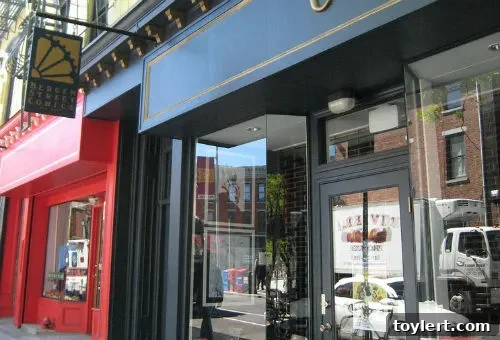
A shining example of this pre-existing, community-driven revitalization is the aptly named “Pintchick Row” on Bergen Street, just a stone’s throw from Flatbush Avenue. Over the five or so years preceding the arena’s full impact, this block blossomed into a diverse and vibrant commercial hub. It welcomed a distinctive array of businesses: the popular gourmet hot dog spot, Bark; a well-known beauty supply store, Ricky’s; a health-conscious vegetarian cafe; a dedicated bicycle shop catering to the city’s cycling culture; an independent comic book store appealing to niche interests; and a tranquil yoga studio promoting wellness. These establishments represent a different kind of urban development—one that emerged from the ground up, reflecting the evolving tastes and needs of the local residents. To suggest that these independently owned, often community-focused businesses detracted from the quality of life in the area feels like a mischaracterization. In many respects, they enhanced the neighborhood’s character, offering diverse services, creating local employment, and fostering a unique sense of place long before the arena opened its doors.
Quality of Life: The Unintended Consequences of Progress
While economic revitalization and increased commercial activity bring undeniable benefits to a city, they often come at a cost to the existing residents, particularly concerning their quality of life. For many individuals living in the immediate vicinity of the Barclays Center, the concerns extend far beyond changing retail facades. The primary anxieties center on the palpable erosion of the peaceful enjoyment of their homes and the fundamental character of their residential streets.
The impact manifests most acutely in several key areas:
- Noise Pollution: The proliferation of new bars and restaurants, often operating late into the night and directly benefiting from arena events, generates substantial noise. This is exacerbated by the sheer volume of arena-goers, who, after events conclude, disperse onto residential blocks, leading to late-night disturbances, shouting, and increased traffic noise that profoundly disrupts the tranquility of previously quiet streets.
- Traffic and Congestion: Event nights bring thousands of attendees, both vehicular and pedestrian, to the area. This influx leads to significant traffic congestion, challenges with parking, and general logistical difficulties for residents navigating their own neighborhoods. The once predictable rhythm of local streets gives way to intermittent bursts of chaotic activity.
- Loss of Local Character: The comparison made by a local small business owner near Barclays is particularly poignant: “‘As a businessman it’s good. …As a resident not so much. It turns a neighborhood into Midtown Manhattan.’” This statement encapsulates the fear of losing the unique, intimate, and community-centric feel of Brooklyn in favor of a bustling, commercialized, and somewhat impersonal environment reminiscent of a major entertainment and business district.
The concerns voiced by the arena’s neighbors are legitimate and deeply rooted in the experience of living alongside a major urban development. The delicate balance between commercial prosperity and residential serenity is frequently tested in such scenarios. While early analyses might have downplayed these concerns, suggesting they were exaggerated compared to the scale of disruption seen around iconic venues like Madison Square Garden (MSG), the true, long-term impact on the community’s fabric continues to unfold. Only time will reveal whether a sustainable equilibrium can be achieved, allowing both vibrant commerce and a high quality of residential life to coexist harmoniously in this dynamic part of Brooklyn.
The Media’s Lens: Shaping Narratives of Urban Transformation
The role of media in framing and interpreting complex urban development projects like Atlantic Yards is critical. The initial New York Times article, while insightful, did draw specific critique regarding its portrayal of certain stakeholders. The Atlantic Yards Report, an independent and influential blog known for its meticulous scrutiny of the project, published an extensive counter-analysis. One notable point of contention highlighted was the mis-characterization of individuals attending a liquor license hearing as “die-hard opponents” of the Barclays Center. Such labels can oversimplify the nuanced perspectives of residents, potentially dismissing their legitimate concerns as mere opposition rather than valid calls for balanced development and community consideration.
Accurate, balanced, and nuanced reporting is paramount in urban planning discussions. It requires acknowledging the diverse interests of all stakeholders: the developers aiming for economic return, city officials balancing growth with public welfare, local business owners navigating market shifts, and long-term residents striving to preserve their community’s character and quality of life. Understanding the interplay between these groups, alongside the historical context of a neighborhood’s evolution, offers a far more complete and empathetic picture than simply focusing on the most dramatic economic indicators or perceived “progress.” The media, therefore, bears a significant responsibility in fostering informed public discourse, ensuring that all voices are heard and fairly represented.
Conclusion: A Continuous Evolution of Brooklyn’s Identity
The Atlantic Yards project and its centerpiece, the Barclays Center, unequivocally symbolize a major chapter in Brooklyn’s ongoing evolution. Its influence on the local retail landscape is profound and undeniable, presenting both exciting new economic opportunities and formidable challenges for existing communities. While the narrative of an arena-driven “exponential” revolution holds some truth, it is equally important to acknowledge the deep-seated trends of gentrification and neighborhood development that were already in motion, albeit significantly accelerated by this monumental project.
Ultimately, the long-term success of such urban developments will be measured not just by economic output or the volume of visitors, but by how effectively city planners and developers address the legitimate quality-of-life concerns of the area’s residents. Striking a sustainable balance where both commercial vibrancy and residential tranquility can genuinely flourish will be key to ensuring that Brooklyn maintains its unique identity as a place where diverse communities thrive. The ongoing discussions and the lived experiences around the Barclays Center serve as a vital case study for urban planners and communities globally, underscoring the complex, intricate balance required when integrating major entertainment venues into established residential fabrics, and the critical importance of foresight, transparent communication, and genuine community engagement.
Sources:
Impact of Atlantic Yards, for Good or Ill, Is Already Felt [NY Times]
Times Focuses on Retail Changes Near Arena Site [AY Report]
Photo by schmuela