Bloomberg’s Paradox: Navigating New York’s Future Between Skyscrapers and Historic Preservation
New York City, a metropolis perpetually in motion, often finds itself at the crossroads of progress and preservation. Few figures embody this dynamic tension quite as distinctly as former Mayor Michael Bloomberg. During his twelve-year tenure, New Yorkers witnessed a dramatic transformation of the city’s skyline, coupled with a surprising and record-breaking commitment to safeguarding its architectural past. This complex legacy invites a deeper exploration into the forces that shape our urban environment: the relentless push for development, the essential desire to protect heritage, and the intricate balancing act of zoning and urban policy.
The Dual Persona: Developer’s Ally and Preservation Champion
To many, Michael Bloomberg is primarily remembered as the architect of a development boom. His administration was synonymous with an era of ambitious urban growth, characterized by significant upzoning initiatives across vast swaths of the city. This strategic rezoning, particularly in areas ripe for expansion like the Brooklyn waterfronts of Williamsburg and Greenpoint, and the burgeoning Long Island City in Queens, paved the way for a proliferation of residential towers and commercial complexes. Projects like the controversial Atlantic Yards (now Pacific Park) in Brooklyn became emblems of this aggressive developmental approach, promising economic revitalization and new housing but often sparking fierce community opposition over scale and impact. This perception of Bloomberg as a “developer-friendly” mayor was largely accurate, reflecting a belief that robust economic growth and increased housing density were vital for New York City’s continued prosperity and global competitiveness.
Yet, an often-overlooked facet of his time in office, as highlighted by the Wall Street Journal, paints a contrasting picture: that of the “Mayor of Preservation.” Under the leadership of his appointee, Chairman Robert Tierney of the Landmarks Preservation Commission (LPC), Bloomberg’s administration presided over an unprecedented period of landmarking. A staggering 41 new historic districts were designated, along with over 2,500 individual buildings. This surpasses the preservation efforts of all his predecessors combined, cementing a legacy that profoundly reshaped the city’s approach to protecting its architectural and cultural heritage. This extensive landmarking spree included diverse neighborhoods and structures, reflecting a broader understanding of what constitutes historical and aesthetic value in a constantly evolving city.
The Intricate Dance of Zoning: Growth, Character, and Control
Bloomberg’s urban planning philosophy was not a simple dichotomy but a nuanced strategy of growth management. While he vigorously pursued upzoning to stimulate development in commercial corridors and transit-rich areas, he simultaneously engaged in downzoning in other, primarily residential, neighborhoods. Downzoning involves reducing the allowed density and height of new construction, effectively limiting development to preserve the existing scale and “character” of these areas. This selective approach demonstrated an awareness of the delicate balance required to accommodate growth while mitigating its potential adverse effects on established communities. The goal was to channel intense development into specific zones while shielding others from incompatible, out-of-scale construction that could erode their unique identities.
However, this intricate dance between upzoning and downzoning was not without its critics. Michael Slattery, a Research Associate for the powerful Real Estate Board of New York (REBNY), voiced a common developer sentiment, suggesting that some of these landmark designations were not solely driven by historical merit. Instead, he claimed, they were strategically deployed as a tool for “development control,” essentially limiting new construction under the guise of preservation. This perspective underscores the economic stakes involved, where landmarking can dramatically impact property values, development potential, and the profitability of real estate ventures. Developers often view such restrictions as an impediment to progress, hindering the supply of much-needed housing and economic growth, particularly in a city facing constant demand.
At the Crossroads: Developer Frustration vs. Community Preservation
The tension between the desire for unhindered development and the imperative of historic preservation frequently played out in passionate community debates. A prime example of this contention was the controversy surrounding the extension of historic districts in Bedford-Stuyvesant, Brooklyn. This historic neighborhood, renowned for its distinctive brownstones and vibrant community life, became a focal point for the struggle to define its future.
Claudette Brady, representing the Bedford Stuyvesant Society for Historic Preservation, passionately articulated the community’s perspective. She described Bed-Stuy as a “very old-fashioned sort of neighborhood where everybody says hello, where people sit on the stoop,” emphasizing its unique social fabric and human scale. The push for preservation in Bed-Stuy was a direct response to a perceived threat from new, architecturally incompatible construction. Brady explicitly criticized “a lot of it was about new buildings — three-story things that were set back two feet or three feet from the street. Just god-ugly things.” This sentiment encapsulates the fear among residents that rapid, poorly conceived development can irrevocably alter a neighborhood’s aesthetic appeal, disrupt its established character, and ultimately diminish the quality of life for its inhabitants. These “god-ugly” structures often signify a generic, profit-driven approach that prioritizes quick construction over contextual sensitivity and architectural harmony.
The Developer’s Dilemma: Economic Realities and Regulatory Hurdles
From the developer’s viewpoint, the growing expanse of landmarked areas and strict preservation guidelines present significant economic and logistical challenges. Landmarking can increase construction costs due to specific material requirements, limitations on alterations, and the need for specialized permits and approvals. It can also restrict the density and height of new buildings, effectively reducing the potential return on investment. Developers argue that these regulations, while well-intentioned, can stifle innovation, exacerbate housing shortages by limiting supply, and make projects financially unfeasible, particularly for affordable housing initiatives. The process itself, involving extensive reviews and potential appeals, can add substantial delays and uncertainty to project timelines, impacting budgets and overall feasibility. This leads to the fundamental question: Is the Mayor, through his preservation policies, being unfairly restrictive to developers, or is this simply the cost of maintaining a city’s unique identity?
Community Voices: Protecting Neighborhood Identity and Quality of Life
Conversely, community groups and preservationists view landmarking as an essential defense mechanism against unchecked gentrification and the erosion of local distinctiveness. They contend that a city’s vibrancy is not solely measured by its economic output or skyscraper count but by the richness of its history, the beauty of its architecture, and the strength of its neighborhood identities. For residents, historic districts offer stability, a sense of place, and protection from speculative development that often brings with it higher rents, displacement, and a homogenization of urban landscapes. The “old-fashioned” charm and communal atmosphere that Claudette Brady highlighted in Bed-Stuy are intangible assets that are difficult to quantify but vital for the emotional and social well-being of a community. The fight for preservation is, therefore, often a fight for the soul of a neighborhood.
The Landmarks Preservation Commission: Balancing Mandates and Backlogs
At the heart of this complex issue lies the Landmarks Preservation Commission (LPC). Tasked with protecting the city’s architectural, historical, and cultural heritage, the LPC wields considerable power in determining what gets preserved and under what conditions development can proceed within designated areas. Its mandate is to apply rigorous criteria to evaluate properties for landmark status, considering factors such as architectural style, historical associations, and cultural significance. However, the sheer volume of potential landmarks in New York City, coupled with limited resources, has historically created a significant backlog of requests for designation.
The question arises: could Bloomberg’s extensive landmarking efforts simply be the LPC finally catching up on years of accumulated requests? This theory suggests that under Chairman Robert Tierney, the commission gained the political will, resources, or directive to systematically address this backlog. This would imply that many of these landmarkings were indeed long overdue, based on existing merit, rather than being solely a tool for development control. If true, it would represent a commendable effort to fulfill the commission’s core mission, belatedly recognizing the historical significance of numerous sites across the five boroughs that had previously been overlooked or sidelined.
Case Study: The Battle for Bedford-Stuyvesant’s Soul
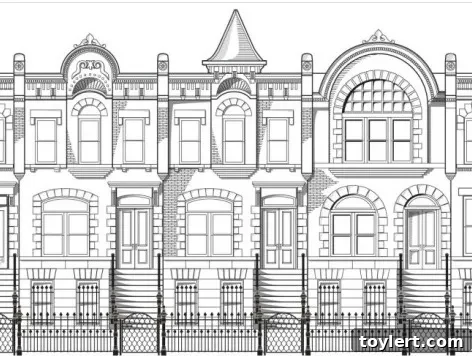
The Bedford-Stuyvesant historic district controversy serves as a microcosm of the larger preservation debate. This Brooklyn neighborhood boasts an unparalleled collection of 19th and early 20th-century brownstones, row houses, and institutional buildings, reflecting diverse architectural styles from Italianate to Romanesque Revival. Residents and preservation groups like the Bedford Stuyvesant Society for Historic Preservation fought tirelessly to extend landmark protections, fearing that encroaching development would introduce incompatible structures, destroy historic fabric, and fundamentally alter the low-rise, tree-lined character that makes Bed-Stuy so appealing. The “god-ugly” new buildings cited by Brady often referred to multi-family dwellings that, while providing housing, lacked the architectural detailing, material quality, and contextual sensitivity of their historic neighbors, leading to a jarring aesthetic contrast. This struggle highlighted the importance of not just preserving individual buildings but safeguarding the cohesive architectural rhythm and historical narrative of entire streetscapes.
Bloomberg’s Enduring Urban Legacy: A Complex Tapestry
Ultimately, Michael Bloomberg’s legacy in New York City is a complex tapestry woven from threads of aggressive development and unprecedented preservation. He simultaneously enabled the construction of towering skyscrapers and championed the protection of historic streetscapes, leaving an indelible mark on the city’s physical form and its policy framework for urban growth. His administration demonstrated that growth and preservation are not necessarily mutually exclusive, though the path to balancing them is fraught with challenges and difficult compromises. The policies enacted during his tenure continue to influence how New York approaches its ongoing urban evolution, informing debates about density, affordability, neighborhood character, and the very identity of the city.
Conclusion: Charting New York’s Future
The ongoing tension between building for the future and preserving the past remains a defining characteristic of New York City. As the city continues to grow, attracting new residents and businesses, the debate over how to manage this growth responsibly will persist. Is it possible for developers to create new structures that are both economically viable and aesthetically sensitive to their historic surroundings? How can the Landmarks Preservation Commission continue to fulfill its crucial role without unduly stifling necessary urban evolution? These questions resonate deeply with New Yorkers, shaping their daily lives and the future appearance of their beloved city. The intricate interplay between mayoral vision, community activism, and economic pressures will continue to chart New York’s ever-evolving course.
Read more about the “Mayor of Preservation” in the Wall Street Journal: Mayor of Preservation [WSJ]
Image by Stuyvesant East Preservation League