Brooklyn, one building at a time.
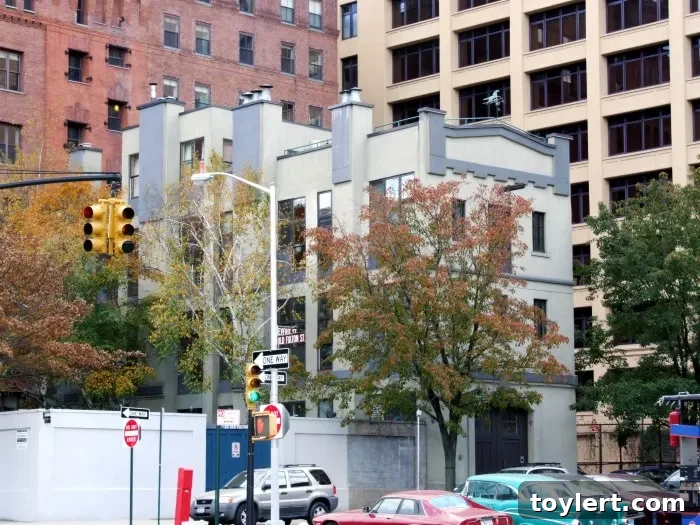
Name: Former stable, warehouse, now residential
Address: 7 Everit Street
Cross Streets: Old Fulton Street and Doughty Street
Neighborhood: Fulton Ferry/Dumbo
Year Built: Perhaps as early as 1850
Architectural Style: Mid-19th century stable, with modern alterations
Architect: Unknown
Landmarked: Yes, part of Fulton Ferry Historic District (1977)
7 Everit Street: Tracing Brooklyn’s Rich History Through a Converted Gem in Fulton Ferry
Nestled within the vibrant and historically rich landscape of Brooklyn, each building tells a story. From grand brownstones to repurposed industrial structures, the borough’s architectural tapestry is a testament to its evolving identity. Today, we turn our gaze to 7 Everit Street, a remarkable building in the heart of the Fulton Ferry/Dumbo neighborhood. Once a bustling stable and warehouse, this edifice has been thoughtfully transformed into contemporary residential spaces, embodying the spirit of Brooklyn’s continuous reinvention while holding fast to its deep historical roots. Its journey from an essential service building in the mid-19th century to a coveted address within a designated historic district offers a compelling narrative of urban change, architectural adaptation, and community preservation.
The Enduring Character of 7 Everit Street: From Horsepower to Modern Living
The building at 7 Everit Street stands as a fascinating example of architectural metamorphosis. Believed to have been constructed as early as 1850, its initial purpose as a stable and warehouse speaks volumes about the early industrial and commercial character of the Fulton Ferry area. In an era predating widespread motorized transport, stables were integral to urban life, housing the horses that powered commerce, transportation, and daily routines. Warehouses, often adjacent to or integrated with stables, facilitated the storage and movement of goods arriving via the nearby ferry terminals and docks.
Today, the building retains the robust, utilitarian charm characteristic of mid-19th century stable architecture, albeit with significant and sensitive modern alterations. These contemporary changes have breathed new life into the structure, allowing it to meet the demands of residential living without erasing its historical integrity. The transition from a place of work and animal husbandry to a residential haven is a common thread in the narrative of Brooklyn’s revitalization, especially in neighborhoods like Fulton Ferry and Dumbo, where industrial pasts are celebrated through adaptive reuse.
Fulton Ferry and Dumbo: A Neighborhood Reborn from Industrial Grandeur
The location of 7 Everit Street within the Fulton Ferry/Dumbo neighborhood is crucial to understanding its significance. This area, hugging the East River waterfront directly beneath the majestic Brooklyn Bridge, has one of the most dynamic histories in New York City. Once a bustling transportation hub and a powerhouse of industrial activity, it has undergone a dramatic transformation over the past few decades, evolving into one of Brooklyn’s most sought-after residential and creative enclaves.
The Genesis of an Industrial Powerhouse
In the 19th and early 20th centuries, Fulton Ferry was a critical nexus for commerce and transit. It was the site of the original ferry service between Brooklyn and Manhattan, predating the Brooklyn Bridge and serving as a vital link for people and goods. The construction of the Brooklyn Bridge in 1883 further solidified the area’s importance, attracting a proliferation of factories, warehouses, and related businesses. Industries ranging from papermaking and coffee roasting to machine shops and storage facilities lined the cobblestone streets, creating a dense, vibrant, and noisy industrial landscape. Buildings like 7 Everit Street were essential components of this ecosystem, supporting the logistics and operations of the surrounding businesses.
The Birth of a Historic District: Preserving a Unique Heritage
By the mid-20th century, as industries moved out and transportation methods changed, much of Fulton Ferry and Dumbo entered a period of decline. However, a growing appreciation for the area’s unique architectural heritage and stunning waterfront views sparked a movement for preservation and revitalization. In 1977, the Fulton Ferry Historic District was officially designated, a landmark decision that recognized the architectural and historical significance of this distinct waterfront community. This designation, which includes 7 Everit Street, has played a pivotal role in protecting the area’s character, ensuring that new developments and renovations respect the existing urban fabric. It means that any exterior alterations to buildings within the district must adhere to strict guidelines set forth by the New York City Landmarks Preservation Commission (LPC), thus safeguarding the visual and historical integrity of these irreplaceable structures.
The Legacy of Thomas Everit and the Shifting Landscape of Everit Street
The very name of Everit Street carries its own fascinating, if somewhat convoluted, history. Local lore attributes the street’s naming to Thomas Everit, a Quaker figure whose entrepreneurial endeavors left a mark on the nascent community. The specific nature of his business, however, remains a point of historical debate, with conflicting sources suggesting he operated either a slaughterhouse or a leather factory at the corner of Columbia and Fulton Streets. Intriguingly, both possibilities align with the industrial character of the area during that period. Whether processing animal hides for leather goods or preparing meat, such businesses were common in port districts where raw materials and markets were readily accessible. The fact that conflicting accounts exist, and that both could potentially be accurate, underscores the layered and often imprecise nature of local history, passed down through generations and archives.
The Street’s Evolution and Diminished Role
Despite Thomas Everit’s initial business ventures, both historical accounts agree on one point: his enterprise ultimately failed. This failure, coupled with broader urban development trends, led to a significant shift in the prominence and usage of Everit Street itself. As Columbia Heights, a prominent thoroughfare, gradually extended its reach down to Fulton Street by the end of the 19th century, the functional importance of Everit Street began to wane. This expansion of major arteries often relegated smaller, more peripheral streets to a secondary status, sometimes leading to their partial or complete disappearance from the active urban grid. For a period, Everit Street’s role diminished considerably, perhaps becoming a less-traveled lane or even being partially absorbed by other developments. Today, however, Everit Street has reclaimed its presence on maps, running as two short blocks from Vine Street to Old Fulton Street, and it is within this rediscovered stretch that the historic building at number 7 proudly stands.
Architectural Resilience: From Stable to Contemporary Residence
The architectural style of 7 Everit Street is described as a mid-19th century stable, a classification that speaks to a particular construction philosophy and aesthetic. These structures were built for practicality and durability, often featuring robust brickwork, strong foundations, and simple, functional designs. High ceilings, large doorways (for horses and carts), and ample natural light were common features. While the architect of 7 Everit Street remains unknown, the building embodies these characteristics, offering a tangible link to the utilitarian beauty of Brooklyn’s industrial past.
Modern Adaptation and Preservation Challenges
The process of converting such a historically significant structure into modern residential units is a complex undertaking. It involves balancing the need for contemporary amenities and living standards with the imperative to preserve the building’s original character and comply with landmark district regulations. Modern alterations at 7 Everit Street would have likely involved extensive interior renovations, including the installation of new plumbing, electrical systems, and HVAC, as well as the creation of distinct living spaces. Exterior changes, if any, would have been carefully reviewed by the LPC to ensure they were in harmony with the building’s historic facade and the overall aesthetic of the Fulton Ferry Historic District. This delicate dance between past and present is a hallmark of successful adaptive reuse projects in landmarked areas, transforming obsolescent structures into valuable and desirable properties that continue to contribute to the urban fabric.
The Significance of Landmarking: Protecting Brooklyn’s Architectural Soul
Being part of the Fulton Ferry Historic District means 7 Everit Street is more than just an old building; it is a protected piece of New York City’s history. The landmark status, granted in 1977, provides a layer of protection that ensures its unique character will endure for future generations. This designation doesn’t merely prevent demolition; it regulates exterior changes, ensuring that any modifications are appropriate and sensitive to the original architecture and the historical context of the neighborhood. For residents and visitors alike, this translates into a cohesive streetscape where every building tells a part of Brooklyn’s grand story, fostering a strong sense of place and community identity. The Fulton Ferry Historic District is celebrated for its distinctive collection of late 19th and early 20th-century warehouse and loft buildings, cobblestone streets, and unparalleled views of the Manhattan skyline and the Brooklyn Bridge. 7 Everit Street contributes significantly to this collective heritage, exemplifying the architectural trends and functional needs of its time.
Conclusion: A Building That Tells a Story
7 Everit Street is more than just an address; it is a microcosm of Brooklyn’s enduring narrative. From its origins as a stable and warehouse, serving the bustling industrial needs of mid-19th century Fulton Ferry, to its current incarnation as a desirable residential building within a cherished historic district, its journey reflects the broader story of urban evolution. It stands as a physical reminder of Thomas Everit’s early ventures, the shifting landscape of Everit Street itself, and the remarkable transformation of a waterfront industrial zone into a vibrant, sought-after residential community. Its preserved architectural style, coupled with its adaptive reuse, makes it a prime example of how Brooklyn honors its past while embracing its future. As one building at a time, Brooklyn continues to reveal its layered history, inviting us to look closely and appreciate the stories etched into its very foundations.